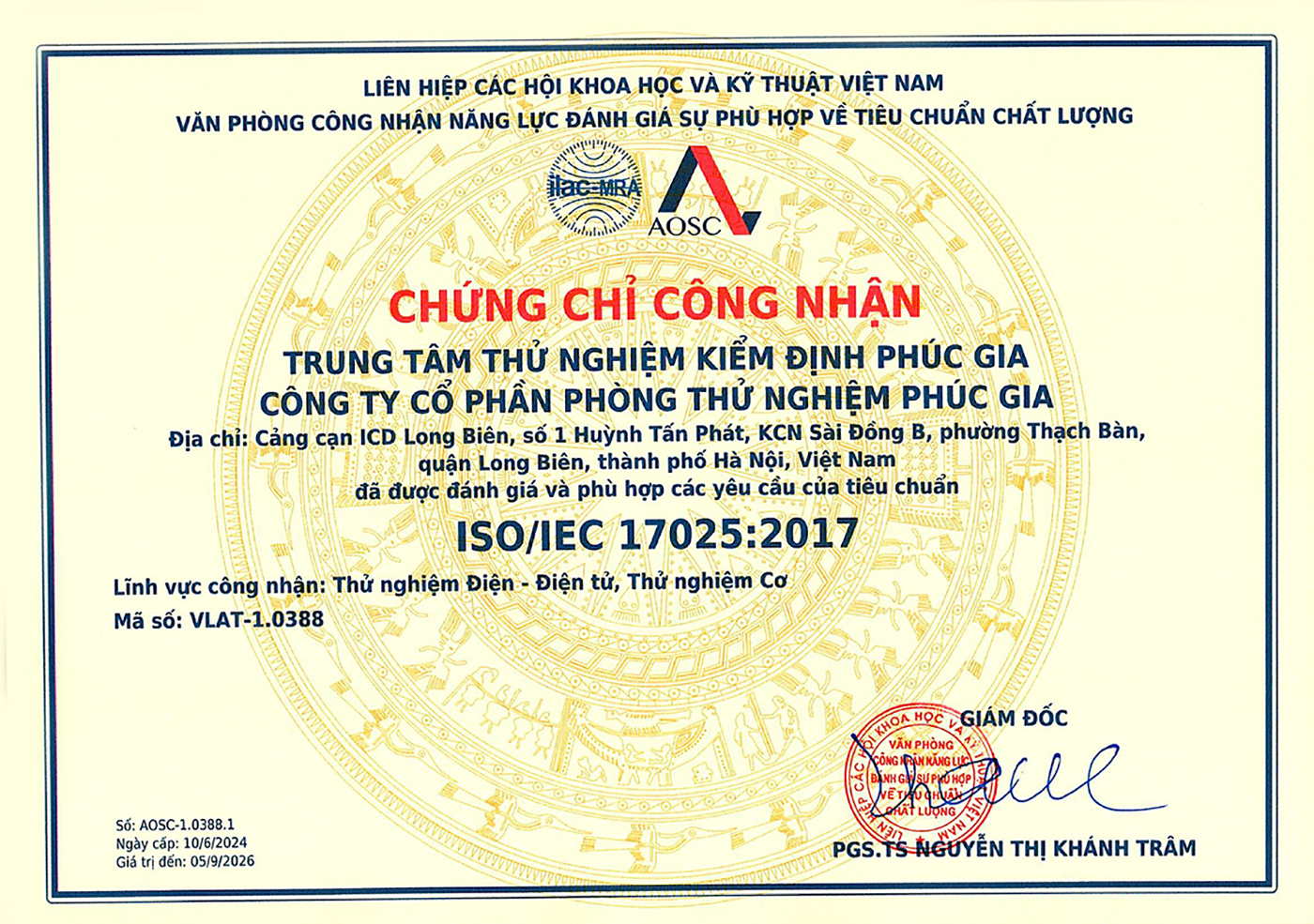


IEC 62321 on Determining the threshold of six types of regulated chemicals in electrotechnical products is the standard used to evaluate the content of hazardous substances in electrical and electronic products when there are no corresponding Vietnam Technical Regulations as prescribed in Circular No. 30/2011/TT-BCT. The TCVN 12667 set was published by the Ministry of Science and Technology and has content equivalent to IEC 62321. This is an important standard that organizations and individuals producing, trading, and importing these types of products need to grasp and comply with. Phuc Gia has summarized the IEC 62321 technical standards in the article below; we invite our customers to follow and identify useful information for themselves.
See more: Capacity Profile Of Phuc Gia Laboratory Corporation
I. VIETNAMESE REGULATIONS ON THE APPLICATION OF IEC 62321
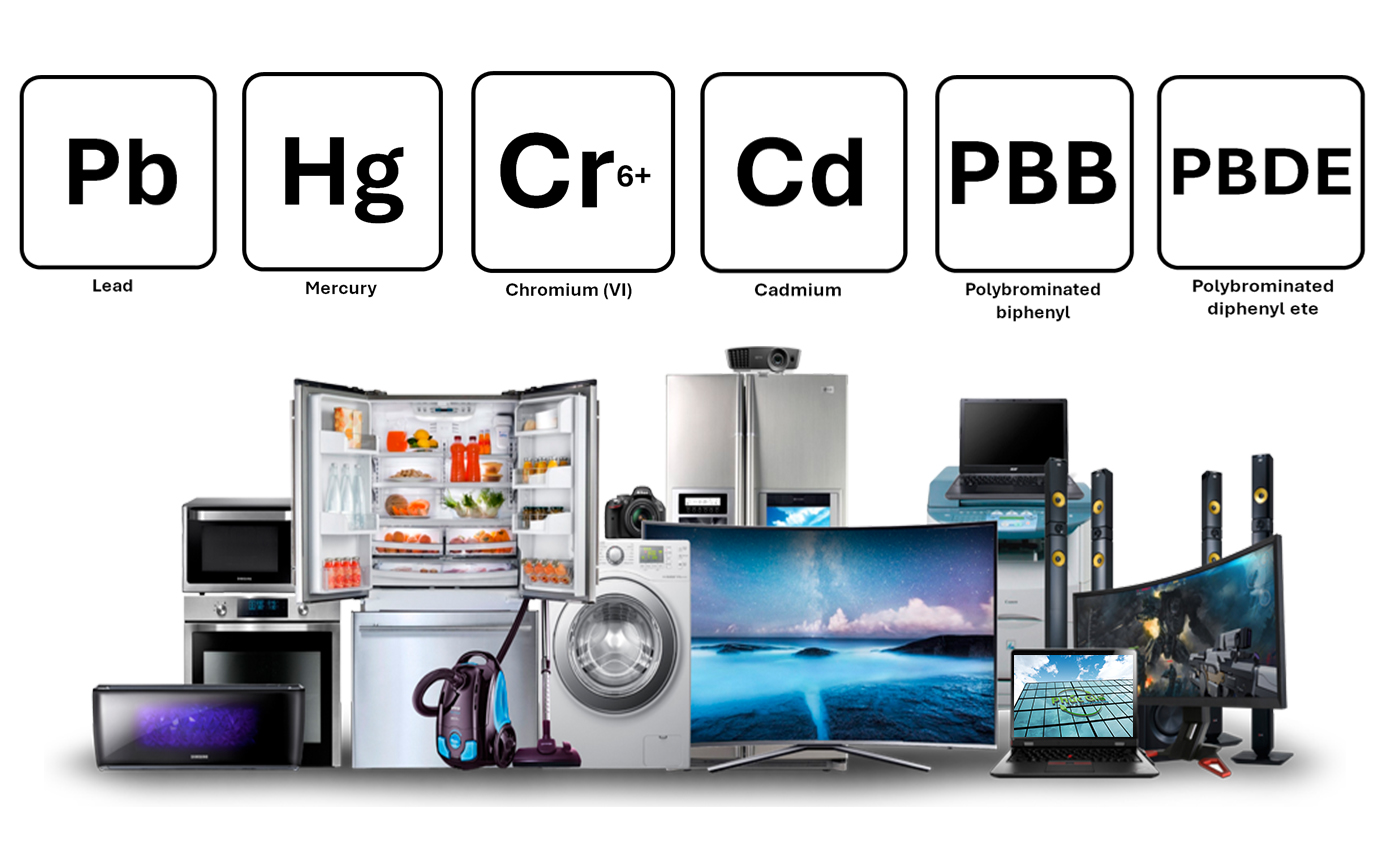
Circular No. 30/2011/TT-BCT stipulates that the content of hazardous chemicals including Lead (Pb), Mercury (Hg), Hexavalent Chromium (Cr6+), Polybrominated biphenyl (PBB), and Polybrominated diphenyl ether (PBDE) must not exceed the permitted limit of 0.1% by weight of the electrical and electronic product. Specifically, for Cadmium (Cd), it must not exceed 0.01% by weight.
This Circular also clearly states in Clause 4, Article 5: “When there is no corresponding Vietnam Technical Regulation, to evaluate the content of hazardous substances in electrical and electronic products, temporarily apply the current standard of IEC 62321: Electrotechnical Product – Determination of levels of six regulated substances or equivalent standards.”
This regulation has been implemented since September 23, 2011, until a corresponding National Technical Regulation is issued to replace it. At the same time, it requires that produced and imported electrical and electronic products must perform the disclosure of information regarding the permitted content limits of certain hazardous chemicals starting from December 1, 2012.
II. CONTENTS OF IEC 62321 ELECTROTECHNICAL PRODUCT – DETERMINATION OF LEVELS OF SIX REGULATED SUBSTANCES
IEC 62321 is a technical standard developed by the International Electrotechnical Commission (IEC) to provide guidance on determining the quality of prohibited substances in electronic and consumer electronic products. Accordingly, the published TCVN 12667 set of standards has content equivalent to IEC 62321, consisting of the following parts:
- IEC 62321-1:2013 (TCVN 12667-1:2020), Part 1: Introduction and overview
- IEC 62321-2:2013 (TCVN 12667-2:2020), Part 2: Disassembly, disjointing and mechanical sample preparation
- IEC 62321-3-1:2013 (TCVN 12667-3-1:2020), Part 3-1: Screening – Lead, mercury, cadmium, total chromium and total bromine using X-ray fluorescence spectrometry
- IEC 62321-3-2:2020 (TCVN 12667-3-2:2020), Part 3-2: Screening – Fluorine, chlorine and bromine in polymers and electronics by combustion-ion chromatography (C-IC)
- IEC 62321-4:2017 (TCVN 12667-4:2020), Part 4: Mercury in polymers, metals and electronics by CV-AAS, CV-AFS, ICP-OES and ICP-MS
Part 1: Introduction and overview (IEC 62321-1:2013 – TCVN 12667-1:2020)
This standard refers to the sample as the object that needs to be processed and measured according to test methods to determine the levels of certain substances. The sample can be a polymer, metal, or electronic material. The organization conducting the test methods must determine the sample and the method of creating the sample according to applicable regulatory documents. The test method to determine the level of certain substances consists of 2 important steps including:
- Analytical test method (structure presented according to ISO 78-2 if appropriate)
- Conducted in a laboratory (including appropriate quality assurance measures and validation procedures to demonstrate the performance of the analytical method using laboratory measuring equipment).
Part 2: Disassembly, disjointing and mechanical sample preparation IEC 62321-2:2013 (TCVN 12667-2:2020)
Standard IEC 62321-2:2013 provides a sampling plan and mechanical sample preparation for electrical and electronic products. In which these samples can be used to determine the level of certain substances as described in the test methods in other standards of the TCVN 12667 (IEC 62321) series. Obtaining a sample (i.e., sampling) is the first step in the analysis of an Electrotechnical Product for the presence of certain substances. This standard only provides general sampling guidelines, designed to basically shape a sampling plan suitable for the Electrotechnical Product.
Part 3-1: Screening – Lead, mercury, cadmium, total chromium and total bromine using X-ray fluorescence spectrometry (IEC 62321-3-1:2013 – TCVN 12667-3-1:2020)
Standard IEC 62321-3-1:2013 describes the screening analysis of five (5) substances, specifically lead (Pb), mercury (Hg), cadmium (Cd), total chromium (Cr), and total bromine (Br) in homogeneous materials found in an Electrotechnical Product, by using the analytical technique of X-ray fluorescence spectrometry (XRF). The range of content tested for the above 5 substances in materials is specified in tables 1 to 5 in this standard.
This standard addresses the testing of repeatability and reproducibility of the five substances tested, categorized by material type including ABS; PE; PC/ABS; PVC; HIPS; Polyolefin; Crystal glass; Glass; Lead-free solder; Si/Al alloy; Cast aluminum alloy; PCB – Printed circuit boards crushed smaller than 250 μm. This is an important guide to help ensure uniformity and reproducibility when testing substances on different types of materials during the research and production process.
Part 3-2: Screening – Fluorine, chlorine and bromine in polymers and electronics by combustion-ion chromatography (C-IC) – (IEC 62321-3-2:2020 – TCVN 12667-3-2:2020)
IEC 62321-3-2:2020 stipulates the screening analysis of fluorine, chlorine, and bromine (Br) in polymers and electronics using combustion-ion chromatography (C-IC). This test method is evaluated for ABS, EMC, PE, and PC within the content ranges specified in tables 1, 2, and 3 in this standard (Detailed results are shown in Appendix E, tables E.1 to E.6, and in Appendix F, tables F.1 and F.2).
The testing procedure in this standard aims to combust samples and perform ion analysis to determine the halide content in the sample. By performing the specified steps accurately and according to the procedure, the main goal is to ensure that the combustion and analysis process is carried out uniformly and precisely, thereby providing accurate analysis results on the halide content in the tested sample. The formula for calculating the content of halogen contained in the sample (peak area or peak height of halides (fluoride, chloride, and bromide)) is specified in Clause 9 of this standard.
Part 4: Mercury in polymers, metals and electronics by CV-AAS, CV-AFS, ICP-OES and ICP-MS (IEC 62321-4:2017 – TCVN 12667-4:2020)
IEC 62321-4:2017 provides specific instructions on how to determine mercury content in electronic products such as polymers, metals, and electronics. By using methods such as CV-AAS (Cold vapor atomic absorption spectrometry), CV-AFS (Cold vapor atomic fluorescence spectrometry), ICP-OES (Inductively coupled plasma optical emission spectrometry), and ICP-MS (Inductively coupled plasma mass spectrometry), this standard helps ensure that mercury levels in these products meet safety and environmental requirements.
IEC 62321-4:2017 guides the testing procedure including sample digestion by wet method or by microwave, using a thermal decomposition gold amalgam system. When using test method standards, quality assurance and quality control must be ensured by including requirements for control samples, including testing frequency and acceptance criteria. This also applies to the quality control of the method, such as determining the limit of detection (LOD) and limit of quantification (LOQ).
Please wait a moment to load the IEC 62321 – Determination of Certain Substances in Electrotechnical Products
In conclusion, the IEC 62321 series stands as the definitive global benchmark for the chemical analysis of Electrotechnical Products, ensuring they meet stringent environmental regulations like RoHS. By providing standardized methods for disassembling and testing Electrotechnical Products, it allows manufacturers to accurately determine the concentration of hazardous substances such as lead, mercury, and phthalates. In 2026, staying updated with new parts like IEC 62321-14 is essential for maintaining the compliance of Electrotechnical Products containing complex plastics or flame retardants.
Ultimately, a rigorous testing strategy based on IEC 62321 is the only way to guarantee that Electrotechnical Products can bypass international trade barriers and avoid costly market recalls. As global “Right to Repair” and circular economy laws evolve, the data derived from IEC 62321 provides the necessary transparency for the safe recycling of Electrotechnical Products. Prioritizing the latest IEC 62321 methodologies ensures that your Electrotechnical Products remain safe, sustainable, and legally authorized for sale in the competitive 2026 global marketplace.
For more details, please contact us at:
PHUC GIA LABORATORY CORPORATION
PHUC GIA CERTIFICATION CENTER
PHUC GIA INSPECTION TESTING CENTER
Address:
- Hanoi: ICD Long Bien, No. 01 Huynh Tan Phat, Sai Dong B Industrial Park, Long Bien Ward
- Ho Chi Minh City: No. 180, D2 Street, Long Truong Ward
Hotline: 0965996696 / 0982996696 / 02477796696
E-mail: lab@phucgia.com.vn/cert@phucgia.com.vn/info@phucgia.com.vn
Website: phucgia.com.vn
Working time: Monday to Friday 8:00 – 18:30; Saturday 8:00 – 12:00

![QUOTATION – Testing and Other Certification Services [2026]](https://phucgia.com.vn/wp-content/uploads/2017/03/bao-gia-thu-nghiem-chung-nhan.png)