

Draft QCVN 134:2024/BTTTT – National technical regulation on Specific Absorption Rate (SAR) for portable and body-worn wireless communication devices, is a critical document of great interest to stakeholders to ensure safety and protect consumer health. Devices within the scope of this technical regulation are expected to be mandatory for compliance starting from July 1, 2026.
See more: Capacity Profile Of Phuc Gia Laboratory Corporation
1. Why is it necessary to promulgate QCVN 134:2024/BTTTT?
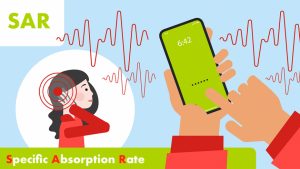
Specific Absorption Rate (SAR) is “the index used to measure the rate of radiofrequency energy absorption by the human body, with the unit of W/kg” (Mobile phones, SAR and power density – ITU EMF Guide).
According to the World Health Organization (WHO) and the International Telecommunication Union (ITU), SAR is related to the phenomenon of thermal increase in the human body due to the influence of radiofrequency energy from portable devices such as mobile phones, tablets, notebook computers, etc. Continuous exposure over a long period may adversely affect human health.
Since SAR can have negative impacts on human health, many international organizations have been researching and establishing standards to limit its effects on consumers. Typically, countries such as the USA, Japan, Australia, many APAC nations, and the Schengen area have promulgated technical standards on Specific Absorption Rate (SAR) to protect users when utilizing portable radio transceiver devices used near the ear, such as mobile phones and walkie-talkies.
Currently, Vietnam does not have mandatory management regulations or a specific technical regulation regarding Specific Absorption Rate (SAR) for portable and body-worn devices. To ensure that devices comply with SAR limit thresholds, and to manage EMF exposure from base transceiver stations (BTS) effectively and strictly while ensuring harmony with international regulations, the promulgation of a dedicated technical regulation on the specific absorption rate for portable and body-worn devices (QCVN 134:2024/BTTTT) is extremely urgent.
2. Differences Between the 1st Promulgated Draft and the 2nd Draft Amendment and Supplement of QCVN 134:2024/BTTTT
The Ministry of Information and Communications (MIC) has released two drafts of QCVN 134:2024/BTTTT regarding Specific Absorption Rate, while simultaneously collecting comments from individuals, agencies, and relevant organizations to develop the most complete technical regulation. Accordingly, the initially promulgated draft of QCVN 134:2024/BTTTT and the 2nd draft amendment and supplement contain many expanded and further improved contents. The specific details are as follows:
| ORD | Content | Contents regulated in the 1st draft | Contents of amendments and supplements in the 2nd draft | Note |
| 1 | Draft QCVN Name | National technical regulation on Specific Absorption Rate (SAR) for mobile phones | National technical regulation on Specific Absorption Rate (SAR) for portable and body-worn wireless communication devices |
Adjusted to accommodate the expanded scope of regulated objects compared to previous versions.
|
| 2 | Regulated Objects | Mobile phones | – Portable and body-worn devices (Mobile phones, tablets, notebook computers, etc.)
– Products not yet listed with HS codes in Appendix A of the QCVN may be regulated to apply this Technical Regulation under the Circular promulgating the list of potentially unsafe products and goods under the management scope of the Ministry of Information and Communications |
In order to align with the scope of devices specified in the reference standards and ensure harmony with other countries.
|
| 3 | SAR Limit Thresholds | – SAR limit for head and torso: 1.6 W/kg (averaged over 1g)
– SAR limit for limbs: 4 W/kg – Whole-body SAR limit: 0.08 W/kg |
– SAR limit for head and torso: 2 W/kg (averaged over 10g)
– SAR limit for limbs: 4 W/kg – Whole-body SAR limit is not applied |
In order to comply with ICNIRP guidelines and the practices of most adopting countries.
|
| 4 | Measurement Frequency Range | 4 MHz to 10 GHz | 30 MHz to 6 GHz |
In order to comply with ICNIRP guidelines and the vast majority of countries.
|
| 5 | Measurement Distance |
– Applied according to the actual usage distance as declared by the manufacturer – In the absence of a declared distance from the manufacturer, the measurement distance is 0 mm |
– The distance between the Equipment Under Test (EUT) and the Flat Phantom is 5 mm when evaluating SAR for the body
– The distance between the Equipment Under Test (EUT) and the Flat Phantom is 0 mm when evaluating SAR for limbs |
In order to harmonize with the regulations of other countries (Europe, USA) and align with actual device usage.
|
| 6 | Management Method | Declaration of Conformity | – For mobile phones: Certification of Conformity
– For remaining devices: Declaration of Conformity |
In order to ensure that devices comply with SAR limit thresholds and to ensure effective and strict management of EMF exposure from base transceiver stations (BTS)
|
Compared to the initially promulgated draft of QCVN 134:2024/BTTTT, the 2nd promulgated draft has been expanded in its scope of application. This technical regulation applies to radio devices with a power output greater than 20 mW and used at a distance of less than 200 mm from humans. The HS codes are regulated as follows:
| ORD | Product Names According to QCVN | HS Code | Product Descriptions |
| 1 |
Terrestrial mobile communication terminal equipment
|
8517.13.00
8517.14.00 |
Terrestrial mobile phones using E-UTRA (4G) technology and may integrate one or more of the following functions:
|
| 2 |
Fifth-generation (5G) mobile communication terminal equipment
|
8517.13.00
8517.14.00 |
Terrestrial mobile phones using fifth-generation (5G) mobile communication technology, with or without the integration of one or more of the following functions:
|
| 3 |
DECT wireless subscriber extension telephone (applicable only to handset)
|
8517.11.00 | A wireline telephone set consisting of a Base Station accompanied by one or more DECT wireless subscriber extension telephones (handsets). The portable mobile units (handsets) connect to the fixed network via the Base Station, which is a fixed telephone that connects calls to the fixed network. |
| 4 | Laptop and portable computer | 8471.30.20 | Portable automatic data processing machines, weighing not more than 10 kg, consisting of at least a central processing unit, a keyboard and a display, with or without the integration of one or more functions:
|
| 5 | Tablet | 8471.30.90 | Portable automatic data processing machines, weighing not more than 10 kg, consisting of at least a central processing unit, a keyboard and a display (excluding laptops, notebooks, and subnotebooks), with or without the integration of one or more functions:
|
3. Expected Implementation Timeline for QCVN 134:2024/BTTTT
The Circular promulgated along with QCVN 134:2024/BTTTT is expected to take effect from July 1, 2025. Accordingly, enterprises, organizations, and individuals may choose to conduct testing according to QCVN 134:2024/BTTTT for Certification of Conformity and Declaration of Conformity purposes from this point forward.
Starting from July 1, 2026, telephone devices and radio devices within the scope of application of QCVN 134:2024/BTTTT are mandatory to comply with this technical regulation before being circulated on the market.
Please wait a moment to load the QCVN 134:2024/BTTTT – “National technical regulation on Specific Absorption Rate (SAR) for mobile phones”
Please wait a moment to load the 2nd Draft – QCVN 134:2024/BTTTT “National technical regulation on Specific Absorption Rate (SAR) for portable and body-worn wireless communication devices”
Click here to download the 2nd Draft – QCVN 134:2024/BTTTT
For more details, please contact us at:
PHUC GIA LABORATORY CORPORATION
PHUC GIA CERTIFICATION CENTER
PHUC GIA INSPECTION TESTING CENTER
Hotline: 0965996696 / 0982996696 / 02477796696
E-mail: lab@phucgia.com.vn/cert@phucgia.com.vn/info@phucgia.com.vn
Website: phucgia.com.vn
Working time: Monday to Friday 8:00 – 18:30; Saturday 8:00 – 12:00

![QUOTATION – Testing and Other Certification Services [2026]](https://phucgia.com.vn/wp-content/uploads/2017/03/bao-gia-thu-nghiem-chung-nhan.png)