

IP Cameras (Internet Protocol cameras) are devices widely used in urban security surveillance systems, businesses, factories, households, and public infrastructure. However, along with the powerful development of technology, issues related to ensuring information security have become increasingly urgent. Currently, the development and promulgation of national technical regulations for IP Cameras is essential to ensure information security and control product quality. Let’s join Phuc Gia in exploring more information in the article below.
See more: Capacity Profile Of Phuc Gia Laboratory Corporation
1. Defining the Standard: IP Cameras and the IP Camera Market in Vietnam
An IP Camera (Internet Protocol Camera) is a digital surveillance device that transmits data over a network. As a dominant force in the IP Camera Market in Vietnam, these devices bypass the need for traditional analog setups, offering independent operation and direct streaming to smart devices.
An IP Camera is an independent system, utilizing existing network wiring to transmit power (PoE) for the camera system. This device possesses many outstanding advantages, including:
- Saving on wiring and installation costs due to Wi-Fi connectivity;
- Capturing images with high clarity and high megapixel counts (High resolution for sharp HD 720P, 1080P images);
- Supporting 2-way audio;
- Integrated infrared technology for observation during both day and night;
- Easy to install, move, and repair;
- Some types of Wi-Fi cameras also support 128GB memory cards for convenient and longer image storage;
- Not only featuring remote access but also the ability to share video clips via SMS, email, or direct links.
An IP Camera system includes the following components:
- IP Camera: The device that records and sends image data over the network;
- Router: The device that forwards data from the IP Camera to the Internet;
- Switch: The device that connects multiple IP Cameras within the same network system;
- Storage Server/NVR (Network Video Recorder): The device that stores and manages video data from IP Cameras;
- Viewing Devices (PC, smartphone): Devices that receive and view image data from the IP Camera.
2. Current Status of the IP Camera Market in Vietnam
The global struggle with surveillance vulnerabilities has hit home, making the regulation of the IP Camera Market in Vietnam a national priority. Aligning with international standards from the US and Singapore, Vietnam’s new mandate addresses the “Make in Vietnam” initiative and the urgent need to secure smart city infrastructure.
According to forecasts, by 2025, the world will have more than 75 billion IoT devices connected to the Internet, including 1 billion surveillance cameras in use. According to statistics from the General Department of Customs, in Vietnam, over 16 million surveillance camera devices have been imported, deployed, and used in the market over the past 5 years. It is estimated that by 2025, Vietnam will have more than 20 million surveillance cameras in use, equivalent to one-fifth of the country’s population.
However, these devices are frequently targeted by hackers and harbor many risks of being exploited, infiltrated, and hijacked. Some common security issues related to IP Cameras include DoS (Denial of Service) attacks, Brute Force attacks, software vulnerabilities, weak security settings, eavesdropping, and data theft. As a result, user information and data can be illegally collected and then used for fraudulent purposes and asset appropriation, affecting the reputation and honor of individuals and organizations.
The Ministry of Information and Communications has discovered more than 800,000 surveillance cameras in Vietnam whose image data is being shared publicly on the Internet. Among them, 360,000 cameras (accounting for 45%) have risks, weaknesses, or vulnerabilities that are easily exploited for attacks and taking control. Furthermore, hundreds of social media groups are publicly offering to sell images and videos from surveillance cameras with fees ranging from 200,000 to 1 million VND.
Additionally, the majority of information systems using surveillance cameras have not implemented network information security measures according to levels as prescribed in Decree No. 85/2016/ND-CP dated July 1, 2016. Approximately 90% of these systems have not undergone network information security testing and assessment before being put into operation, nor periodic annual network information security assessments.

3. Promulgation of national technical regulation QCVN 135:2024/BTTTT on basic information security requirements for Internet Protocol surveillance cameras
Safety and security issues related to surveillance camera devices are becoming a painful problem in society, not only domestically but also internationally. Countries such as the UK, the US, Singapore, and Finland have all issued specific standards and documents for surveillance camera devices as well as implemented network information security programs for many years.
In Vietnam, there have been many cases of personal information leaks and private camera image data being exposed, causing anxiety for users and significantly affecting social safety and security. This is especially true when surveillance cameras in general, and IP cameras in particular, account for the majority of deployment items in smart city development. Currently, most of these products have not been tested or assessed for network information security.
This sets an urgent requirement to control and evaluate network information security for these devices when imported, before being put into use, and during the deployment and operation process. At the same time, it promotes the production of “Make in Vietnam” surveillance camera products that ensure network information security requirements to meet the domestic market. This issue is also of special concern to the Government and has been directed by the Prime Minister in Directive 23/CT-TTg of 2022 on strengthening the work of ensuring network information security and information security for surveillance camera devices.
On December 31, 2024, the Ministry of Information and Communications issued Circular 21/2024/TT-BTTTT together with the National Technical Regulation QCVN 135:2024/BTTTT on basic information security requirements for Internet Protocol surveillance camera devices. The document took effect on February 15, 2025, with the following implementation roadmap:
- From February 15, 2025: QCVN 135:2024/BTTTT is applied voluntarily in testing, certification of conformity, and declaration of conformity.
- From January 01, 2026: Internet Protocol surveillance camera devices imported and domestically produced must comply (mandatory) with QCVN 135:2024/BTTTT before circulating on the market.
Certification and declaration of conformity for Internet Protocol surveillance camera devices will be regulated in the Circular specifying the List of products and goods with the potential to cause unsafety under the management responsibility of the Ministry of Information and Communications (expected to be issued in the near future, effective as early as July 01, 2025).
The National Technical Regulation on basic information security requirements for Internet Protocol surveillance cameras was developed and issued for the purpose of managing and enhancing security for IP camera systems, including:
- Ensuring security measures such as secure password management, periodic software updates, and data communication protection to prevent Denial of Service (DoS) attacks and other security threats.
- Establishing data encryption rules and access management to ensure personal information safety, helping to prevent data theft and abuse of personal information from surveillance camera systems, thereby protecting personal data and privacy.
- Ensuring transparency and reliability: Creating conditions for manufacturers and end-users to feel secure about the safety of products. Regulations on periodic monitoring, inspection, and vulnerability management help maintain the reliability of the surveillance camera system.
- The scope of application of the regulation includes all types of IP cameras imported, produced, distributed, and used in Vietnam.
4. Impacts of Promulgating Technical Regulation QCVN 135:2024/BTTTT on the IP Camera Market in Vietnam
4.1. New Opportunities for the IP Camera Market
- Protecting privacy and personal data, minimizing the risk of losing important information. Increasing the sense of peace of mind and trust when using IP Camera devices that have been certified for safety, contributing to creating a safer living and working environment.
- Promoting safety standards in the industry, enhancing the competitiveness of products in the market. Creating opportunities for cooperation with reputable manufacturers whose products are certified for safety.
- Promoting the production of “Make in Vietnam” surveillance camera products that ensure network information security requirements to meet the domestic market…
- Imported products must ensure compliance with QCVN requirements; businesses producing high-quality products will have better opportunities to access the Vietnam market.
4.2. Points for Businesses and Organizations to Note
- The process of achieving safety certification may require significant investment in upgrading and changing technology, increasing production and distribution costs.
- Compliance with safety standards may require complex processes and procedures during production, complicating the workflow and increasing production time.
- Safety measures may reduce production efficiency due to increased inspection and testing time, as well as the application of stricter quality control processes.
- Increased time for conducting verification and issuing certifications, delaying market launches and slowing down the new product development process.
- Imported products must undergo certification of conformity and declaration of conformity according to Vietnam’s QCVN 135:2024/BTTTT, and may not be able to use existing international certifications (if any), incurring commercial costs in the Vietnam market.

IP Cameras bring many benefits but also harbor serious risks if not strictly controlled. The promulgation of QCVN 135:2024/BTTTT will help standardize information security, protect privacy, and ensure cybersecurity. Businesses need to proactively improve product standards to adapt to new regulations, contributing to the development of a safe and sustainable IP Camera Market in Vietnam.
In conclusion, the enforcement of QCVN 135:2024/BTTTT has fundamentally reshaped the IP Camera Market in Vietnam by making cybersecurity a mandatory baseline. Since January 1, 2026, every participant in the IP Camera Market in Vietnam—from international brands to local startups—must ensure their devices are hardened against digital intrusion to remain legally compliant. This regulation eliminates unsecure hardware from the IP Camera Market in Vietnam, prioritizing features like unique password initialization and encrypted data channels that were previously voluntary.
Ultimately, the IP Camera Market in Vietnam is shifting toward high-quality, certified products that carry the mandatory ICT Mark. By mandating rigorous testing and Certification for IP Surveillance Camera Equipment, the government is effectively cleaning up the IP Camera Market in Vietnam and protecting national information infrastructure. For businesses, successfully navigating these 2026 requirements is the only way to maintain a competitive and sustainable presence in the rapidly growing IP Camera Market in Vietnam.
RELATED POSTS
- Decision No. 724/QD-BTTTT Promulgating the Set of Criteria for Basic Network Information Security Requirements for Surveillance Cameras
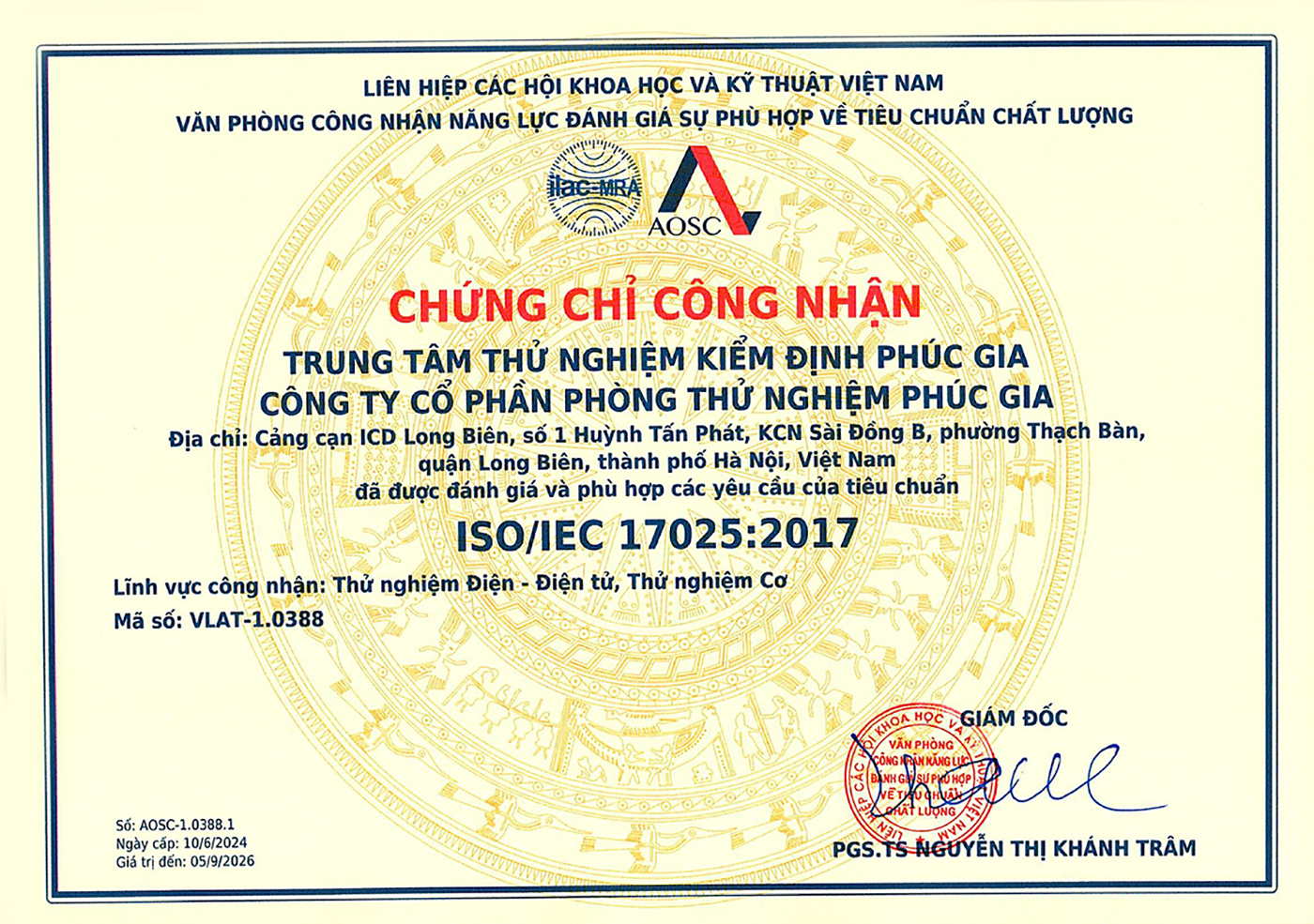
- Phuc Gia Inspection & Testing Center Meets ISO/IEC 17025:2017 Standards – VLAT-1.0388
- Phuc Gia Inspection & Testing Center Meets ISO/IEC 17025:2017 Standards – VILAS 1212
- Phuc Gia Inspection & Testing Center Meets ISO/IEC 17025:2017 Standards – VALAS 09
- The Ministry of Information and Communications Designates Phuc Gia Lab to Test Electrical Safety for Telecommunications and Information Technology Terminal Equipment According to QCVN 132:2022/BTTTT
- The Ministry of Information and Communications Designates Phuc Gia Lab to Test Lithium Batteries for Handheld Devices According to QCVN 101:2020/BTTTT
For more details, please contact us at:
PHUC GIA LABORATORY CORPORATION
PHUC GIA CERTIFICATION CENTER
PHUC GIA INSPECTION TESTING CENTER
Address:
- Hanoi: ICD Long Bien, No. 01 Huynh Tan Phat, Sai Dong B Industrial Park, Long Bien Ward
- Ho Chi Minh City: No. 180, D2 Street, Long Truong Ward
Hotline: 0965996696 / 0982996696 / 02477796696
E-mail: lab@phucgia.com.vn/cert@phucgia.com.vn/info@phucgia.com.vn
Website: phucgia.com.vn
Working time: Monday to Friday 8:00 – 18:30; Saturday 8:00 – 12:00

![QUOTATION – Testing and Other Certification Services [2026]](https://phucgia.com.vn/wp-content/uploads/2017/03/bao-gia-thu-nghiem-chung-nhan.png)