

Today’s homemakers are increasingly demanding cooking appliances that facilitate quick and simple meal preparation. Gas stove explosions have caused public anxiety, prompting a transition toward utilizing Induction Hobs, which boast a significantly more luxurious and contemporary design compared to gas models. Nevertheless, the underlying concept of these appliances remains unfamiliar to many first-time users: Induction Hobs Definition. Let’s explore this topic with Phuc Gia® in the following guidance article.
1. What are Induction Hobs?
Induction Hobs are a smart cooking appliance powered by electricity. These appliances are highly effective at minimizing heat loss and ensuring very fast cooking times. The operating principle involves an electric current passing through the induction coil beneath the glass, generating a magnetic field on the hob surface. This field, in turn, rapidly heats up any pot or pan with a magnetic base, thus cooking the food.
2. Structure of Induction Hobs
Design and Shape of Induction Hobs
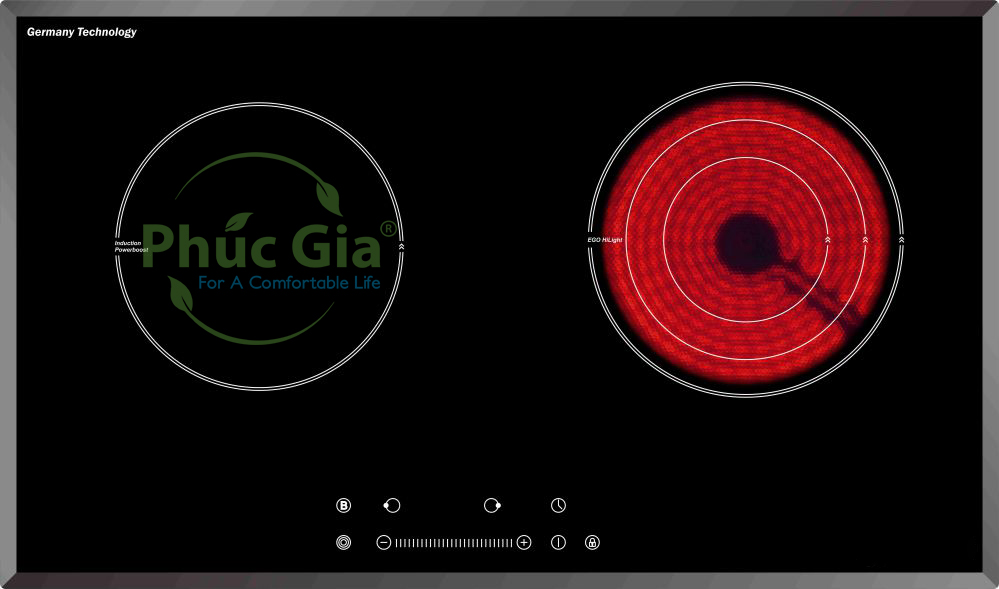
Induction Hobs are designed in diverse shapes such as square or round; depending on your desire, you can choose the Induction Hob shape you prefer. The classic black color tone with a modern touch will help your family’s kitchen space become more luxurious. Also, the type of Induction Hob (built-in or countertop) will affect its thickness. The depth is mainly within the range of 7 cm to 25 cm, making installation very easy, so you do not need to worry about this.
The top surface of the hob is constructed from a glass layer that is heat-insulating and highly durable, with a thickness of 0.5 cm to 1 cm. The surface features a control panel and buttons, making it easy for you to operate the hob during use.
Induction Coil
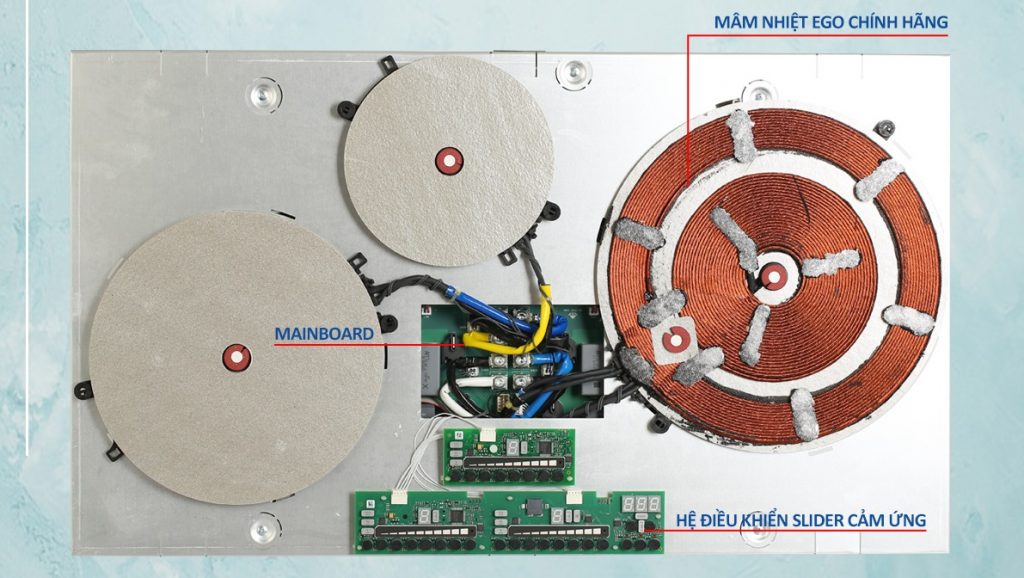
The induction coil, also called the inductor, is an important component in the structure of Induction Hobs. This part contributes to generating heat and ensuring stability, durability, and safety during the use of Induction Hobs.
Induction Hobs coil is constructed by a single circular loop, connected by ultra-durable copper wires, coiled on a flat surface. When the current running through the induction coil is activated, the Induction Hob automatically recognizes the size of the pot and generates just enough heat for the size of the cooking pot. Therefore, when cooking with an Induction Hob, if your hand accidentally touches the area outside the cooking zone, you will not feel heat.
Temperature Sensor
In addition to the temperature sensor attached directly to the induction coil, the Induction Hob also has a temperature sensor attached to the IGBT power transistor, which connects to the heat sink. It is securely mounted on a highly elastic rubber mount with the adsorption capability of the Induction Hob glass surface.
It also serves to measure the temperature on the glass surface and permanently monitors the temperature for the IGBT power transistor in the Induction Hob. If there is a change in temperature from the power transistor, it will immediately report to the microprocessor unit to issue a control command to turn off the hob.
Cooling Fan
The cooling fan, or heat dissipation fan, in the Induction Hob is responsible for cooling and reducing the temperature of the internal components, rebalancing the temperature when the hob operates at too high power. This helps protect the components and keeps the Induction Hob running stably.
Every Induction Hob is equipped with 1 to 2 cooling fans, depending on the number of cooking zones and the fan quality. Usually, double Induction Hobs are designed with 2 cooling fans, while some Induction Hobs only have 1 fan. However, the number of cooling fans is not as important as the type of heat dissipation mechanism being used to balance the hob temperature during cooking.
Induction Hob cooling fans typically come in 2 types:
- Axial fan
- Turbine fan
Among them, the turbine fan is often used for high-end imported Induction Hobs, while the axial fan is typically used in lower-priced Induction Hobs. With the type of Induction Hob using a turbine fan, which offers fast, durable cooling efficiency, only 1 unit is usually needed to cool the internal components. However, the cost of the turbine fan is also quite expensive.
The cooling fan in the Induction Hob operates with a 18V DC voltage. The fan only operates when the power source is correctly plugged in (positive (+) and negative (-)). During use, the fan often shows signs of damage due to dry oil or loose screws and rarely due to electrical issues.
It is difficult to upgrade and change previously used axial fans to turbine fans because the structure of the Induction Hob is pre-designed, and the control chips for these two types of fans are also different. Therefore, when choosing an Induction Hob, you should consider the components of these two fan types.
Induction Hobs’ Circuit Board
Each Induction Hob device has a different circuit configuration. However, Induction Hobs’ circuit board typically includes:
- Power source and rectifier circuit
- Switching (pulse) power supply
- IGBT power transistor
- Capacitor
- Panel coil
- Temperature sensors
- MUC Microprocessor Unit
- Cooling fan
- Temperature sensor
- Diode bridge
- And a few other small components in the Induction Hob circuit.
Induction Hobs’ circuit board is a relatively large and noticeable component in the hob’s structure. For double Induction Hobs, the circuit board is quite complex because it is two-layer printed.
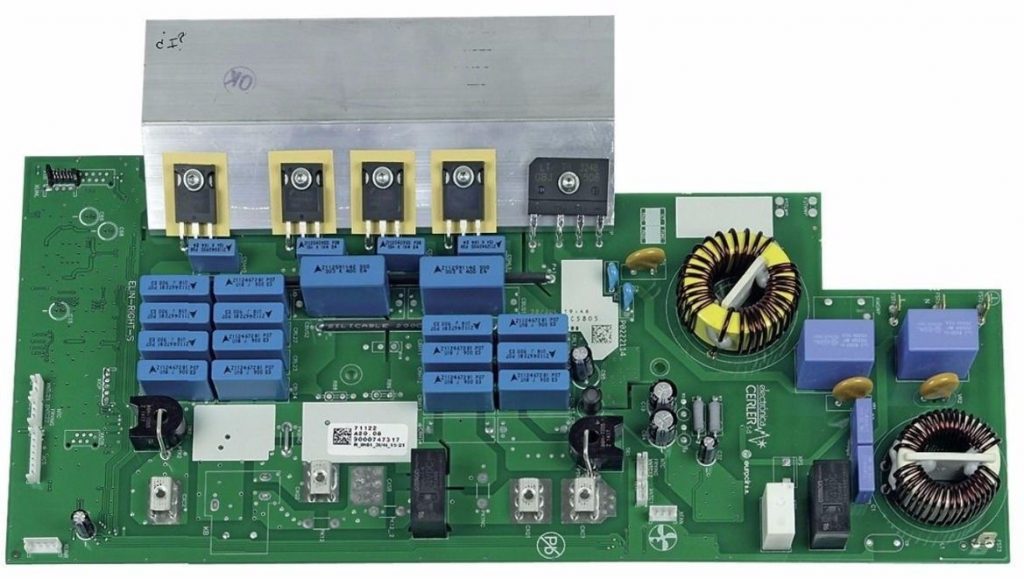
The control circuit board plays a vital role, as it determines the entire operation process of the Induction Hob. The Induction Hob circuit is responsible for supplying high-frequency current to the Induction Hob coil. The circuit board is the component that receives direct operational commands from the user through the control panel buttons on the hob surface.
However, compared to the main circuit board, the control circuit board has a much simpler structure. The main components of the control circuit board are the display LED and the function selection buttons.
Induction Hob Glass Surface
Ceramic glass is the type of glass chosen for the Induction Hob surface because it has scratch resistance, good impact resistance, high durability, and excellent heat resistance.
The glass surface plays a rather important role in the Induction Hob; it functions to protect the hob body and the internal components. At the same time, it enhances the aesthetics of the entire hob, making it luxurious.
High-end glass surfaces currently available for purchase with an Induction Hob are Schott Ceran glass from Germany and EuroKera glass from France, as these are two types of glass with good quality and high durability. Almost all types of Induction Hobs imported into Vietnam and Spanish Induction Hobs use this high-grade glass surface.
3. Operating Principle of Induction Hobs
The main principle of the Induction Hob is using the Foucault current (Eddy current) to heat the cooking pot directly. When the Induction Hob is plugged in, the LC oscillating circuit generates a changing magnetic field on the hob surface. If there is a ferromagnetic object on the hob surface, an internal current will run within the object, and this current generates significant heat.
For this reason, the cooking pot must be made of ferromagnetic material; glass or ceramic pots cannot be used directly on the Induction Hob but require an induction disk underneath. Since the pot is heated directly, the heat transfer efficiency is very high, with little heat loss.
The internal circuit uses an AC-DC rectifier bridge, a high-frequency oscillating circuit, an IGBT for power control, an induction coil, and, of course, a MicroController to adjust and control the cooking mode.
Because the Induction Hob uses electromagnetic induction, heat is only generated when the hob surface is in contact with metal cookware, specifically iron, steel, or stainless steel attracted by a magnet—generally, ferromagnetic materials. Items made of aluminum, non-magnetic stainless steel, glass, or ceramics cannot be used because these materials cannot generate heat when in contact with the Induction Hob. Therefore, when cooking with a built-in Induction Hob, you must choose the correct type of pot, and the size of the pot must also be suitable; typically, the pot bottom must cover 2/3 of the cooking zone to generate heat.
The Induction Hob has the smart feature of automatically recognizing the size of the pots and pans; the hob generates heat exactly where the pot bottom touches the glass surface. Therefore, the hob does not become hot outside the contact area between the Induction Hob surface and the pot bottom area. Other areas do not generate heat, which is very safe for the user and prevents burns during cooking. Furthermore, since the hob surface cools down very quickly, the user only needs to wait a moment after cooking to clean the hob. Cleaning is very easy because the hob surface is made from high-grade material, so a damp cloth is enough to clean the hob thoroughly. The Induction Hob is the type of cooker with the highest cooking efficiency, much higher than gas and electric stoves. This is because the heat generated is almost completely absorbed into the cooking pot, whereas cooking with gas and electric stoves inevitably results in heat loss to the external environment. Based on the operating principle of the Induction Hob, we can always see that using the Induction Hob is much safer and more cost-effective than other types of cookers.
4. Pros and Cons of Induction Hobs
Pros:
- The Induction Hob is extremely energy efficient in use: The Induction Hob operates with a direct heat transfer mechanism to the pot bottom, achieving a cooking efficiency of up to 90%. This saves your family cooking time and electricity consumption. The Induction Hob operates without heat escaping to the outside and without a flame, so cooking does not generate heat, allowing you to cook and run a fan without worrying about affecting the hob’s heat.
- Absolute safety for the user: The Induction Hob does not emit harmful gases like CO2 and has no radiation, so you can confidently use it without affecting health.
- Modern aesthetic of the Induction Hob: Using the Induction Hob makes cleaning easier because the hob surface does not accumulate dirt; you can clean it immediately after cooking. The Induction Hob is not just a cooking appliance; it also helps make your kitchen space more luxurious.
- Superior features of the Induction Hob: The Induction Hob ensures absolute safety during use because every design is equipped with functions like timer setting, keypad lock, heat warning, automatic shutdown when no pot is present, which will give you complete peace of mind when using the product.
Cons:
- Using the Induction Hob is picky about cookware; only one type of pot with a ferromagnetic bottom can be used.
- The initial investment cost is high because, in addition to the cost of the hob, you must also spend an amount to purchase a set of dedicated cookware.
- If a family member uses medical electronic devices, such as a pacemaker, they should not use the Induction Hob because the magnetic field of the hob is not suitable for those devices.
5. Types of Induction Hobs
- Single Induction Hob: The single Induction Hob is a compact type of Induction Hob with only one cooking zone, easily portable, and with a maximum power typically ranging from 1800-2200W depending on the specific design. The single Induction Hob is very suitable for students, single people, or those who rarely cook at home.
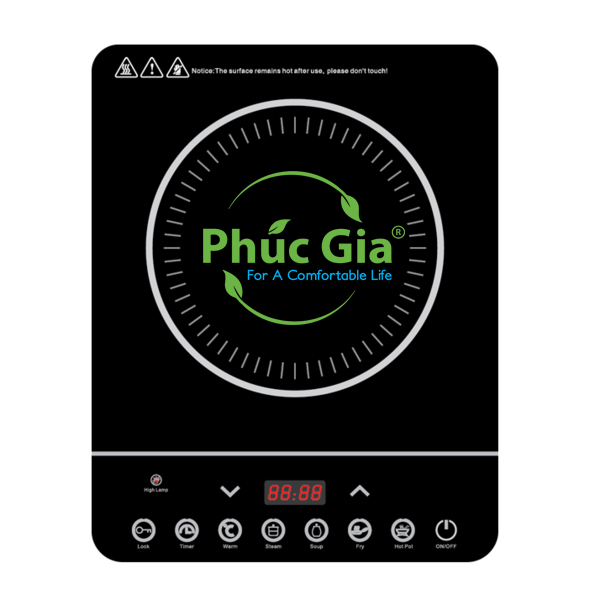
- Dual Induction Hob: The dual Induction Hob is a cooking appliance with 2 dedicated cooking zones. This device, featuring two Induction Hob cooking zones, will make your cooking faster and save time compared to other types of cooking appliances. In recent years, the dual Induction Hob has become familiar, and most current households use the dual hob not only for its layout but also because the dual Induction Hob is considered the product line with the most abundant models and designs.
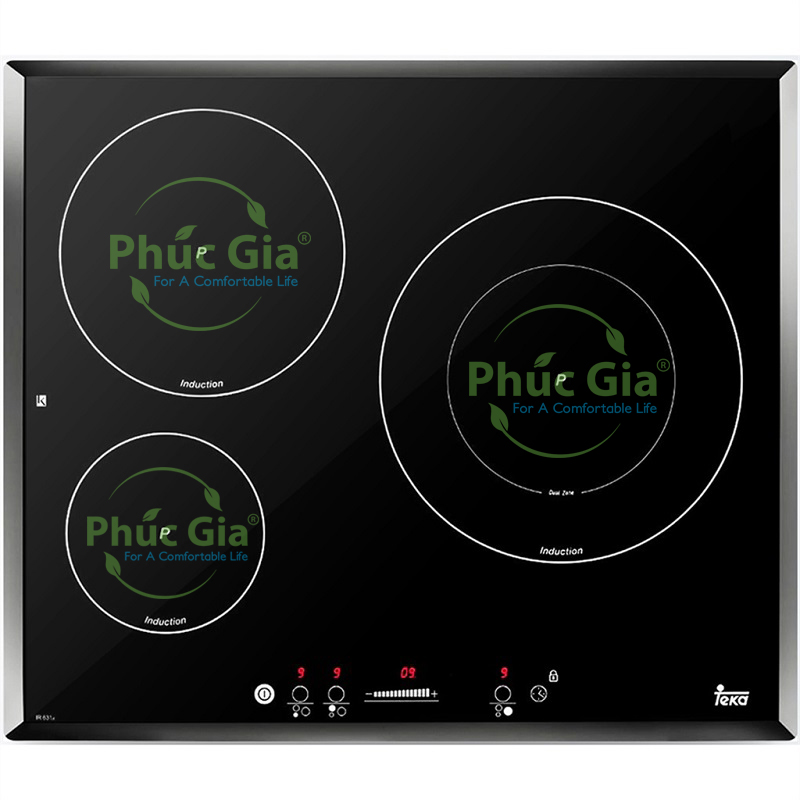
- Induction Hobs with 3 or More Cooking Zones: With the design of an Induction Hob with 3 or more cooking zones, this new line of appliances has greatly helped homemakers improve cooking tasks compared to before. It helps increase power, solves the difficult problem of high-frequency cooking, and cuts cooking time by half. This is the clearest benefit provided by the Induction Hob with 3 or more cooking zones.
RELATED POSTS:
- Electromagnetic Compatibility Testing According to QCVN 09 for Electric Stoves and Induction Hobs
- Electromagnetic Compatibility (EMC) Test Results for Induction Hobs – QCVN 09:2012/BKHCN
For more details, please contact us at:
PHUC GIA LABORATORY CORPORATION
PHUC GIA CERTIFICATION CENTER
PHUC GIA INSPECTION TESTING CENTER
Address: ICD Long Bien, No. 01 Huynh Tan Phat, Sai Dong B Industrial Park, Long Bien Ward, Hanoi City, Vietnam.
Hotline: 0981 996 996/ 0982 996 696/ 024 7779 6696
E-mail: lab@phucgia.com.vn
Website: phucgia.com.vn
Working time: Monday to Friday 8:00 – 18:30; Saturday 8:00 – 12:00

![QUOTATION – Testing and Other Certification Services [2026]](https://phucgia.com.vn/wp-content/uploads/2017/03/bao-gia-thu-nghiem-chung-nhan.png)