

See more: Capacity Profile Of Phuc Gia Laboratory Corporation
LED Tube lamps, linear LED lamps, and LED tubes shall hereafter be collectively referred to as LED Tube Lamps.
Labeling LED Tube lamps in compliance with the National Technical Regulation QCVN 19:2019/BKHCN is a mandatory requirement for the LED Lighting Conformity Certification process. However, many manufacturing, trading, or importing enterprises are not yet fully aware of the specific mandatory content required to ensure their labels meet these regulatory standards.
Phuc Gia Laboratory will clarify the mandatory labeling requirements for LED Tube lamps to assist your business in achieving compliance.


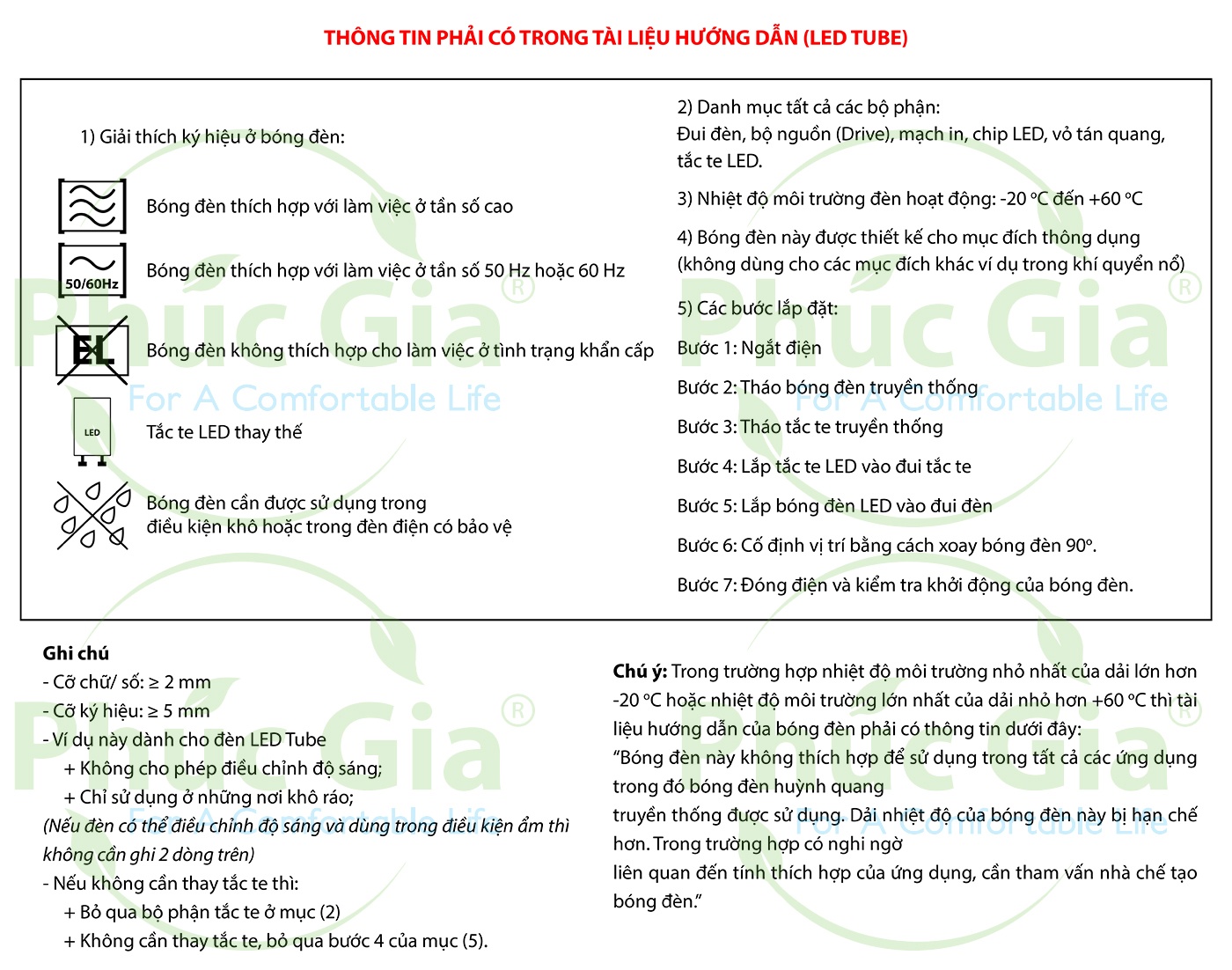
Based on section 2.1.3, QCVN 19:2019/BKHCN, Double-capped LED lamps designed to replace linear fluorescent lamps (LED Tube) must comply with the regulations in TCVN 11846:2017.
Based on section 5 – Labeling, TCVN 11846:2017, Double-capped LED lamps designed to replace linear fluorescent lamps (LED Tube) must display the labeling content detailed as follows:
| ORD | Categories of Requirements | Details | Examples | Requirements |
| Based on section 5 – Labeling, TCVN 11846:2017 | ||||
|
5.1 |
Labeling on the lamp. |
Requirements: Marking must be clear and durable. Font/number size: ≥ 2 mm. Symbol size: ≥ 5 mm. |
||
| a) Mark of origin | This label can be a trademark, the manufacturer’s name, or the name of the authorized dealer. | Example: Philips, Osram, Nanoco… | ||
|
b) Rated voltage or rated voltage range
|
Mark as “V” or “volt”
Note: The rated voltage or rated voltage range of the lamp may differ from the open-circuit voltage. |
Example: 220 V;
220 – 240 V |
||
| c) Rated power | Mark as “W” or “watt” | Example: 15 W; | ||
| d) Rated frequency | Mark as “Hz” or “kHz” | Example: 50 Hz;
50/ 60 Hz |
||
|
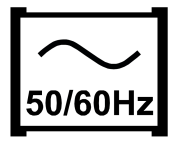
e) Double-capped LED lamps suitable only for use with certain types of ballasts (e.g., magnetic ballasts) must be labeled with symbols as shown in Figure 1 and/or Figure 2
|

Figure 1 – Lamp suitable for high-frequency operation
Figure 2 – Lamp suitable for operation at 50 Hz or 60 Hz Note: The explanation of the meaning of Figure 1 and Figure 2 must be provided in the instruction manual. |
|||
|
f) Double-capped LED lamps must be labeled according to Figure 3 and with the following information: “This lamp is not suitable for use in emergency luminaires designed for double-capped fluorescent lamps”
|
Figure 3 – Lamp not suitable for emergency operation Note: Additional requirements to support emergency lighting will be developed in the future. |
|||
|
g) If double-capped lamps must be used with replacement parts for starters, they must be labeled with the model code of the replacement LED starter. The replacement LED starter must be labeled as shown in Figure 4
|
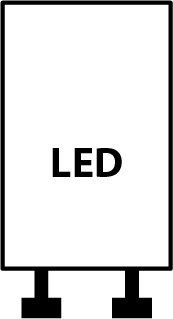
Figure 4 – Replacement LED starter |
|||
|
h) Provide information on the protection against dust and water ingress (IP rating)
|
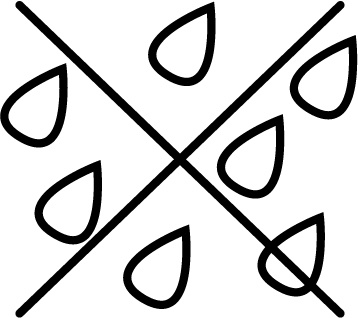
For lamps that must be used in dry conditions or in protected luminaires, see Figure 5.
Figure 5 – Lamp to be used in dry conditions or in protected luminaires |
|||
|
i) Rated ambient temperature range of the lamp.
|
Example: -20°C ~ + 60°C |
|||
|
5.2 |
Labeling on the lamp, on the immediate wrapping or box, or in the instructions. |
Information in section 5.2 must be marked on:
Requirements: Must present the contents in the side table. |
||
| a) Rated current | Mark as “A” or “ampere” | Example: 0.16A; 160mA; 160 miliAmpe … | ||
|
b) Special conditions or restrictions that must be observed for the operation of the lamp |
Example: In case the lamp is not suitable for dimming, the symbol as shown in Figure 6 may be used. | 
Figure 6: Dimming not allowed |
||
|
5.3 |
Instruction manual | |||
|
5.3.1 |
General regulations |
– In addition to the information mentioned in 5.2, double-capped LED lamps must include instructions specifying all necessary steps to replace a fluorescent lamp with an LED lamp.
For example: replacing the starter. – All necessary instructions detailed in this safety standard must be displayed on the lamp, on the product packaging, or in the manufacturer’s user manual and must be provided along with the lamp. – The meaning of the symbols in 5.1 and 5.2 must be clearly explained (using words) in the instruction manual. The content of the instructions must include the following information: |
||
|
5.3.2 |
Product declaration The information required in items 1 to 5 as shown in the side column must be provided:
|
1) List of all components | ||
| 2) The types of fluorescent lamps that the LED lamp is designed to replace | ||||
| 3) Warning content regarding the prohibition of modifying the luminaire into which the LED lamp will be installed | ||||
| 4) The ambient temperature range of the lamp must be declared (*) | ||||
| 5) Declaration: “This lamp is designed for general lighting purposes (not for other purposes, such as in explosive atmospheres)” | ||||
| (*) In the event that the minimum ambient temperature of the range is higher than -20°C or the maximum ambient temperature of the range is lower than +60°C, the lamp’s instruction manual must contain the following information:
“This lamp is not suitable for use in all applications where a traditional fluorescent lamp is used. The temperature range of this lamp is more restricted. In cases of doubt regarding the suitability of the application, the lamp manufacturer should be consulted.” Note: This standard is based on the assumption that the expected normal ambient temperature range of fluorescent lamps that can be replaced by these products is -20°C to +60°C. |
||||
|
5.3.3 |
Visual instructions This may be used instead of 5.3.4 |
The steps for installing the product into an existing luminaire must follow Figure 7. If a starter replacement is not required, steps 4 and 5 in Figure 7 and section 5.3.4 can be omitted |

Figure 7 – Steps for removing fluorescent lamps and installing double-capped LED lamps designed to replace linear fluorescent lamps |
|
|
5.3.4 |
Installation This may be used instead of 5.3.3
|
Example for a replacement lamp type that does not require luminaire modification. (1) Disconnect power. (2) and (3) Remove the traditional lamp. (4) Remove the starter. (5) Install the LED starter into the starter holder. (6) Install the LED lamp into the lamp holders. (7) Secure the position by rotating the lamp 90º. (8) Connect power and check the starting operation of the lamp. |
||
|
5.4
|
Conformity |
Check for conformity with 5.1 to 5.3 as follows: – Check for the presence and legibility of the label by visual inspection. – Durability of marking – on the lamp (attempting to erase the marking content) is tested by: + Step 1: rub the marking lightly for 15 s with a cloth soaked with water and after drying + Step 2: rub lightly again for 15 s with a cloth soaked with hexane. => The marking shall still be legible after this test. The information content required in 5.2 and 5.3 is checked by inspection. |
||

For more details, please contact us at:
PHUC GIA LABORATORY CORPORATION
PHUC GIA CERTIFICATION CENTER
PHUC GIA INSPECTION TESTING CENTER
Address: ICD Long Bien, No. 01 Huynh Tan Phat, Sai Dong B Industrial Park, Long Bien Ward, Hanoi City, Vietnam.
Hotline: 0981 996 996/ 0982 996 696/ 024 7779 6696
E-mail: lab@phucgia.com.vn/cert@phucgia.com.vn/info@phucgia.com.vn
Website: phucgia.com.vn
Working time: Monday to Friday 8:00 – 18:30; Saturday 8:00 – 12:00

![QUOTATION – Testing and Other Certification Services [2026]](https://phucgia.com.vn/wp-content/uploads/2017/03/bao-gia-thu-nghiem-chung-nhan.png)