

See more: Capacity Profile Of Phuc Gia Laboratory Corporation
Phuc Gia® – What are UV rays, and how do their benefits or harms affect human life? Are TUV (UV) rays present in the light from electric lamps and LED lights? Let’s clarify these issues with Phuc Gia Testing Laboratory.
Within the visible light spectrum, ultraviolet light/UV rays/UV radiation becomes invisible to humans, primarily because it is absorbed by the cornea below 360 nm and by the lens below 400 nm. Furthermore, the rods and cones located in the human retina cannot detect wavelengths below 360 nm, and the ultraviolet wavelength in fact causes damage to them. Many animals whose eyes do not require a lens (such as insects and shrimp) can detect UV rays via the quantum photon absorption mechanism, the same chemical process by which humans detect visible light. So, what exactly are ultraviolet rays, or UV rays?
UV (Ultraviolet) rays, also known as ultraviolet radiation, are electromagnetic waves with wavelengths shorter than visible light but longer than X-rays.
Ultraviolet (UV) rays appear in sunlight and also in artificial light sources. In reality, the largest amount of UV rays is found in sunlight; however, artificial lamps also emit light bands containing this radiation, whether in small or large amounts.
For example, staring at a clear blue sky (scattered blue light) poses a low risk, while looking directly at the sun can cause irreversible damage almost immediately.
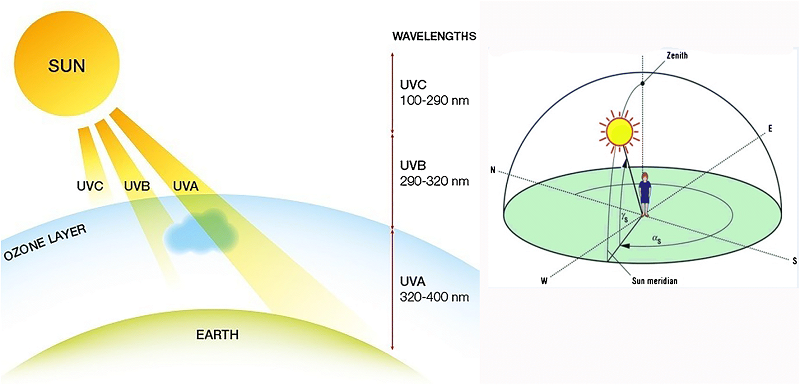
UV rays are divided into 3 types:
- UVA: Wavelength from 320 nm to 400 nm
- UVB: Wavelength from 280 nm to 320 nm
- UVC: Wavelength from 100 nm to 280 nm
1. UVA Rays
1.1. What are UVA rays?
Ultraviolet UVA rays are long-wavelength light rays, with wavelengths ranging from 320 nm to 400 nm. They account for the highest proportion, up to 95%, of the radiation reaching the skin because UVA easily penetrates the Earth’s protective ozone layer.
1.2. Classification of UVA rays?
- UVA rays are divided into two types: UVA1 and UVA2.
UVA1 light has wavelengths ranging from 340 nm to 400 nm.
UVA2 light has wavelengths ranging from 320 nm to 340 nm.
- UVA rays are not absorbed by the atmospheric ozone layer.
- Birds, insects, and fish can see them.
1.3. Harms of UVA Rays?
UVA rays are considered the silent killer because, unlike UVB rays (which cause a burning sensation), you do not feel the impact of UVA rays damaging your skin.
- Harm to the Skin: UVA rays can penetrate deep into the skin, causing destruction in every layer without causing pain. It damages the skin’s structure, leading to a loss of elasticity and firmness. It is also a leading cause of wrinkles and various skin cancers.
- Harm to the Eyes: UVA rays can penetrate the cornea of the eye, reaching the lens or the retina inside the eye. Prolonged exposure to UVA radiation can lead to cataracts or macular degeneration.
UVA rays can penetrate windows in your office or car (unless they have been specially treated with UVA radiation-filtering measures).
2. UVB Rays
2.1. What are UVB rays?
Ultraviolet UVB rays are light rays with wavelengths ranging from 280 nm to 320 nm, a much smaller range than UVA light. The potential harm of UVB depends on altitude. The higher the altitude, the greater the proportion of UVB rays.
2.2. Harms of UVB Rays?
The ozone layer absorbs most of the UVB rays; however, some UVB rays still penetrate the ozone and atmosphere, causing phenomena such as sunstroke, sunburn, reducing the skin’s ability to produce Collagen and Elastin, and causing skin damage and darkening by stimulating the metabolic process of Melanin (skin pigment). UVB rays also play a significant role in skin cancer.
3. UVC Rays
3.1. What are UVC rays?
- Ultraviolet UVC rays are light rays with wavelengths from 100 nm to 280 nm, representing the highest-energy radiation band.
- Ultraviolet UVC rays are completely absorbed by the ozone layer and the atmosphere. However, due to many negative impacts on the ozone layer today, the ozone layer is increasingly weakened, thinning, and developing holes. Consequently, UVC rays can more easily penetrate the Earth’s surface, leading to severe health problems.
3.2. Harms of UVC Rays?
UVC is the highest-energy UV ray, making it the most capable of causing severe damage to human eyes and skin, such as skin cancer. This light can destroy nucleic acids in cells, break down DNA present in living organisms, etc. UVC is a threat to human life on Earth. This is the most harmful type of ray.
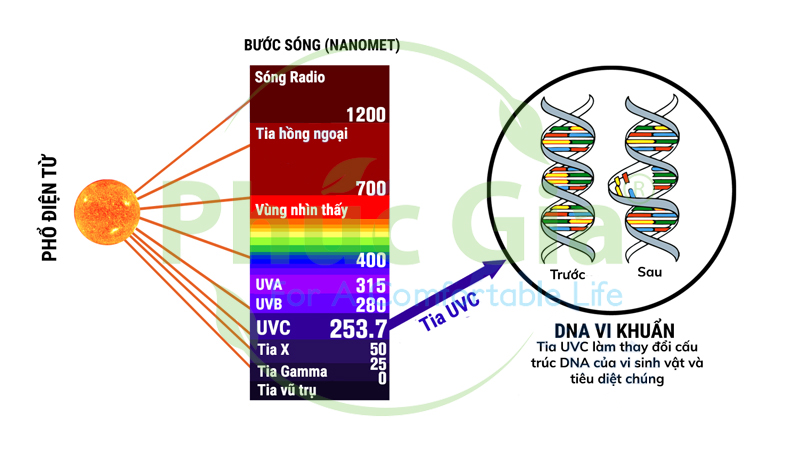
According to the National Center for Hydro-Meteorological Forecasting, the Ultraviolet Index, or UV Index, is the international standard measure of the strength of ultraviolet radiation from sunlight.
UV Hazard Levels According to the U.S. Environmental Protection Agency (EPA):
- UV Index 0 – 2: Considered Low.
- UV Index 8 – 10: Can cause sunburn in 25 minutes.
- UV Index 11 or higher: Considered Extremely High and very dangerous, posing a risk of skin damage and eye burns if exposed to sunlight for approximately 15 minutes without protection.
4. Benefits of UV Rays
If used correctly, UV rays also offer immense benefits to our health and daily lives, such as:
4.1. Aids the Body in Synthesizing Vitamin D
(Vitamin D helps treat and prevent osteoporosis and participates in many important metabolic processes in the body.)
There are two main sources of Vitamin D for the human body:
- From Sunlight (Endogenous): Vitamin D is synthesized in the skin under the influence of solar ultraviolet B (UV-B) radiation, accounting for 80-90% of the supply.
- From Diet (Exogenous): Vitamin D synthesized from food accounts for approximately 10-20%.
Therefore, doctors always advise mothers to let their children sunbathe in the morning to synthesize endogenous Vitamin D.
4.2. UV Rays are Applied in Treating Skin Conditions like Psoriasis
Psoriasis is a condition where skin cells grow too rapidly, causing itching and scaling. Exposure to ultraviolet light slows the growth of these skin cells, reducing the symptoms of the disease.
4.3. UV Application in Disinfection and Sterilization
Because UV rays possess very strong germicidal properties, they are also used for water and air disinfection. (UV-C energy, which has shorter wavelengths than UV-A and UV-B and is less penetrating and less risky to human health, is applied in the field of disinfection and sterilization.)
Mechanism of UV Action in Disinfection:
Ultraviolet UV rays can kill microorganisms like viruses and bacteria. UV rays penetrate the cell membrane of bacteria and viruses, destroy their DNA, and prevent their ability to regenerate and multiply. Thanks to this effect, famous lamp manufacturers like Philips have used this property of UV to produce UV germicidal lamps for sterilization and disinfection. Depending on the intended use, we can utilize the germicidal effect of UV by direct or indirect irradiation.
- Effect when using Direct Irradiation Germicidal Lamps: The germicidal lamps are hung at a certain height so that the UV rays shine directly onto the target. Examples include baby bottle sterilizers.
- In Indirect Irradiation: The UV light is positioned to shine towards the ceiling, aiming to destroy bacteria in the upper area. Due to convection currents, the disinfected layer of air above is replaced by the untreated air layer below. After the process is complete, the entire volume of air will be disinfected.
- Light from the sun regulates hormones in the body more normally compared to people who only work under artificial light.
5. UV Hazard Level in Current Lighting Devices?
5.1. Incandescent Light Bulbs
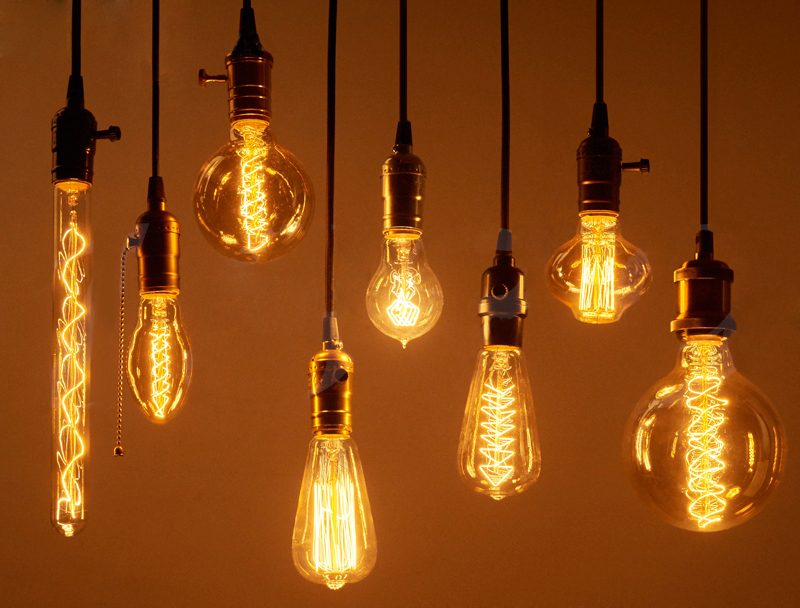
Due to their high light wavelength, incandescent light bulbs emit very little UV radiation.
However, because incandescent bulbs emit light by heating a tungsten filament, this leads to an increase in ambient temperature and contributes to global warming, accelerating the greenhouse effect. Therefore, incandescent bulbs are rarely used today. This type of bulb is now mainly used only for aesthetic or skin-warming purposes.
5.2. Fluorescent Tube Lamps
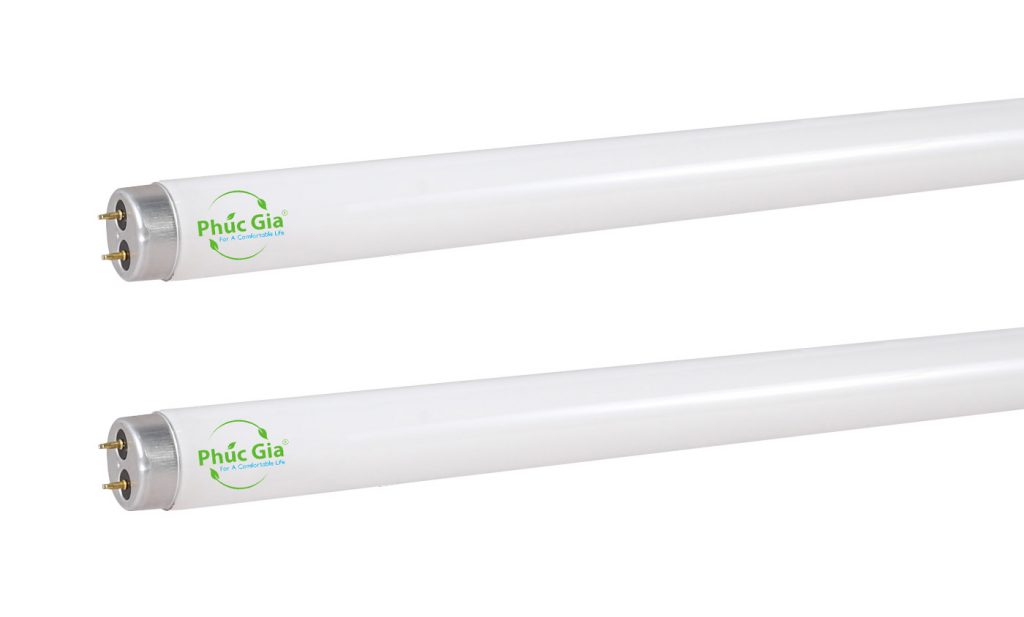
Operating Principle: When power is applied, an electrical discharge between the two electrodes emits ultraviolet (UV) radiation. These UV rays strike the fluorescent powder (phosphor) layer, causing the lamp to emit visible light. Specifically, in a low-pressure gas environment, mercury atoms inside the fluorescent tube emit several short wavelengths; 61% of this is radiation at a wavelength of 253.7 nm (UV rays). This 253.7 nm radiation interacts with the phosphor layer, stimulating it to emit visible light.
If the lamp were not coated with phosphor and the tube was made of quartz (which does not absorb ultraviolet rays), it would become a germicidal lamp, commonly known as a UV lamp used in medical applications. The light from such lamps is only safe when the phosphor coating and the outer shell are intact and free of cracks.
Furthermore, due to the non-continuous flickering of fluorescent bulbs, working or reading for extended periods under these lights can negatively impact the eyes, potentially leading to myopia (nearsightedness).
5.3. Compact Fluorescent Lamps (CFL)
– Advantages of CFLs compared to linear fluorescent tubes:
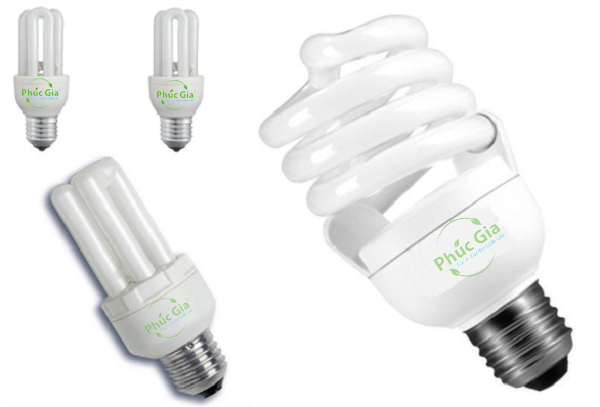
Compact fluorescent lamps, also known as CFLs, are an improvement over linear tubes, offering the advantage of better light intensity and lower heat output. However, due to their small size and spiral shape, CFLs have a higher risk of cracking compared to linear tubes, which allows UV rays to easily leak out.
- When using this type of lighting, it is necessary to conduct regular UV emission inspections.
5.4. Does LED Light Contain UV Rays?
With increasingly modern technology, LEDs are considered the most advanced lighting type today, featuring advantages such as luminous intensity comparable to incandescent lamps and almost no heat dissipation. For high-quality LEDs, the UV content is extremely low, making them very safe for human skin and health. Due to these benefits, LEDs are becoming increasingly popular in our daily lives.
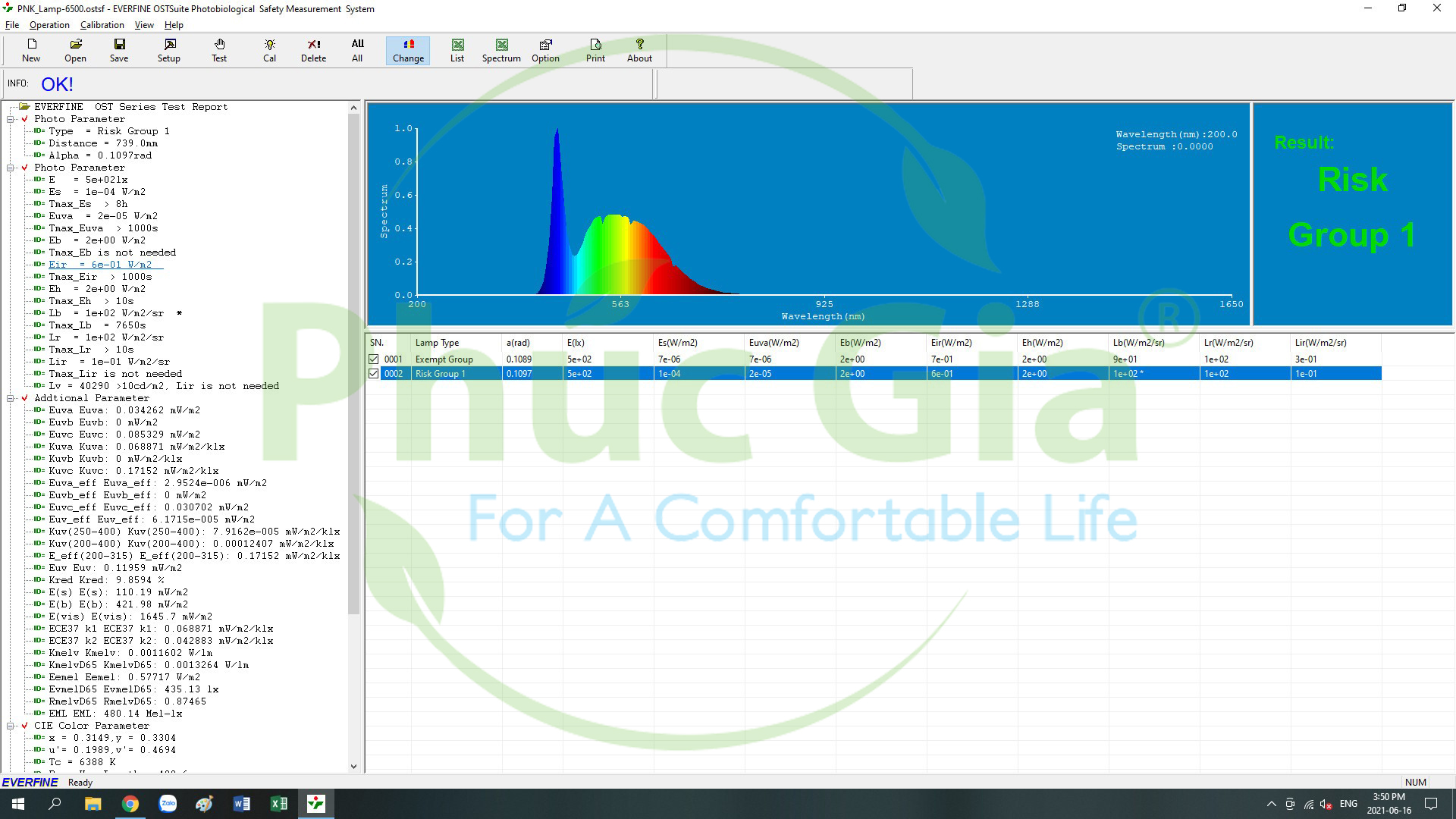
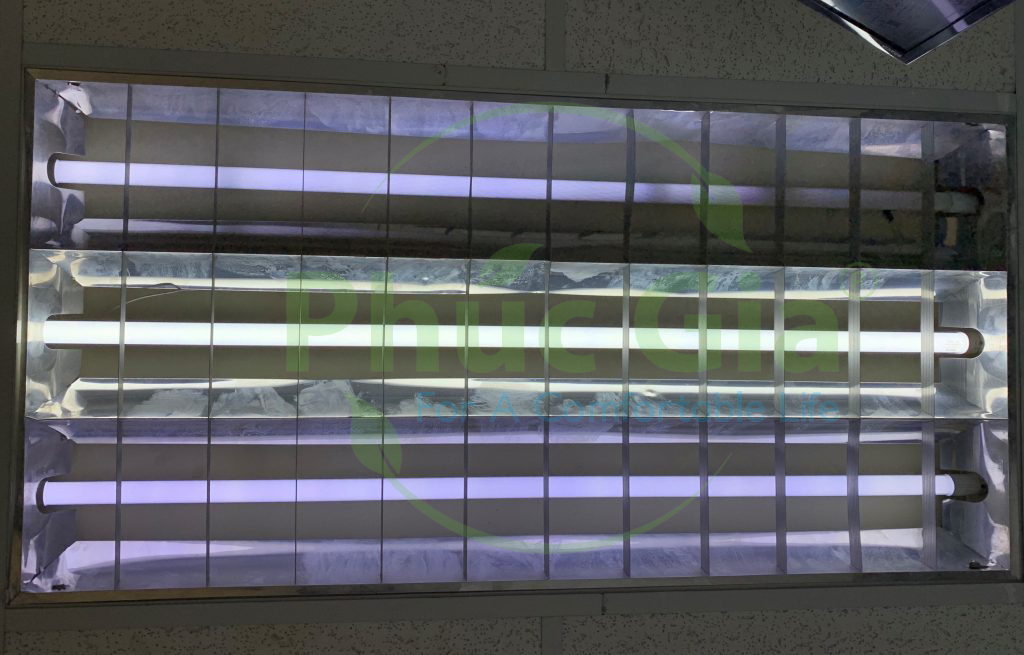
However, after a period of use, as the quality of the phosphor layer in the LED chips degrades, the color of the LED light will gradually shift toward a purple hue. At that point, UV rays will appear more frequently and may affect human health.
Therefore, to prevent harmful photobiological effects on human health, the Ministry of Science & Technology issued the National Technical Regulation on LED Lighting Products – QCVN 19:2019/BKHCN. This regulation specifies safe exposure limits for LED lighting equipment, particularly the evaluation of photobiological risks for lamps and lamp systems.
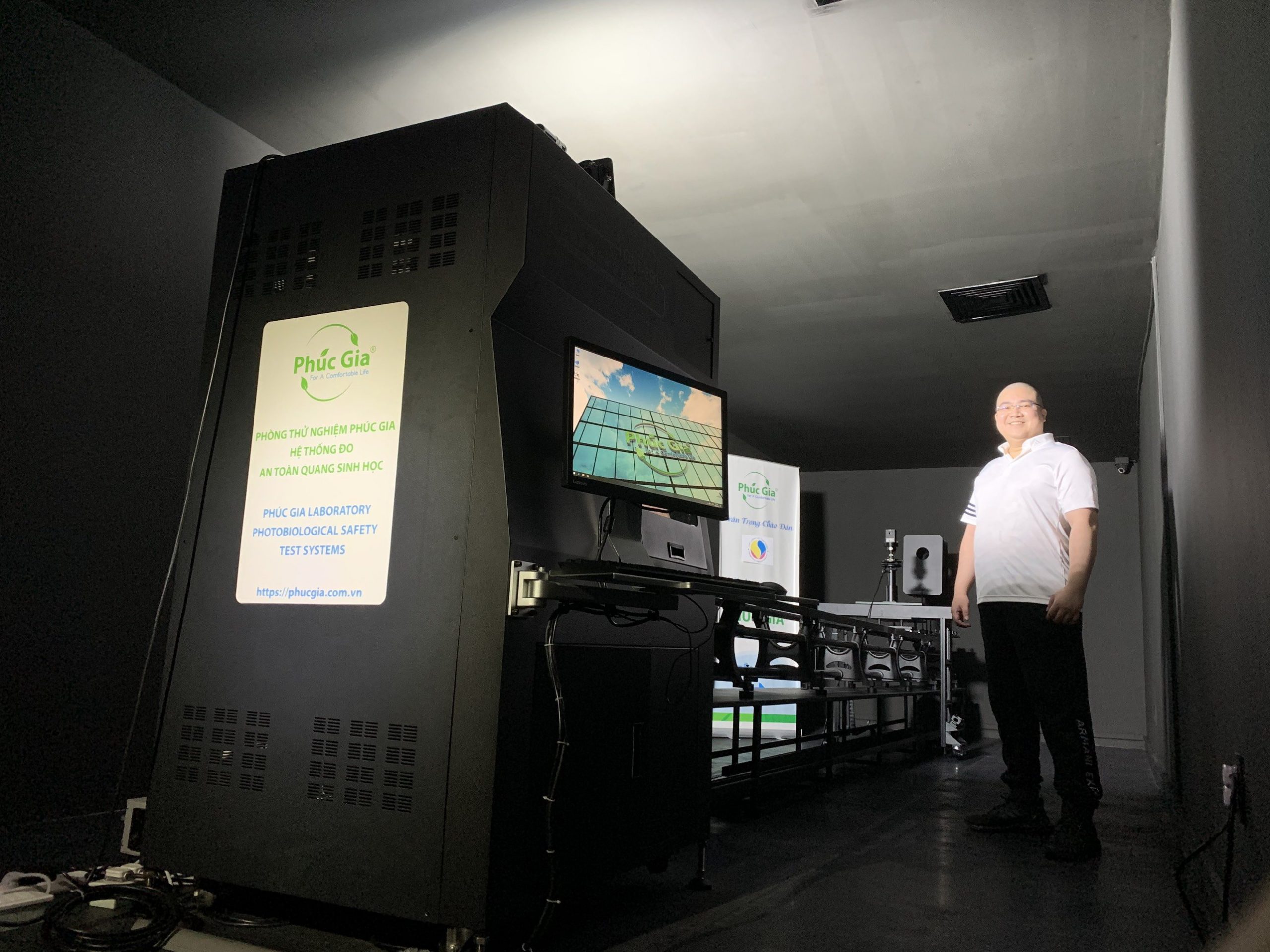
To test photobiological safety for lighting products, Phuc Gia Testing Laboratory is equipped with a Photobiological Safety system that meets IEC 62778 and IEC 62471 standards. Furthermore, Phuc Gia’s Photobiological Safety Testing System fully complies with the latest national and international standards, such as:
- GB/T 20145-2006 / CIE S 009 / E: 2002
- IEC 62471:2006 / EN 62471-2008
- IEC 60598-1-2012
- IEC/TR 62471-2:2009
- IEC/TR 62778
- IEC/EN 60432
- IEC 60335-2-27 / IEC 60335-2-59
- 2005/32/EC…
This system is widely utilized to test spectral power distribution, radiance, irradiance, radiation exposure, and specifically effective UV radiant power (mW/klm). It also measures illuminance, apparent source size, color temperature, color coordinates, Color Rendering Index (CRI), SDCM, and other parameters for LEDs, LED modules, LED lamps, LED luminaires, fluorescent lamps, HID lamps, and Halogen lamps for both general lighting services and specialized light sources (such as those used in automotive, medical, and aesthetic applications).
For more details, please contact us at:
PHUC GIA LABORATORY CORPORATION
PHUC GIA CERTIFICATION CENTER
PHUC GIA INSPECTION TESTING CENTER
Address: ICD Long Bien, No. 01 Huynh Tan Phat, Sai Dong B Industrial Park, Long Bien Ward, Hanoi City, Vietnam.
Hotline: 0981 996 996/ 0982 996 696/ 024 7779 6696
E-mail: lab@phucgia.com.vn/cert@phucgia.com.vn/info@phucgia.com.vn
Website: phucgia.com.vn
Working time: Monday to Friday 8:00 – 18:30; Saturday 8:00 – 12:00

![QUOTATION – Testing and Other Certification Services [2026]](https://phucgia.com.vn/wp-content/uploads/2017/03/bao-gia-thu-nghiem-chung-nhan.png)