

The Ministry of Information and Communications (MIC) in Vietnam has issued National Technical Regulation QCVN 134:2024/BTTTT on Specific Absorption Rate (SAR), which sets essential safety thresholds aimed at protecting the well-being of users when utilizing electromagnetic radiation-emitting electronic devices, such as mobile phones and other portable electronic devices. Excessive levels of electromagnetic waves emitted from these devices pose a risk of causing negative health consequences for users, including, but not limited to, cancer, hormonal imbalances, and impacts on the nervous system. This is a crucial step for SAR in Vietnam.
See more: Capacity Profile Of Phuc Gia Laboratory Corporation
I. Overview of National Technical Regulation QCVN 134:2024/BTTTT About SAR in Vietnam
On December 31, 2024, the Ministry of Information and Communications (MIC) (now consolidated with the Ministry of Science and Technology (MOST)) promulgated QCVN 134:2024/BTTTT governing radiofrequency radiation safety compliance. QCVN 134:2024/BTTTT is a core “safety compliance regulation,” establishing maximum permissible limits for radio wave energy absorption from handheld and body-worn radio devices, including mobile phones, notebook computers, and tablet computers. This National Technical Regulation represents the MIC’s second standard for safe electromagnetic exposure limits, succeeding QCVN 8:2022/BTTTT, which is exclusively applicable to mobile base stations.
Circular 19/2024/TT-BTTTT officially becomes effective on February 15, 2025, with the mandatory application schedule for QCVN 134:2024/BTTTT detailed as follows:
- Starting February 15, 2025, QCVN 134:2024/BTTTT will be voluntarily applied for product testing, conformity certification, and declaration of conformity.
- Starting July 1, 2026, terrestrial mobile phones are required to achieve mandatory compliance with QCVN 134:2024/BTTTT prior to being distributed and marketed.
- Starting July 1, 2027, all products and goods falling under the regulatory scope of QCVN 134:2024/BTTTT (DECT Cordless Telephone Subscriber Extension devices – only the handset component, Laptops, Tablets) must achieve mandatory compliance with this National Technical Regulation before being distributed and marketed.
II. The Technical Significance of SAR in Electronic Technology
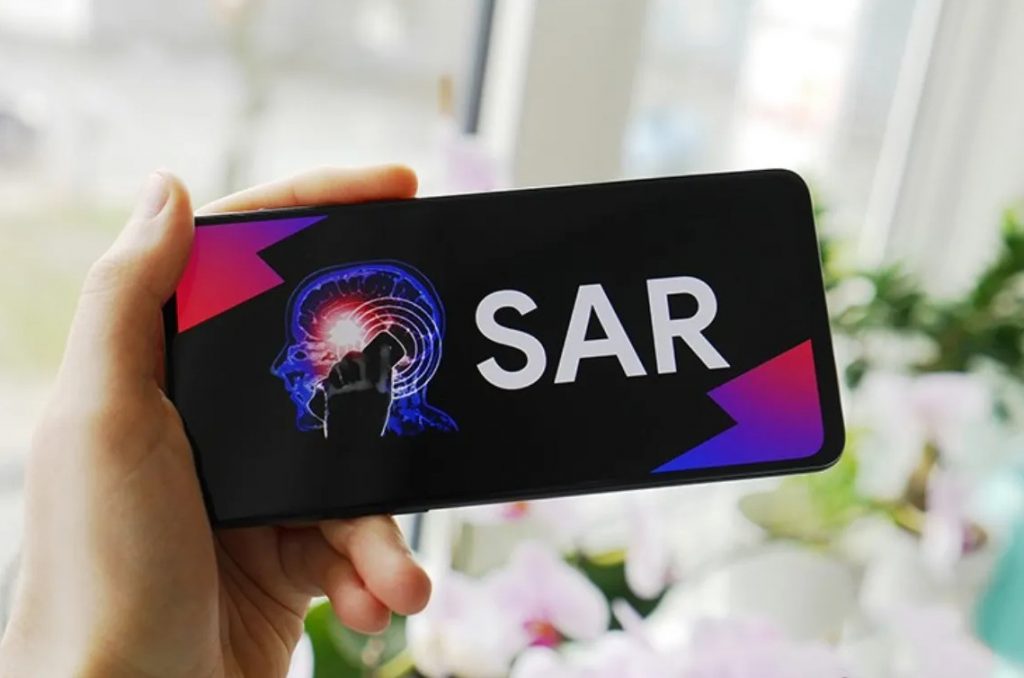
Specific Absorption Rate (SAR) is a standardized index that quantifies the rate at which radiofrequency energy is absorbed by the head, body, or extremities of a mobile device user during exposure to the electromagnetic field. The official measurement unit for SAR is Watts per kilogram (W/kg). Scientific studies have consistently demonstrated that electromagnetic waves can negatively influence public health if the absorption level significantly exceeds stipulated thresholds.
Read more: What is SAR? Testing Methodology and Regulatory Updates
III. Critical Significance of QCVN 134:2024/BTTTT Governing Limits of SAR in Vietnam
The regulatory necessity for this National Technical Regulation is strongly supported by research findings from the World Health Organization (WHO) and the International Agency for Research on Cancer (IARC), which have established that electromagnetic radiation exposure can induce tissue heating, potentially disrupting electrical brain activity and other fundamental physiological functions.
- The World Health Organization (WHO) has clearly stated[1]: When individuals operate mobile phones, the body’s tissues absorb radiofrequency energy, leading to a thermal effect ; long-term, continuous exposure may lead to adverse human health impacts.
- The International Telecommunication Union (ITU) confirms in its report[2]: SAR (Specific Absorption Rate) directly relates to the thermal increase experienced by the human body due to close proximity to radiofrequency energy emitted by handheld devices, notably mobile phones.
Given that SAR levels can significantly impact human health and safety, numerous global organizations have committed to research to establish international standards aimed at minimizing the health risk associated with SAR. The initial SAR standard was enacted in 1982 by the Institute of Electrical and Electronics Engineers (IEEE). Following this, the International Commission on Non-Ionizing Radiation Protection (ICNIRP), the International Electrotechnical Commission (IEC), the ITU, and other key bodies have all published pivotal research documents and SAR technical standards.
Most recently, the International Commission on Non-Ionizing Radiation Protection (ICNIRP) updated its 2020 guidelines, which provide exposure limits for electromagnetic fields in the 100 kHz to 300 GHz frequency band, directly covering mobile terminal devices (cell phones). In December 2021, the ITU-T issued Recommendation ITU-T – Supplement 13, detailing electromagnetic field exposure thresholds generated by mobile and portable devices across various usage scenarios.
The IEC has standardized the IEC 62209 series (IEC 62209-1 addresses SAR testing for handheld and body-worn devices near the ear, operating from 300 MHz to 6 GHz; IEC 62209-2 focuses on SAR testing for wireless devices used near the human body, operating from 300 MHz to 6 GHz; and IEC 62209-3 covers SAR assessment via the vector array method). The IEEE mirrors this effort by issuing Standard IEEE Std 1528:2013 for SAR testing compliance of wireless devices concerning the human head.
In 2020, Standard IEC/IEEE 62209-1528:2020 was jointly promulgated to harmonize the measurement methodologies published by the IEC and IEEE, establishing a unified standard for SAR testing compliance. This specific standard is currently adopted for SAR testing procedures across the European nations, the United States, Canada, Taiwan, South Korea, and Indonesia.
Crucially, the majority of advanced global markets—including the European Union, the United States, Japan, Australia, and numerous other territories—have already implemented mandatory technical standards for Specific Absorption Rate (SAR) to protect consumers using handheld radio transceiver devices near the ear, such as mobile phones and walkie-talkies. Every jurisdiction maintains unique technical standards and specific limit requirements for the maximum permissible SAR testing result for wireless equipment.
See more: International SAR Regulatory Landscape and Management Practices
Consequently, the enactment of QCVN 134:2024/BTTTT is absolutely essential, reinforcing the regulatory framework for SAR in Vietnam and demonstrating the country’s alignment with developed nations in mandating user safety for mobile device technology.
The official issuance and subsequent enforcement of QCVN 134:2024/BTTTT serves a dual purpose: it guarantees the technical compatibility and product safety compliance of electronic devices sold in the Vietnamese market, while simultaneously spurring technological innovation and R&D within the telecommunications sector. This National Technical Regulation is key to bolstering consumer confidence in the use of electronic technology products.
The proposed limits for SAR in Vietnam are expected to be regulated according to the following table:
| Frequency Range: 30 MHz to 6 GHz | Limits | ||
| Head, Body | Limbs | The Whole Body | |
| Average SAR Values | 2 W/kg Averaged Over 1 gram of Tissue | 4 W/kg | No SAR Limits Applied |
(Source: QCVN 134:2024/BTTTT)
IV. Conclusion
Against the backdrop of an ever-expanding and critically important telecommunications network, the mandatory issuance and implementation of QCVN 134:2024/BTTTT represents a crucial and correct strategy to navigate the demands of the digital era. It simultaneously ensures that advanced technologies do not compromise user health. The implementation of QCVN 134:2024/BTTTT is thus a vital advancement in securing electronic device user safety in Vietnam.
This National Technical Regulation transcends being just a technical mandate; it is a clear reflection of Vietnam’s national commitment to safeguarding public health. Furthermore, it actively drives the sustainable development of the entire Information and Communications Technology (ICT) industry. This initiative is geared towards meeting the goal of formulating and enforcing technical standards and technical regulations that guarantee the health, safety, and superior quality of ICT products, goods, and services, ultimately elevating Vietnam’s regional standing in ICT product and service quality, as formally proposed during the 2024 Conference on Standardization – Metrology – Quality for the Information and Communications Sector.
Referenced Documents
- [1] Electromagnetic fields and public health: mobile phones, WHO (https://www.who.int/news-room/fact-sheets/detail/electromagnetic-fields-and-public-health-mobile-phones).
- [2] International Telecommunication Union, Development Sector, Study Group 2 Question 7, Policies, guidelines, regulations, and assessments of human, exposure to radio-frequency electromagnetic fields, page 23.
Please wait a moments to load the Circular 19/2024/TT-BTTTT – QCVN 134:2024/BTTTT “National Technical Regulation on Specific Absorption Rate (SAR in Vietnam) for Handheld and Body-Worn Radio Equipment.”
Click here to download the Circular 19/2024/TT-BTTTT – QCVN 134:2024/BTTTT (PDF Version)
Click here to download the Circular 19/2024/TT-BTTTT – QCVN 134:2024/BTTTT (Word Version)
RELATED POSTS:
- Overview of the Draft QCVN 134:2024/BTTTT – National Technical Regulation on Specific Absorption Rate for Mobile Phones
- Overview of the Second Draft QCVN 134:2024/BTTTT – National Technical Regulation on Specific Absorption Rate for Handheld and Body-Worn Radio Equipment
- Compilation of Legal Regulations for the Production and Import of Mobile Phones
For more details, please contact us at:
PHUC GIA LABORATORY CORPORATION
PHUC GIA CERTIFICATION CENTER
PHUC GIA INSPECTION TESTING CENTER
Address: ICD Long Bien, No. 01 Huynh Tan Phat, Sai Dong B Industrial Park, Long Bien Ward, Hanoi City, Vietnam.
Hotline: 0981 996 996/ 0982 996 696/ 024 7779 6696
E-mail: lab@phucgia.com.vn
Website: phucgia.com.vn
Working time: Monday to Friday 8:00 – 18:30; Saturday 8:00 – 12:00

![QUOTATION – Testing and Other Certification Services [2026]](https://phucgia.com.vn/wp-content/uploads/2017/03/bao-gia-thu-nghiem-chung-nhan.png)