

Enterprises involved in the manufacturing, importing, or trading of Rice Cookers are mandatory to perform Safety Testing for Rice Cookers in Vietnam to ensure compliance with the safety requirements of QCVN 4:2009/BKHCN before market distribution. Phuc Gia® has researched and synthesized the essential data regarding these regulatory requirements in the sections below. We trust this information will assist you in achieving Technical regulation Compliance. Should you have any inquiries, please contact us for professional and dedicated support from our consulting team.
See more: Capacity Profile Of Phuc Gia Laboratory Corporation
1. Mandatory timeline for enterprises to complete Safety Testing for Rice Cookers in Vietnam and Conformity Certification according to QCVN 4:2009/BKHCN
Based on QCVN 4:2009/BKHCN and QCVN 4:2009/BKHCN/SĐ01:2016, effective from June 1, 2010, various electrical and electronic appliances are subject to mandatory Technical regulation Compliance. This includes devices such as instantaneous water heaters, storage water heaters, hairdryers, kettles, rice cookers, and electric fans listed in the National Technical Regulation’s Appendix. These products are prohibited from market circulation unless they have undergone Safety Testing for Rice Cookers in Vietnam (or relevant safety tests), obtained a Certificate of Conformity, displayed the CR mark, and been registered within the official quality dossier system.
2. The importance of Safety Testing for Rice Cookers in Vietnam according to QCVN 4:2009/BKHCN
Rice cookers are ubiquitous appliances used daily in nearly every household, particularly in Asian markets like Vietnam. For this reason, verifying the safety parameters—including electrical, mechanical, thermal, fire, and radiation protection—during normal operation is essential for consumer protection. To meet these needs, the Regulatory Authority mandates Safety Testing for Rice Cookers in Vietnam under QCVN 4:2009/BKHCN. This ensures that every device complies with the national standard TCVN 5699-2-15:2013 – IEC 60335-2-15:2012 (replacing the TCVN 5699-2-15:2007 version).
3. Scope of rice cooker models subject to mandatory Safety Testing for Rice Cookers in Vietnam under QCVN 4:2009/BKHCN
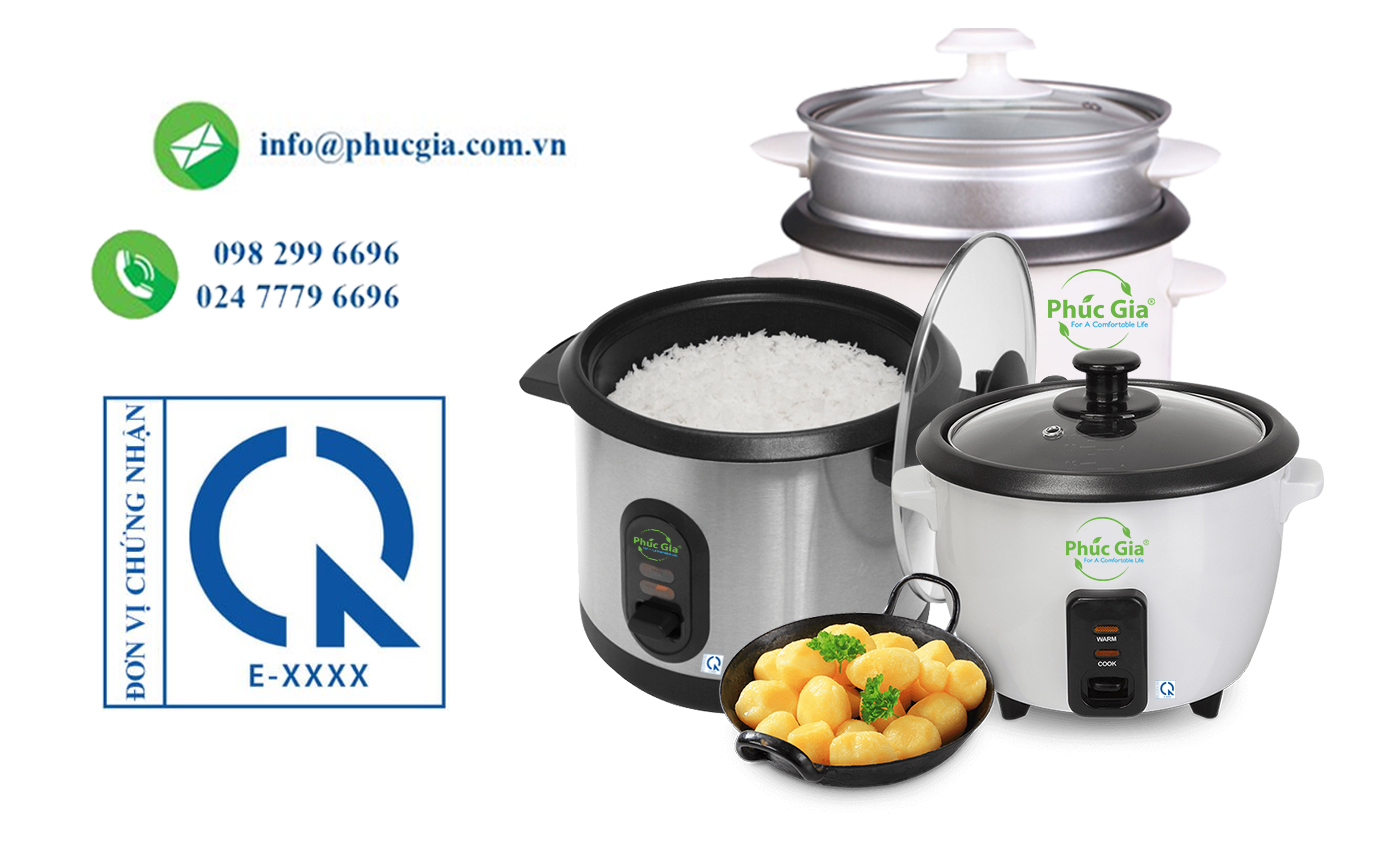
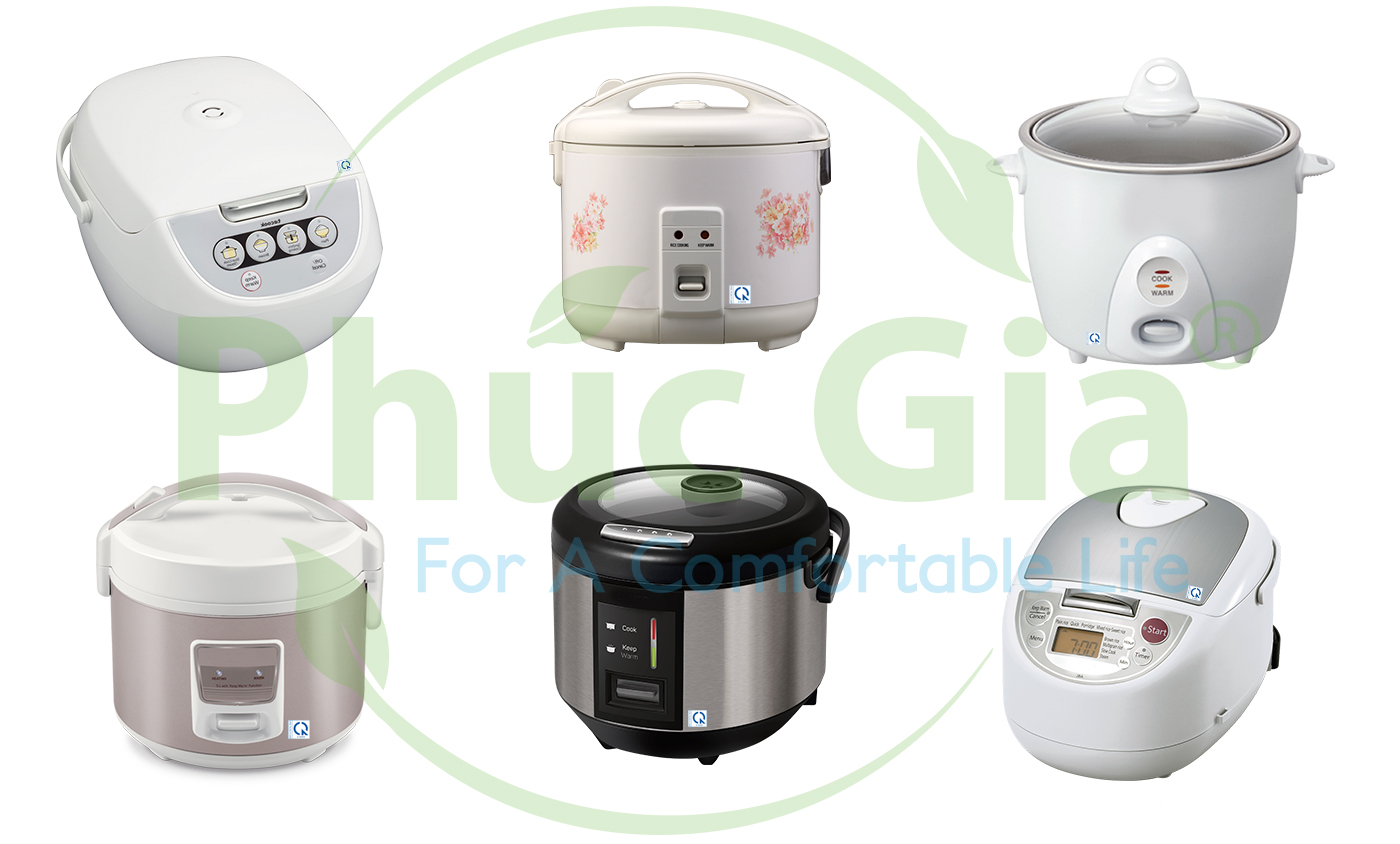
A rice cooker is an “appliance for cooking rice which is placed in a removable container, the container being placed in the appliance during cooking” (according to TCVN 5699-2-15:2013 – IEC 60335-2-15:2012). Additionally, this product may have a keep-warm function and can cook food other than rice. Currently, there are 2 types of rice cookers commonly used today:
- Mechanical rice cookers operate when the user connects the power cord to an electrical outlet and switches the cook button; the controller then supplies heat to the heating plate, promoting the conversion of electrical energy into thermal energy to cook the rice. Afterward, the controller will switch to keep-warm mode once the rice has reached maturity.
- Induction rice cookers / Electronic rice cookers are a “type of appliance that heats the rice container using eddy currents” (which are currents induced into the rice container, the lid, or both by the electromagnetic field of a coil). Furthermore, the product is equipped with an electronic chip with pre-set cooking programs for appropriate time and heat levels.
4. Technical specifications for Safety Testing for Rice Cookers in Vietnam under QCVN 4:2009/BKHCN
QCVN 4:2009/BKHCN stipulates that Rice Cookers must ensure electrical safety requirements according to TCVN 5699-2-15:2013 (IEC 60335-2-15:2012) regarding Household and similar electrical appliances – Safety – Part 2-15: Particular requirements for appliances for heating liquids, including the following main contents:
- The standard specifies safety for electrical appliances used for heating liquids/foods for household and similar purposes, with a rated voltage not exceeding 250V, including “Coffee makers; electric pans; Egg boilers; Feed bottle heaters; Kettles and other appliances for boiling water, having a rated capacity not exceeding 10 L; Milk heaters; Pressure cookers having a rated cooking pressure not exceeding 140 kPa and a rated capacity not exceeding 10 L; Rice cookers; Slow cookers; Steamers; Soy milk makers; Tea makers; Wash boilers; Yogurt makers.”
- Acceptable levels of protection against electrical, mechanical, thermal, fire, and radiation hazards of the devices when operating under normal use conditions, taking into account the manufacturer’s instructions;
- Addresses foreseeable abnormal situations that may occur in practice and takes into account how electromagnetic field phenomena may affect the safe operation of the device;
- Incorporates requirements specified in the TCVN 7447 (IEC 60364) standard series where possible to be compatible with wiring rules when the device is connected to the power supply mains (However, wiring rules may vary in different countries).
In which, attention should be paid to the following information regarding rice cooker testing according to TCVN 5699-2-15:2013 (IEC 60335-2-15:2012):
- Slow cookers, rice cookers, steamers, and yogurt makers are operated until steady conditions are established.
- For rice cookers, the tests specified in Part 1 of TCVN 5699-1 (IEC 60335-1) must be conducted with the rice container in position.
- The interior of the rice cooker must not be affected by water; compliance is checked by the following test: “The rice cooker is placed on a horizontal surface, with the rice container removed, and 30mL of water containing approximately 1% NaCl is poured onto the center of the inner bottom of the product. The saline solution is poured slowly through a tube with an internal diameter of 8mm and a length of 30mm, over a period of 2s, the lower end of the tube being 200mm above the bottom of the appliance.”
- Rice cookers must withstand the electric strength test as specified in Section 16.3, Part 1 of TCVN 5699-1 (IEC 60335-1).
- Induction rice cookers are tested as motor-operated appliances. If the magnetic field of the induction rice cooker excessively affects the results, the temperature rise may be determined by using platinum resistance thermometers with twisted leads or by any equivalent means.
5. How Phuc Gia® assists clients with Safety Testing for Rice Cookers in Vietnam and QCVN 4:2009/BKHCN Certification
Phuc Gia® provides the most professional and rapid rice cooker conformity certification services, helping customers optimize time and costs during product research, development, and business processes. Currently, we utilize subcontractors to perform testing and certification services for this product according to QCVN 4:2009/BKHCN.
Registering for State Inspection of rice cooker conformity certification
– Legal assessment of dossiers: Our team of experts will analyze the dossiers to evaluate legal conformity.
– Phuc Gia® represents clients to complete online registration procedures:
- Conducting the preparation and drafting of dossiers;
- Registering for State Inspection of product conformity certification;
Electrical safety testing for rice cooker conformity certification
We will support enterprises in contacting designated testing laboratories for sampling and testing according to TCVN 5699-2-15:2013 (IEC 60335-2-15:2012).
Conformity certification (QCVN 4:2009/BKHCN) for rice cookers at the Ministry of Science and Technology
– Detailed legal procedure consulting:
- Consulting on regulations and procedures for applying for the Certificate of Conformity;
- Consulting on testing issues: typical samples and test parameters for each specific product;
- Consulting on preparing the Conformity registration dossier;
- Consulting on other related legal inquiries.
– Legal assessment of dossiers:
- A team of experts and lawyers will analyze the dossiers to evaluate legal conformity (arranging meetings with lawyers if requested by clients);
- Supporting translation and notarization of relevant documents.
– Phuc Gia® represents clients to complete the Certificate of Conformity application procedures:
- Conducting the preparation and drafting of dossiers;
- Representing the client to submit the dossier at the Ministry of Science and Technology;
- Being responsible for tracking dossiers, receiving results, or handling feedback from specialized agencies.
To know the costs for each testing and certification step and related inquiries, please contact Phuc Gia® Testing and Inspection Center for detailed support from our professional and dedicated consulting team.
RELATED POSTS
- Guidance on Safety Testing for Instantaneous Water Heaters according to QCVN 4:2009/BKHCN
- Guidance on Safety Testing for Microwave Ovens according to QCVN 4:2009/BKHCN
- Guidance on Safety Testing for Electric Fans according to QCVN 4:2009/BKHCN
- Guidance on Safety Testing for Hair Dryers according to QCVN 4:2009/BKHCN
- Guidance on Safety Testing for Rice Cookers according to QCVN 4:2009/BKHCN
For more details, please contact us at:
PHUC GIA LABORATORY CORPORATION
PHUC GIA CERTIFICATION CENTER
PHUC GIA INSPECTION TESTING CENTER
Hotline: 0965996696 / 0982996696 / 02477796696
E-mail: lab@phucgia.com.vn/cert@phucgia.com.vn/info@phucgia.com.vn
Website: phucgia.com.vn
Working time: Monday to Friday 8:00 – 18:30; Saturday 8:00 – 12:00

![QUOTATION – Testing and Other Certification Services [2026]](https://phucgia.com.vn/wp-content/uploads/2017/03/bao-gia-thu-nghiem-chung-nhan.png)