

See more: Capacity Profile Of Phuc Gia Laboratory Corporation
LED bulbs are currently very popular in households, large projects, and various public spaces due to outstanding advantages such as energy savings, long lifespan, and high-quality light. However, a recent study regarding the harmful effects of LED bulbs at a Spanish University has attracted significant public attention. This has led to two opposing viewpoints: those who claim the bulbs are harmful to our eyes and those who deny this claim. So, should you use LED lights? Are LED bulbs harmful to your eyes? Let’s explore the information with Phuc Gia in the article below!
1. What is an LED?
LED (Light Emitting Diode) refers to diodes capable of emitting light or infrared and ultraviolet rays. Similar to a standard diode, an LED is constructed from a P-type semiconductor block joined with an N-type semiconductor block.
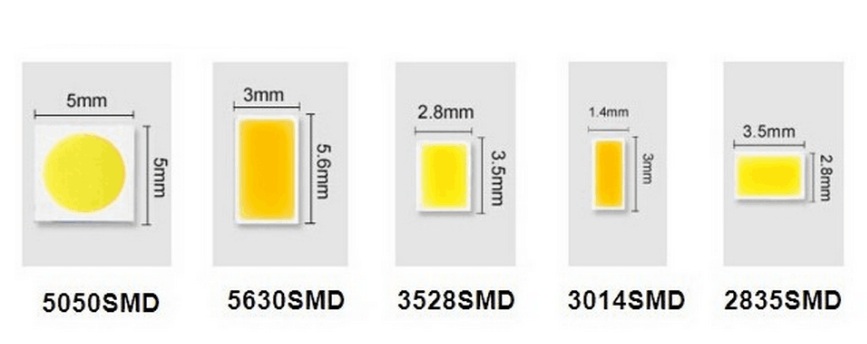
LED chips are mounted together to enhance light output. Three common assembly types today are: DIP, SMD, and COB.

In lighting applications, LED chips are assembled into a light source contained within products shaped as: bulbs, long tubes, candles, spheres, downlights, etc., which are called LED lamps.
2. Features and Characteristics of LED Lights
LED lights have a lifespan and efficiency several times greater than incandescent lamps and are more effective than most types of fluorescent lamps. Some chips are capable of emitting more than 300 lumens per watt.
Unlike most fluorescent lamps (compact fluorescents or CFLs), LEDs light up instantly without needing warm-up time. Therefore, their lifespan is longer than fluorescent lamps. The initial cost to purchase LED lights is usually higher than incandescent or fluorescent types; however, in terms of energy savings and lifespan, they are considered more cost-effective.
Currently, most products are designed with standard bases that can directly replace incandescent or fluorescent bulbs. The packaging usually clearly states lumens (Lm), wattage, color temperature, and operating temperature range. They do not emit light in all directions, and their directional characteristics affect design, although many designs today offer a 360-degree beam angle.
Like most other lighting devices, LEDs are affected by high temperatures, even though they emit very little heat during operation. However, this amount of heat is still enough to cause damage such as reduced lumens and shortened lifespan. Therefore, a heat sink or cooling component is usually added to the design. The lifespan of an LED lamp depends greatly on the quality of the heat sink.
To operate, the LED chip requires converting current from alternating current (AC) to direct current (DC) using a transformer and converter device called a driver. An LED light paired with a quality driver can ensure a long lifespan and provide light control features. It can be placed inside the bulb (integrated type) or outside (independent type). Depending on the lighting application, different drivers are used (e.g., outdoor drivers for street lighting, point drivers for indoor lighting, and linear drivers for advertising lights).
3. Real Causes Leading to the Harmful Effects of LED Bulbs
3.1. Looking directly at LED light for a long time
Theoretically, looking directly at an LED light source for a long or excessive period will cause the following specific consequences:
- Accelerating the aging process of the retina, causing vision impairment as well as increasing the risk of diseases such as macular degeneration.
- Causing circadian rhythm disruptions, specifically affecting sleep, especially in adolescents.
- Looking directly at the light source—whether it is fluorescent or LED—is harmful to the eyes. Therefore, experts advise users to follow the usage instructions provided by sellers.
3.2. Choosing LED lights with inappropriate light intensity
LED bulbs are not manufactured with only one light intensity, nor is their color range limited. Thus, many people wonder if yellow LED light is harmful to the eyes, and similarly for other color tones. Depending on the space and usage needs, we must always choose the most suitable light intensity. However, many people often overlook this factor when choosing, leading to inappropriate light intensity usage that creates negative impacts.
3.3. Long-term exposure to LEDs on electronic devices
According to the latest scientific studies, blue light emitted from electronic devices and new technologies directly affects user health. It not only causes eye-related pathologies but also affects the user’s mental state. Using blue light in the dark can cause depression.
3.4. Using low-quality LEDs – Flickering
Using poor-quality LED lights causes flickering during use, forcing the user’s eyes to constantly adjust; this leads to eye strain and headaches. Additionally, fake or low-quality lights do not guarantee safety requirements. They may contain toxic substances that directly affect user health, such as lead, mercury, etc.
4. Harmful Effects of LED Bulbs When Used Incorrectly
4.1. Direct impact on vision
According to studies, looking directly at any light source for a long time affects human eye health. Specifically, it causes vision to decline rapidly, making it easy to contract conditions such as astigmatism, farsightedness, and nearsightedness.
4.2. Increased aging speed, circadian rhythm disruption
It causes the aging process of retinal cells to occur faster, increasing the risk of macular degeneration. It also makes one more susceptible to obesity, cancer, and cardiovascular diseases.
4.3. Negative impacts on the brain
This is a concern for many, but this negative impact on the brain is directly related to blue LED light. According to Professor Gianluca Tosini, light from blue LEDs is directly related to the brain’s biological clock. It inhibits the synthesis of the hormone melatonin, which plays a role in promoting sleep. Consequently, it makes it harder for you to sleep, prevents the brain from recognizing sleep cues, and alters the biological sleep clock.
4.4. Harmful effects of LED light on the skin
According to experts, UV rays are considered a silent killer; they affect and damage the epidermal tissues of the skin. They cause phenomena such as skin darkening, melasma, premature skin aging, and even skin cancer.

However, scientific research has shown that high-quality LED lights are safe for the skin; conversely, poor-quality LED lights can pose many harmful risks.
4.5. Low-quality lights causing explosions and safety hazards
When using poor-quality LED lights of unclear origin, explosions may occur during use. The resulting flying fragments have the potential to cause injury to the user.
5. Advice on Using LED Lights Correctly
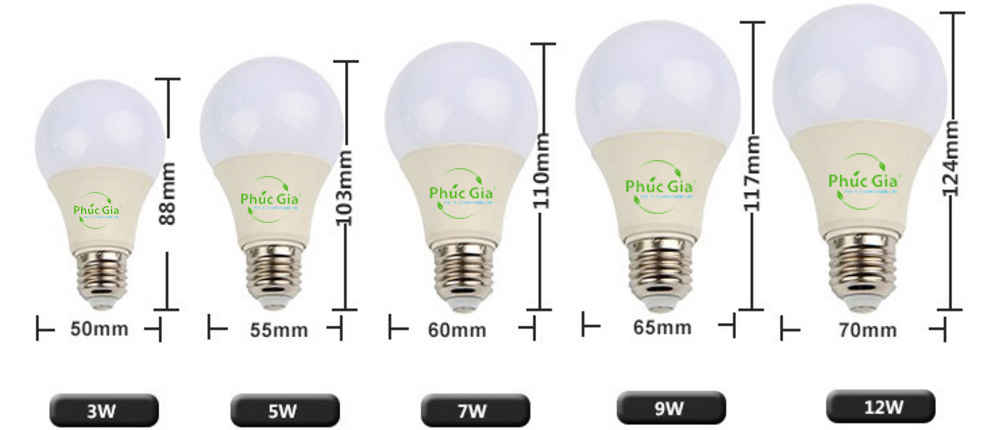
5.1. Choosing LED lamp wattage
It is not true that the higher the wattage, the better. Each space will require a different bulb wattage. To select a bulb with the appropriate power, you need to pay attention to the area of the illuminated space and the purpose of the lighting.
5.2. Evaluating LED Light Quality
Objective criteria that customers can consider to evaluate the quality of LED lights are the price and the LED brand.
Typically, the cost of LED lights is influenced by the quality of the components used. Therefore, higher-priced LED lights will generally be of better quality than lower-priced ones.
The LED brand is the second factor that customers can trust, as a brand is built on actual experiences and authentic reviews from customers. A well-known brand will provide more peace of mind regarding quality than an anonymous brand.
5.3. Correct Technical Installation
Calculate reasonable mounting heights and spacing between lights. Absolutely do not hang lights directly over a person’s head, and do not install lights with a beam angle that shines directly into the eyes.
For this reason, to prevent harmful photobiological impacts on human health, the Ministry of Science & Technology has issued the National Technical Regulation on LED Lighting Products – QCVN 19:2019/BKHCN. This regulation specifies safe exposure limits for LED lighting equipment, particularly evaluating photobiological hazards for lamps and lamp systems.
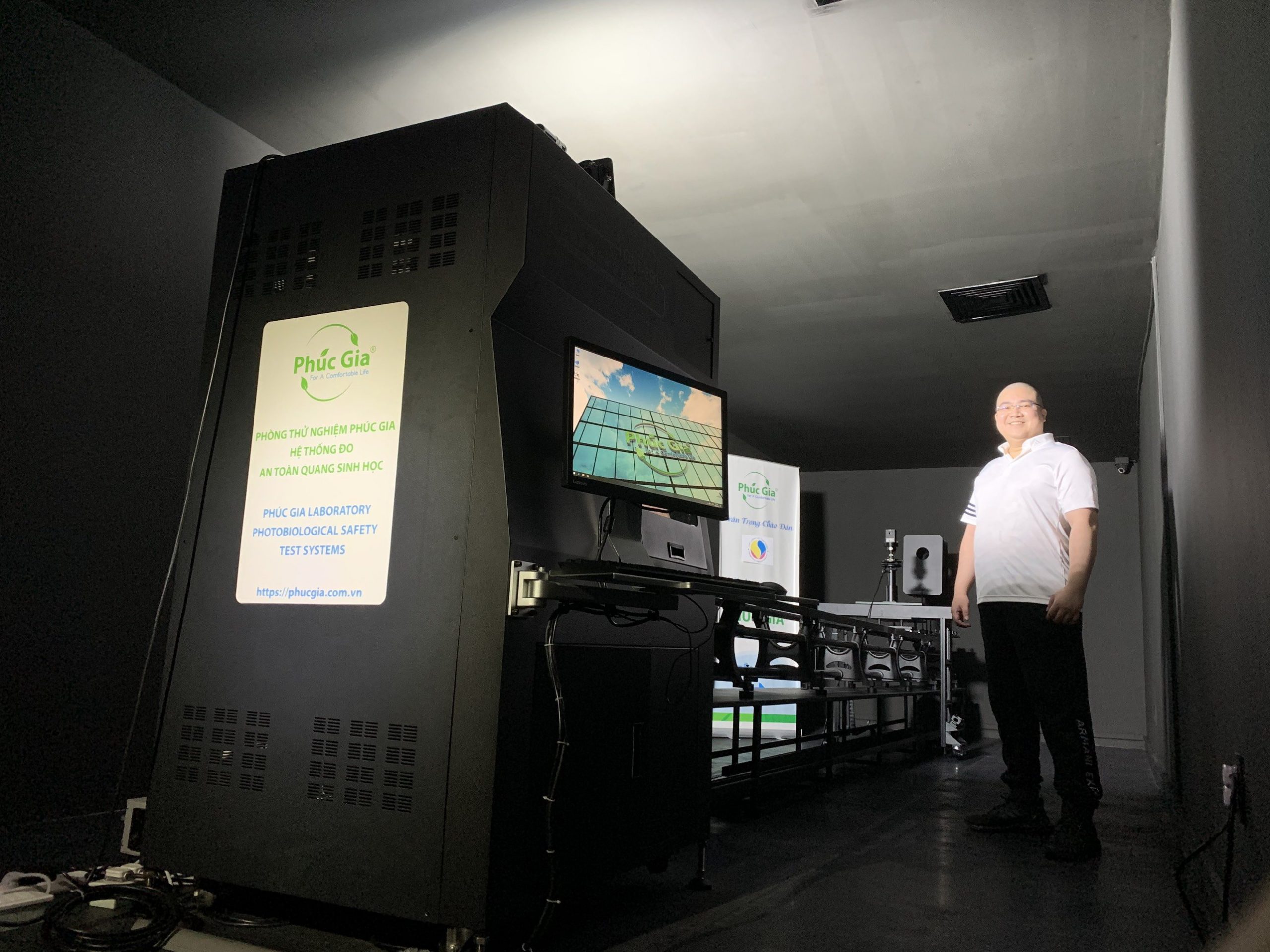
Phuc Gia Laboratory has equipped a Photobiological Safety system that meets IEC 62778 and IEC 62471 standards. Furthermore, Phuc Gia Laboratory’s Photobiological Safety Testing System fully meets the requirements of the latest national and international standards, such as GB/T 20145-2006/CIE S 009/E: 2002, IEC 62471:2006/EN 62471-2008, IEC 60598-1-2012, IEC/TR 62471-2:2009, IEC/TR 62778, IEC/EN 60432, IEC 60335-2-27, IEC 60335-2-59, 2005/32/EC…, which are widely used to test spectral power distribution, irradiance, radiance, radiant exposure, specifically effective radiant ultraviolet power (mW/klm), illuminance, size of the apparent source, color temperature, color coordinates, color rendering index, SDCM, and other parameters of LEDs, LED modules, LED lamps, LED luminaires, fluorescent lamps, HID lamps, and Halogen lamps for both general lighting services and special light sources (such as those used in automobiles, medical treatment, aesthetics, etc.).
For more details, please contact us at:
PHUC GIA LABORATORY CORPORATION
PHUC GIA CERTIFICATION CENTER
PHUC GIA INSPECTION TESTING CENTER
Address: ICD Long Bien, No. 01 Huynh Tan Phat, Sai Dong B Industrial Park, Long Bien Ward, Hanoi City, Vietnam.
Hotline: 0981 996 996/ 0982 996 696/ 024 7779 6696
E-mail: lab@phucgia.com.vn/cert@phucgia.com.vn/info@phucgia.com.vn
Website: phucgia.com.vn
Working time: Monday to Friday 8:00 – 18:30; Saturday 8:00 – 12:00

![QUOTATION – Testing and Other Certification Services [2026]](https://phucgia.com.vn/wp-content/uploads/2017/03/bao-gia-thu-nghiem-chung-nhan.png)