

See more: Capacity Profile Of Phuc Gia Laboratory Corporation
High-intensity discharge (HID) lamps are types of lamps that use high-pressure gas discharge bulbs with high power. These bulbs are designed in many different shapes and power levels. However, not everyone fully understands the operating principle of HID lamps. Join Phuc Gia Lab to explore this in the article below.
1. Operating Principle of the Ballast
1.1. What is an HID lamp?
An HID lamp is a traditional high-power lighting system. Typically, the lowest wattage for an HID lamp is 100W. When illuminating, the HID lamp utilizes an ignitor (capacitor trigger) to generate the electrical current that enables the lamp to provide light.
In today’s developing technology, lighting systems have been upgraded, leading to the birth of LED lighting technology which is gradually replacing traditional HID systems. However, consumers often still refer to them as “High-Power LEDs” (or High-Bay LEDs) instead of just LEDs.
1.2. What is an HID lamp ballast?
The ballast is considered one of the most important components in the structure of a high-intensity discharge lamp.
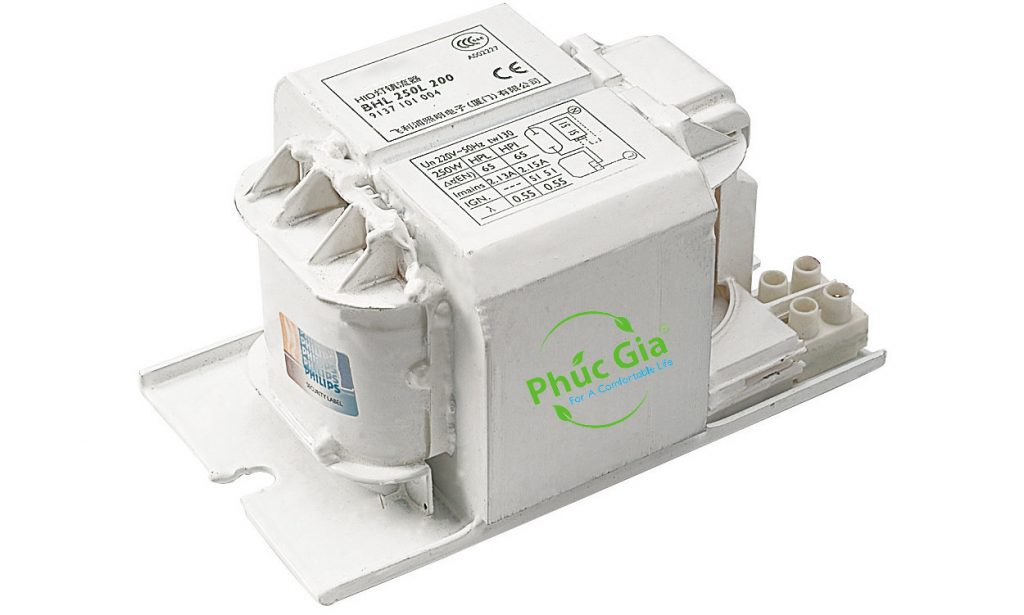
An HID lamp ballast, also known as a Ballast or Transformer, is an inductor consisting of a coil wound around a ferromagnetic core made of thin iron laminations stacked closely together. Its primary task is to regulate the electrical current to the bulb to match the lamp’s wattage. Because of this voltage stabilization function, it indirectly determines the lifespan of the HID lamp.
1.3. Operating principle of the ballast
Initially, high-voltage pulses from the electrical circuit are generated continuously until the bulb starts up and illuminates. Subsequently, the HID ballast begins to operate and helps stabilize the voltage so that the bulb can function at the appropriate power level and provide the desired light output.
2. HID Ignitor
2.1. What is an HID ignitor?
An HID ignitor, also known as a capacitor trigger or starter, is a vital component within an HID lighting fixture. It helps the lamp start up in a short amount of time, thereby saving energy consumption.
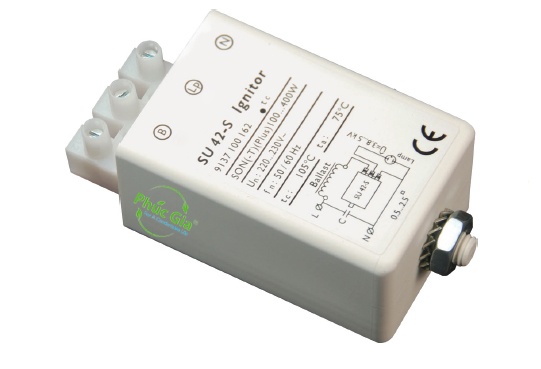
The role of this component is to ensure that the HID bulb operates stably and achieves the desired illumination. The HID ignitor is designed to be compact, making it easy to replace and install into the lamp.
2.2. How to measure the HID ignitor
Use a multimeter or ammeter to measure the HID ignitor. The device will analyze the resulting indicators shown on the meter to determine if they fall within the allowable range for the HID lamp. If the results are incompatible or unsuitable, a different type of ignitor must be used.
2.3. Operating principle of the HID ignitor
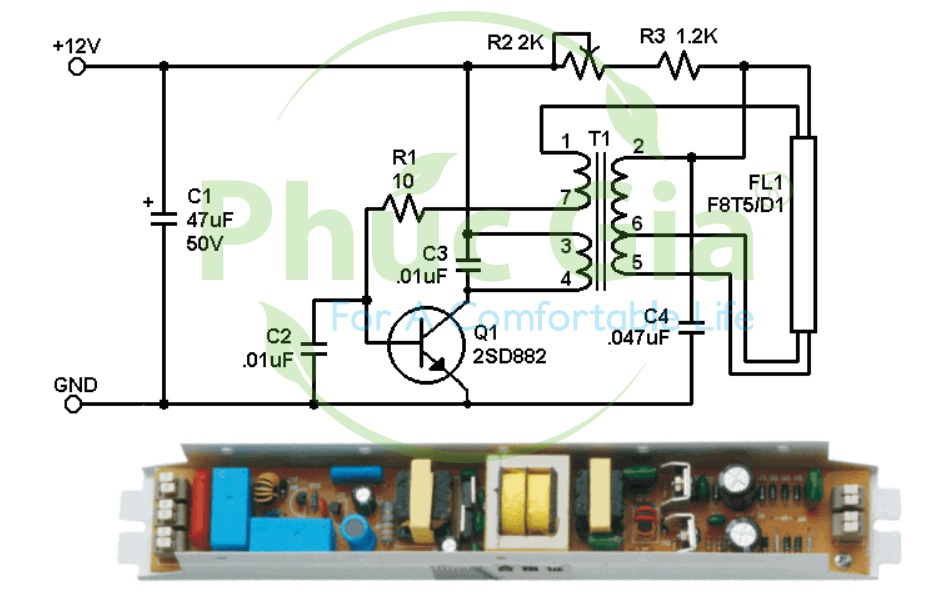
When 220VDC direct current passes through the HID ignitor, the power transistors and magnetic transformer start operating at a frequency of 50Hz. They subsequently convert the direct current into 220VAC alternating current. This alternating current acts upon the ballast and capacitor, causing the HID lamp to heat up and illuminate. The HID ignitor operates based on parallel and semi-parallel circuits, which help improve the power factor of the entire electrical circuit. Consequently, the ignitor enables the lamp to light up faster while enhancing lighting efficiency.
3. Operating Principle of the HID Capacitor
3.1. Characteristics of the HID capacitor
A capacitor is one of the essential electronic components in an HID lighting set, constructed from two conductive surfaces separated by a dielectric layer (such as paper, mica, ceramic, etc.). There are many different types of HID capacitors on the market, usually classified based on their construction.
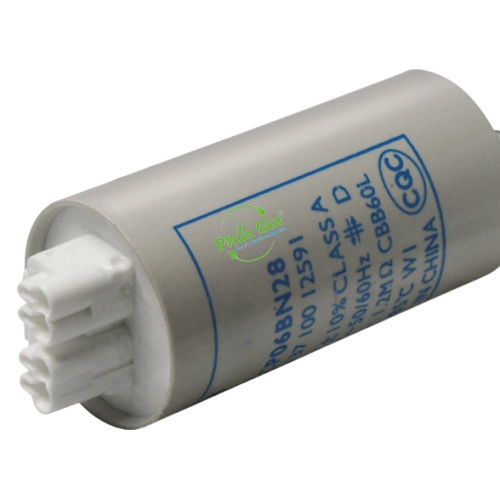
3.2. Operating principle of the HID capacitor
The operating principle of the HID capacitor is based on the charge-discharge principle. This principle refers to the ability to store electrical energy like a small battery in the form of an electric field; it effectively stores electrons and discharges these charges to create an electrical current. However, it does not have the capacity to generate electrons on its own.
This principle enables the HID capacitor to conduct alternating current. During operation, the HID capacitor helps compensate for the power factor loss at the ballast within the electrical circuit. Consequently, it ensures the provision of sufficient power for the bulb to illuminate.
4. Operating Principle of the Bulb
4.1. Characteristics of the HID bulb
HID bulbs come in many different shapes and sizes. The outer bulb envelope is typically made of glass to prevent melting, as the lamp emits a high amount of heat.
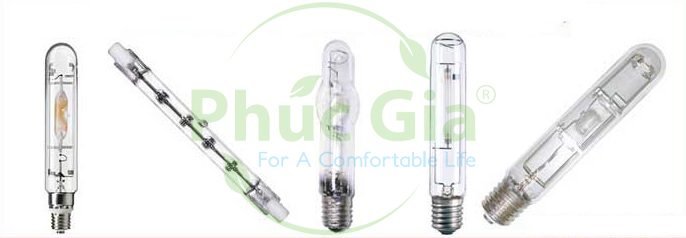
Some typical types of HID lamps include: HID street lights, high-bay industrial HID lamps, mercury vapor lamps, etc.
4.2. Operating principle of the HID bulb
After starting, an HID bulb will not reach full brightness immediately but will brighten gradually; the light color typically shifts from white to a warm white (yellow). Reputable, high-quality HID bulbs usually offer a long lifespan, stable luminous intensity, and high economic efficiency, such as energy savings, dust resistance, and waterproofing capabilities.
5. Lighting Operating Principles of the 5 Most Common Lamps
5.1. Lighting principle of High-Power LED lamps
The lighting principle of High-Power LED lamps (often called LED high-pressure lamps) is understood as follows: light-emitting diodes are contained within a semiconductor LED chip. These electronic LED chips operate when an electrical current flows through them, filling electron “holes” and generating light radiation (electroluminescence). Consequently, the high-power LED bulb emits light.
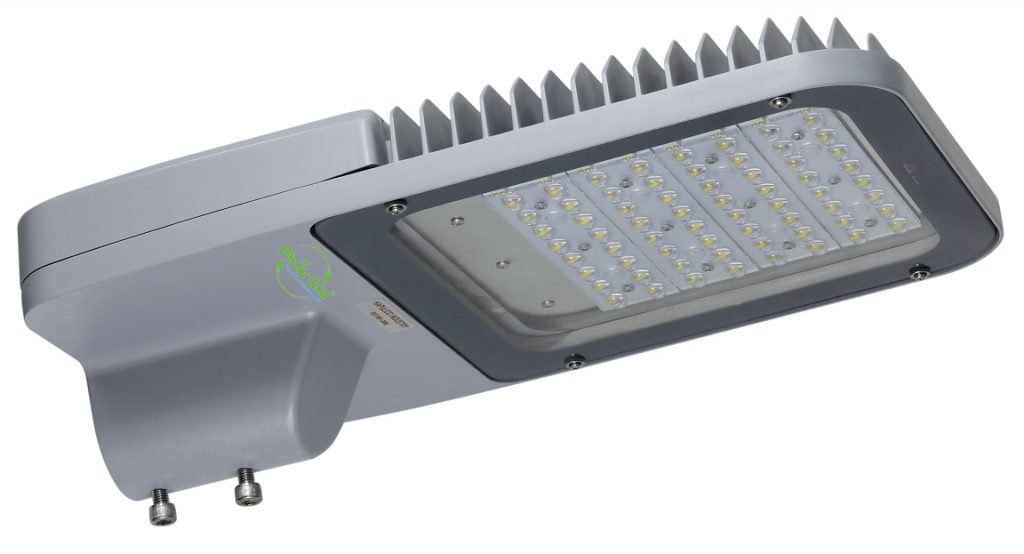
The light provided by high-power LED bulbs ensures safety for consumer health and the environment because they do not contain toxic chemicals such as lead or mercury.
5.2. Lighting principle of mercury vapor lamps
5.2.1. Construction of mercury vapor lamps
The construction of a mercury vapor lamp consists of inert gases (nitrogen, argon) and mercury contained within a quartz tube operating at high pressure. When encountering a sufficiently high electrical current, these mercury vapors emit light.
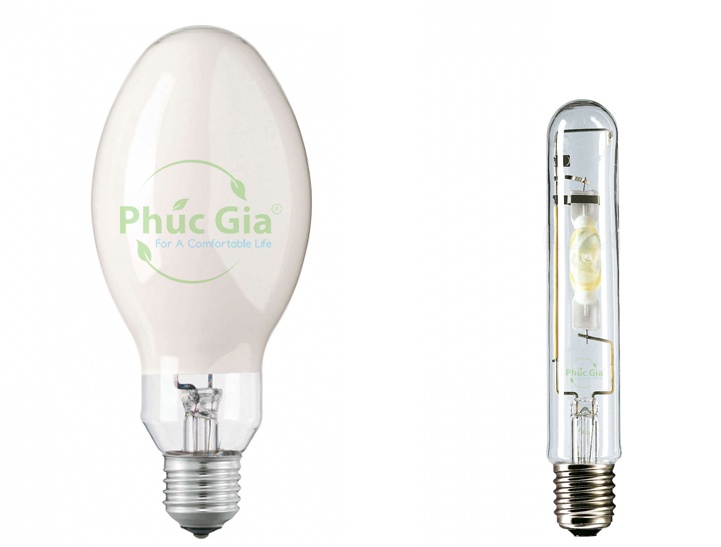
5.2.2. What is the operating principle of mercury vapor lamps?
The lighting principle of mercury vapor lamps relies on an inert gas contained within a quartz tube reacting with mercury in the same tube. Subsequently, the mercury vapor formed after the reaction emits light when it encounters an electrical current. However, to be able to illuminate, mercury vapor lamps typically require a relatively high voltage.
Mercury vapor lamps contain toxic mercury and emit ultraviolet (UV) radiation when lighting. Using these lamps for a long period can significantly affect the health of users and contribute to the greenhouse effect.
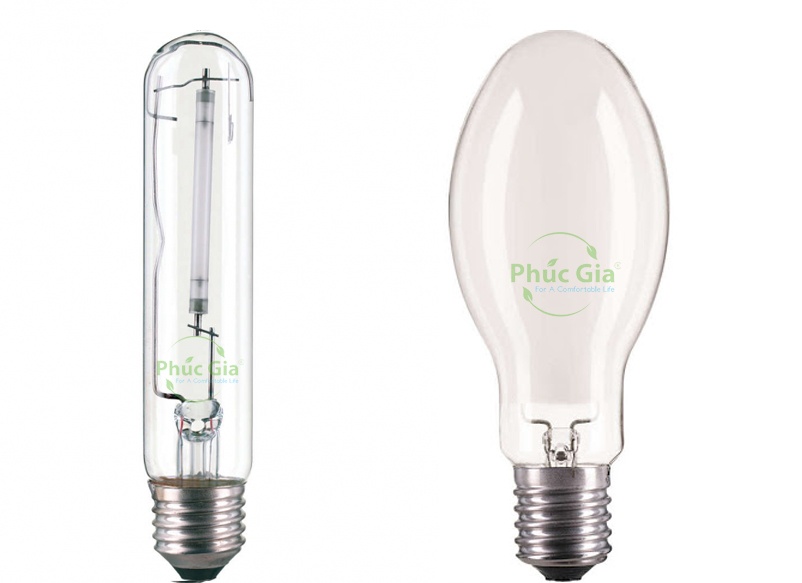
5.3. Operating principle of Sodium HID lamps
The operating principle of Sodium HID lamps is based on the reaction of a mixture of Sodium – Thallium – Indium salts in an ionized state. Subsequently, this reaction forms a waveband that allows the HID lamp to emit light. Sodium HID lamps can be used for street lighting, LEDs, etc.
5.4. Lighting principle of Metal Halide HID lamps
A Metal Halide lamp is a type of high-intensity discharge (HID) lamp.
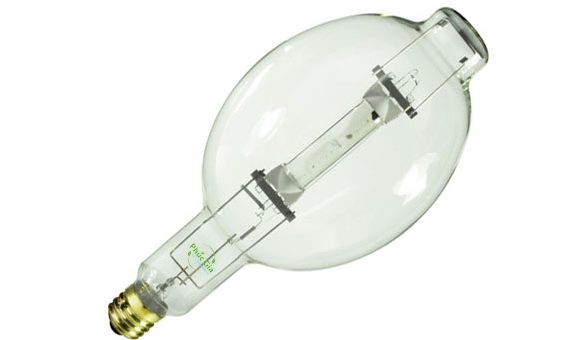
The lighting principle of a Metal Halide lamp is as follows: light is emitted directly from the electrical arc between two electrodes through high-pressure vaporized mercury and metal halides—such as silver iodide, silver sodium bromide, and other metal salts—inside an arc discharge tube. The luminous efficacy of Metal Halide lamps is quite high, helping to significantly save on monthly electricity consumption.
5.5. Operating principle of fluorescent lamps
A fluorescent lamp is a type of lamp consisting of a glass tube with two filaments (tungsten filaments) at each end.
Fluorescent lamps operate based on the following principle:
When the power is turned on, a current flows through the series circuit, heating the starter. The bimetallic strip inside the starter heats up and opens the circuit, causing the voltage across the two ends of the lamp to increase abruptly to 400 V. This high voltage across the lamp ends triggers a discharge through the tube. The current flowing through the lamp creates ions that strike the phosphor coating, causing the lamp to emit light. Simultaneously, the voltage across the two ends of the lamp drops to approximately 40 V, and the starter stops operating. The current through the fluorescent lamp is limited by the inductance of the ballast. Fluorescent lamps also help save energy and ensure safety during use.
For more details, please contact us at:
PHUC GIA LABORATORY CORPORATION
PHUC GIA CERTIFICATION CENTER
PHUC GIA INSPECTION TESTING CENTER
Address: ICD Long Bien, No. 01 Huynh Tan Phat, Sai Dong B Industrial Park, Long Bien Ward, Hanoi City, Vietnam.
Hotline: 0981 996 996/ 0982 996 696/ 024 7779 6696
E-mail: lab@phucgia.com.vn/cert@phucgia.com.vn/info@phucgia.com.vn
Website: phucgia.com.vn
Working time: Monday to Friday 8:00 – 18:30; Saturday 8:00 – 12:00

![QUOTATION – Testing and Other Certification Services [2026]](https://phucgia.com.vn/wp-content/uploads/2017/03/bao-gia-thu-nghiem-chung-nhan.png)