

QCVN 9:2012/BKHCN – “National Technical Regulation on Electromagnetic Compatibility for Household Electrical and Electronic Equipment and Similar Purposes” was issued by the Ministry of Science and Technology along with Circular No. 11/2012/TT-BKHCN. According to this regulation, self-ballasted lamps (compact fluorescent lamps) are included in the list of products that must mandatory comply with testing and certification requirements. Hereby are the detailed instructions on technical requirements for certification and EMC testing for self-ballasted lamps in Vietnam (Compact Fluorescent Lamps) according to QCVN 9:2012/BKHCN.
Phuc Gia has researched and synthesized the regulations in QCVN 9:2012/BKHCN and its amendments or supplements related to electromagnetic compatibility over the years for the specified household electrical and electronic equipment. We are committed to providing useful information and offering a comprehensive package of services (testing and certification) for products that must ensure technical regulation compliance with this standard.
See more: Capacity Profile Of Phuc Gia Laboratory Corporation
I. OVERVIEW OF ELECTROMAGNETIC COMPATIBILITY
1. What is Electromagnetic Compatibility (EMC)?
According to QCVN 9:2012/BKHCN, “Electromagnetic Compatibility (EMC) is the ability of equipment or a system to function satisfactorily in its electromagnetic environment without introducing intolerable electromagnetic interference to anything in that environment.” Quality control for electrical and electronic products aims to limit electromagnetic interference/electromagnetic compatibility issues that significantly affect the proper operation of other electrical and electronic devices.
2. Why is Electromagnetic Compatibility testing necessary?
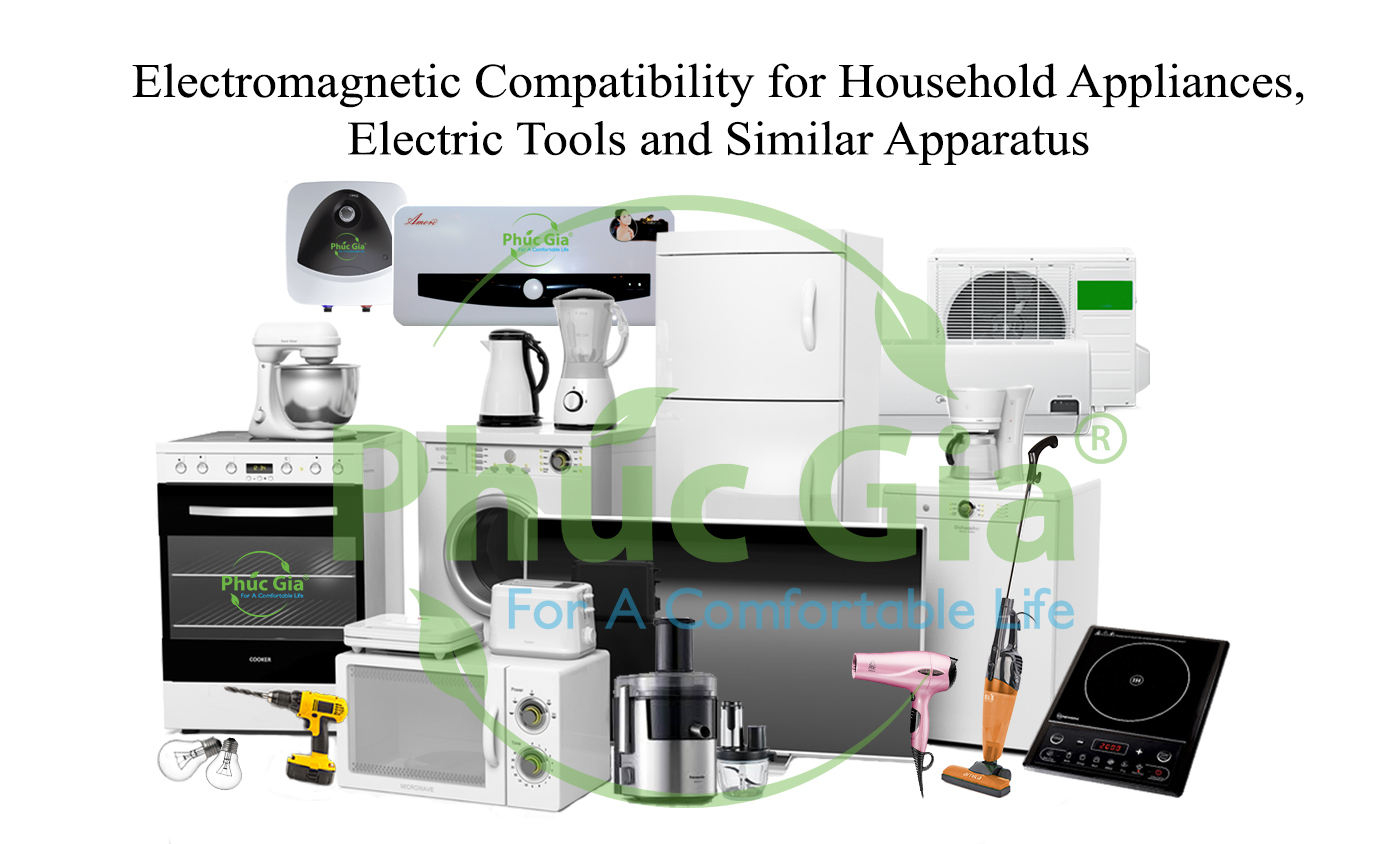
Household electrical and electronic equipment in the mandatory testing list under QCVN 9:2012/BKHCN includes: vacuum cleaners; household washing machines; refrigerators, freezers, commercial refrigerators; air conditioners; self-ballasted lamps; hair dryers; blenders; meat grinders; fruit juicers; egg beaters; electric stoves (including induction hobs); and microwave ovens (including combination types). These are devices used daily for cooling, refrigeration, cooking, laundry, cleaning, drying, and lighting.
Furthermore, these products are commonly used in various environments, from homes and offices to public spaces like supermarkets, restaurants, and entertainment areas. They are often placed near other electronic devices and operate in environments with significant electromagnetic influence, which can easily cause electromagnetic interference, reducing performance or even creating hazards for users. Therefore, Electromagnetic Compatibility (EMC) testing not only ensures safety but also guarantees that these products can operate stably and efficiently in any environment.
3. Current Legal Regulations on Electromagnetic Compatibility
Due to the concerning effects of electromagnetic interference, electromagnetic radiation, and electromagnetic compatibility issues, the Ministry of Science and Technology issued Circular No. 11/2012/TT-BKHCN accompanied by QCVN 9:2012/BKHCN – “National Technical Regulation on Electromagnetic Compatibility for Household Electrical and Electronic Equipment and Similar Purposes.” Accordingly, from April 12, 2012, the products specified in the table below must have goods labels in accordance with labeling laws; must undergo testing and conformity certification according to QCVN 9:2012/BKHCN, bear the conformity mark (CR mark), and be subject to market inspection by product quality control authorities as required by QCVN 9:2012/BKHCN.
| ORD |
Electrical and electronic devices that must comply with QCVN 9 |
Technical Requirements | Effective Dates and Mandatory Compliance |
| 1 |
Instant Water Heaters
|
TCVN 7492-1 (CISPR 14-1) | 01/06/2013 |
| 2 |
Handheld Electric Drills
|
01/06/2013 | |
| 3 |
Vacuum Cleaners
|
01/06/2014 | |
| 4 |
Washing Machines
|
01/06/2014 | |
| 5 |
Refrigerators, Freezers, and Commercial Refrigerated Cabinets
|
01/06/2014 | |
| 6 | Air Conditioners | 01/06/2014 | |
| 7 |
Self-ballasted Lamps
|
TCVN 7186 (CISPR 15) | 01/06/2014 |
– Circular No. 07/2018/TT-BKHCN issuing Amendment 1:2018 QCVN 9:2012/BKHCN – National Technical Regulation on Electromagnetic Compatibility for Household Electrical and Electronic Equipment and Similar Purposes, issued by the Ministry of Science and Technology on June 06, 2018. This amendment added 4 more product groups to the list of products under electromagnetic compatibility management, including:
| ORD |
Electrical and electronic devices that must comply with QCVN 9 |
Technical Requirements | Effective Dates and Mandatory Compliance |
| 1 | Hairdryers | TCVN 7492-1 (CISPR 14-1) | 01/09/2019 |
| 2 | Blenders, Meat Grinders, Juicers, Hand Mixers | 01/07/2020 | |
| 4 | Electric hobs (including induction hobs) | 01/07/2021 | |
| 3 | Microwave (including combination types) | TCVN 7492-1 (CISPR 14-1) TCVN 6988 (CISPR 11) |
01/07/2021 |
– Circular No. 01/2022/TT-BKHCN: amending Circular No. 07/2018/TT-BKHCN and Circular No. 08/2019/TT-BKHCN, issued by the Minister of Science and Technology on February 16, 2022.
– Decision No. 1983/QĐ-TĐC: Decision on issuing guidelines for certification of conformity with the national technical regulation QCVN 9:2012/BKHCN on Electromagnetic Compatibility (EMC) for household electrical and electronic equipment and similar purposes, issued by the Ministry of Science and Technology on October 15, 2014.
II. EMC TESTING FOR SELF-BALLASTED LAMPS IN VIETNAM (COMPACT FLUORESCENT LAMPS) ACCORDING TO QCVN 9:2012/BKHCN
1. What are Self-ballasted Lamps – Compact Fluorescent Lamps?
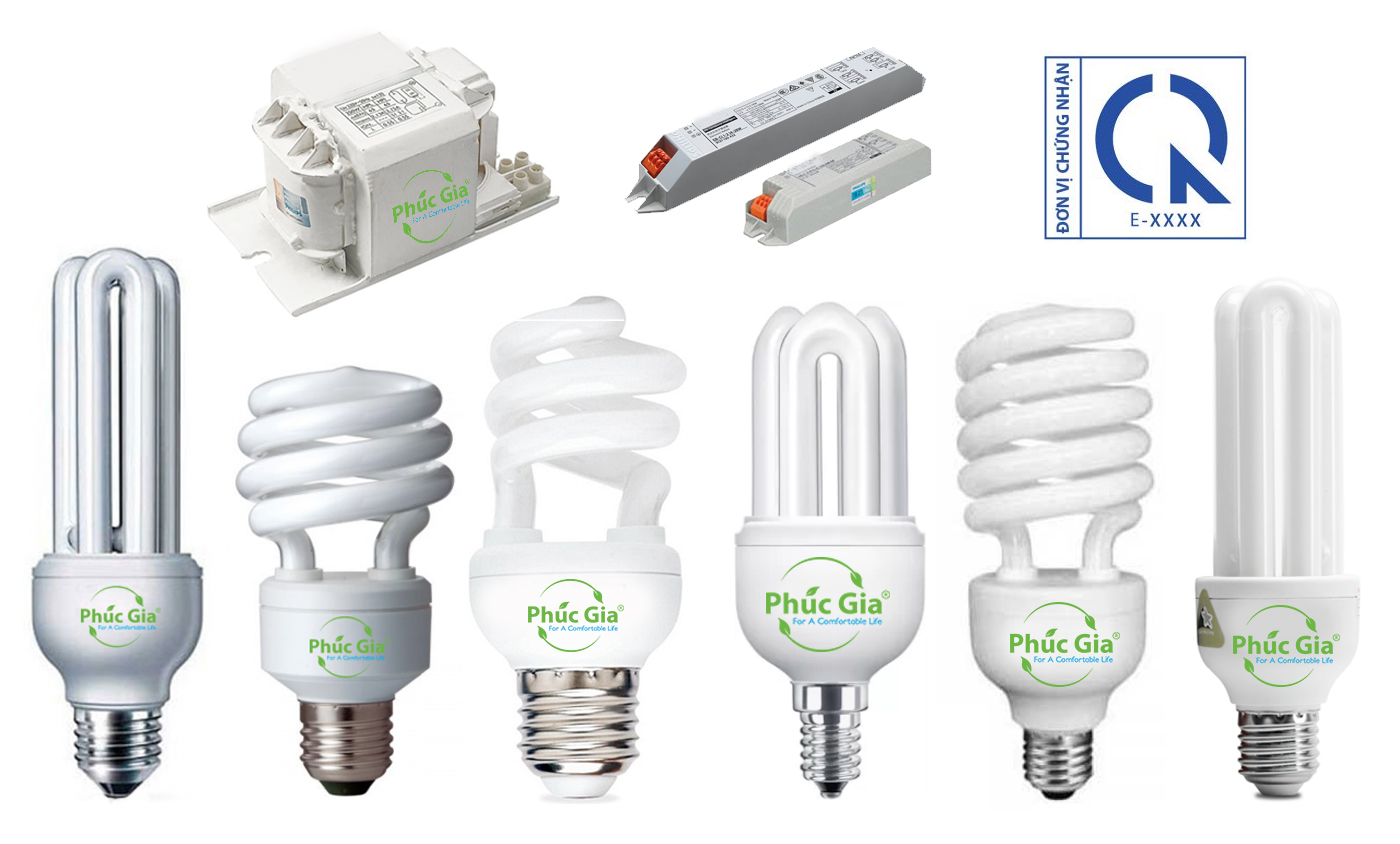
A ballast (also known as a choke or stabilizer) is utilized in lighting systems, primarily for lamps such as compact and LED varieties. Simply put, this device ensures the lighting equipment operates more stably and achieves significantly higher durability. Electronic ballasts operate at high frequencies, providing a precise amount of electricity to the luminaire and minimizing flickering. They also feature an automatic power-off capability during installation or removal. An electronic ballast is a circuit board combining rectification and inversion to generate alternating current through the resonance of the lamp ends. This internal component is a primary focus during EMC Testing for Self-Ballasted Lamps in Vietnam.
According to National Standard TCVN 7186:2018 (CISPR 15:2018), a self-ballasted lamp is defined as a “unit which cannot be dismantled without being permanently damaged, provided with a light source and any additional elements necessary for starting and stable operation of the light source, and provided with one or two standard lamp caps according to IEC 60061-1 for connection to a lamp holder or a luminaire.” The light source component is non-replaceable. The term “self-ballasted lamp” is a general term for all designs capable of independent operation without external auxiliary gear, except for the lamp holder.
Compact Fluorescent Lamps (CFLs) are low-power fluorescent lamps, often shaped in U-bends (1U to 3U) or compact spirals to match incandescent bulb sizes. CFLs emit light when a mixture of three phosphors is exposed to ultraviolet light from mercury atoms. The structure consists of the glass tube, the ballast, and the lamp cap, providing a brightness 4-5 times higher than incandescent bulbs of the same wattage.
2. Why must EMC Testing for Self-Ballasted Lamps in Vietnam (CFLs) be conducted according to QCVN 9:2012/BKHCN?
Compact fluorescent lamps (self-ballasted lamps) fall under the category of products that must comply with legal requirements for electromagnetic compatibility before being placed on the market in many countries worldwide, including Vietnam (QCVN 9:2012/BKHCN). This ensures the products meet established safety and quality standards.
Self-ballasted lamp samples (CFLs) are devices used everywhere and are often operated alongside various other electrical and electronic equipment. Given their high frequency of use, it is critical and necessary for these products to undergo EMC Testing for Self-Ballasted Lamps in Vietnam as required by QCVN 9:2012/BKHCN. This ensures stable operation for the device itself and limits electromagnetic interference that could disrupt usage, reduce performance, or cause unintended malfunctions in surrounding electronics.
3. Specified Disturbance Limits / Testing Parameters for Self-Ballasted Lamps
- Limits for disturbance voltage at the mains terminals;
- Limits for disturbance power (30 MHz to 300 MHz).
4. Why choose Phuc Gia for EMC Testing for Self-Ballasted Lamps in Vietnam (CFLs) according to QCVN 9:2012/BKHCN?
On July 16, 2021, the Commission for the Standards, Metrology and Quality of Vietnam (STAMEQ) – Ministry of Science and Technology granted the Certificate of Registration for Electromagnetic Compatibility (EMC) Testing Activities for household electrical and electronic products to Phuc Gia Testing Center. According to Certificate No. 2242/TĐC-HCHQ, our authorized scope includes: hair dryers, blenders, meat grinders, juicers, egg beaters, electric stoves (including induction hobs), instant water heaters, handheld drills, vacuum cleaners, washing machines, refrigerators, freezers, air conditioners, and specifically EMC Testing for Self-Ballasted Lamps in Vietnam (compact fluorescent lamps).
a) Comprehensive All-in-One Testing and Certification Services
Phuc Gia Laboratory Corporation is licensed by the Ministry of Science and Technology to perform EMC testing according to QCVN 9:2012/BKHCN and is designated to provide product certification under the same regulation. By choosing Phuc Gia, clients receive comprehensive support from a reputable partner with extensive experience in a seamless two-stage service (Testing & Certification)—a competitive advantage that few other providers can offer.
b) Testing Equipment for QCVN 9:2012/BKHCN
Phuc Gia Testing Center prides itself on being a modern, advanced facility equipped with high-end instruments imported from Germany, Italy, Switzerland, and the UK, operated by a highly specialized team. We are committed to delivering the most accurate testing results for electrical and electronic equipment, including EMC Testing for Self-Ballasted Lamps in Vietnam.

c) Costs and Lead Time for EMC Testing for Self-Ballasted Lamps in Vietnam According to QCVN 9:2012/BKHCN
Phuc Gia Laboratory Corporation is pleased to provide our customers with the testing price list for electrical and electronic products, including self-ballasted lamps (compact fluorescent lamps), in accordance with QCVN 9:2012/BKHCN regarding electromagnetic compatibility.
Click here to view the detailed quote: QUOTATION – Testing and Other Certification Services [2025]
The testing duration for this equipment is approximately 01–03 days per model. This includes weekends and holidays, as Phuc Gia arranges overtime personnel to provide maximum measurement and inspection services.
d) Important Notes for EMC Testing for Self-Ballasted Lamps in Vietnam (CFLs) at Phuc Gia
- Required Sample Quantity: 01 sample.
- Post-Testing: The laboratory will return the sample to the customer.
(Note: The wire may be cut to connect to the absorbing clamp system for the Disturbance Power test)
RELATED POSTS:
- Conformity Certification Services for Compact Lamps
- TCVN 7672:2014 (IEC 60968:2012): Safety Requirements – Self-Ballasted Lamps
- TCVN 7896:2015 – Compact Fluorescent Lamps – Energy Efficiency
- Energy Efficiency Test Report for Compact Fluorescent Lamps
For more details, please contact us at:
PHUC GIA LABORATORY CORPORATION
PHUC GIA CERTIFICATION CENTER
PHUC GIA INSPECTION TESTING CENTER
Hotline: 0965996696 / 0982996696 / 02477796696
E-mail: lab@phucgia.com.vn/cert@phucgia.com.vn/info@phucgia.com.vn
Website: phucgia.com.vn
Working time: Monday to Friday 8:00 – 18:30; Saturday 8:00 – 12:00

![QUOTATION – Testing and Other Certification Services [2026]](https://phucgia.com.vn/wp-content/uploads/2017/03/bao-gia-thu-nghiem-chung-nhan.png)