

Energy efficiency testing for motors imported into Vietnam is a mandatory legal requirement. However, this procedure does not apply to all motor types. More than 13 cases are exempted from testing under the latest regulations, enabling businesses to save significant time and costs. So, which cases are applicable? Join Phuc Gia to explore the details in the following article!
See more: Capacity Profile Of Phuc Gia Laboratory Corporation
1. Legal Basis for Motor Energy Efficiency Testing Exemptions
The specific cases exempted from energy efficiency testing for motors are clearly defined in legal documents and guidelines concerning energy labeling for electric motors. These include:
- Law No. 50/2010/QH12, issued by the National Assembly on June 17, 2010, which regulates the economical and efficient use of energy.
- Decision No. 04/2017/QĐ-TTg, issued by the Prime Minister on March 9, 2017 – Specifying the list of means and equipment subject to energy labeling, the application of minimum energy efficiency levels, and the implementation roadmap.
- Decision No. 14/2023/QĐ-TTg of the Prime Minister, dated May 24, 2023, issuing the list and roadmap for energy-using means and equipment that must be eliminated, and low-efficiency generator sets banned from new construction.
- Circular No. 36/2016/TT-BCT, issued by the Ministry of Industry and Trade (MOIT) on December 28, 2016 – Regulating energy labeling for energy-using means and equipment under the MOIT’s management scope (along with Consolidated Document No. 23/VBHN-BCT dated March 24, 2020).
- Consolidated Document No. 23/VBHN-BCT – Stipulating energy labeling for energy-using means and equipment under the management scope of the Ministry of Industry and Trade.
- National Standard TCVN 7540-1:2013, compiled by the national technical committee TCVN/TC/E1 Electrical machinery and apparatus, proposed by the Directorate for Standards, Metrology and Quality, and announced by the Ministry of Science and Technology – Regulating Three-phase squirrel-cage induction motors – Part 1: Energy efficiency.
2. Cases of Exemption from Energy Efficiency Testing for Motors
Based on National Standard TCVN 7540-1:2013 (Stipulating Three-phase squirrel-cage induction motors – Part 1: Energy Efficiency), not all electric motors are mandated to undergo energy efficiency testing prior to circulation.
In reality, several cases are exempted, allowing businesses to streamline procedures and optimize their operations. Below are the specific cases exempted from testing as per TCVN 7540-1:2013.
2.1. Based on Motor Power
Based on power ratings, the following motor types do not require energy efficiency testing:
- Case 1: Electric motors with a rated output power below 0.75 kW (750W) are exempted from energy labeling.
- Case 2: Electric motors with a rated output power above 150 kW are also not mandatory for energy labeling.
Note: For motors with a power rating between 0.75 kW and 150 kW, their exemption from energy efficiency testing also depends on other factors included in the 15 exemption cases.

2.2. Based on Technical Specifications
In certain instances, based on their technical specifications, motors with specialized designs or features may be exempted from testing and energy labeling. The specific cases are as follows:
- Case 3: Electric motors with a rated frequency other than 50Hz or 60Hz are not required to complete energy efficiency testing procedures.
- Case 4: Motors with variable speed capabilities (intermittent duty/operation) are not mandatory for efficiency testing and energy labeling. These motors are often identified by nameplate symbols like S2…X%, S3…Y%…
- Case 5: Electric motors manufactured with 8 poles or more do not require efficiency testing and energy labeling. Note: 2-pole, 4-pole, and 6-pole motor types are not eligible for this exemption.
2.3. Based on Motor Type
When evaluating exemptions for efficiency testing, the motor type is a critical factor, in addition to power ratings and technical specifications. The following are motor types exempted from Energy Efficiency Testing for Motors based on their inherent characteristics:
- Case 6: Motors that use direct current (DC motors) do not require energy efficiency testing.
- Case 7: 3-phase synchronous motors do not require energy labeling. (Note: It is important to distinguish this type from asynchronous motors).
- Case 8: Motors that are integrated with a gearbox (Gear motors) do not require energy efficiency testing.
- Case 9: Servo motors, regardless of whether they operate on AC or DC, are exempted from Energy Efficiency Testing for Motors.

2.4. Based on Design and Operation
The following are cases where motors are exempted from energy efficiency testing based on their design and operational principles:
- Case 10: Motors completely integrated into a machine (e.g., pump motors, fan motors, or compressor motors) that cannot be tested separately are not required to undergo the efficiency testing procedure for energy labeling.
- Case 11: Motors specially manufactured for operation in explosive atmospheres, compliant with the IEC 60079-0 standard, are exempted from energy efficiency testing.
- Case 12: Motors specifically designed for use with converters according to the IEC 60034-25 standard do not require efficiency testing.
- Case 13: Electric motors designed exclusively to meet the special requirements of a machine (such as heavy starting, high start/stop cycles, or small rotor inertia) are also exempt from energy efficiency testing.
- Case 14: Motors specially designed for unique mains supply requirements (such as limited starting current or large tolerances for voltage or frequency) also do not need energy labeling.
- Case 15: Motors designed specifically for special environmental conditions, falling outside the working conditions specified in Article 6 of TCVN 6627-1 (IEC 60034-1), will be exempted from energy efficiency testing.
3. The Procedure for Energy Labeling and Energy Efficiency Testing for Motors
Excluding the exempted cases, other types of electric motors must mandatorily undergo energy efficiency testing and declare their energy label to be permitted for market circulation and consumer distribution. This is regulated by Decision No. 14/2023/QĐ-TTg, issued by the Prime Minister on July 15, 2023. TCVN 7540-1:2013 is the national technical standard applied for this testing on three-phase squirrel-cage induction motors.
The Energy Efficiency Testing for Motors procedure is as follows:
Step 1: Register for Energy Efficiency Testing for Motors with the Ministry of Industry and Trade
Enterprises must create an account and register for motor energy efficiency testing via the Ministry of Industry and Trade’s (MOIT) online public services system at: https://dichvucong.moit.gov.vn.
Concurrently, the enterprise must prepare an initial registration dossier, which includes:
- The energy efficiency testing registration form;
- The Test results according to TCVN 7540-1:2013;
- The proposed energy label sample.
Step 2: Conduct Energy Efficiency Testing for Motors at Phuc Gia Laboratory Corporation
Electric motors will be tested for energy efficiency according to TCVN 7540-1:2013 at testing laboratories designated by the Ministry of Industry and Trade. If your business requires, Phuc Gia will provide support by contacting designated testing laboratories like Quatest 1 in Hanoi to collect samples and perform testing per TCVN 7540:2013.
Standard TCVN 7540-1:2013 stipulates the Energy Efficiency level for single-speed, three-phase, squirrel-cage induction motors using a 50 Hz and/or 60 Hz power supply, and which:
- Have a rated voltage UN up to 1000 V;
- Have a rated output power PN (PN is system power) from 0.75 kW to 150 kW;
- Have 2, 4, or 6 poles;
- Operate on S1 duty type (continuous duty);
- Work directly on the mains;
Motors equipped with a removable gearbox or braking mechanism also fall within the scope of this standard, even if they use special shafts and flanges.
Regarding the nominal limits of the energy efficiency level:
Nominal limits (%) for the minimum energy efficiency level at 50 Hz
| PN (kW) | NUMBER OF POLES | ||
| 2 | 4 | 6 | |
| 0,75 | 72,1 | 72,1 | 70,0 |
| 1,1 | 75,0 | 75,0 | 72,9 |
| 1,5 | 77,2 | 77,2 | 75,2 |
| 2,2 | 79,7 | 79,7 | 77,7 |
| 3 | 81,5 | 81,5 | 79,7 |
| 4 | 83,1 | 83,1 | 81,4 |
| 5,5 | 84,7 | 84,7 | 83,1 |
| 7,5 | 86,0 | 86,0 | 84,7 |
| 11 | 87,6 | 87,6 | 86,4 |
| 15 | 88,7 | 88,7 | 87,7 |
| 18,5 | 89,3 | 89,3 | 88,6 |
| 22 | 89,9 | 89,9 | 89,2 |
| 30 | 90,7 | 90,7 | 90,2 |
| 37 | 91,2 | 91,2 | 90,8 |
| 45 | 91,7 | 91,7 | 91,4 |
| 55 | 92,1 | 92,1 | 91,9 |
| 75 | 92,7 | 92,7 | 92,6 |
| 90 | 93,0 | 93,0 | 92,9 |
| 110 | 93,3 | 93,3 | 93,3 |
| 132 | 93,5 | 93,5 | 93,5 |
| 150 | 93,8 | 93,8 | 93,8 |
Step 3: Declare Energy Labeling for the Motor Product
Upon successful completion of energy efficiency testing, the enterprise must declare and affix the energy label to the motor product before introducing it to the market.Required Dossier:
- Business Registration Certificate;
- Form of Declaration of Energy Labeling;
- Appendix of registered products;
- Test Report;
- Proposed energy label template;
- Official letter addressed to the Ministry of Industry and Trade;
- Along with other relevant documents.
Processing Time: Approximately 3 – 5 working days from the date of complete dossier submission.
Receiving Authority: Energy Saving Department – Ministry of Industry and Trade (MOIT) or online submission via: https://dichvucong.moit.gov.vn.
Note:
As per Section 1, Official Letter 5010/TCHQ-GSQL, issued by the General Department of Customs in 2017:
“The written confirmation of registration for declaration of energy efficiency and energy labeling may be used instead of the Minimum Energy Performance test report to complete customs clearance procedures. Consequently, for goods subject to energy efficiency inspection, the enterprise shall submit the MOIT’s written confirmation of energy efficiency declaration and energy labeling registration (a copy stamped by the enterprise) to the customs agency for clearance processing. The enterprise is responsible for conducting the energy efficiency inspection directly with the Ministry of Industry and Trade. The Form of Declaration of Energy Labeling will substitute the energy efficiency test results report during customs clearance for subsequent shipments.”
Step 4: Affix the Label to the Motor
After finalizing the energy labeling declaration procedure, the enterprise must execute the final step: attaching the energy label directly to the product before its market release.
- Energy Label: As stipulated in Clause 1, Article 1 of Decision 04/2017/QĐ-TTg (issued by the Prime Minister on March 9, 2017), products under the energy efficiency management list, including electric motors, are mandatorily required to bear an energy label. This label must clearly display the product’s energy efficiency level, enabling consumers to easily identify its energy-saving capabilities when comparing similar products.
- Other Supplementary Labels: According to Clause 4, Article 3 of Decree 43/2017/NĐ-CP, “A supplementary label shows mandatory content translated from the original foreign-language label into Vietnamese and adds mandatory content in Vietnamese required by Vietnamese law that the original label lacks.” Therefore, if an imported refrigerator requires such a supplementary label, the enterprise must affix it in accordance with Decree 43/2017/NĐ-CP (issued by the Government in 2017) regarding Goods Labeling.
Note: It is crucial to note that labeling must be completed before the product enters market circulation. The label must be securely affixed, must not peel, must not obscure any original product information, and must be placed in the correct position as guided by the manufacturer or technical regulations.

4. Important Notes When Energy Efficiency Inspection is Required
The regulations governing motor energy efficiency inspection apply to both imported and domestically manufactured motors. The specifics are as follows:
- For Imported Motors: In accordance with Decision No. 14/2023/QĐ-TTg from the Prime Minister (dated May 24, 2023), efficiency inspection and energy labeling are mandatory prerequisites for customs clearance. Consequently, all energy efficiency testing dossiers must be fully prepared and submitted to the inspection body to ensure a compliant import process.
- For Domestically Manufactured Motors: Production units are required to complete the energy labeling process for motors before they are sold to the market and bear full responsibility for this compliance.
5. Phuc Gia – A Reputable Service Provider for Electric Motor Energy Labeling Declaration
Among over 200 organizations in Vietnam’s Electrical – Electronic Testing and Certification sector, Phuc Gia Laboratory Corporation is a prominent private entity, distinguished by its methodical investment strategy in technology, personnel, and a governance system aligned with international standards.

Phuc Gia’s notable strengths include:
- Modern Infrastructure: A facility spanning nearly 5,000 m², outfitted with state-of-the-art machinery and advanced equipment systems.
- High-Quality Human Resources: A team of nearly 100 engineers and technical experts, meticulously selected and intensively trained to meet international standards.
- Diverse Testing Scope: Performs testing for products across various sectors: Household electrical – electronics, office equipment, telecommunications, and information technology.
- Pioneer in New Technology Testing: Proactively implements tests for modern technologies, including 4G/5G, Wi-Fi 6, RFID, and NFC, addressing the escalating technical demands of the comprehensive digital transformation.
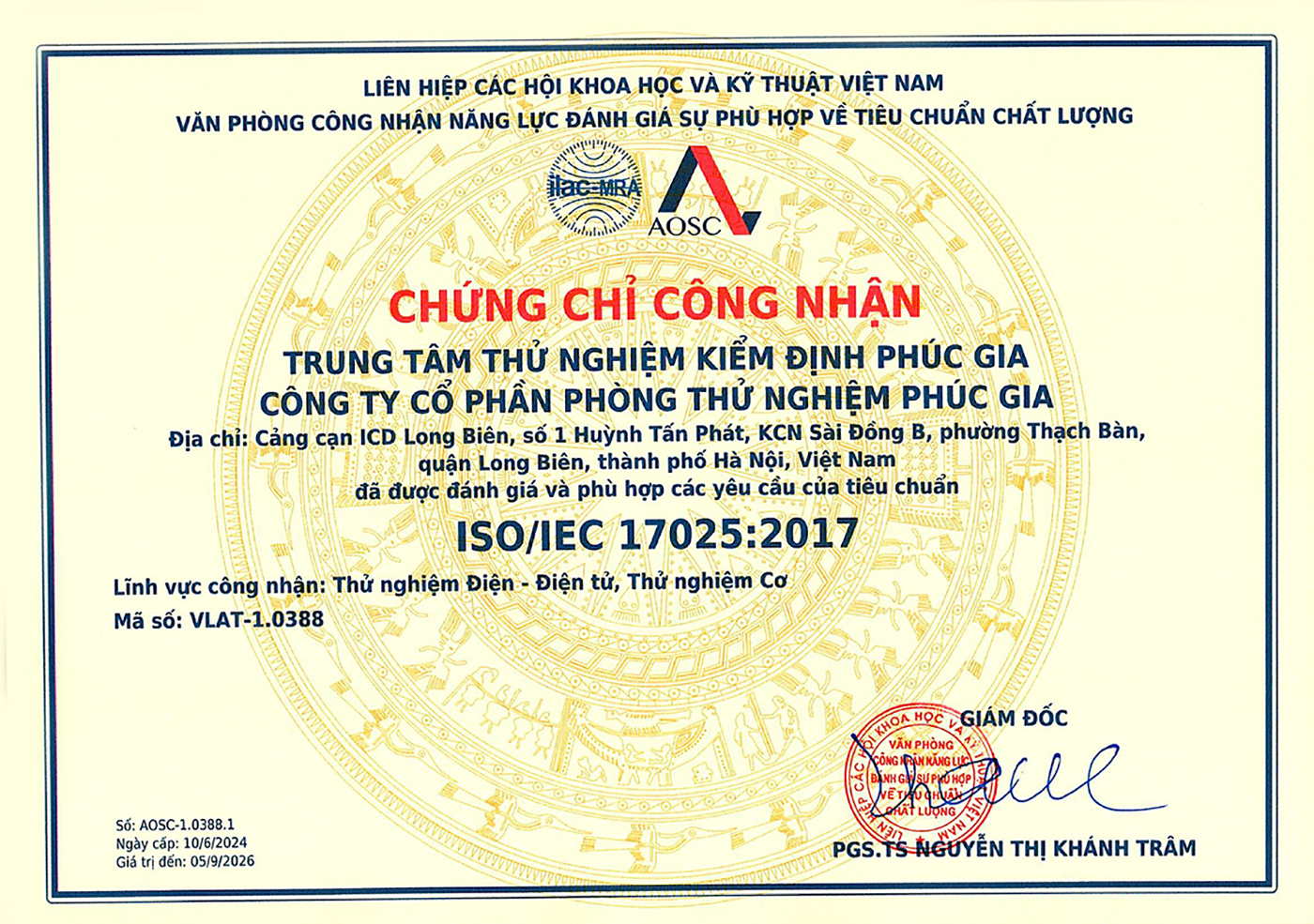
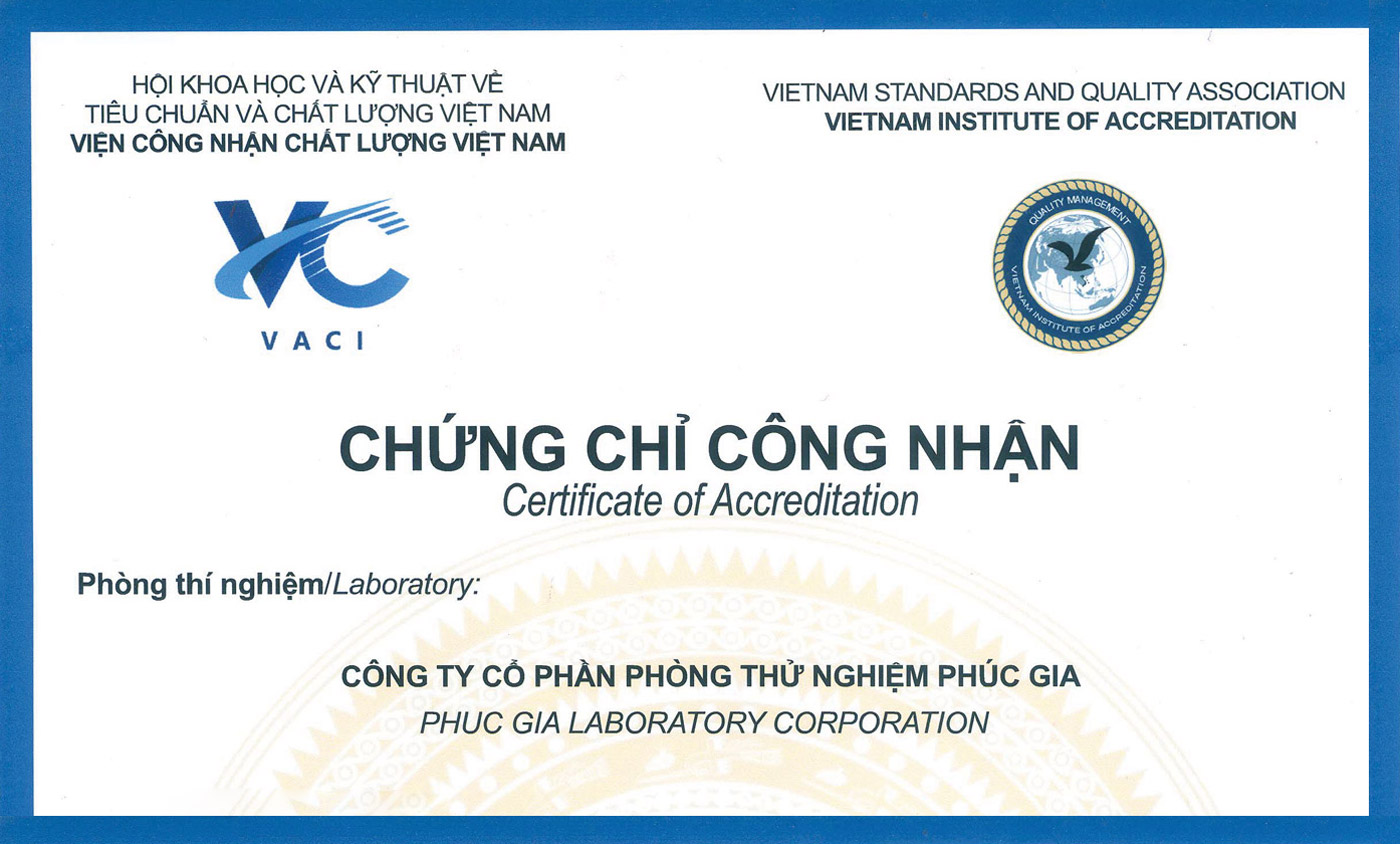
- Accredited by 3 Reputable Vietnamese Bodies: Recognized by the Bureau of Accreditation (BoA), AOSC, and VACI as a testing laboratory compliant with ISO/IEC 17025.
- Designated by 3 Specialized Management Ministries: Designated by the Ministry of Industry and Trade, the Ministry of Information and Communications (now consolidated with MOST), and the Ministry of Science and Technology. This authorization allows Phuc Gia to conduct conformity assessments for nearly 90% of current technical regulations and standards in the electrical, electronics, and IT fields.
Therefore, if an enterprise selects Phuc Gia’s energy labeling service for electric motors, our experts will provide complimentary consultation on procedures, evaluate the legal validity of the dossier, and subsequently act as the representative to submit, monitor, and receive results, or manage any feedback from specialized agencies.
We hope the list of 13+ cases exempted from energy efficiency testing for motors has provided your business with a clearer understanding of the current regulations. Should you have any further inquiries or need assistance with energy labeling services for electric motors, please do not hesitate to contact Phuc Gia’s experts for free consultation and support!
For more details, please contact us at:
PHUC GIA LABORATORY CORPORATION
PHUC GIA CERTIFICATION CENTER
PHUC GIA INSPECTION TESTING CENTER
Address: ICD Long Bien, No. 01 Huynh Tan Phat, Sai Dong B Industrial Park, Long Bien Ward, Hanoi City, Vietnam.
Hotline: 0981 996 996/ 0982 996 696/ 024 7779 6696
E-mail: lab@phucgia.com.vn
Website: phucgia.com.vn
Working time: Monday to Friday 8:00 – 18:30; Saturday 8:00 – 12:00

![QUOTATION – Testing and Other Certification Services [2026]](https://phucgia.com.vn/wp-content/uploads/2017/03/bao-gia-thu-nghiem-chung-nhan.png)