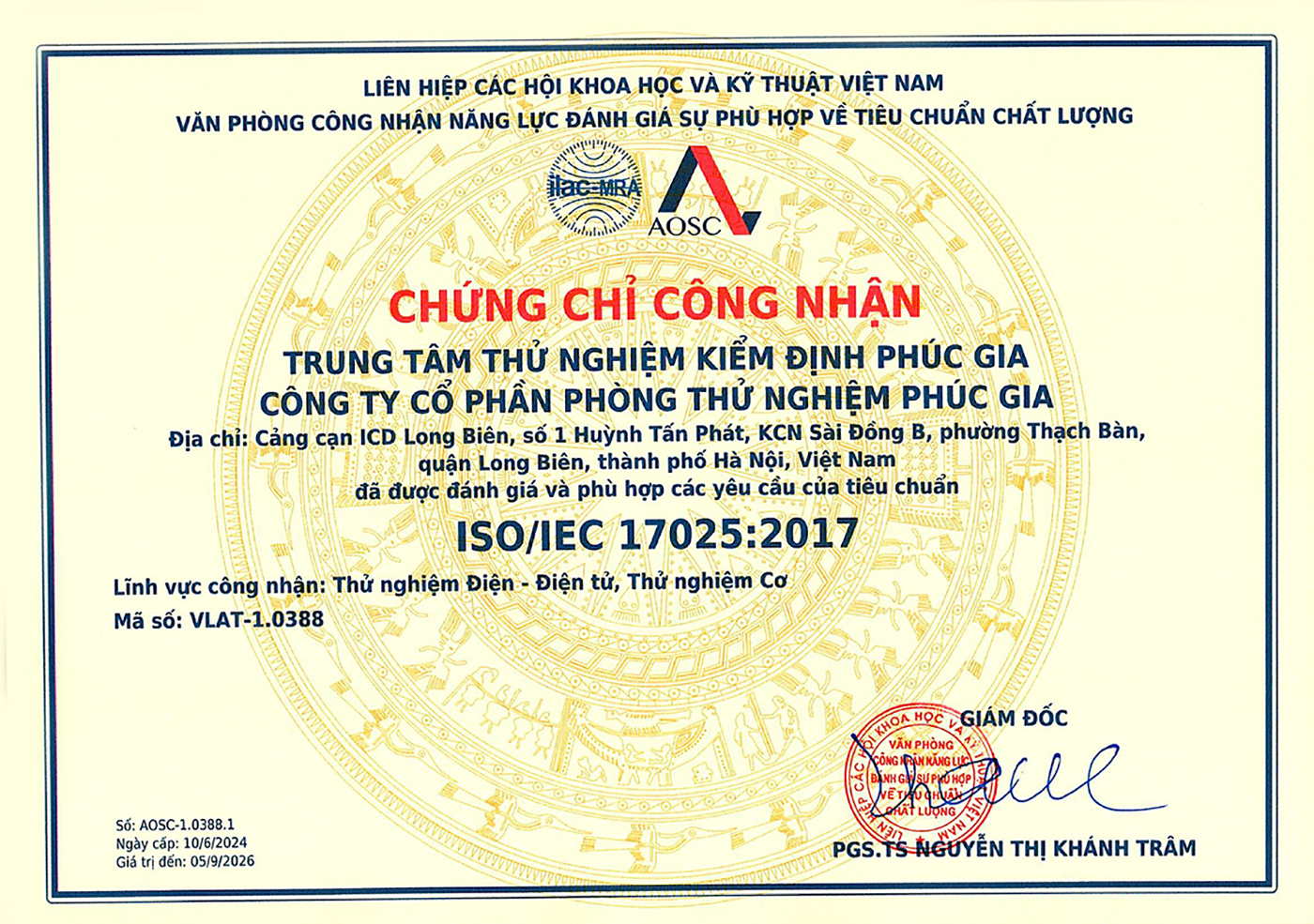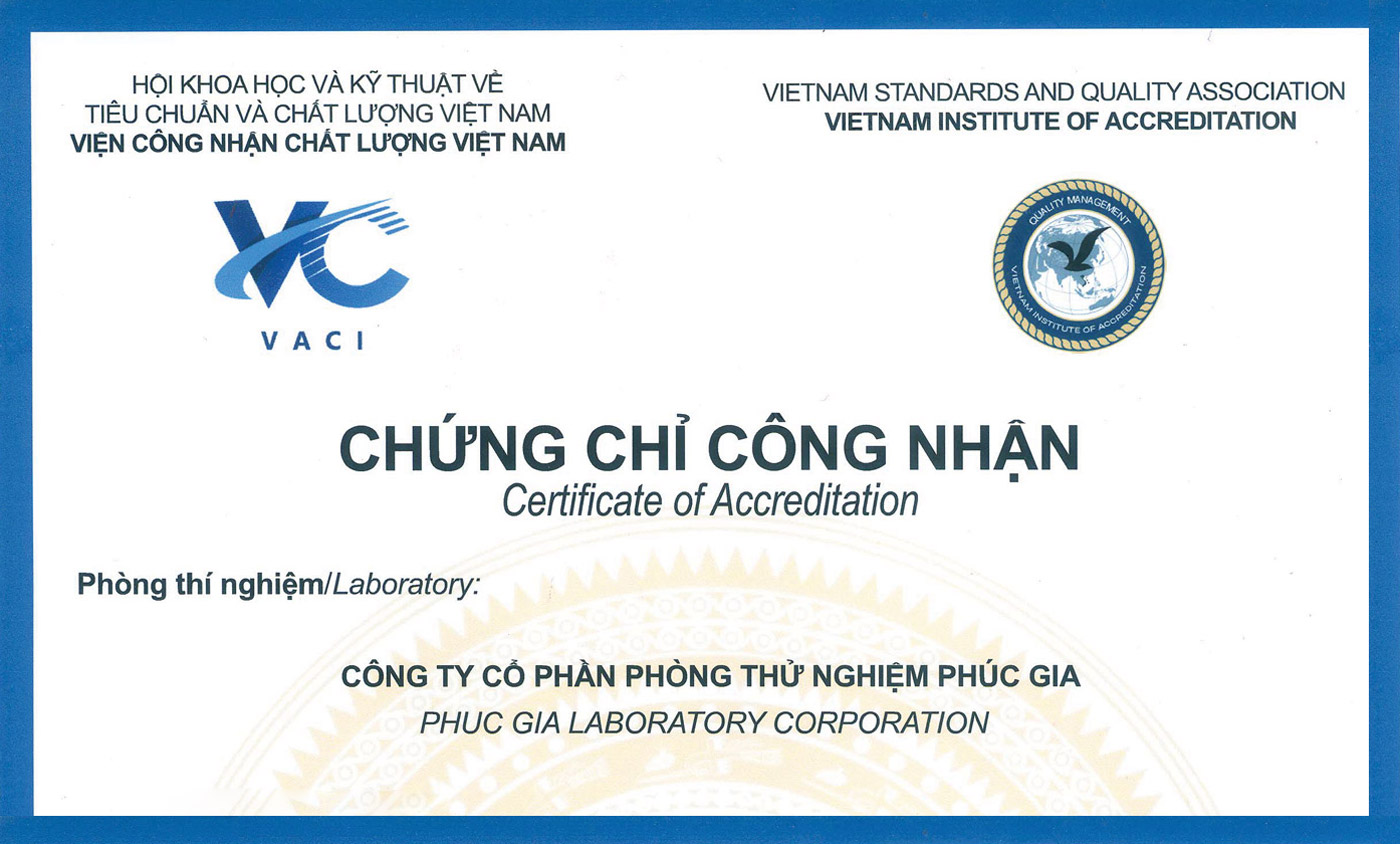


On July 16, 2021, the Directorate for Standards, Metrology and Quality (STAMEQ) – Ministry of Science and Technology granted the Certificate of Registration for Electromagnetic Compatibility (EMC) testing activities for household electrical and electronic products and similar purposes according to QCVN 9:2012/BKHCN and Amendment 1:2018 QCVN 9:2012/BKHCN to Phuc Gia Laboratory. The list of products is specified in detail in the appendix attached to Certificate No. 2242/TĐC-HCHQ.
Accordingly, from July 16, 2021, Phuc Gia Laboratory is officially authorized to perform Electromagnetic Compatibility (EMC) testing for household electrical and electronic products and similar purposes according to QCVN 9:2012/BKHCN and Amendment 1:2018 QCVN 9:2012/BKHCN for products such as: Electric motor-operated hand-held drills, Vacuum cleaners, Washing machines, Refrigerators, freezers, Air conditioners, Hair dryers, Blenders, meat grinders, fruit juicers, egg beaters, and Electric hobs (including induction hobs).
Phuc Gia Laboratory is honored to serve our Customers in the field of Electromagnetic Compatibility testing – QCVN 9:2012/BKHCN!
See more: Capacity Profile Of Phuc Gia Laboratory Corporation
1. What is Electromagnetic Compatibility?
Electromagnetic Compatibility (EMC) is the ability of electrical and electronic equipment to operate normally in an electromagnetic environment without affecting the operation of other equipment.
If quality is not controlled, electrical and electronic products can cause electromagnetic interference or compatibility issues, which can lead to significant impacts on the normal operation of other electrical and electronic devices.
2. Why must Electromagnetic Compatibility (EMC) be managed according to QCVN 9:2012/BKHCN for Microwave ovens?
Every electrical and electronic product generates electromagnetic interference and compatibility issues, whether large or small. Microwave ovens are no exception.
When electrical and electronic equipment in general, and Microwave ovens in particular, are operating—even under normal conditions—they emit electromagnetic radiation (emissions), also known as electromagnetic interference waves, with varying wavelengths and intensities. The higher the radiation intensity, the greater the impact on the normal operation of other equipment and the surrounding environment.
What are the harmful effects of electromagnetic interference and compatibility issues from electrical and electronic equipment?
Practical examples of these harmful effects in daily life include: distorting results of blood pressure monitors; causing malfunctions in escalators, automatic doors, elevators, and cameras; and even significantly affecting human health, such as nervous system dysfunction, immune system dysfunction, reproductive health issues, or even cancer and many other diseases.
Due to these concerning impacts, on April 12, 2012, the Ministry of Science and Technology issued the National Technical Regulation QCVN 9:2012/BKHCN. This regulation stipulates the technical and management requirements for electromagnetic interference emission limits for household electrical and electronic equipment, including Microwave ovens (stipulated in Amendment 1:2018 QCVN 9:2012/BKHCN dated June 6, 2018).
3. Currently Effective Regulations
– Circular No. 11/2012/TT-BKHCN: Issued by the Ministry of Science and Technology on April 12, 2012, promulgating the “National technical regulation on electromagnetic compatibility for household electrical and electronic equipment and similar purposes.”
– QCVN 9:2012/BKHCN: The National Technical Regulation on electromagnetic compatibility for household electrical and electronic equipment and similar purposes, issued by the Ministry of Science and Technology on April 12, 2012.
Accordingly, from April 12, 2012, products specified in the table below must be labeled in accordance with labeling laws; they must undergo testing and conformity certification according to QCVN 9:2012/BKHCN, bear the conformity mark (CR mark), and are subject to market inspection by product and goods quality inspection agencies as required by QCVN 9:2012/BKHCN.
| ORD |
Electrical and electronic devices that must comply with QCVN 9 |
Technical Requirements | Effective Dates and Mandatory Compliance |
| 1 | Instant Electric Water Heaters | TCVN 7492-1 (CISPR 14-1) | 01/06/2013 |
| 2 | Electric Motor-operated Handheld Drills | TCVN 7492-1 (CISPR 14-1) | 01/06/2013 |
| 3 | Self-ballasted Lamps (Integrated Ballast Lamps) | TCVN 7186 (CISPR 15) | 01/06/2014 |
| 4 | Vacuum Cleaners | TCVN 7492-1 (CISPR 14-1) | 01/06/2014 |
| 5 | Washing Machines | TCVN 7492-1 (CISPR 14-1) | 01/06/2014 |
| 6 | Refrigerators, Freezers, and Commercial Refrigerators | TCVN 7492-1 (CISPR 14-1) | 01/06/2014 |
| 7 | Air Conditioners | TCVN 7492-1 (CISPR 14-1) | 01/06/2014 |
– Amendment 1:2018 QCVN 9:2012/BKHCN: National Technical Regulation on electromagnetic compatibility for household electrical and electronic equipment and similar purposes, issued by the Ministry of Science and Technology on June 6, 2018.
Amendment 1:2018 QCVN 9:2012/BKHCN adds 4 more product groups to the list of products subject to electromagnetic compatibility management, including:
| ORD | Electrical and electronic devices that must comply with QCVN 9 | Technical Requirements | Effective Dates and Mandatory Compliance |
| 1 | Hairdryers | TCVN 7492-1:2010 (CISPR 14-1:2009) | 01/09/2019 |
| 2 | Blenders, Meat Grinders, Juicers, Hand Mixers | TCVN 7492-1:2010 (CISPR 14-1:2009) | 01/07/2020 |
| 3 | Microwave (including combination types) | TCVN 6988:2006 (CISPR 11:2004) | 01/07/2021 |
| 4 | Electric hobs (including induction hobs) | TCVN 7492-1:2018 (CISPR 14-1:2016) | 01/07/2021 |
– Circular No. 01/2022/TT-BKHCN: Amending Circular No. 07/2018/TT-BKHCN and 08/2019/TT-BKHCN, issued by the Minister of Science and Technology on February 16, 2022.
– Decision No. 1983/QĐ-TĐC: Decision on the promulgation of guidelines for certification of conformity with the national technical regulation QCVN 9:2012/BKHCN on electromagnetic compatibility (EMC) for household electrical and electronic equipment and similar purposes, issued by the Ministry of Science and Technology on October 15, 2014.
4. Regulated interference limits/testing criteria for Microwave ovens?
- Limits for Conducted Disturbance (150kHz – 30MHz)
- Limits for Electromagnetic Radiated Disturbance (150kHz – 18GHz)
5. Testing standards and mandatory application timeline of QCVN 9:2012/BKHCN for Microwave products?
- Testing Standard: TCVN 6988 (CISPR 11)
- Mandatory Application Date: July 1, 2021
6. Notes on Electromagnetic Compatibility (EMC) for Microwave ovens according to QCVN 9?
- Required number of samples: 01 sample
- After testing: The laboratory will return the sample to the customer.
- Testing costs: The costs for Electromagnetic Compatibility testing are publicly listed by Phuc Gia Laboratory in the following post: Phuc Gia Lab Testing Quotation.
RELATED POSTS:
For more details, please contact us at:
PHUC GIA LABORATORY CORPORATION
PHUC GIA CERTIFICATION CENTER
PHUC GIA INSPECTION TESTING CENTER
Hotline: 0965996696 / 0982996696 / 02477796696
E-mail: lab@phucgia.com.vn/cert@phucgia.com.vn/info@phucgia.com.vn
Website: phucgia.com.vn
Working time: Monday to Friday 8:00 – 18:30; Saturday 8:00 – 12:00

![QUOTATION – Testing and Other Certification Services [2026]](https://phucgia.com.vn/wp-content/uploads/2017/03/bao-gia-thu-nghiem-chung-nhan.png)