

The Rice Cooker is one product for which businesses have been mandatorily required to conduct Energy Efficiency Testing and Declaration of Energy Labeling since January 01, 2013. Below is information that Phuc Gia has researched, compiled, and studied concerning the technical requirements, implementation methods, and product types within the scope of application that businesses manufacturing, importing, and trading this item must clearly understand. We hope this article helps you grasp the essential information. If you have any questions, please contact us for the most thorough and enthusiastic answers.
See more: Capacity Profile Of Phuc Gia Laboratory Corporation
1. When is it mandatory for businesses to conduct Declaration of Energy Labeling and Energy Efficiency Testing for Rice Cookers?
Energy Efficiency Testing for Rice Cookers
Based on Decision No. 14/2023/QD-TTg – “Decision promulgating the list and roadmap for energy-using means and equipment to be eliminated and low-efficiency power generation units not to be newly built,” issued on May 24, 2023, which replaces Decision No. 24/2018/QD-TTg, Rice Cooker products are regulated as follows:
- Appendix I clearly states: The import, production, and trading of Rice Cookers with energy efficiency not meeting the minimum energy efficiency level specified in National Standard (TCVN) 8252:2015 is prohibited from the effective date of this Decision;
- Accordingly, as of July 15, 2023, businesses importing, producing, and trading this item are required to conduct Energy Efficiency Testing for Rice Cookers according to TCVN 8252:2015 and must meet the minimum Energy Efficiency level.
Declaration of Energy Labeling for Rice Cookers
Based on Decision No. 04/2017/QD-TTG – “Decision stipulating the list of means and equipment required to have Energy Labels, applying the minimum Energy Efficiency level and implementation roadmap,” the Rice Cooker product is regulated as follows:
- In Clause 1, Article 1, it is clearly stated that Rice Cookers belong to the group of equipment that must bear energy labels and apply minimum energy efficiency.
- At Point a, Clause 1, Article 2 regarding the roadmap for energy labeling, it is required to “implement mandatory energy labeling for the following household appliance and industrial equipment groups: Tubular fluorescent lamps, self-ballasted lamps, electromagnetic and electronic ballasts for fluorescent lamps, air conditioners, rice cookers, electric fans, refrigerators, horizontal-axis washing machines, vertical-axis washing machines, televisions, three-phase distribution transformers, induction motors;”.
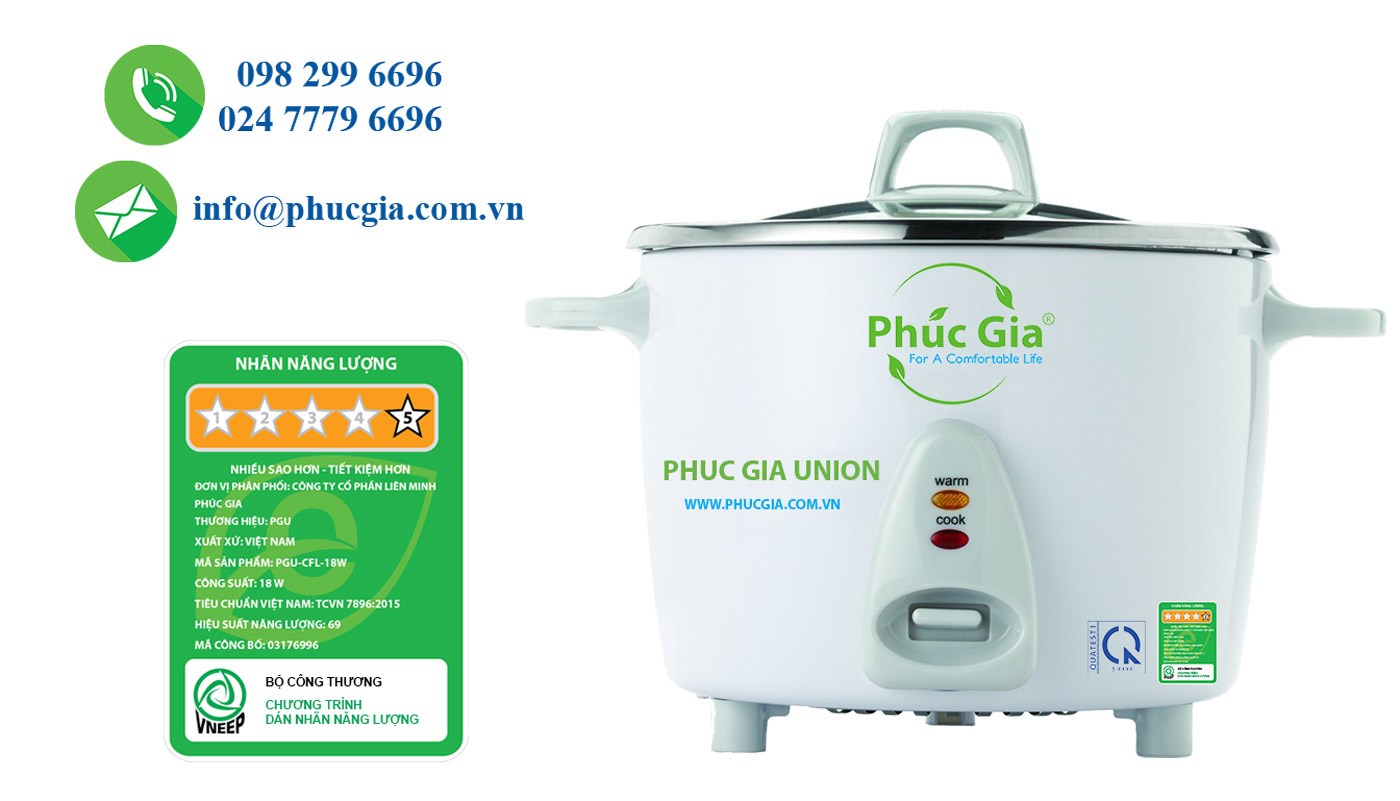
- Accordingly, since January 01, 2013, businesses importing, producing, and trading this item have been mandatorily required to conduct Declaration of Energy Labeling for Rice Cookers.
2. Does the Ministry of Industry and Trade have guidance for organizations on implementing Declaration of Energy Labeling and Energy Efficiency Testing for Rice Cookers?
On December 28, 2016, the Ministry of Industry and Trade issued Circular No. 36/2016/TT-BCT – “Stipulating energy labeling for energy-using means and equipment under the management scope of the Ministry of Industry and Trade” (Including Consolidated Document No. 23/VBHN-BCT issued on March 24, 2020).
The Circular mandates that businesses producing, importing, or trading means and equipment on the List of items requiring energy labels (issued by the Prime Minister) must submit a registration dossier for energy labeling to the Ministry of Industry and Trade before introducing the items to the market. The registration dossier includes:
- A Form of Declaration of Energy Labeling for the energy-using means and equipment, clearly specifying whether the business is registering for a comparative label or a confirmation label, per the template in Appendix 1, Circular No. 36/2016/TT-BCT;
- Test/Certification Reports/Results issued by a testing laboratory for the product model;
- Documentation proving a foreign testing laboratory meets all conditions (Applicable when the energy labeling testing is conducted by a foreign testing laboratory);
- The proposed energy label design.
Furthermore, this Circular clarifies that re-registration for energy labeling is required in only two cases: The evaluation standard has changed, or the means and equipment already registered for labeling have changes in their energy consumption level. Concurrently, Circular No. 36/2016/TT-BCT also outlines the conditions that testing laboratories for energy labeling must satisfy.
3. Which types of Rice Cookers are covered by the National Energy Labeling Program?
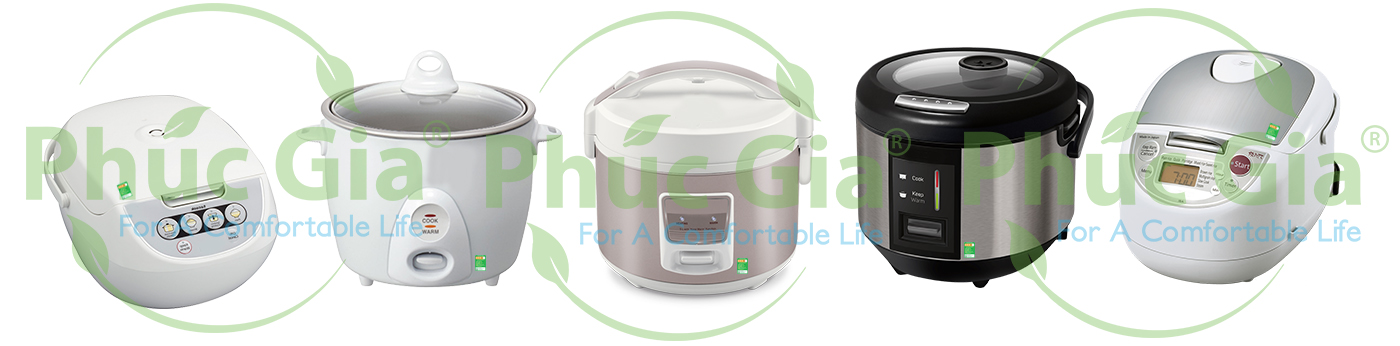
Based on TCVN 8252:2015, the types of Rice Cookers subject to the National Energy Labeling Program and the corresponding Energy Efficiency Testing for Rice Cookers include “common electric rice cookers used for household and similar purposes, with a rated capacity up to and equal to 2000W. This standard applies to Rice Cookers using either resistance or induction heating methods, operating at normal atmospheric pressure”. This basically includes the following types:
- Classification by design: Clamshell lid rice cookers, Detachable lid rice cookers.
- Classification by operation: Resistance-type rice cookers, Induction rice cookers, High-frequency electric rice cookers.
This standard does not apply to Rice Cookers with a rated capacity over 2000W or industrial Rice Cookers that primarily use Gas.
4. What technical requirements must Rice Cookers meet for the energy labeling program?
According to TCVN 8252:2015, Rice Cookers must meet the following technical requirements, which are verified during the Energy Efficiency Testing for Rice Cookers:
- Safety requirement: Rice cooker products must ensure safety in accordance with TCVN 5699-2-15 (IEC 60335-2-15).
- Power requirement: The average power value measured across 4 tests must not deviate from the rated power by more than ± 5 %.
- Energy efficiency requirement: The energy efficiency of rice cookers is classified into five (5) levels. Level 1 represents the lowest energy efficiency, while level 5 represents the highest. Corresponding to these levels are star symbols that represent the efficiency of the rice cooker for which the customer seeks labeling.
| Rated Power, P W |
Energy efficiency level (%) | ||||
| Level 1 | Level 2 | Level 3 | Level 4 | Level 5 | |
| P ≤ 400 | ≥ 72 | ≥ 76 | ≥ 80 | ≥ 84 | ≥ 88 |
| 400 < P ≤ 600 | ≥ 73 | ≥ 77 | ≥ 81 | ≥ 85 | ≥ 89 |
| 600 < P ≤ 800 | ≥ 74 | ≥ 78 | ≥ 82 | ≥ 86 | ≥ 90 |
| 800 < P ≤ 1 000 | ≥ 75 | ≥ 79 | ≥ 83 | ≥ 87 | ≥ 91 |
| 1 000 < P ≤ 2 000 | ≥ 76 | ≥ 80 | ≥ 84 | ≥ 88 | ≥ 92 |
Rice cooker products, when implementing energy labeling, will apply the comparative energy label, which has the following model:
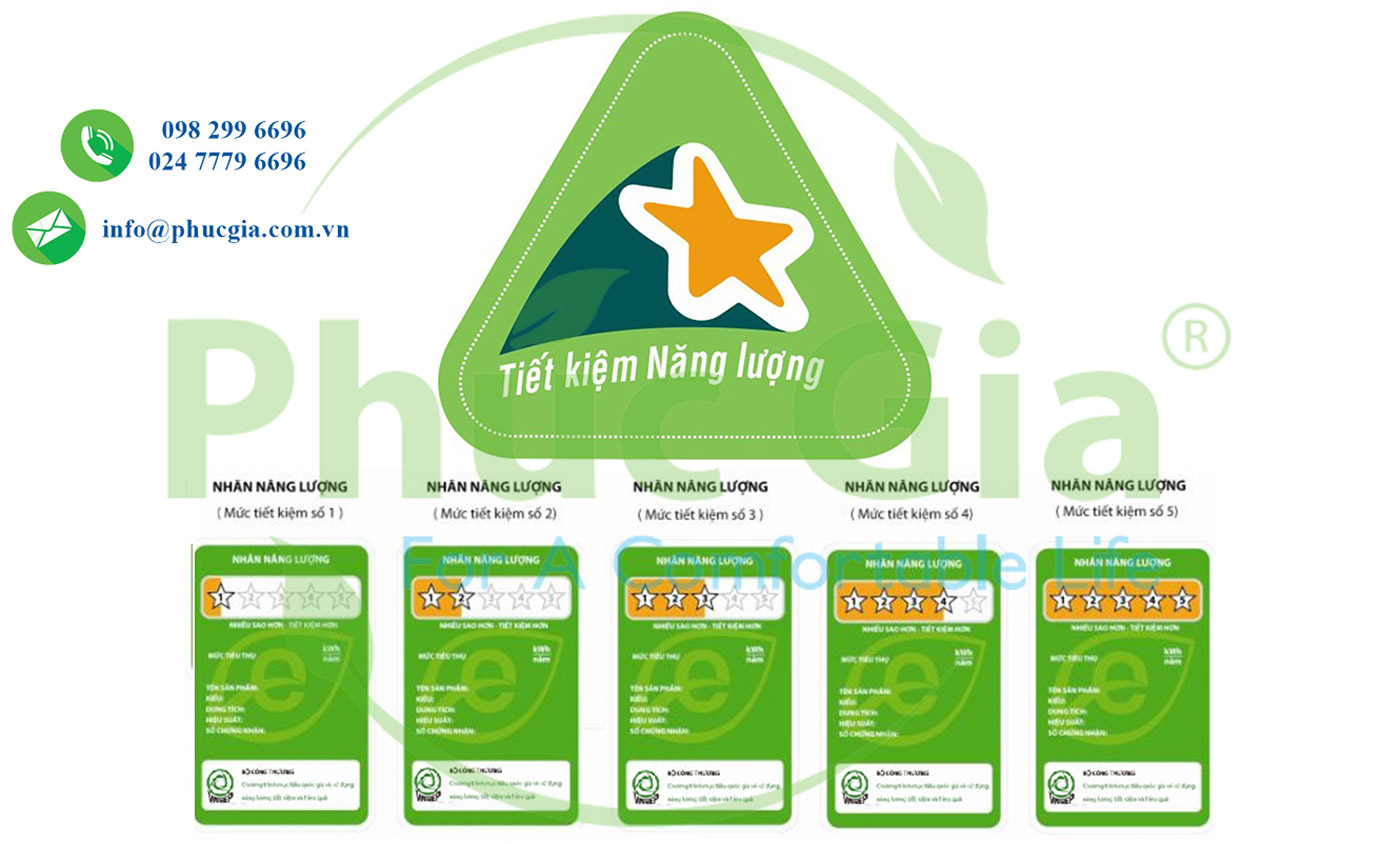
5. Which Testing units are designated by the Ministry of Industry and Trade to conduct Energy Efficiency Testing for Rice Cookers?
Pursuant to Circular No. 36/2016/TT-BCT, which stipulates that Energy Labeling Testing laboratories must meet the following conditions:
- Domestic testing laboratories are those meeting the provisions in Chapter II of Decree No. 107/2016/ND-CP dated July 1, 2016, of the Government, stipulating the conditions for trading in conformity assessment services;
- Foreign testing laboratories are those accredited according to ISO/IEC 17025 (or equivalent) by accreditation bodies that have signed mutual recognition agreements (ILAC or APLAC).
To find out if the Testing Center you plan to use is designated, you should contact the lab to request the designation decision issued to them by the Ministry of Industry and Trade. Alternatively, you can check the official Ministry of Industry and Trade website.
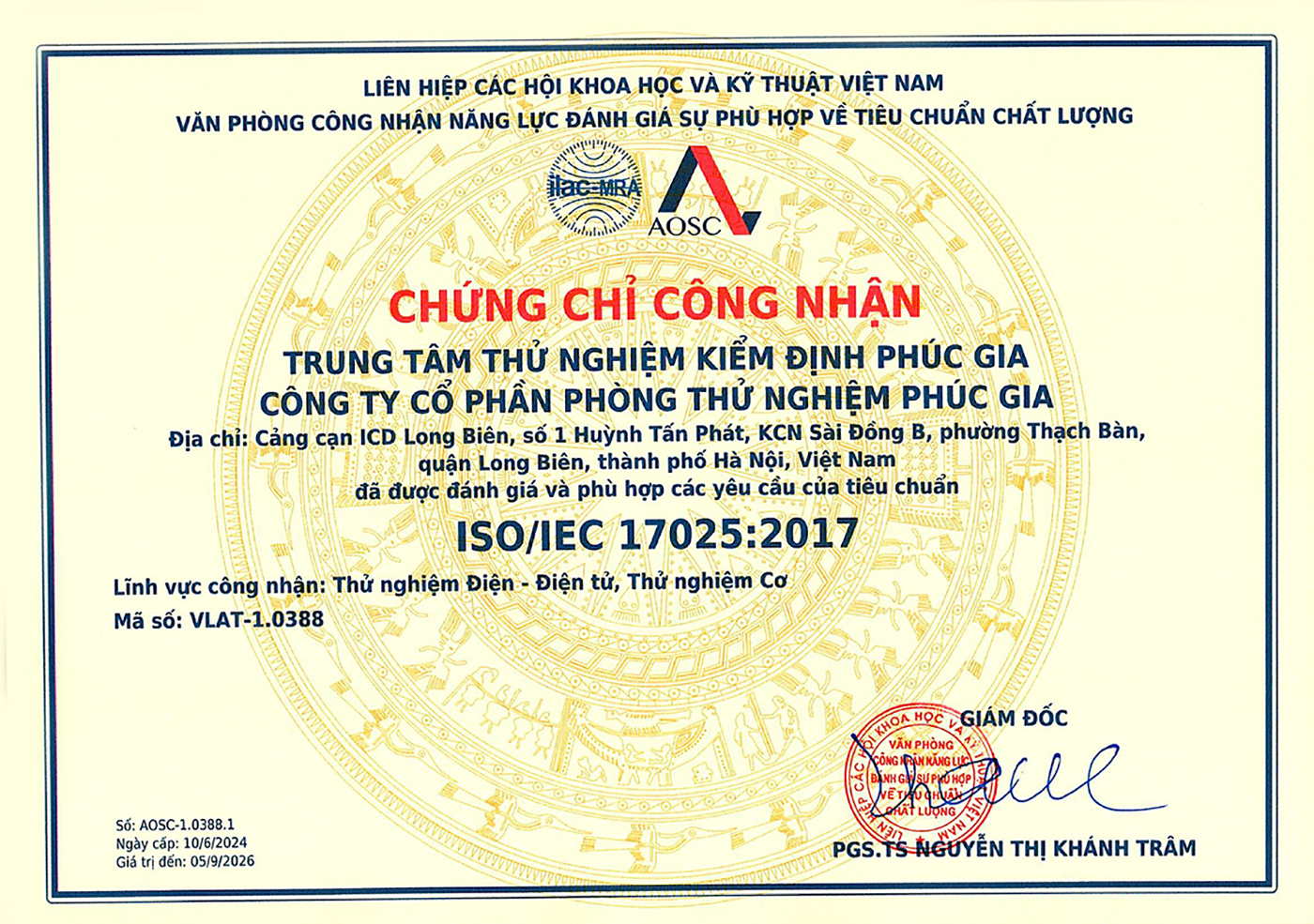
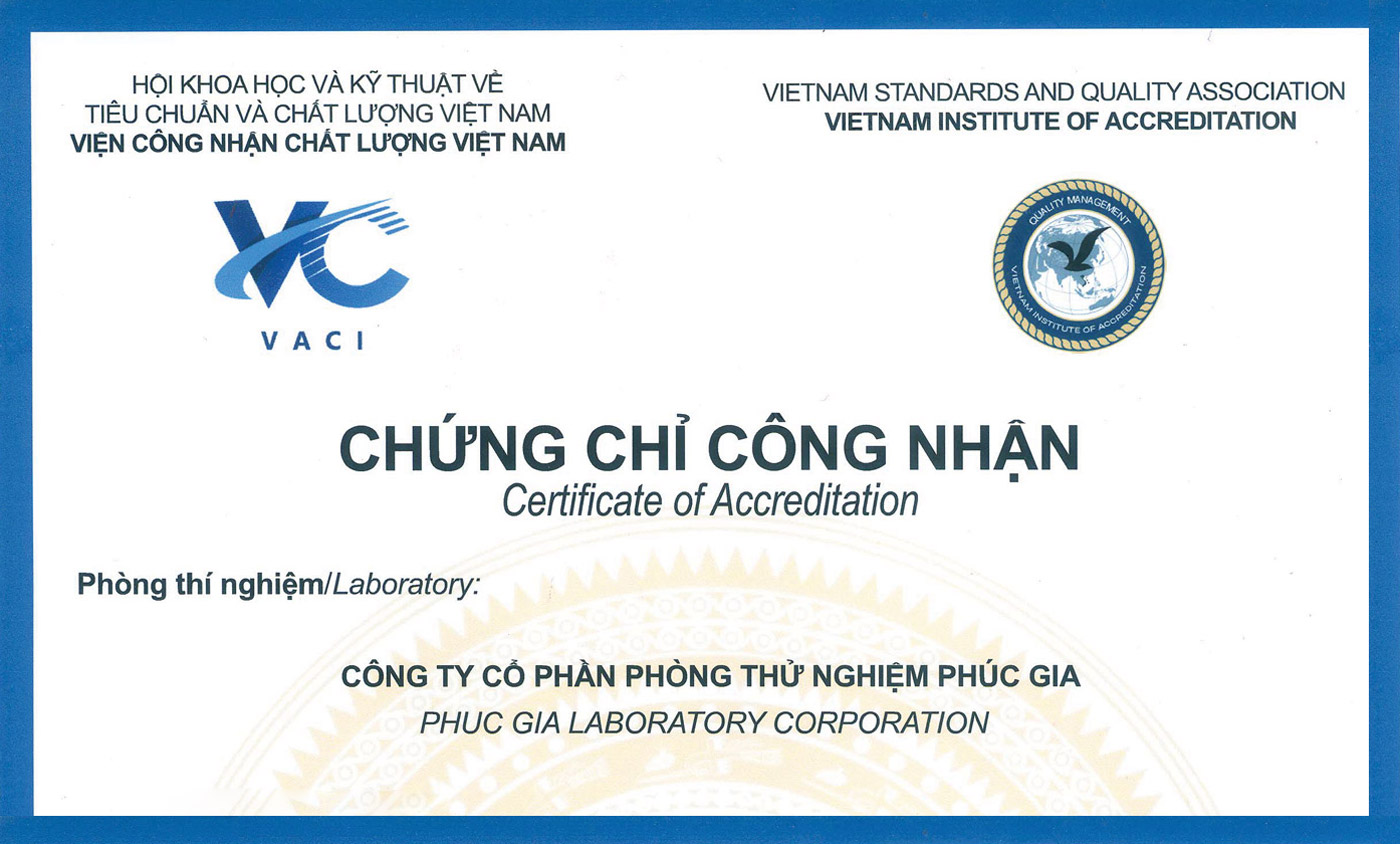
Accordingly, Phuc Gia Testing Center is one of the units designated by the Ministry of Industry and Trade to conduct energy efficiency testing for Rice Cookers under the Certificate of Registration for Energy Efficiency Testing No. 15/GCN-BCT.
6. For Energy Efficiency Testing for Rice Cookers, how many samples does a business need to bring to the Testing laboratory?
Based on Article 5 of TCVN 8252:2015, it is clearly stated, “Testing is performed 4 times on one test sample (one rice cooker) of each model.” Therefore, businesses need to bring a minimum of 1 sample to the testing unit to perform Energy Efficiency testing.
7. What is the Fee for Energy Efficiency Testing for Rice Cookers?
The fee will vary depending on the listed price of each Testing laboratory. The Energy Efficiency Testing for Rice Cookers fee at Phuc Gia Lab is listed at: Quotation for Energy Efficiency Testing.
8. What is the Duration for Energy Efficiency Testing for Rice Cookers?
The testing time depends on the unit the customer chooses for testing, typically ranging from 2 – 10 days/model. However, at Phuc Gia Testing Center, we always offer customers the best support regarding testing time. Here, the Energy Efficiency Testing for Rice Cookers takes only 1-3 days/model.
Please wait a moment to load the Sample Energy Efficiency Test Report for Rice Cookers
Click here to download the Sample Energy Efficiency Test Report for Rice Cookers
Please wait a moment to load the Designation from the Ministry of Industry and Trade
Click here to download the Designation from the Ministry of Industry and Trade
RELATED POSTS:
- How Decision No. 14/2023/QD-TTg has affected and will affect businesses importing and manufacturing household electrical and office equipment
- A Very Thorough Guidance on Declaration of Energy Labeling for Street Lighting LED Lamps/ Industrial LED Lamps
- A Very Thorough Guidance on Energy Efficiency Testing for Electric Fans
For more details, please contact us at:
PHUC GIA LABORATORY CORPORATION
PHUC GIA CERTIFICATION CENTER
PHUC GIA INSPECTION TESTING CENTER
Address: ICD Long Bien, No. 01 Huynh Tan Phat, Sai Dong B Industrial Park, Long Bien Ward, Hanoi City, Vietnam.
Hotline: 0981 996 996/ 0982 996 696/ 024 7779 6696
E-mail: lab@phucgia.com.vn/cert@phucgia.com.vn/info@phucgia.com.vn
Website: phucgia.com.vn
Working time: Monday to Friday 8:00 – 18:30; Saturday 8:00 – 12:00

![QUOTATION – Testing and Other Certification Services [2026]](https://phucgia.com.vn/wp-content/uploads/2017/03/bao-gia-thu-nghiem-chung-nhan.png)