

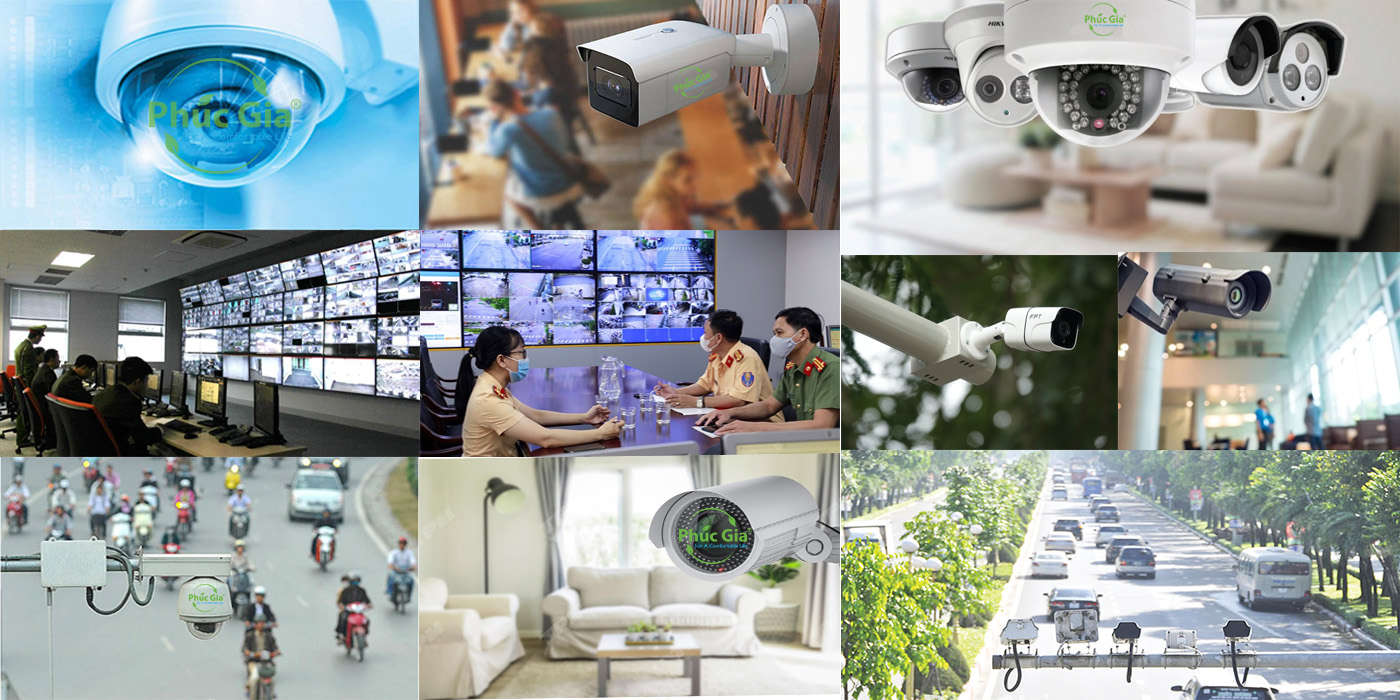
Internet Protocol-based surveillance systems (IP Cameras) are now essential in today’s world. Serving more than just home security, these IP cameras are extensively used across corporate sectors, traffic monitoring, urban governance, and public infrastructure. With the surge in Internet-connected devices operating 24/7, IP cameras are no longer isolated hardware; they are critical nodes in an information system that demands stringent cybersecurity and Security Controls for IP Cameras.
See more: Capacity Profile Of Phuc Gia Laboratory Corporation
1. Alarming Reality – Security Vulnerabilities of Surveillance Cameras in Vietnam
1.1. Common Security Vulnerabilities on IP Cameras
In addition to the conveniences in monitoring and management, Internet Protocol surveillance cameras possess many inadequacies regarding information security. Most of these risks do not originate from overly complex attack techniques, but from fundamental vulnerabilities in the design, configuration, and operation of the devices.
One common form of attack is a Denial of Service (DoS) attack, where an attacker overloads the system, making the camera inaccessible or causing it to stop functioning, thereby disrupting surveillance. Furthermore, Brute Force attacks remain widespread as many devices use weak, predictable passwords or do not limit the number of incorrect login attempts.

In addition to direct attack methods, many surveillance cameras still possess vulnerabilities within their software or firmware. When manufacturers fail to provide timely security patches or lack a secure update mechanism, hackers can infiltrate and seize remote control of the devices. Notably, if image and video data are not fully encrypted during transmission, they can be subject to unauthorized access, leading to the leakage of private information belonging to individuals, families, or organizations.
Remarkably, the use of default passwords and weak security configurations remains the most common reason hackers easily breach camera systems. Many devices, when put into operation, do not mandate a change of the initial password, creating conditions for attackers to exploit them en masse using readily available automated tools.

1.2. The Reality of Information Insecurity for IP Cameras in Vietnam
Statistical data shows that over the past five years, Vietnam has imported and put into use more than 16 million surveillance camera devices. On average, the market receives approximately 3.2 million cameras annually, with products of Chinese origin accounting for 96.3%. It is forecasted that by 2025, this figure could exceed 20 million devices, equivalent to about one-fifth of the country’s population.
This rapid increase reflects the actual needs of society, while simultaneously posing new challenges in technical management and information security assurance. According to the monitoring system of the Ministry of Information and Communications (MIC), there are currently more than 800,000 surveillance cameras in Vietnam whose image data is being shared publicly on the Internet. Among these, approximately 360,000 cameras (accounting for 45%) possess weaknesses or vulnerabilities that can be exploited to seize control.

Beyond that, images and videos illegally collected from surveillance cameras are even publicly offered for sale on social media groups with fees ranging from only 200,000 to 1 million VND. According to 2021 statistics, every month there are approximately 1 million Vietnamese IP addresses located within botnet networks, of which about 5% (equivalent to nearly 50,000 IP addresses) are directly related to malware from surveillance cameras.
Research further indicates that 90% of existing camera systems lack proper Security Controls for IP Cameras, having never undergone a formal cybersecurity audit. Without these protections, hijacked devices are transformed into instruments for illicit spying, identity theft, and fraud, or are weaponized in massive distributed cyberattacks.

These systemic failures have escalated privacy risks into a significant social crisis. Devices intended to provide safety have instead become entry points for exploitation in the digital landscape.
2. The Critical Need for National Technical Regulations on IP Cameras
Establishing a National Technical Regulation for Internet Protocol-based surveillance (IP Cameras) is now a matter of extreme urgency driven by practical necessity.
Primarily, Vietnam’s surveillance market is dominated by imports. Most of these units enter the country without comprehensive cybersecurity evaluations, leaving a massive security vacuum. Without standardized Security Controls for IP Cameras, consumers remain vulnerable to persistent cyber threats.
Most existing security gaps originate from basic oversights: weak factory-set passwords, outdated firmware, lack of robust encryption, and a total absence of pre-deployment security assessments. Once compromised, these cameras are easily turned into tools for unauthorized surveillance, data breaches, and criminal scams.

Beyond individual use, surveillance cameras serve as the backbone for smart city initiatives. With 41 of Vietnam’s 63 provinces currently rolling out smart urban schemes, tens of millions of new units are expected to be deployed. Without a unified security framework, these massive networks could jeopardize personal privacy and create systemic vulnerabilities across the national digital infrastructure, highlighting the need for robust Security Controls for IP Cameras.
The frequent leakage of private footage has fueled widespread public anxiety. In response, the Government issued Directive No. 23/CT-TTg (2022), prioritizing heightened information safety for all surveillance hardware. Establishing formal technical regulations is the vital next step in fulfilling this mandate to protect citizens and maintain social stability.

3. QCVN 135:2024/BTTTT – The “Shield” for Digital Safety
Issued by the Ministry of Information and Communications (MIC) and now managed under the Ministry of Science and Technology (MOST), QCVN 135:2024/BTTTT sets the mandatory cybersecurity standards for IP cameras produced or sold in Vietnam. This regulation is designed to secure user privacy, protect personal data, and restore market confidence through standardized Security Controls for IP Cameras.
Key pillars of this regulation include the requirement for unique, non-predictable default passwords and a forced password update upon initial setup. Manufacturers are also required to implement vulnerability reporting channels and provide secure, authenticated firmware updates to thwart spoofing. Furthermore, the regulation mandates end-to-end data encryption and grants users full authority to manage or delete their personal information.
Starting January 1, 2026, compliance with QCVN 135:2024/BTTTT will be a prerequisite for any IP camera to enter the Vietnamese market. This shift will fundamentally transform the industry:
- For consumers, these standards offer a reliable benchmark to identify secure products, effectively reducing the threats of hacking and privacy breaches.
- For manufacturers and importers, while meeting these Security Controls for IP Cameras demands rigorous investment in design, specialized testing, and Certificate of Conformity procedures, it ultimately builds long-term brand equity and market transparency.
While the rapid expansion of the surveillance industry offers great utility, it simultaneously introduces complex risks to cybersecurity and personal data. The introduction of QCVN 135:2024/BTTTT is more than a reactive measure against current threats; it represents a strategic advancement in Vietnam’s technology governance and the implementation of robust Security Controls for IP Cameras.
These standards serve as a cornerstone for building a secure, transparent, and trustworthy digital infrastructure, paving the way for successful digital transformation and the expansion of smart cities across Vietnam. Within this framework, enhancing user awareness and ensuring strict adherence to technical specifications are not merely legal obligations—they are the essential drivers for achieving a resilient and secure digital ecosystem for all of society.
RELATED POSTS
- Decision No. 724/QĐ-BTTTT Issuing the Set of Criteria on Basic Network Information Security Requirements for Surveillance Cameras
- QCVN 135:2024/BTTTT on Basic Information Security Requirements for Internet Protocol Surveillance Cameras
- The Impact of QCVN 135:2024/BTTTT on the IP Camera Market
- Ensuring Network Information Security for Surveillance Camera Systems
For more details, please contact us at:
PHUC GIA LABORATORY CORPORATION
PHUC GIA CERTIFICATION CENTER
PHUC GIA INSPECTION TESTING CENTER
Address:
- Hanoi: ICD Long Bien, No. 01 Huynh Tan Phat, Sai Dong B Industrial Park, Long Bien Ward
- Ho Chi Minh City: No. 180, D2 Street, Long Truong Ward
Hotline: 0965996696 / 0982996696 / 02477796696
E-mail: lab@phucgia.com.vn/cert@phucgia.com.vn/info@phucgia.com.vn
Website: phucgia.com.vn
Working time: Monday to Friday 8:00 – 18:30; Saturday 8:00 – 12:00

![QUOTATION – Testing and Other Certification Services [2026]](https://phucgia.com.vn/wp-content/uploads/2017/03/bao-gia-thu-nghiem-chung-nhan.png)