

IP Cameras are widely used in households, businesses, and public surveillance systems, thanks to their network connectivity and remote management capabilities. Unlike traditional cameras, an IP Camera operates on an Internet platform, allowing for more flexible data transmission, storage, and utilization. Correctly understanding what an IP Camera is, how it operates, and its role in modern life is an important basis for users, businesses, and regulatory agencies to properly approach the relevant technical requirements and regulations.
See more: Capacity Profile Of Phuc Gia Laboratory Corporation
1. Understanding the IP Camera
1.1. What is an IP Camera?
An IP Camera (Internet Protocol Camera – a surveillance camera using Internet protocols) is a type of digital camera capable of sending and receiving data over the Internet. Unlike traditional analog cameras, an IP Camera does not require a separate video recorder but can operate independently, transmitting images directly to network-connected devices such as computers, smartphones, or storage servers.

1.2. How does an IP Camera system work?
A basic IP Camera system consists of the following main components:
- IP Camera: The device that relays data from the IP Camera to the Internet.
- Router: The device that relays data from the IP Camera to the Internet.
- Switch: The device that connects multiple IP Cameras within the same network system.
- Storage Server/NVR (Network Video Recorder): The device for storing and managing video data from the IP Cameras.
- Viewing Device (PC, smartphone): The device used to receive and view image data from the IP Camera.
Regarding the operating mechanism, the camera records the footage and then transmits digital data through a Switch or Router to the storage server (NVR) and out to the Internet. This allows users to directly monitor live images remotely via computers or mobile devices.

2. The Role of Surveillance Cameras in Everyday Life
2.1. The Rapid Increase of Surveillance Cameras in Vietnam
The surveillance camera market in Vietnam has developed at a rapid pace in recent years. Statistics show that within the last 5 years, Vietnam has imported over 16 million surveillance camera devices of various types. It is projected that by 2025, the total number of cameras put into use nationwide could exceed 20 million devices, indicating that the market scale continues to expand.
Accordingly, each year Vietnam imports approximately 3.2 million camera devices, of which products originating from China account for a very large proportion, up to about 96.3%. This reality shows a significant level of dependence on imported supply sources, while simultaneously setting increasingly clear requirements for quality management, technical safety, and information security for the surveillance camera devices circulated on the market.

2.2. Application of surveillance cameras in various life sectors
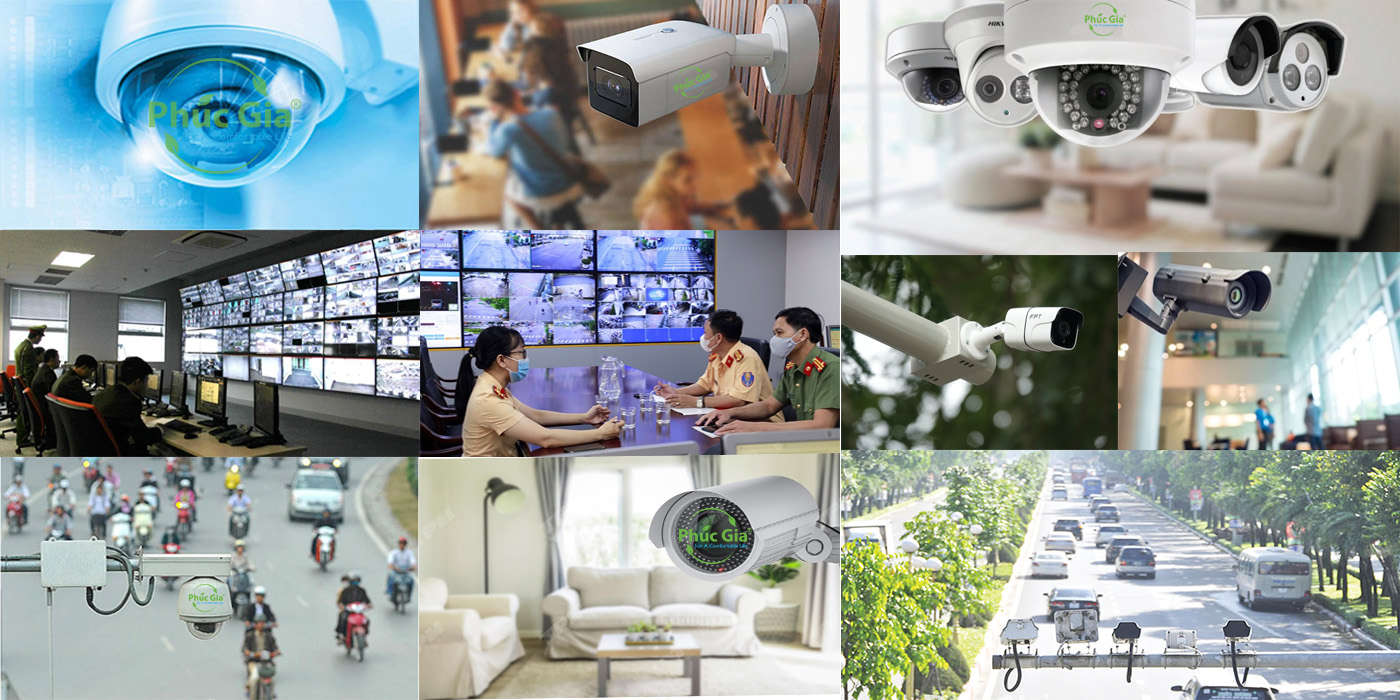
Surveillance cameras play an increasingly important role in many areas of social life. In households, cameras are used to monitor home security, protect property, and support the monitoring and care of young children, the elderly, or family members when away.
For businesses, surveillance cameras are essential tools for ensuring security for offices, factories, and warehouses, monitoring production line activities, and supporting personnel and asset management. The application of the IP Camera helps businesses improve management efficiency, minimize risks, and enhance operational transparency.
In addition, surveillance cameras (especially the IP Camera) serve as foundational devices in smart city systems, particularly in traffic monitoring, security and order management, and supporting urban operations. Currently, 41 out of 63 provinces and cities nationwide have implemented or are implementing smart city construction projects, showing the immense application potential of surveillance cameras in the development of digital infrastructure and urban management in Vietnam.
3. Current state of information insecurity related to surveillance cameras in Vietnam
The IP Camera brings many clear benefits in monitoring, management, and system operation, especially in the context of digital transformation and increasingly popular Internet connectivity. However, along with these benefits come information security risks that cannot be underestimated. When a camera becomes a permanently connected network device, failing to control security factors can lead to serious consequences, directly affecting user privacy as well as the safety of information systems.
The current state of information insecurity related to surveillance cameras in Vietnam is at an alarming level, as shown by statistics from the Ministry of Information and Communications:
- The monitoring system of the Ministry of Information and Communications has detected more than 800,000 surveillance cameras in Vietnam whose image data is being shared publicly on the Internet.
- Among those, 360,000 cameras (accounting for 45%) have risks, weaknesses, and easily exploitable vulnerabilities.
- Hundreds of social media groups openly offer to sell leaked images and videos from surveillance cameras.
- Approximately 90% of systems using surveillance cameras have not been inspected or assessed for network information security.

Faced with this alarming reality, the Ministry of Information and Communications (now under the Ministry of Science and Technology) issued QCVN 135:2024/BTTTT – the technical regulation specifying basic information security requirements for surveillance cameras using Internet Protocol on December 31, 2024. This regulation establishes basic information security requirements, creating a protective “shield” for users.
The implementation roadmap for the regulation is clearly defined as follows:
- From February 15, 2025: QCVN 135:2024/BTTTT is applied on a voluntary basis for testing, conformity certification, and declaration of conformity.
- From January 1, 2026: Imported and domestically manufactured surveillance camera equipment using Internet Protocol must comply (mandatory) with QCVN 135:2024/BTTTT before being circulated on the market.
View the content of QCVN 135:2024/BTTTT – the National Technical Regulation on IP Surveillance Camera Equipment regarding basic information security requirements here.
RELATED POSTS
- Decision No. 724/QĐ-BTTTT Issuing the Set of Criteria on Basic Network Information Security Requirements for Surveillance Cameras
- QCVN 135:2024/BTTTT on Basic Information Security Requirements for Internet Protocol Surveillance Cameras
- The Impact of QCVN 135:2024/BTTTT on the IP Camera Market
- Ensuring Network Information Security for Surveillance Camera Systems
For more details, please contact us at:
PHUC GIA LABORATORY CORPORATION
PHUC GIA CERTIFICATION CENTER
PHUC GIA INSPECTION TESTING CENTER
Address:
- Hanoi: ICD Long Bien, No. 01 Huynh Tan Phat, Sai Dong B Industrial Park, Long Bien Ward
- Ho Chi Minh City: No. 180, D2 Street, Long Truong Ward
Hotline: 0965996696 / 0982996696 / 02477796696
E-mail: lab@phucgia.com.vn/cert@phucgia.com.vn/info@phucgia.com.vn
Website: phucgia.com.vn
Working time: Monday to Friday 8:00 – 18:30; Saturday 8:00 – 12:00

![QUOTATION – Testing and Other Certification Services [2026]](https://phucgia.com.vn/wp-content/uploads/2017/03/bao-gia-thu-nghiem-chung-nhan.png)