

Legal Regulations for Air Conditioners are critical measures aimed at ensuring safety, efficiency, and environmental protection. Each nation typically establishes its own distinct standards, and air conditioner manufacturers must adhere to these strictly to gain market access for their products. In Vietnam, the Government and relevant Ministries and Agencies have also implemented specific regulations for air conditioners. Join Phuc Gia as we explore these regulations in detail in the article below!
See more: Capacity Profile Of Phuc Gia Laboratory Corporation
Table 1: Testing Requirements for Air Conditioners

Table 2: Procedures for Implementing Licenses for Air Conditioners

I. WHAT IS AN AIR CONDITIONER?
Air conditioning is the process of creating and maintaining stable microclimate parameters of the air in a room according to a predetermined program, independent of external conditions. The conditioned space is always subject to many internal and external disturbances, causing its parameters to always tend to deviate from the required setpoints. Therefore, the task of the air conditioning system is to create and maintain the microclimate regime in the space it serves.
Unlike ventilation, in an air conditioning system, the air is treated for temperature and humidity before being blown into the room. Therefore, air conditioning is more effective than ventilation. An air conditioner, which includes a motor-driven fan and components that alter temperature and humidity, including types that do not separately regulate humidity, is used for household and similar purposes (with a current limit not exceeding 25A; excluding products that use 3-phase electricity).
To ensure consumer safety and promote energy conservation, the manufacturing, import, and trade of air conditioners are governed by a robust framework of Legal Regulations for Air Conditioners. In many jurisdictions, governmental bodies like the Ministry of Science and Technology and the Ministry of Industry and Trade are the primary regulatory authorities responsible for establishing and enforcing these rules. These regulations mandate that all air conditioning products comply with national technical regulations and standards before being circulated on the market.
A key aspect of this compliance is mandatory Energy Efficiency testing and subsequent energy labeling registration. Products must undergo rigorous assessments by a designated testing laboratory to verify their efficiency and energy consumption levels. Based on the test results, they are assigned an energy label, often a comparative one with a star rating, which helps consumers make informed decisions. This comprehensive compilation of Legal Regulations for Air Conditioners ensure that products on the market are not only effective but also meet national goals for the economical and efficient use of energy.
This entire process, from testing and certification to achieving Standard Compliance and securing a Registration Certificate, is a critical part of the Legal Regulations for Air Conditioners, benefiting both the consumer and the environment.
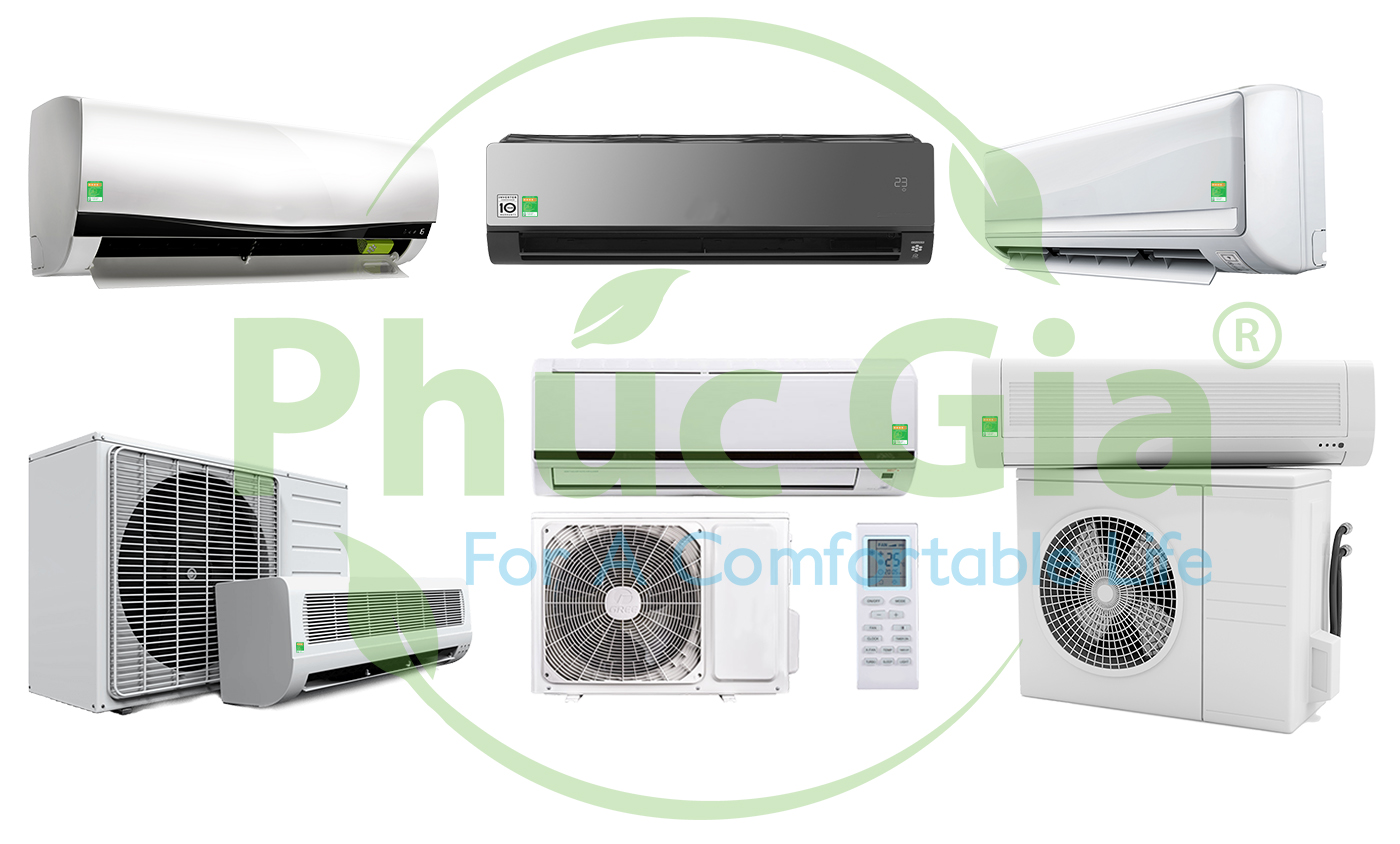
Classification of Air Conditioner Types:
- One-Way Cooling Air Conditioner < 24,000 BTU/h
- One-Way Cooling Air Conditioner > 24,000 BTU/h
- Two-Way Heating and Cooling Air Conditioner
- Single-Unit Air Conditioner
- Multi-Split Air Conditioner (1 outdoor unit and 2 indoor units)
- Multi-Split Air Conditioner (each with one indoor unit)
Air conditioners are classified into various types to suit different needs, and all are subject to Legal Regulations for Air Conditioners. From single-unit models to multi-split systems, these Legal Regulations for Air Conditioners ensure each type meets specific energy and safety standards. Understanding the classifications is essential within these Legal Regulations for Air Conditioners.
II. LEGAL REGULATIONS FOR AIR CONDITIONERS
1. Legal Regulations for Air Conditioners
| Ministry of Industry and Trade (MOIT) | Ministry of Science and Technology (MOST) |
| – Decision No. 04/2017/QD-TTg (March 9, 2017) issued by the Prime Minister, which specifies the portfolio of equipment subject to mandatory energy labeling, defines the applicable Minimum Energy Performance Standards (MEPS), and outlines the national implementation roadmap.
– Decision No. 14/2023/QD-TTg (May 24, 2023) from the Prime Minister, issuing the official list and roadmap for phasing out inefficient energy-consuming equipment and prohibiting the new construction of low-efficiency power generation units. – Circular No. 36/2016/TT-BCT (December 28, 2016) from the Ministry of Industry and Trade (MOIT), providing detailed regulations on energy labeling for products. – Circular No. 30/2011/TT-BCT (August 10, 2011) by the Ministry of Industry and Trade (MOIT), which sets forth temporary regulations on the permissible content limits of certain hazardous chemicals in electrical and electronic (E&E) products. |
– Decision No. 3810/QD-BKHCN (December 18, 2019) from the Ministry of Science and Technology, detailing the official portfolio of goods requiring mandatory quality inspection under its jurisdiction.
– Decision No. 1983/QD-TDC (October 15, 2014) by the Ministry of Science and Technology, which issues official guidelines for the certification of conformity with National Technical Regulation QCVN 9:2012/BKHCN, concerning Electromagnetic Compatibility (EMC) for household and similar electrical and electronic equipment. – Circular No. 11/2012/TT-BKHCN (April 12, 2012) from the Ministry of Science and Technology, formally promulgating QCVN 9:2012/BKHCN and providing the list of items subject to testing under this regulation. – Circular No. 13/2013/TT-BKHCN (April 12, 2013) by the Ministry of Science and Technology, which amends and supplements several articles of Circular No. 21/2011/TT-BKHCN, Circular No. 10/2012/TT-BKHCN, and Circular No. 11/2012/TT-BKHCN. – Circular No. 07/2018/TT-BKHCN (June 6, 2018) issued by the Ministry of Science and Technology, enacting Amendment 1:2018 to QCVN 9:2012/BKHCN – the National Technical Regulation on Electromagnetic Compatibility (EMC) for Household and Similar Electrical and Electronic Equipment. – Circular No. 01/2022/TT-BKHCN (February 16, 2022) from the Minister of Science and Technology, which amends both Circular No. 07/2018/TT-BKHCN and Circular No. 08/2019/TT-BKHCN. – Decision No. 2711/QD-BKHCN (December 30, 2022) of the Ministry of Science and Technology, regarding the official declaration of Group 2 products and goods to all domestic and international enterprises and organizations. |
2. Required Permits and Procedures
| Ministry of Industry and Trade (MOIT) | Ministry of Science and Technology (MOST) |
| – Energy efficiency testing;
– Declaration of energy labeling. => Affix the energy label before circulating the product on the market. – Testing for the content of hazardous substances in the product. |
– State control registration on quality of goods.
– Product testing according to QCVN 9:2012/BKHCN and Amendment 1:2018 QCVN 9:2012/BKHCN. – Certificate of Conformity – Declaration of Conformity – Affixing of conformity mark => It is mandatory to register for state quality control, obtain a certificate of conformity, issue a declaration of conformity, and affix the conformity label before circulating products on the market. |
3. Types of Air Conditioners within the Scope of Application
| Ministry of Industry and Trade (MOIT) | Ministry of Science and Technology (MOST) |
| Applicable to ducted air conditioners using a hermetic compressor-motor and an air-cooled condenser, single-package or split-unit, with or without an inverter, having a rated cooling capacity of up to 12,000W (41,000 BTU/h).
(*)Not applicable to the following air conditioners:
|
Air conditioners (not applicable to air conditioners using three-phase power) |
4. Mandatory Implementation Date of Legal Regulations for Air Conditioners
| Ministry of Industry and Trade (MOIT) | Ministry of Science and Technology (MOST) |
|
Circular No. 11/2012/TT-BKHCN, issued by the Ministry of Science and Technology, promulgates the National Technical Regulation QCVN 9:2012/BKHCN, with the effective date of June 1, 2014. |
5. Regulations/Standards for Testing
| Ministry of Industry and Trade (MOIT) | Ministry of Science and Technology (MOST) |
a. Energy efficiency according to the following standards:
b. Permissible content limits of certain hazardous chemicals in electrical and electronic products:
|
Testing of Air Conditioners in accordance with QCVN 9:2012/BKHCN and Amendment 1:2018 of QCVN 9:2012/BKHCN.
(This includes ensuring the technical testing requirements for Air Conditioners according to TCVN 7492-1 (CISPR 14-1)). |
6. Important Notes in Import, Manufacturing, and Business Policies
| Ministry of Industry and Trade (MOIT) | Ministry of Science and Technology (MOST) |
| – Air conditioners must undergo quality inspection and energy labeling during import procedures.
– Enterprises must adhere to the energy efficiency testing and energy labeling procedures for air conditioners in accordance with TCVN 7830:2015 (effective until March 31, 2025) and TCVN 7830:2021 (effective from April 1, 2024). – VRF and VRV air conditioners are not yet included in the mandatory scope of application. |
– This technical regulation does not apply to air conditioners using a 3-phase power supply. |
7. Detailed Guide to Pre-Market Procedures for Product Circulation
| Ministry of Industry and Trade (MOIT) | Ministry of Science and Technology (MOST) |
| – Imported air conditioner
(1) Complete the registration for energy efficiency testing; (2) Submit the air conditioner’s testing registration to the Customs authority; (3) The enterprise may be granted immediate customs clearance or carry out procedures to bring goods into storage; (4) Take samples for testing, and verify the minimum energy efficiency for the air conditioner; (5) Submit the efficiency test results to the Customs authority to complete the customs clearance procedures; (6) Carry out the procedure for the declaration of energy labeling with the Ministry of Industry and Trade; (7) Affix the energy label to the product before circulating it on the market. – Domestically manufactured air conditioner (1) Test for minimum energy efficiency; (2) Declare the energy label with the Ministry of Industry and Trade; (3) Affix the energy label to the product before circulating it on the market. |
– Imported air conditioner
(1) Register for state quality inspection; (2) Transmit the import goods declaration along with the quality inspection registration; (3) Complete customs clearance procedures and move goods to the warehouse; (4) Conduct conformity testing of the product according to the applicable Technical Regulation; (5) Obtain the Certificate of Conformity; (6) Make the Declaration of Conformity; (7) Affix the conformity mark (CR mark) to the product before circulating it on the market. – Domestically manufactured air conditioner (1) Conduct testing according to current regulations (QCVN 9:2012/BKHCN and Amendment 1:2018 QCVN 9:2012/BKHCN); (2) Submit the conformity certification dossier and one sample device for assessment to the Ministry of Science and Technology; (3) Announce the Declaration of Conformity at the local Sub-Department of Standards, Metrology and Quality; (4) Affix the conformity mark (CR mark) to the product before circulating it on the market. |
III. PHUC GIA LABORATORY CORPORATION: COMPREHENSIVE SERVICES FOR AIR CONDITIONERS
| ORD | PHUC GIA®’S CAPABILITIES | MINISTRY OF INDUSTRY AND TRADE (MOIT) | MINISTRY OF SCIENCE AND TECHNOLOGY (MOST) |
| 1 | Testing Capabilities (Certification/ Designation) |
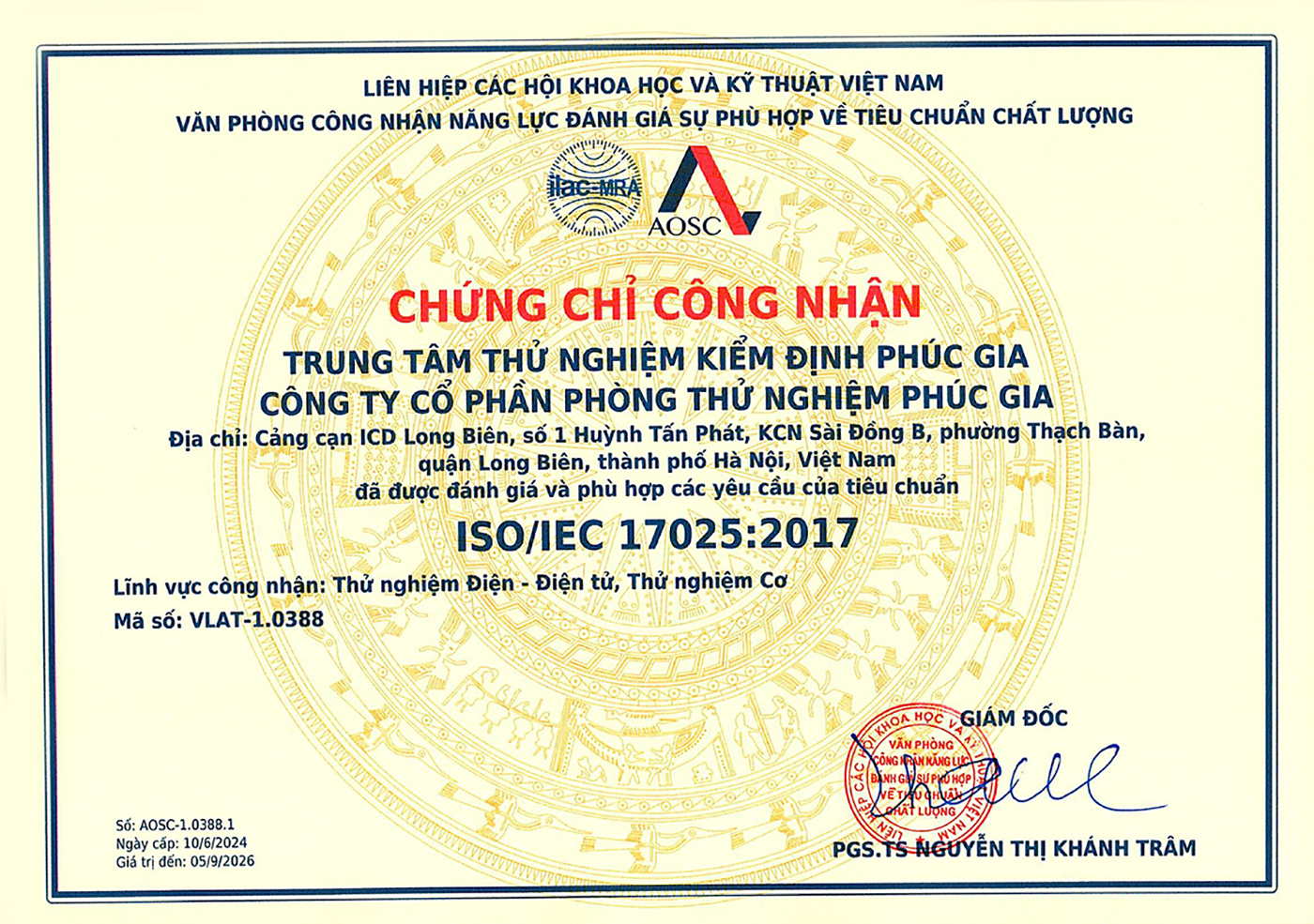
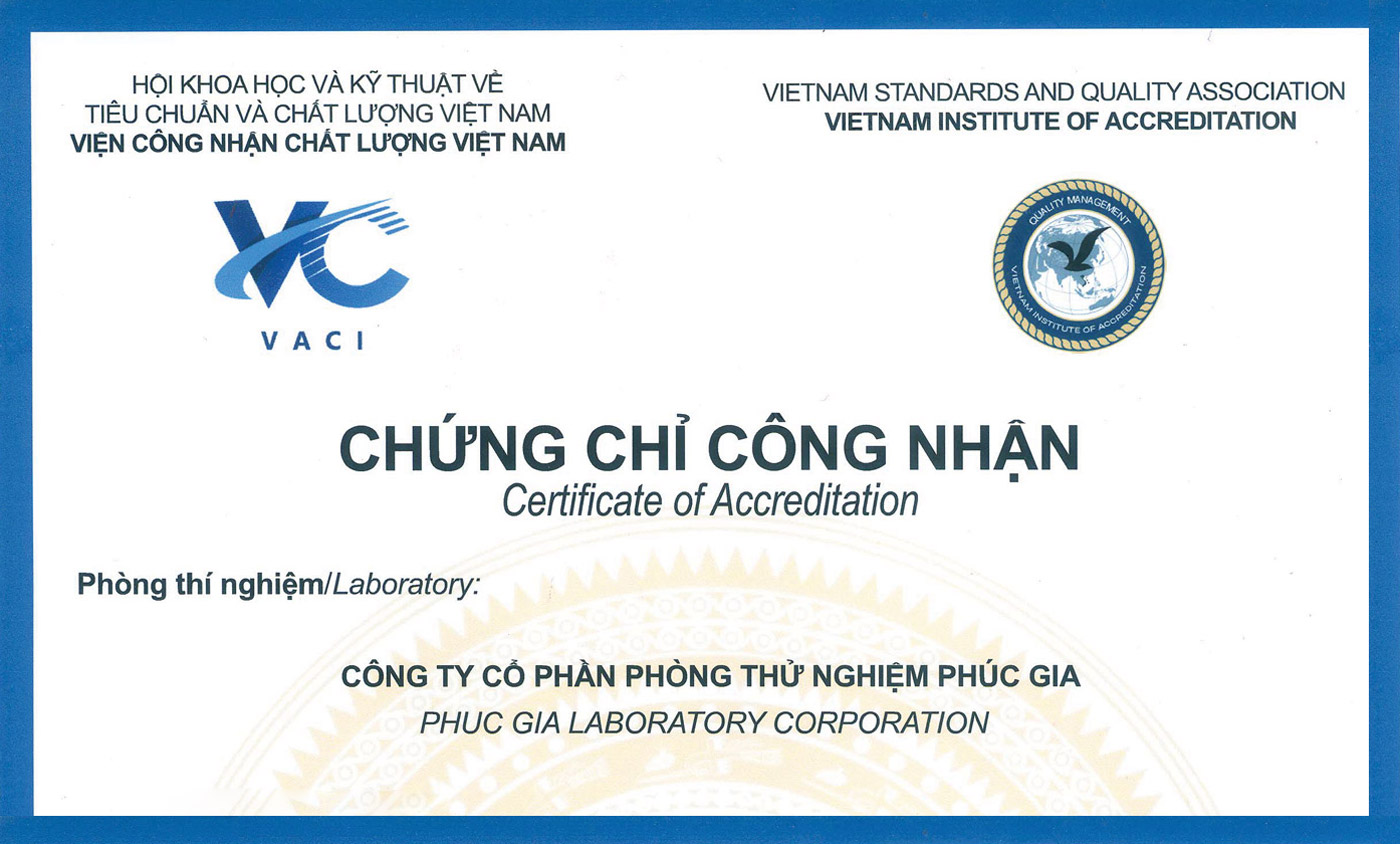
Phuc Gia’s official designation for Energy Efficiency testing services is currently active and remains in full effect. (Detail) | Phuc Gia has been designated for Electromagnetic compatibility and the designation is still valid. (Detail) |
| 2 | Quotation and Duration for Tests | The official listed quotation is available here: The updated Quotation for Testing and Certification Services from Phuc Gia Laboratory Corporation | |
| 3 | Support | – Consultancy on product quality improvement;
– Free 24/7 consultation service; – Consultancy on product quality improvement. |
|
| 6 | Contact for Testing Services | For assistance with testing/certification, please contact:
Address: ICD Long Bien, No. 01 Huynh Tan Phat, Sai Dong B Industrial Park, Long Bien Ward, Hanoi |
|
| Note: Phuc Gia Testing & Inspection Center directly conducts conformity testing for air conditioner products in accordance with the regulations of the Ministry of Industry and Trade, the Ministry of Science and Technology, and the Ministry of Information and Communications. For services such as Testing, Energy Labeling Declaration, Electromagnetic Compatibility, Electrical Safety, etc., Phuc Gia can provide support upon the customer’s request. | |||
Adhering to the Legal Regulations for Air Conditioners is a critical responsibility for manufacturers and importers. These rules are not just about compliance; they are designed to protect consumers by guaranteeing product safety and efficiency.
By enforcing mandatory energy efficiency testing and clear labeling, these Legal Regulations for Air Conditioners empower buyers to make informed, cost-effective choices. Ultimately, this regulatory framework fosters a fair market, promotes national energy conservation, and ensures that the air conditioning industry operates transparently, making the Legal Regulations for Air Conditioners beneficial for everyone.
RELATED POSTS:
- Air Conditioner Products Certificate According to QCVN 9:2012/BKHCN
- Electromagnetic Compatibility Testing According to QCVN 9:2012/BTTTT for Air Conditioners
- Electromagnetic Compatibility (EMC) Test Results for Air Conditioners – QCVN 9:2012/BKHCN
- Guidance on Energy Efficiency Testing for Non-Ducted Air Conditioners
- Declaration of Energy Labeling for Air Conditioners
- Conformity Certification Services for Air Conditioners
- Summary of Information to Know About Civil Cryptography Permits
For more details, please contact us at:
PHUC GIA LABORATORY CORPORATION
PHUC GIA CERTIFICATION CENTER
PHUC GIA INSPECTION TESTING CENTER
Address: ICD Long Bien, No. 01 Huynh Tan Phat, Sai Dong B Industrial Park, Long Bien Ward, Hanoi City, Vietnam.
Hotline: 0981 996 996/ 0982 996 696/ 024 7779 6696
E-mail: lab@phucgia.com.vn/cert@phucgia.com.vn/info@phucgia.com.vn
Website: phucgia.com.vn
Working time: Monday to Friday 8:00 – 18:30; Saturday 8:00 – 12:00

![QUOTATION – Testing and Other Certification Services [2026]](https://phucgia.com.vn/wp-content/uploads/2017/03/bao-gia-thu-nghiem-chung-nhan.png)