

The blender is an essential appliance in households, restaurants, and cafes, providing quick and convenient food processing. Its ability to blend fruits, dry ingredients, or crush ice contributes significantly to the variety of daily meals and beverages. As the market expands, this product is continuously improved with diverse designs, capacities, and features, meeting the growing demands of consumers.
The rapid growth of the market, however, necessitates increasingly strict product quality management. Consequently, for this appliance to be legally circulated, it must fully comply with all Legal Regulations for Blenders in Vietnam.
See more: Capacity Profile Of Phuc Gia Laboratory Corporation
In this article, Phuc Gia Laboratory Corporation (Phuc Gia®) provides a comprehensive summary of the essential information concerning the Legal Regulations for Blenders in Vietnam. This resource is designed to support enterprises in fully understanding and strictly adhering to the mandatory procedures for import, manufacturing, and market circulation under current law.

I. WHAT IS A BLENDER?
The blender is an essential fixture in households, restaurants, and cafes, facilitating rapid and convenient food preparation. Capable of blending fruits, dry ingredients, and ice, it significantly enhances the variety of daily nutrition and drinks. As the market evolves, these appliances feature increasingly advanced designs, capacities, and functionalities to satisfy growing consumer expectations.
Technically, blenders are classified as motor-operated household electrical appliances powered by AC or DC sources. They fall under the regulatory scope of TCVN 7492-1:2018 (CISPR 14-1:2016), which governs radio frequency disturbance emissions ranging from 9 kHz to 400 GHz. This standard mandates rigorous Electromagnetic Compatibility (EMC) testing to control emission levels, ensuring the device operates without causing interference to other electronic equipment.
Given this widespread use and technical complexity, strict management of quality and safety is essential. Consequently, prior to market entry, all products must fully adhere to the Legal Regulations for Blenders in Vietnam.

II. PROCEDURES AND LEGAL REGULATIONS FOR BLENDERS IN VIETNAM
1. Procedures for Implementing Licenses for Blenders
1.1. For Imported Blenders
| MANAGING MINISTRY | IMPORTED BLENDERS | |
| Implementing Steps | Authorizing/Implementing Body | |
| MINISTRY OF SCIENCE AND TECHNOLOGY | Step 1: State control registration (*) | Local Department of Standards, Metrology and Quality / Department of Science and Technology where the declaration is opened |
| Step 2: Regulation conformity testing | Phuc Gia® | |
| Step 3: Regulation conformity certification (**) | Phuc Gia® | |
| Step 4: Submit the certificate of conformity and related documents to the registration authority from Step 1 | Local Department of Standards, Metrology and Quality / Local Department of Science and Technology where the declaration is opened | |
| Step 5: Affix the conformity stamp (Before circulating on the market) |
The enterprise self-implements after being licensed | |
Notes:
(*) Submit online on https://vnsw.gov.vn/
(**) QCVN 9:2012/BKHCN – Certification according to Method 1: Typical sample testing, the Certificate is valid for 3 years.
1.2. For Domestically Manufactured Blenders
| MANAGING MINISTRY | MÁY XAY SINH TỐ SẢN XUẤT TRONG NƯỚC | |
| Implementing Steps | Authorizing/Implementing Body | |
| MINISTRY OF SCIENCE AND TECHNOLOGY | Step 1: Regulation conformity testing | Phuc Gia® |
| Step 2: Regulation conformity certification (**) | Phuc Gia® | |
| Step 3: Declaration of conformity | Local Department of Standards, Metrology and Quality / Department of Science and Technology (where the business is registered) | |
| Step 4: Affix the conformity stamp (Before circulating on the market) |
The enterprise self-implements after being licensed | |
Notes: Phuc Gia®: Phuc Gia Laboratory Corporation
(**) QCVN 9:2012/BKHCN – Certification according to Method 1: Typical sample testing, the Certificate is valid for 3 years.
2. Legal Regulation Documents
To achieve legal compliance and consumer safety in the Vietnamese market, manufacturers and importers must strictly adhere to the comprehensive Legal Regulations for Blenders in Vietnam, encompassing all applicable standards, technical regulations, and current management directives. The specific legal documents and technical standards are detailed below:
- Decision 2711/QĐ-BKHCN (30/12/2022) of the Ministry of Science and Technology (MOST) on announcing the list of Group 2 products and goods (mandatory quality inspection).
- Circular 01/2022/TT-BKHCN (16/02/2022) of MOST on amending Circular 07/2018/TT-BKHCN and Circular 08/2019/TT-BKHCN.
- Circular 06/2020/TT-BKHCN (10/12/2020) of MOST guiding and implementing Decrees 132/2008/NĐ-CP, 74/2018/NĐ-CP, 154/2018/NĐ-CP, and 119/2017/NĐ-CP.
- Circular 07/2018/TT-BKHCN (06/06/2018) of MOST promulgating Amendment 1:2018 to QCVN 9:2012/BKHCN – National Technical Regulation on Electromagnetic Compatibility for Household and Similar Electrical and Electronic Equipment.
- Circular 02/2017/TT-BKHCN (31/03/2017) of MOST promulgating regulations on standard conformity declaration, regulation conformity declaration, and conformity assessment methods.
- Decision 1983/QĐ-TĐC (15/10/2014) of MOST on issuing guidance for certifying conformity to the National Technical Regulation QCVN 9:2012/BKHCN on electromagnetic compatibility (EMC) for household and similar electrical and electronic equipment.
- Circular 13/2013/TT-BKHCN (12/4/2013) of MOST on amending and supplementing a number of articles of Circulars 21/2011/TT-BKHCN, 10/2012/TT-BKHCN, and 11/2012/TT-BKHCN.
- Circular 11/2012/TT-BKHCN (12/4/2012) of MOST promulgating QCVN 9:2012/BKHCN and the list of goods subject to testing under this regulation.
- Circular 28/2012/TT-BKHCN (30/09/2009) of MOST promulgating regulations on standard conformity declaration, regulation conformity declaration, and conformity assessment methods.
- National Standard TCVN 7492-1:2018 (CISPR 14-1:2016) on Electromagnetic compatibility – Requirements for household electrical appliances, electric tools and similar apparatus – Part 1: Emission.
These documents specifically stipulate the technical requirements, testing methods, labeling, conformity certification, and conformity declaration for the product. These are precisely the Legal Regulations for Blenders in Vietnam, ensuring the product meets all safety and quality requirements under current regulations.
3. Types of Blenders within the Scope of Application
Pursuant to Decision 2711/QĐ-BKHCN, all blenders (HS Code: 8509.40.00) must undergo testing, certification, and public declaration of conformity according to the mandatory National Technical Regulation QCVN 9:2012/BKHCN (and its Amendment 1:2018) before they are legally circulated.
Blenders are classified as motor-operated household electrical appliances (AC or DC powered) and are subject to the specific requirements of TCVN 7492-1:2018 (CISPR 14-1:2016). This standard controls radio frequency disturbance emissions from 9 kHz to 400 GHz. Products must pass Electromagnetic Compatibility (EMC) testing to confirm their emission levels and guarantee they will not cause interference to other electronic devices in the operational environment.
Therefore, compliance with these technical regulations and standards is crucial. This adherence fulfills the mandatory Legal Regulations for Blenders in Vietnam, ensuring product safety and, specifically, electromagnetic compatibility, prior to legal market entry.

4. Currently Effective Regulations/Standards
As part of the Legal Regulations for Blenders in Vietnam, Decision 2711/QĐ-BKHCN classifies blenders as Group 2 products—meaning they have the potential to pose safety risks. The product falls under the direct management of the Ministry of Science and Technology (MOST) and is mandatory to be tested, certified, and publicly declared compliant with the EMC safety standard, QCVN 9:2012/BKHCN (including Amendment 1:2018).
QCVN 9:2012/BKHCN stipulates that blenders must meet the electrical safety/EMC requirements of TCVN 7492-1:2018 (CISPR 14-1:2016) – the standard on Electromagnetic compatibility – Requirements for household electrical appliances, electric tools, and similar apparatus (Part 1: Emission). Accordingly, blenders must ensure compliance with the requirements for the Limit of conducted disturbance voltage at the mains terminals and the Limit of disturbance power (30-300MHz) specified in this standard.

5. Important Notes in Importation, Manufacturing, and Business Policies under the Legal Regulations for Blenders in Vietnam
– Testing and certification must be carried out by a testing and certification organization designated, registered, or recognized by the Ministry of Science and Technology (MOST).
– Domestically manufactured, imported, and traded blenders must be certified compliant with EMC using Method 1 (testing of a typical sample).
– The equipment must have product labeling as regulated, must undergo conformity certification, must affix the Conformity Mark (CR Mark), and is subject to inspection by the quality inspection agency.
– The Certificate of Conformity is valid for no more than 3 years. The enterprise must retain records for no less than 10 years from the date the last product of the registered type/model was shipped.
– TCVN 7492-1:2018 (CISPR 14-1:2016) generally does not apply to blenders designed for industrial use or for use in special environmental conditions (such as corrosive atmospheres, dusty or flammable gas environments).
– Used blenders are prohibited from import.
– Import tax must be fulfilled when completing blender import procedures. Enterprises should request a Certificate of Origin (C/O) from the exporter to benefit from special preferential import tax rates.

Thorough understanding and compliance with the Legal Regulations for Blenders in Vietnam is not merely a legal prerequisite for market circulation; it is a critical factor for enterprises seeking to safeguard their reputation, significantly minimize legal risks, and boost competitiveness. Therefore, businesses must ensure complete adherence to all current regulations and maintain a proactive approach by regularly updating their knowledge of changes in the legal framework, thereby ensuring product safety and meeting all quality management demands.
III. PHUC GIA LABORATORY CORPORATION: COMPREHENSIVE SERVICES FOR BLENDERS
| ORD | PHUC GIA® CAPABILITIES | MINISTRY OF SCIENCE AND TECHNOLOGY |
| 1 | Testing Capabilities (Certification/ Designation) |
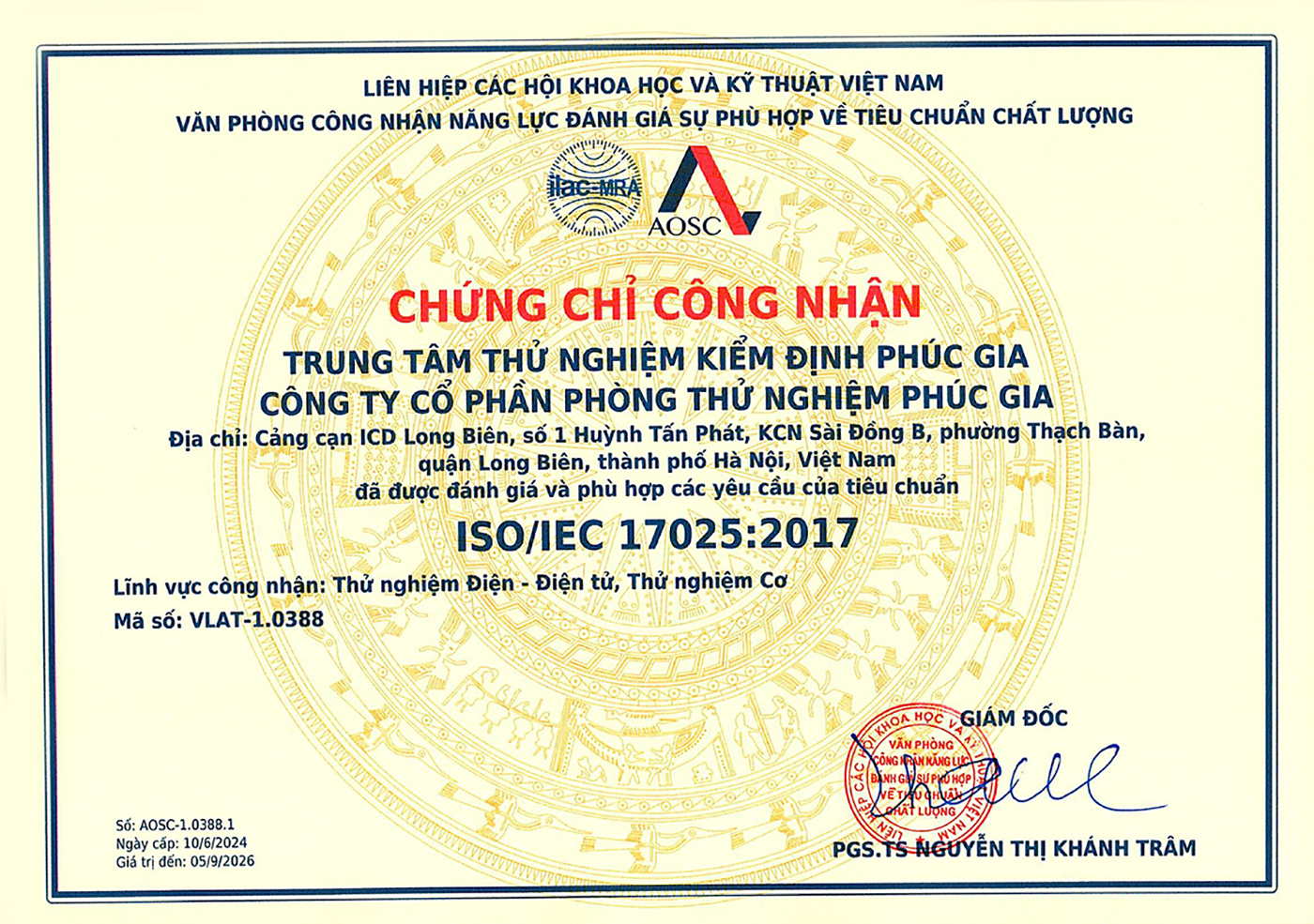
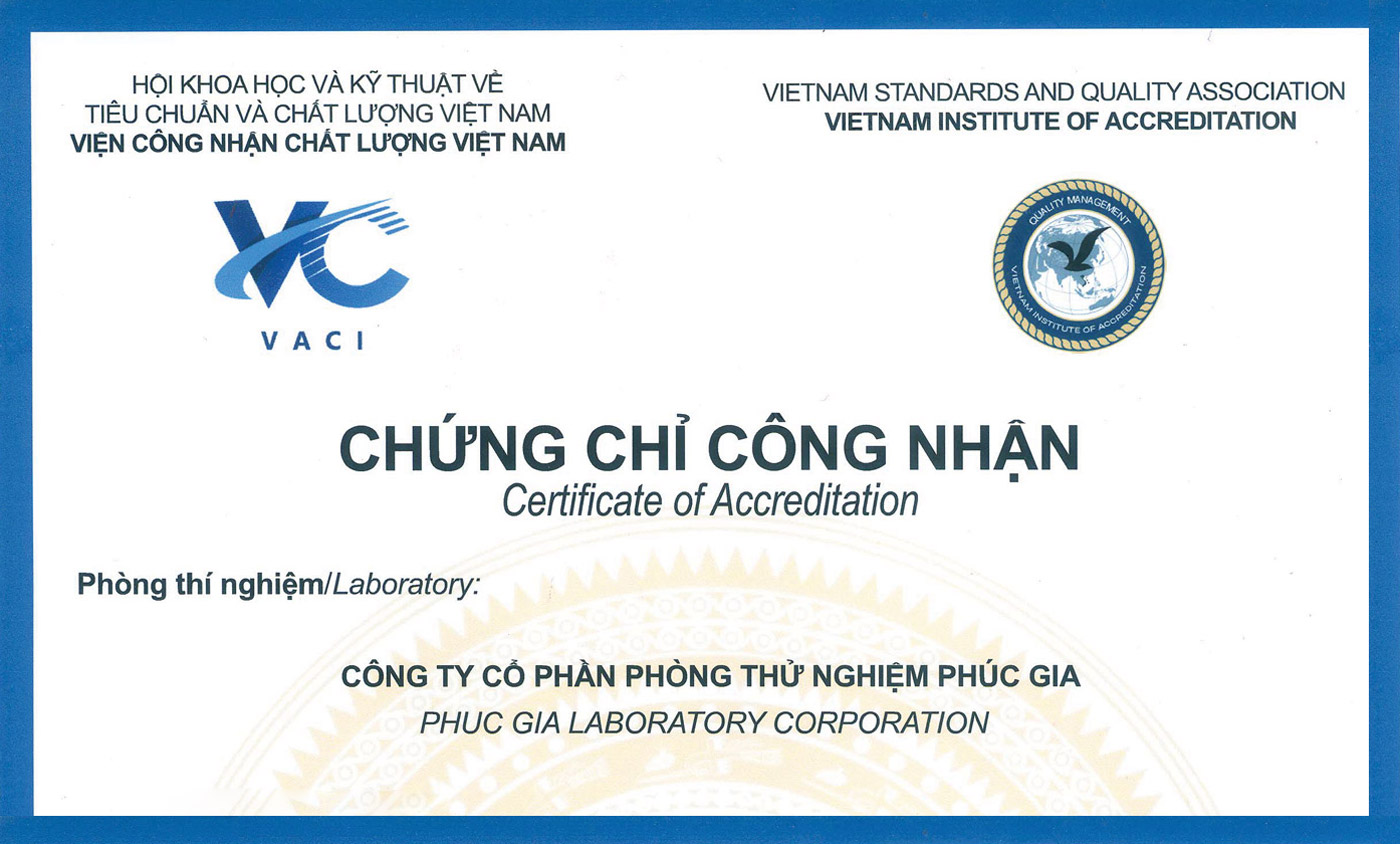
Phuc Gia® has been designated for testing and certification of electrical safety and electromagnetic compatibility (EMC) and remains effective/valid. (Detail) |
| 2 | Quotation and Duration for Tests | The official listed quotation is available here. |
| 3 | Support | – Consultancy on product quality improvement;
– Free 24/7 consultation service; – Consultancy on product quality improvement. |
| 6 | Contact for Services | For assistance with testing/certification, please contact:
Address: ICD Long Bien, No. 01 Huynh Tan Phat, Sai Dong B Industrial Park, Long Bien Ward, Hanoi |
| Note: Phuc Gia Testing and Inspection Center directly performs testing and certification for blenders according to the regulations of the Ministry of Science and Technology (MOST). | ||
RELATED POSTS:
- Guidance on Electromagnetic Compatibility (EMC) Testing for Blenders under QCVN 9:2012/BKHCN
- Latest Import Procedures for Blenders
- Product Certificate for Blenders under QCVN 9:2012/BKHCN
- Electromagnetic Compatibility (EMC) Testing Results for Blenders under QCVN 9:2012/BKHCN
- Food Safety (ATTP) Declaration for Multi-functional Blenders, Food Processors, and Juicers
- Guidance on Food Safety Testing and Declaration for Blenders
For more details, please contact us at:
PHUC GIA LABORATORY CORPORATION
PHUC GIA CERTIFICATION CENTER
PHUC GIA INSPECTION TESTING CENTER
Address: ICD Long Bien, No. 01 Huynh Tan Phat, Sai Dong B Industrial Park, Long Bien Ward, Hanoi City, Vietnam.
Hotline: 0981 996 996/ 0982 996 696/ 024 7779 6696
E-mail: lab@phucgia.com.vn/cert@phucgia.com.vn/info@phucgia.com.vn
Website: phucgia.com.vn
Working time: Monday to Friday 8:00 – 18:30; Saturday 8:00 – 12:00

![QUOTATION – Testing and Other Certification Services [2026]](https://phucgia.com.vn/wp-content/uploads/2017/03/bao-gia-thu-nghiem-chung-nhan.png)