

Fluorescent lamps are common lighting devices in homes, offices, and public works, due to their ability to provide stable light with high energy efficiency. They are also among the artificial light sources used to replace natural light in daily life, contributing to improved lighting quality and energy savings.
The transition towards energy-efficient lighting has placed fluorescent lamps under increasing regulatory scrutiny in Vietnam. For manufacturers and importers, understanding the comprehensive Legal Regulations for Fluorescent Lamps in Vietnam is not just about compliance—it is a mandatory requirement for market access and successful distribution. These regulations, issued by State Agencies like the Ministry of Industry and Trade (MOIT) and the Ministry of Science and Technology (MOST), govern everything from product quality and technical standards to mandatory energy efficiency testing and the all-important energy labeling process. This overview will guide you through the latest Vietnamese standards and legal frameworks you must navigate to ensure your products meet the nation’s stringent criteria for quality and energy conservation.
See more: Capacity Profile Of Phuc Gia Laboratory Corporation
Adhering to the Legal Regulations for Fluorescent Lamps in Vietnam is mandatory to ensure stringent product quality control, particularly addressing critical aspects such as electrical safety, UV radiation risks, and mercury content. This comprehensive article, compiled by Phuc Gia®, provides essential information on the required standards, technical regulations, and licensing procedures, empowering businesses to fully comply with testing, certification, and necessary steps before commencing production, importation, and market circulation.
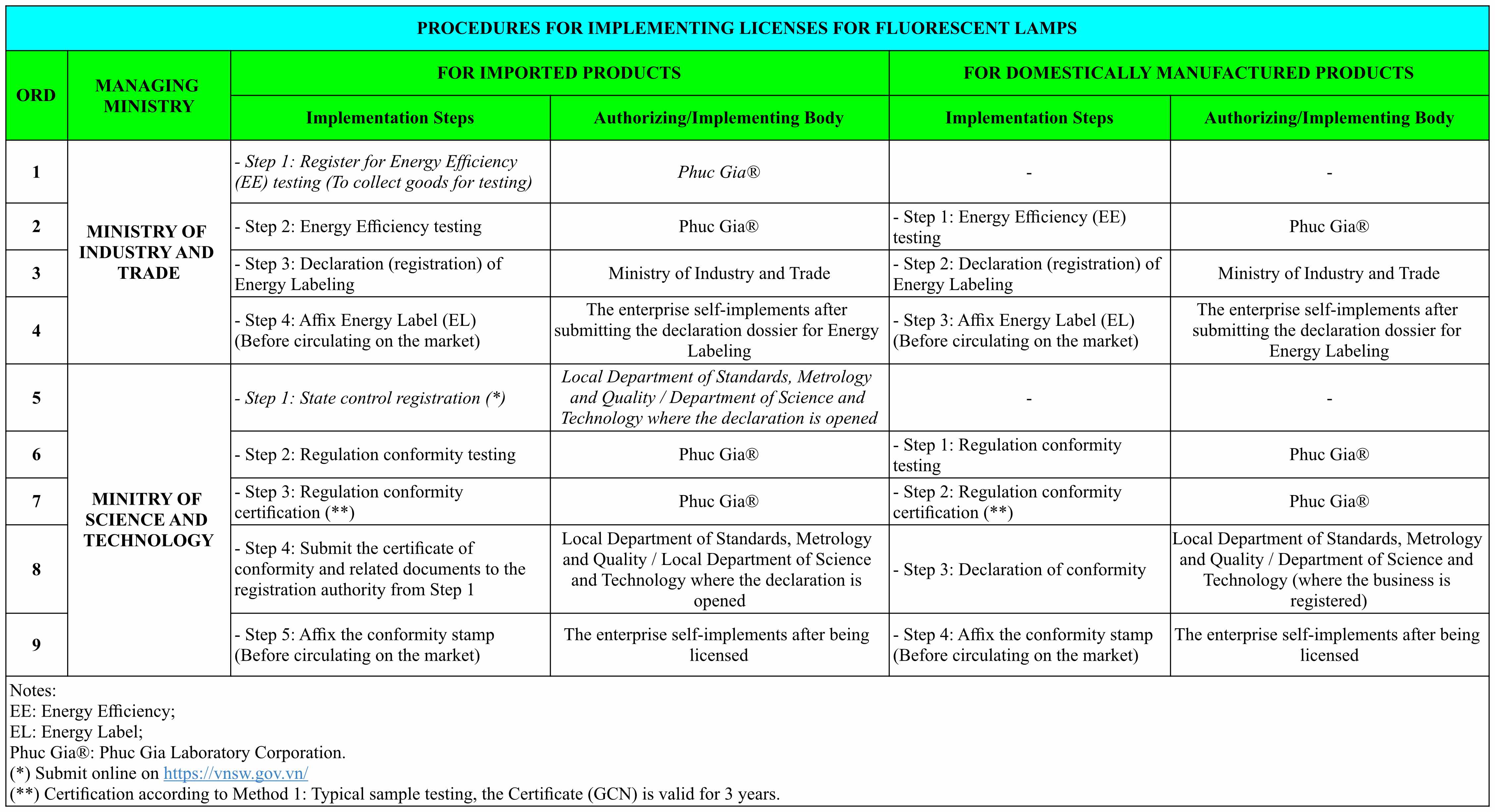
Table 1: Procedures for Implementing Licenses for Fluorescent Lamps
I. What is a Fluorescent Lamp?
Fluorescent lamps, also known as tube lamps or tubular lamps, are lighting devices that use the phenomenon of fluorescence from a phosphor powder layer to create light. The lamp consists of a glass tube containing inert gas and mercury vapor, two electrodes, and a phosphor coating on the inside. When current flows through, the mercury vapor emits ultraviolet rays, which the phosphor layer absorbs and converts into white or colored light. Thanks to this principle, fluorescent lamps have high efficiency, low power consumption, and low heat emission.
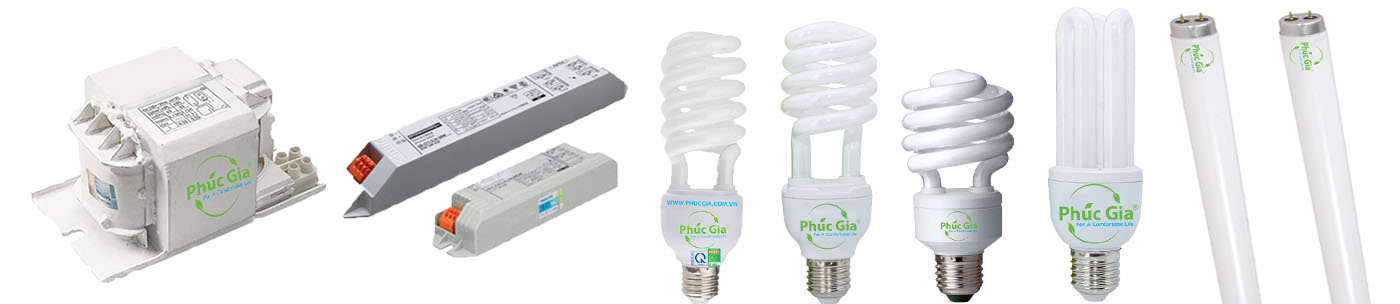
Beyond the traditional fluorescent tube, the market is widely served by the Compact Fluorescent Lamp (CFL) — a smaller, integrated version, often twisted or folded, featuring an electronic ballast. CFLs offer significant power savings, a long service life, and are ideal for smaller, residential lighting applications. Nevertheless, given that these lamp types contain trace amounts of mercury and emit ultraviolet radiation, strict quality control, testing, and market circulation management are mandatory under the Legal Regulations for Fluorescent Lamps in Vietnam to guarantee quality, energy efficiency, and safety for both users and the environment.
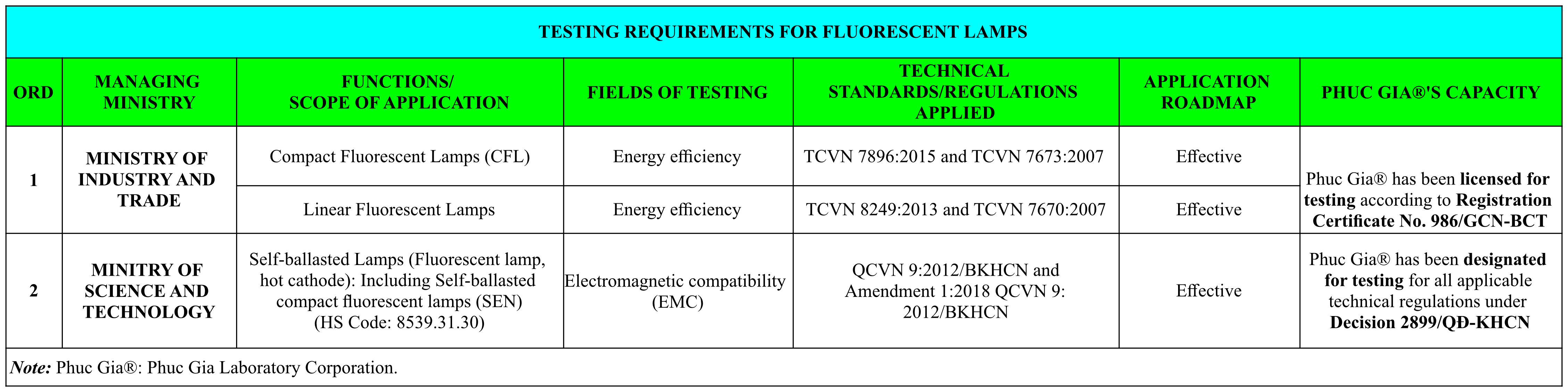
Table 2: Testing Requirements for Fluorescent Lamps
II. Legal Regulations for Fluorescent Lamps in Vietnam
1. Procedures for Implementing Licenses for Fluorescent Lamps
a) Imported Fluorescent Lamps
| MANAGING MINISTRY | IMPORTED FLUORESCENT LAMPS | |
| Implementing Steps | Authorizing/Implementing Body | |
| Ministry of Industry and Trade |
– Step 1: Register for Energy Efficiency (EE) testing
(To collect goods for testing) |
Phuc Gia® |
| – Step 2: Energy Efficiency testing | Phuc Gia® | |
| – Step 3: Declaration (registration) of Energy Labeling | Ministry of Industry and Trade | |
| – Step 4: Affix Energy Label (EL)
(Before circulating on the market) |
The enterprise self-implements after submitting the declaration dossier for Energy Labeling | |
| Ministry of Science and Technology | – Step 1: State control registration (*) | Local Department of Standards, Metrology and Quality / Department of Science and Technology where the declaration is opened |
| – Step 2: Regulation conformity testing | Phuc Gia® | |
| – Step 3: Regulation conformity certification (**) | Phuc Gia® | |
| – Step 4: Submit the certificate of conformity and related documents to the registration authority from Step 1 | Local Department of Standards, Metrology and Quality / Local Department of Science and Technology where the declaration is opened | |
| – Step 5: Affix the conformity stamp (Before circulating on the market) |
The enterprise self-implements after being licensed | |
Notes: EE: Energy Efficiency; EL: Energy Label; Phuc Gia®: Phuc Gia Laboratory Corporation.
(*) Submit online on https://vnsw.gov.vn/
(**) Certification according to Method 1: Typical sample testing, the Certificate (GCN) is valid for 3 years.
b) Domestically Manufactured Fluorescent Lamps
| MANAGING MINISTRY | DOMESTICALLY MANUFACTURED FLUORESCENT LAMPS | |
| Implementing Steps | Authorizing/Implementing Body | |
| Ministry of Industry and Trade | – Step 1: Energy Efficiency (EE) testing | Phuc Gia® |
| – Step 2: Declaration (registration) of Energy Labeling | Ministry of Industry and Trade | |
| – Step 3: Affix Energy Label (EL) (Before circulating on the market) |
The enterprise self-implements after submitting the declaration dossier for Energy Labeling | |
| Ministry of Science and Technology | – Step 1: Regulation conformity testing | Phuc Gia® |
| – Step 2: Regulation conformity certification (*) | Phuc Gia® | |
| – Step 3: Declaration of conformity | Local Department of Standards, Metrology and Quality / Department of Science and Technology (where the business is registered) | |
| – Step 4: Affix the conformity stamp (Before circulating on the market) |
The enterprise self-implements after being licensed | |
Notes: EE: Energy Efficiency; EL: Energy Label; Phuc Gia®: Phuc Gia Laboratory Corporation.
(*) Certification according to Method 1: Typical sample testing, the Certificate (GCN) is valid for 3 years.
2. Legal Regulation Documents
| Ministry of Industry and Trade | Ministry of Science and Technology |
|
– Decision 1725/QD-BCT dated July 1, 2024, of the Ministry of Industry and Trade (MOIT) promulgating the list of items subject to energy efficiency inspection and energy labeling. – Decision 14/2023/QD-TTg dated May 24, 2023, of the Prime Minister promulgating the list and roadmap for energy-consuming vehicles and equipment to be phased out and low-efficiency power generating sets prohibited from new construction. – Consolidated Document 16/VBHN-BCT of 2014 by MOIT promulgating the consolidated Circular temporarily regulating the permissible limits of hazardous chemical content in electrical and electronic products. – Decision 04/2017/QD-TTg dated March 9, 2017, of the Prime Minister regulating the list of products subject to energy efficiency inspection and mandatory energy labeling (specifically mentioning electric rice cookers, but setting general policy framework). – Circular 36/2016/TT-BCT dated December 28, 2016, of MOIT regulating energy labeling. – Circular 30/2011/TT-BCT dated August 10, 2011, of MOIT temporarily regulating the permissible limits of hazardous chemical content in certain electrical and electronic products. |
– Decision 3810/QD-BKHCN (18/12/2019) of the Ministry of Science and Technology (MOST) on the list of goods subject to quality inspection under MOST’s management. – Decision 1983/QD-TDC (15/10/2014) of MOST promulgating guidelines for conformity certification with National Technical Regulation QCVN 9:2012/BKHCN on Electromagnetic Compatibility (EMC) for household electrical and electronic equipment and similar purposes. – Circular 11/2012/TT-BKHCN (12/04/2012) of MOST promulgating QCVN 9:2012/BKHCN. – Circular 13/2013/TT-BKHCN (12/04/2013) of MOST on amending and supplementing a number of articles of Circular 21/2011/TT-BKHCN, Circular 10/2012/TT-BKHCN and Circular 11/2012/TT-BKHCN. – Circular 07/2018/TT-BKHCN (06/06/2018) of MOST on Amendment 1:2018 to QCVN 9:2012/BKHCN – National Technical Regulation on Electromagnetic Compatibility. – Circular 01/2022/TT-BKHCN (16/02/2022) of the MOST Minister promulgating amendments to Circular 07/2018/TT-BKHCN and Circular 08/2019/TT-BKHCN. – Decision 2711/QD-BKHCN (30/12/2022) of MOST on announcing Group 2 products and goods to all domestic and foreign units and enterprises. |
3. Types of Fluorescent Lamps within the Scope of Application
| Ministry of Industry and Trade | Ministry of Science and Technology |
|
Self-ballasted lamps (Fluorescent lamp, hot cathode: Self-ballasted compact fluorescent lamps (SEN)) – HS Code: 8539.31.30 |
4. Currently Effective Regulations/Standards
| Ministry of Industry and Trade | Ministry of Science and Technology |
|
a) Energy Efficiency Testing for Compact Fluorescent Lamps
b) Energy Efficiency Testing for Straight Tube Fluorescent Lamps
c) Permissible Limits of Hazardous Chemical Content in Electrical and Electronic Products
|
Mandatory testing of fluorescent lamps is conducted according to QCVN 9:2012/BKHCN and Amendment 1:2018 QCVN 9:2012/BKHCN. These key documents, integral to the Legal Regulations for Fluorescent Lamps in Vietnam, specifically mandate that Compact Fluorescent Lamps (CFLs) must comply with the technical testing requirements of TCVN 7186 (CISPR 15). This standard sets the limits and methods for measuring the radio frequency disturbance characteristics (EMC Emission) produced by lighting equipment and similar electrical devices. |
5. Important Notes in Importation, Manufacturing, and Business Policies under the Legal Regulations for Fluorescent Lamps in Vietnam
| Ministry of Industry and Trade | Ministry of Science and Technology |
| – When carrying out procedures for importing fluorescent lamps, enterprises must perform quality inspection, declare conformity, and apply the energy label.
– Ballasts for fluorescent lamps are mandatory to test for energy efficiency according to specific standards:
– The manufacturer must declare the lifespan of the fluorescent lamp, which shall not be less than 6,000 hours. |
– Enterprises manufacturing or importing domestic storage water heaters, after obtaining conformity certification, must register the conformity declaration at the Sub-Department of Standards, Metrology, and Quality (STAMEQ) where the enterprise is registered, before placing the product on the market.
– The Conformity Certificate is valid for a maximum of 3 years. The enterprise must archive records for no less than 10 years from the date the last product of the registered model/type is shipped. – Multi-function equipment that is subject to simultaneous compliance with different clauses of this standard and/or other standards must satisfy the regulations of each clause/standard related to the relevant operating functions. – TCVN 7186 (CISPR 15) applies to equipment with a frequency range from 9 kHz to 400 GHz. |
III. PHUC GIA LABORATORY CORPORATION: COMPREHENSIVE SERVICES FOR FLUORESCENT LAMPS
| ORD | PHUC GIA® CAPABILITIES | MINISTRY OF INDUSTRY AND TRADE (MOIT) | MINISTRY OF SCIENCE AND TECHNOLOGY (MOST) |
| 1 | Testing Capabilities (Certification/ Designation) |
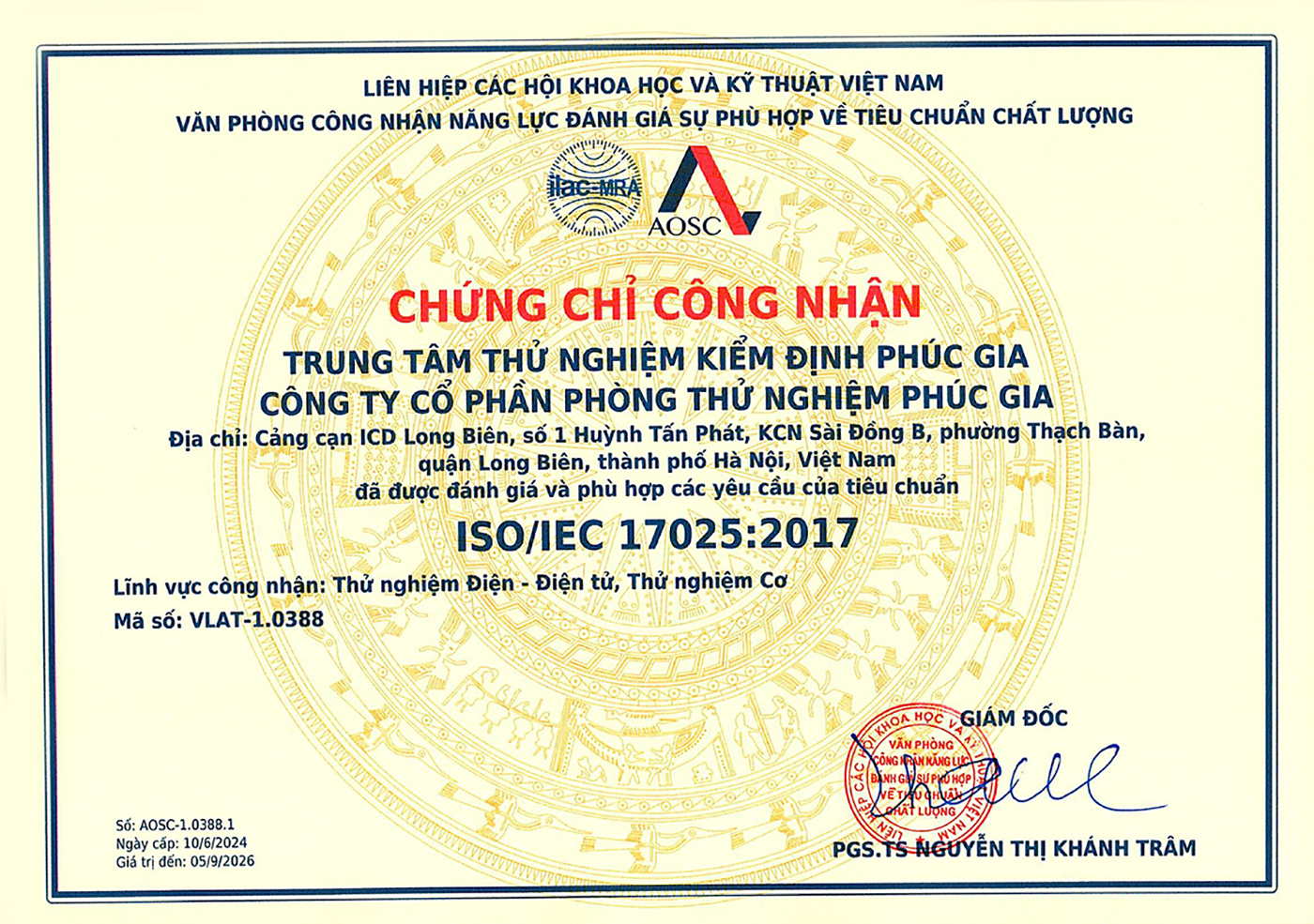
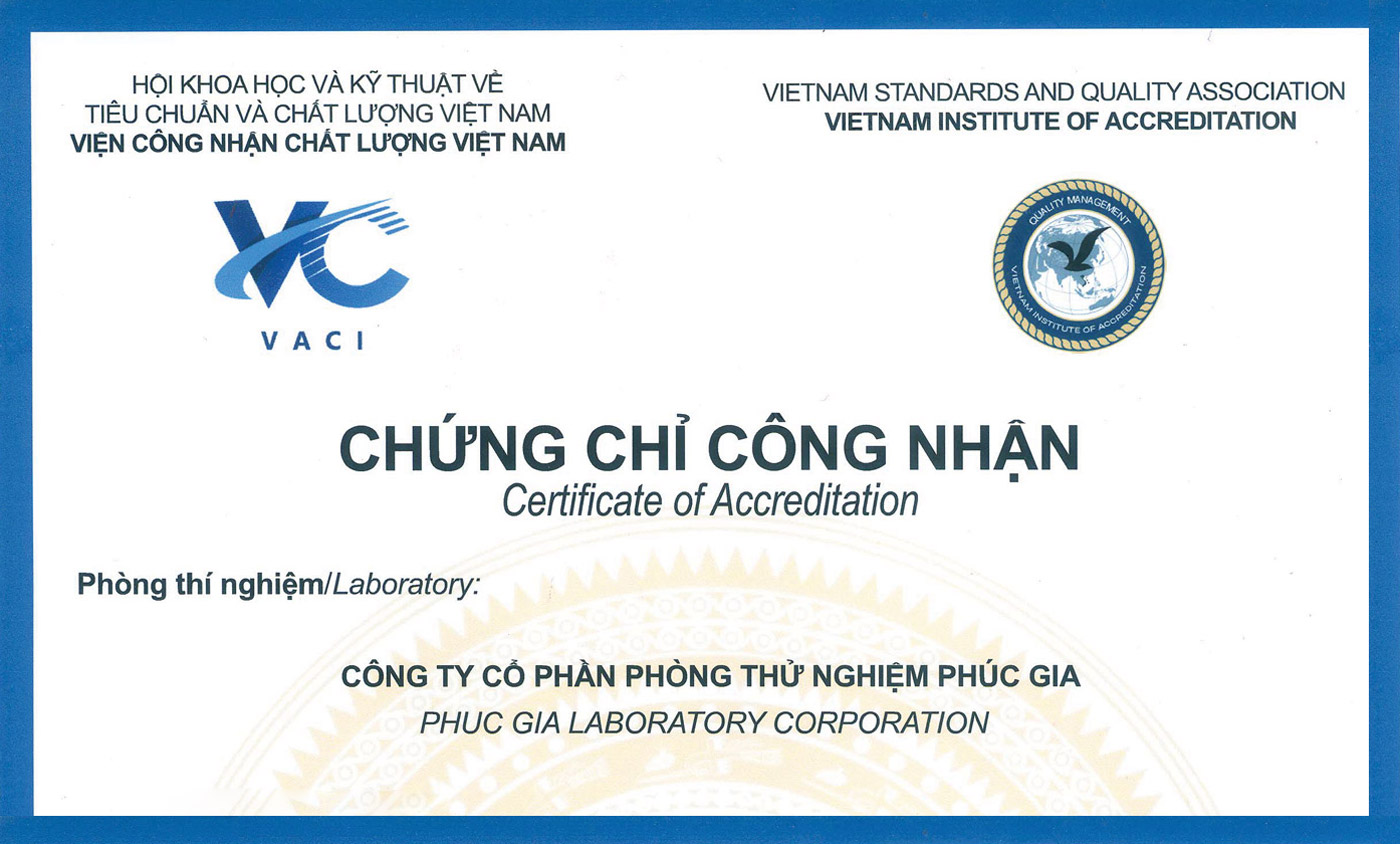
Phuc Gia® has been designated and remains effective/valid. (Detail) | Phuc Gia® has been designated for testing and certification of electrical safety and electromagnetic compatibility (EMC) and remains effective/valid. (Detail) |
| 2 | Quotation and Duration for Tests | The official listed quotation is available here | |
| 3 | Support | – Consultancy on product quality improvement;
– Free 24/7 consultation service; – Consultancy on product quality improvement. |
|
| 6 | Contact for Services | For assistance with testing/certification, please contact:
Address: ICD Long Bien, No. 01 Huynh Tan Phat, Sai Dong B Industrial Park, Long Bien Ward, Hanoi |
|
| Note: Phuc Gia Laboratory Joint Stock Company directly performs testing and certification for fluorescent lamps according to the regulations of the Ministry of Science and Technology (MOST) | |||
In conclusion, the Comprehensive Compilation of Legal Regulations for Fluorescent Lamps in Vietnam establishes a robust and evolving framework for the industry. Driven by a national agenda for energy conservation and environmental safety, this regulatory ecosystem mandates strict adherence to national technical standards (TCVN) for Minimum Energy Performance Standards (MEPS). Crucially, key regulations like QCVN 02A:2020/BCT limit the maximum allowable mercury content, signaling a clear focus on reducing environmental impact. For manufacturers and importers, navigating these requirements—including mandatory testing, conformity assessment, and energy labeling—is essential for seamless market access and compliance. Ultimately, this dynamic legal landscape is actively shaping the Vietnamese market, pushing the industry toward safer, higher-quality, and more sustainable lighting solutions.
RELATED POSTS:
- Guidance on Energy Efficiency Testing for Compact Fluorescent Lamps
- Guidance on Energy Efficiency Testing for Linear Tubular Fluorescent Lamps in Vietnam
- Energy Efficiency Test Report for Compact Fluorescent Lamps
For more details, please contact us at:
PHUC GIA LABORATORY CORPORATION
PHUC GIA CERTIFICATION CENTER
PHUC GIA INSPECTION TESTING CENTER
Address: ICD Long Bien, No. 01 Huynh Tan Phat, Sai Dong B Industrial Park, Long Bien Ward, Hanoi City, Vietnam.
Hotline: 0981 996 996/ 0982 996 696/ 024 7779 6696
E-mail: lab@phucgia.com.vn/cert@phucgia.com.vn/info@phucgia.com.vn
Website: phucgia.com.vn
Working time: Monday to Friday 8:00 – 18:30; Saturday 8:00 – 12:00

![QUOTATION – Testing and Other Certification Services [2026]](https://phucgia.com.vn/wp-content/uploads/2017/03/bao-gia-thu-nghiem-chung-nhan.png)