

Hair dryer import procedures include 5 important steps such as preparing the legal dossier, opening the declaration, registering for quality inspection, taking test samples, and actual customs clearance. In the following article, Phuc Gia will provide you with 5 detailed steps to perform hair dryer import procedures in a timely and effective manner.
See more: Capacity Profile Of Phuc Gia Laboratory Corporation
1. Process for performing Hair Dryer Import Procedures
The hair dryer import procedure consists of 5 steps: Quality inspection of the hair dryer, opening the customs declaration, testing and certification of conformity, customs clearance of the declaration, and transporting goods to the warehouse. When carrying out hair dryer import procedures, full compliance with customs procedure steps is very important to ensure the process takes place in a timely manner and without encountering legal issues.
Step 1: Quality inspection of the hair dryer
Quality inspection of the hair dryer is an important step in the import process, according to the provisions in Decision No. 3810/QĐ-BKHCN issued by the Ministry of Science and Technology on December 18, 2019. Below are the three main steps to register for quality inspection via the national single window system:
-
Step 1: Create an account and register the dossier: Access the website vnsw.gov.vn to create an account and register the quality inspection dossier for the hair dryer. After having an account, register the dossier with the Ministry of Science and Technology (MOST), where the Department of Standards, Metrology and Quality will receive it.
-
Step 2: Sampling and quality inspection: After registration, take samples of the hair dryer at the port or the importer’s warehouse. Samples will be quality-tested in the laboratory; the testing time usually takes 2-3 days.
-
Step 3: Receive results and upload to the system: After having the test results, upload the results to the national single window system. The Department of Standards, Metrology and Quality will confirm or reject the dossier.
This process helps ensure that hair dryers meet quality requirements before being imported.
Step 2: Open customs declaration
After preparing all necessary documents such as the contract, commercial invoice, packing list, bill of lading, certificate of origin, and HS code, the enterprise proceeds to declare information on the electronic customs system. This task requires absolute accuracy in data entry, because just a small error regarding the HS code, tax rate, goods description, or origin can cause the enterprise to lose a lot of time and cost for corrections. The declaration deadline is 30 days from the date the goods arrive at the port; if the declaration is late, the enterprise will be penalized according to regulations.
After the declaration is sent to the system, customs will automatically assign the inspection channel: green, yellow, or red. Each channel will have a different processing workflow, and the enterprise needs to open the declaration at the customs branch within 15 days from the time of declaration. If the deadline is exceeded, the declaration will be canceled and the enterprise may face administrative penalties.
Note: After having the official declaration, immediately contact the customs branch to continue the hair dryer import procedure, avoiding delays that cause incurred costs and risks.
Step 3: Testing and Certification of Conformity
In order for hair dryers to be allowed to circulate in Vietnam, the product must undergo steps of testing and certification of conformity for hair dryers, and energy labeling according to evaluation under national technical regulations to ensure the equipment operates safely, saves energy, and does not affect the surrounding electromagnetic environment.
-
Electromagnetic Compatibility (EMC) Testing: Hair dryers must be tested according to QCVN 9:2012/BKHCN, ensuring the equipment does not generate electromagnetic interference exceeding the permitted level, avoiding influence on other electronic devices.
-
Certification of Conformity (CR): After achieving the test results, the designated authority will issue the Certificate of Conformity and the CR mark, allowing the product to circulate legally on the Vietnamese market.
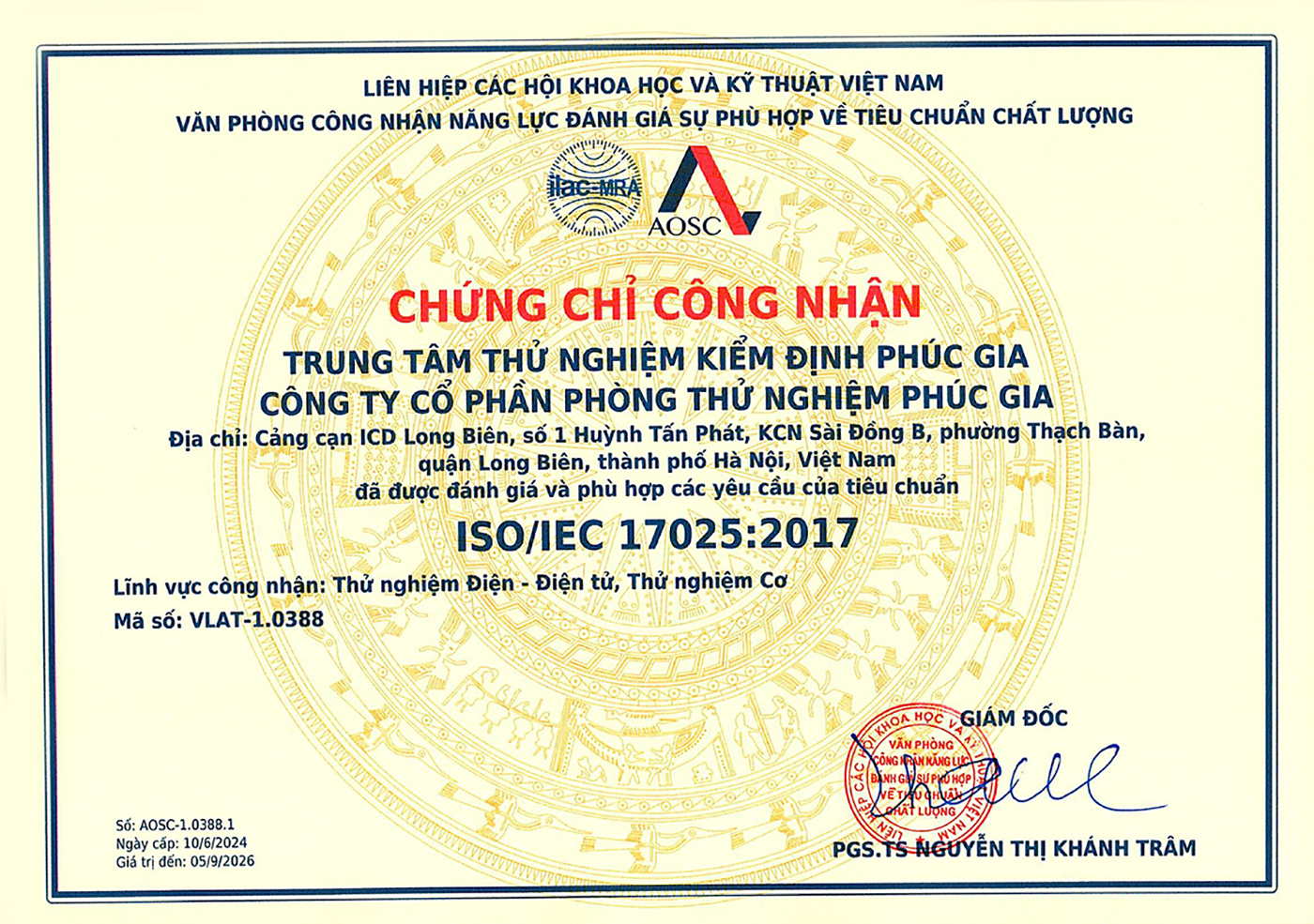
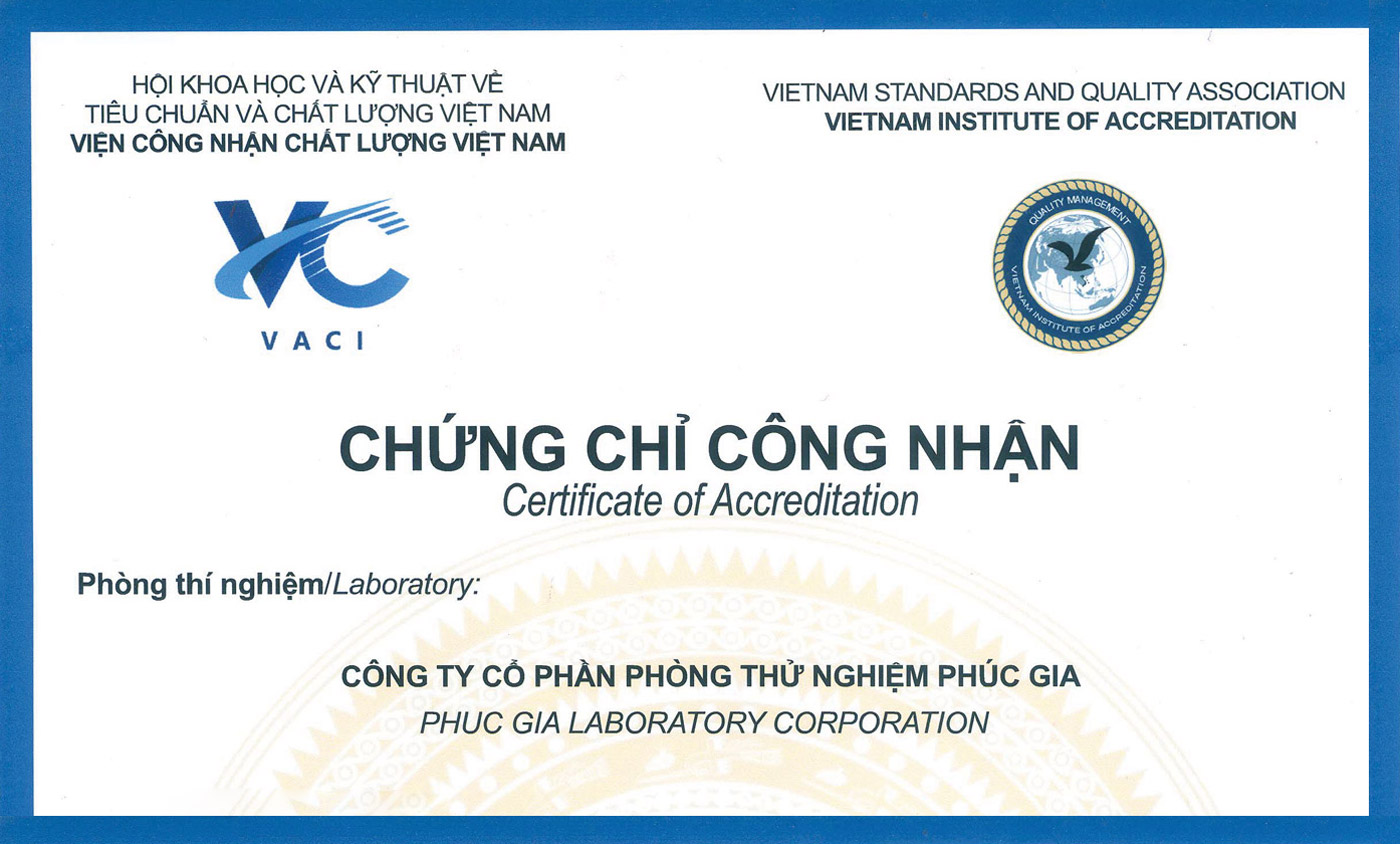
With more than 10 years of experience, a team of nearly 100 highly specialized experts, and a modern laboratory system, Phuc Gia is one of the few facilities licensed by the Ministry of Science and Technology. Unlike many units that only have certification capacity, Phuc Gia simultaneously possesses full certification and testing capacities, helping the quality assessment of goods to be accurate and comprehensive, ensuring products quickly circulate legally on the Vietnamese market.

Step 4: Customs clearance of the declaration
After checking the dossier and documents, if there are no issues, the customs officer will accept the customs clearance of the hair dryer import declaration. You can pay the import tax to complete the clearance procedures.
In some cases, the declaration will be released to bring the goods to the warehouse for preservation before supplementing the full dossier. After completion, customs will continue to grant clearance for the declaration. If the declaration has not been cleared, additional customs documentation procedures must be performed. Overdue clearance will lead to penalty fees and prolonged processing time.
Step 5: Bringing goods to the warehouse
After the declaration has been cleared, proceed to liquidate the declaration and complete the necessary hair dryer import procedures to bring the goods to the warehouse. To pick up the goods smoothly, you need to prepare the delivery order (D/O), transportation means, and ensure the goods are accepted through the supervision area.

2. Hair Dryer Import Dossier
When performing a hair dryer import, enterprises need to prepare a dossier in accordance with the regulations in Circular No. 38/2015/TT-BTC and its amendments in Circular No. 39/2018/TT-BTC issued by the Ministry of Finance. The hair dryer import document set includes the following papers:
-
Customs declaration
-
Sales contract
-
Commercial invoice
-
Packing list
-
Bill of lading
-
Certificate of origin (if any)
-
Quality inspection
-
Catalog (if any) and other documents as required by customs.
Among them, the most important documents are the customs declaration, commercial invoice, bill of lading, certificate of origin, and quality inspection dossier. If required by customs, enterprises need to provide additional documents.
Note that the quality inspection dossier must be registered on the national single window portal, and the inspection results must be uploaded to this system.

3. Legal Regulations on Hair Dryer Import Procedures
When performing hair dryer import procedures into Vietnam, enterprises need to clearly understand several important legal documents to ensure the product fully meets quality and safety requirements. Below are the legal regulations to note when performing hair dryer customs procedures:
-
Decision No. 3810/QD-BKHCN – Issuing the list of imported goods subject to quality inspection according to national technical regulation QCVN 4:2009/BKHCN. The decision took effect on December 8, 2017, issued by the Ministry of Science and Technology.
-
Circular No. 21/2009/TT-BKHCN – Regulating QCVN 4:2009/BKHCN, requiring quality inspection for electrical equipment. The Circular took effect on June 1, 2010, issued by the Ministry of Science and Technology.
-
Circular No. 07/2017/TT-BKHCN – Amending and supplementing a number of articles in Circular No. 27/2012/TT-BKHCN, regulating quality inspection of imported goods. The Circular took effect on October 1, 2017, issued by the Ministry of Science and Technology (MOST).
-
Official Dispatch No. 2421/TDC-HCHQ – Instructions for implementing Circular No. 07/2017/TT-BKHCN. The dispatch took effect on October 1, 2017, issued by the Directorate for Standards, Metrology and Quality.
In addition, hair dryers must comply with electromagnetic compatibility (EMC) regulations to ensure they do not cause electromagnetic interference affecting equipment and human health. Regulations on hair dryer EMC testing standards include:
-
Decision No. 1983/QD-TDC: Guidelines for certification of conformity with QCVN 9:2012/BKHCN on electromagnetic compatibility for household electrical and electronic appliances. Issued by the Ministry of Science and Technology, effective from October 15, 2014.
-
Circular No. 11/2012/TT-BKHCN: Issuing National Technical Regulation QCVN 9:2012/BKHCN on electromagnetic compatibility for household electrical and electronic appliances. Issued by the Ministry of Science and Technology, effective from June 1, 2012.
-
Circular No. 01/2022/TT-BKHCN: Amending and supplementing a number of articles in Circular No. 07/2018/TT-BKHCN and No. 08/2019/TT-BKHCN. Issued by the Ministry of Science and Technology (MOST), effective from April 1, 2022.
-
National Technical Regulation QCVN 9:2012/BKHCN: Regulations on electromagnetic compatibility for household electrical and electronic appliances (including hair dryers). Regulating requirements for electromagnetic interference emission limits and testing and conformity certification processes. Issued by the Ministry of Science and Technology, effective from June 1, 2012.
-
Amendment 1:2018 QCVN 9:2012/BKHCN: Updating a number of regulations on product testing and certification. Issued by the Ministry of Science and Technology (MOST), effective from September 1, 2018.
4. HS code and hair dryer import tax
When performing a Hair Dryer Import, the first important step is to accurately determine the HS code (Harmonized System). The HS code determines the import tax rate and related policies, so choosing the right HS code is a key factor to ensure hair dryer import procedures take place according to regulations:
Below is the HS code information for hair dryers:
| Description | HS Code | Import Tax (%) | Preferential Import Tax (%) | VAT (%) |
| Hair Dryer | 8516.31.00 | 37,5 | 25 | 8 |
Determining the wrong HS code can lead to issues such as:
-
Delay in hair dryer customs procedures: An incorrect HS code may lead to customs requesting re-inspection and verification of information, prolonging clearance time.
-
Administrative penalties: If errors are discovered, enterprises may be subject to fines under Decree 128/2020/ND-CP issued by the Government on October 19, 2020.
-
Delays in goods delivery: An incorrect HS code may require information adjustments, affecting production and business schedules.
-
Incurred taxes and tax penalties: If an incorrect HS code leads to inaccurate import tax calculation, enterprises may be fined from 2 million VND up to three times the amount of tax payable.
Import taxes for hair dryers include two main types: import tax and value-added tax (VAT). The tax calculation formulas are performed as follows:
-
Import tax is calculated by the formula: CIF Value x % import tax rate.
-
Value-added tax (VAT) will be calculated by the formula: (CIF Value + Import tax) x % VAT rate.
The VAT for hair dryers is 8%. To apply the preferential import tax rate of 25%, the Hair Dryer Import shipment needs a Certificate of Origin (C/O) from the exporting country. This is an important factor for enterprises to take advantage of preferential import tax rates, saving costs for their shipments.
5. Regulations on goods labeling when performing a Hair Dryer Import
Since Decree No. 128/2020/ND-CP (issued by the Government on October 19, 2020) and amended/supplemented by Decree No. 111/2021/ND-CP (issued by the Government on December 9, 2021), goods labeling has become stricter. Specifically, for an imported hair dryer, the label needs the following information:
-
Name and address of the exporter and importer (including company name, address).
-
Name of goods and related information.
-
Origin of goods.
In addition, this information needs to be written in English or have a translation if another language is used. Placing labels in the correct position is also very important, usually attached to packaging, cartons, or surfaces that are easy to inspect. For retail goods, labels must have additional information such as manufacturer, technical specifications, production date, and safety warnings.
Note, if labels are not attached or contain incorrect information, the importer will face risks such as:
-
Fines under Article 22 of Decree 128/2020/ND-CP.
-
Not enjoying preferential import tax due to the certificate of origin being rejected.
-
Goods being easily lost or damaged due to lack of warnings during transportation.
Compliance with labeling regulations is mandatory and very important to ensure smoothness during the import and distribution process.

6. Notes when performing a Hair Dryer Import
When performing Hair Dryer Import procedures, there are several important notes that enterprises need to pay attention to in order to avoid risks and ensure a timely customs clearance process:
-
Completion of tax obligations: Hair dryers are only cleared when tax obligations to the state have been completed.
-
Prohibition of used goods: Old or used hair dryers are not allowed to be imported.
-
Quality inspection: Imported hair dryers must undergo quality inspection before customs clearance.
-
Goods labeling: According to the provisions in Decree No. 43/2017/ND-CP, goods must be labeled according to standards.
-
Accurate HS code determination: Correctly identifying the HS code helps determine accurate taxes and avoid penalties.
-
Medical device classification declaration: If the product is related to medical devices, a classification declaration is required before import to avoid storage and yard delays.
Above is the entire hair dryer import procedure process according to current regulations, helping enterprises perform it easily and ensure legal compliance. We hope that the information Phuc Gia has provided will support your enterprise in optimizing time and costs in import activities.
Regarding electromagnetic compatibility testing and conformity certification for circulating hair dryers on the Vietnamese market after customs clearance, Phuc Gia Laboratory Corporation is the licensed unit to perform this. With an international standard lab system, a team of experienced experts, and capacities designated by the Ministries, Phuc Gia is committed to ensuring quality and compliance with legal regulations.
For more details, please contact us at:
PHUC GIA LABORATORY CORPORATION
PHUC GIA CERTIFICATION CENTER
PHUC GIA INSPECTION TESTING CENTER
Address:
- Hanoi: ICD Long Bien, No. 01 Huynh Tan Phat, Sai Dong B Industrial Park, Long Bien Ward
- Ho Chi Minh City: No. 180, D2 Street, Long Truong Ward
Hotline: 0965996696 / 0982996696 / 02477796696
E-mail: lab@phucgia.com.vn/cert@phucgia.com.vn/info@phucgia.com.vn
Website: phucgia.com.vn
Working time: Monday to Friday 8:00 – 18:30; Saturday 8:00 – 12:00

![QUOTATION – Testing and Other Certification Services [2026]](https://phucgia.com.vn/wp-content/uploads/2017/03/bao-gia-thu-nghiem-chung-nhan.png)