

The import procedures for ICT equipment are one of the critical steps businesses must master to bring ICT products into the Vietnamese market. In the article below, Phuc Gia will help you clearly understand the regulatory steps for the import procedures for ICT equipment, ensuring you avoid information gaps and legal risks.
See more: Capacity Profile Of Phuc Gia Laboratory Corporation
1. What is ICT Equipment?
ICT stands for Information & Communication Technologies. This term is often employed as a broader concept than IT (Information Technology), aiming to emphasize the role of unified communications and the integration of telecommunications (telephone lines and wireless signals), smart building management systems, and audio-visual systems.
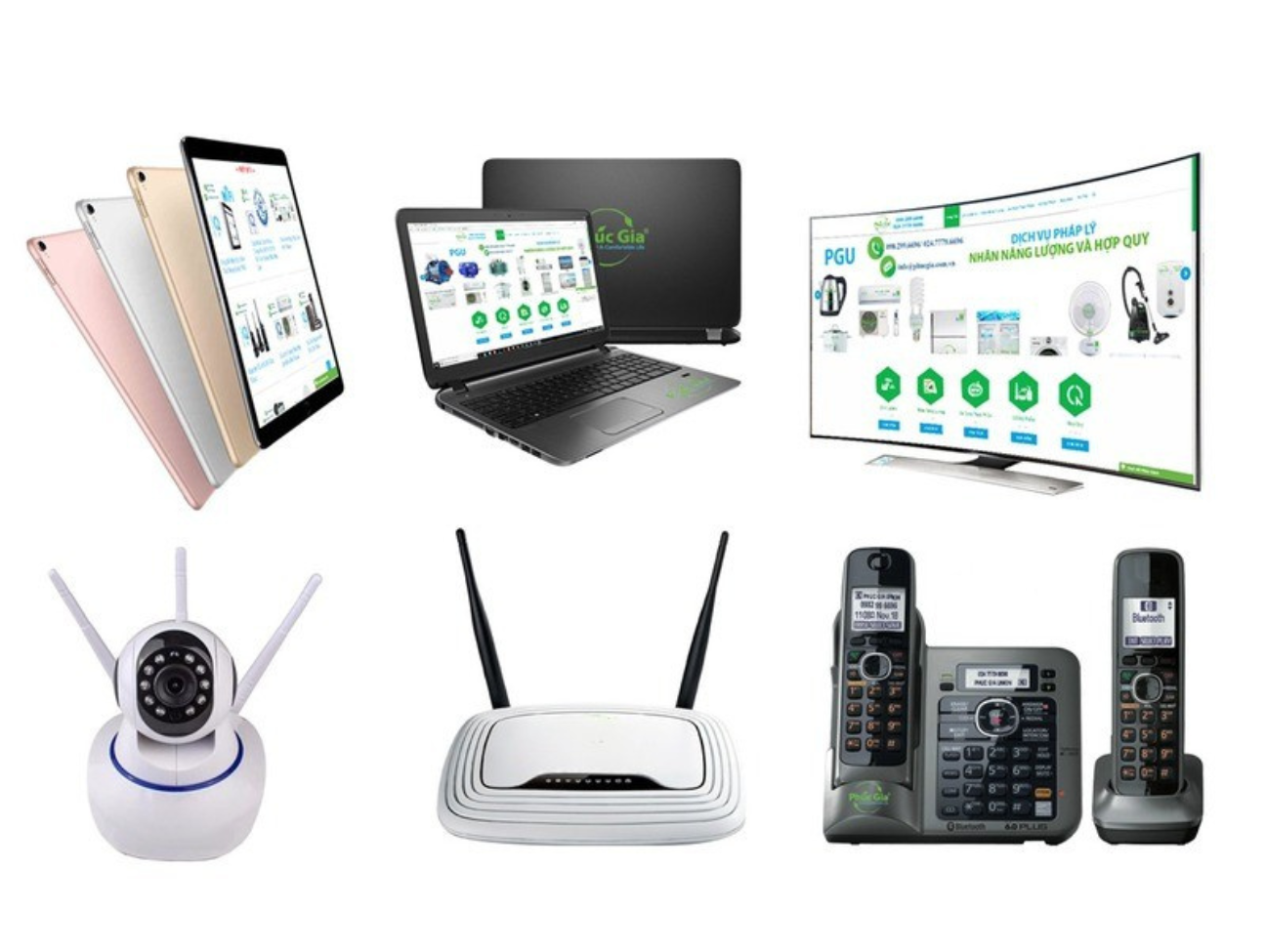
ICT equipment encompasses all technical means that serve data processing and support information communication. This includes: computer hardware and networks, intermediary communications, all types of audio and video processing, telephony, network transmission-based controls, and operational control-monitoring platforms.
Below are several typical applications of ICT:
- In the community: Through tools like mobile phones, computers, email, chat rooms, and social networks,… ICT not only connects individuals instantly but also contributes to fostering an open, dynamic, and more powerfully interactive society than ever before.
- In education: The application of ICT delivers significant efficiency in teaching, enhancing internet connectivity, supporting multi-device learning, and enabling distance education. This helps pupils – students familiarize themselves with technology and fosters enthusiasm in their learning process.
- In the management field: Today’s managers not only apply ICT for monitoring via camera systems or transmitting image data but also invest heavily in work management software, personnel management systems, and online collaboration platforms. Tools such as email, Google Workspace, Zoom, Microsoft Teams,… have become powerful assistants, helping organizational leaders work flexibly, organize remote meetings, and manage operations effectively, even when not physically present at the office.
- In modern Marketing: The development of ICT serves as the launching pad for the explosion of Digital Marketing. From SEO, SEM, and Email Marketing activities to advertising on websites and social networks,… Thanks to ICT, businesses can analyze customer behavior, build personalized campaigns, and interact directly with consumers.
- Driving strong growth in the entertainment industry: The entertainment industry is one of the sectors most profoundly impacted by ICT. The Internet and digital platforms have created a rich entertainment landscape, from social networks and video-sharing platforms to online games and virtual reality. This not only creates an engaging playground but also helps relieve stress after intense working periods.
- Expanding job opportunities: ICT possesses the ability to generate many new professions and job opportunities, especially within the IT industry, such as IT Helpdesk, Tester, and Data Scientist roles,… Concurrently, thanks to recruitment websites and professional community groups on social networks, workers can increasingly access recruitment information and apply for positions that match their skills and interests.
2. Legal Documents Regulating the Import Procedures for ICT Equipment
The importation of information and communication technologies (ICT) equipment must strictly adhere to the system of legal documents issued by the Ministry of Information and Communications (MIC). These regulations are intended to ensure that imported goods meet technical, safety, and quality requirements.
Below are several important legal documents that businesses should consult when performing the import procedures for ICT equipment:
- Circular No. 02/2024/TT-BTTTT, issued by the Ministry of Information and Communications on March 29, 2024, specifying the list of equipment subject to mandatory Regulation Conformity Certification and Declaration of Regulation Conformity;
- Circular No. 10/2020/TT-BTTTT, issued by the Ministry of Information and Communications on July 1, 2020, specifying the methods for Regulation Conformity Certification and Declaration of Regulation Conformity for products managed by the MIC;
- Circular 30/2011/TT-BTTTT, issued by the Ministry of Information and Communications on October 31, 2011, specifying Regulation Conformity Certification and Declaration of Regulation Conformity for products managed by the MIC;
- Circular No. 15/2018/TT-BTTTT, issued by the Ministry of Information and Communications on November 15, 2018, amending and supplementing Circular 30/2011/TT-BTTTT.
- Circular 08/2021/TT-BTTTT, issued by the Ministry of Information and Communications on October 14, 2021, specifying the list of radio equipment exempt from frequency licensing (requires checking transmission power levels, operating frequency bands of WiFi, NFC, and wireless reverse charging technologies for other devices);
- Circular 19/2024/TT-BTTTT, issued by the Ministry of Information and Communications on December 31, 2024, establishing the National technical regulation on specific absorption rate for handheld and body-worn radio equipment.
In addition to complying with regulations on the import procedures for ICT equipment and quality during the ICT equipment importation process, businesses must also pay special attention to the list of goods banned from import, stipulated in Circular No. 65/2017/TT-BTC dated June 27, 2017, issued by the Minister of Finance.
When referencing and applying the list of goods banned from import, businesses need to clearly understand the classification principles as follows:
- If only the 4-digit code is listed: All 8-digit HS codes within this 4-digit group are subject to the import ban.
- If only the 6-digit code is listed: All 8-digit HS codes belonging to this 6-digit subgroup are also banned from import.
- If detailed to the 8-digit code: Only those specific 8-digit HS codes are banned.
Some special cases to note:
- Used components, spare parts, and subassemblies
These parts, if they pertain to products on the list of banned imports, are also banned from import, whether as individual components or separate accessories. This aims to prevent “circumvention” by importing parts for later assembly into a complete product.
- Used multi-color digital printers and photocopiers
Digital, multi-color printing and photocopying equipment, particularly used items, must adhere to the regulations in the printing field under Vietnamese law. Notably, used monochrome (black and white) digital printers or digital photocopiers with an A0 print size or a speed of 35 pages/minute or more (for A4 size), as well as used laser toner cartridges (HS code 8443.99.20), are not on the banned list, meaning they can still be imported if all conditions are met.
- Refurbished information technology products
This is a group of products that were previously used and subsequently repaired, had components replaced, and were cosmetically refurbished to have functions and appearance similar to new products. These products are often labeled in Vietnamese as “sản phẩm tân trang” (refurbished product), or use a foreign language with equivalent meaning.
However, if these refurbished ICT products have an HS code that is on the banned import list (Appendix of Circular 65/2017/TT-BTC), they remain banned from import, regardless of their refurbished status or warranty policy.
3. HS Codes and Taxes during the Import Procedures for ICT Equipment
Determining the correct HS code not only impacts the applicable tax rates but also serves as the basis for defining quality inspection requirements, regulation conformity certification, and other associated legal procedures. Below is a table of HS codes and taxes relevant to the import procedures for ICT equipment:
| ORD | HS Code as stipulated in Circular No. 65/2017/TT-BTC | Name of products and goods as regulated by Circular No. 04/2018/TT-BTTTT |
| 1 |
Terminal Devices |
|
| 1.1 | 8517.11.00 | DECT wireless radio subscriber extension telephone equipment |
| 1.2 | 8517.12.00 | Public Land Mobile (PLM) terminal equipment |
| GSM (Global System for Mobile communications) mobile terminal equipment | ||
| W-CDMA FDD mobile terminal equipment | ||
| E-UTRA FDD mobile terminal equipment | ||
| 2 | Radio-frequency equipment | |
| 2.1 | Radio-frequency transmitting and transceiving equipment with frequency bands between 9 kHz and 400 GHz and transmission power of 60 mW or higher | |
| 2.1.1 | Radio-frequency transmitting and transceiving equipment for fixed or land mobile radio communication services | |
| 8517.61.00 | GSM mobile communication base station equipment | |
| 8517.61.00 | W-CDMA FDD mobile communication base station equipment | |
| 8517.61.00 | E-UTRA FDD mobile communication base station equipment | |
| 8517.12.00 | Land mobile radio equipment with integral antenna for analogue speech | |
| 8517.12.00 8517.61.00 |
Land mobile radio equipment with external antenna for data (and speech) transmission | |
| 8517.12.00 8517.61.00 |
Land mobile radio equipment with external antenna for analogue speech | |
| 8517.12.00 | Land mobile radio equipment with integral antenna for data (and speech) transmission | |
| 8517.62.59 | Point-to-Multipoint radio equipment (frequency band below 1 GHz) using TDMA access | |
| 8517.62.59 | Point-to-Multipoint radio equipment (frequency band below 1 GHz) using FDMA access | |
| 8517.62.59 | Point-to-Multipoint radio equipment (frequency band below 1 GHz) using DS-CDMA access | |
| 8517.62.59 | Point-to-Multipoint radio equipment (frequency band below 1 GHz) using FH-CDMA access | |
| 8517.62.59 | GSM mobile communication repeater equipment | |
| 8517.62.59 | W-CDMA FDD mobile communication repeater equipment | |
| 8517.62.59 | E-UTRA FDD mobile communication repeater equipment | |
| 2.1.2 | Radio-frequency transmitting, transceiving equipment specialized for television broadcasting | |
| 8525.50.00 | DVB-T2 digital television transmitter | |
| 2.1.3 | Radio-frequency transmitter and transceiver equipment dedicated to broadcast radio | |
| 8525.50.00 | AM (Amplitude Modulation) broadcast radio equipment | |
| 8525.50.00 | FM (Frequency Modulation) broadcast radio equipment | |
| 8525.50.00 | Wireless broadcast (FM) equipment operating in the 54 MHz to 68 MHz frequency band | |
| 2.1.4 | Radio-frequency transmitter and transceiver equipment for the maritime mobile service (including auxiliary and satellite devices) | |
| 8517.18.00 | VHF radiotelephone equipment for riverine use | |
| 8517.18.00 | VHF radiotelephone equipment for the maritime mobile service | |
| 8517.18.00 | MF and HF radiotelephone equipment | |
| 8517.18.00 | UHF radiotelephone equipment | |
| 2.1.5 | 8517.62.59 | Amateur radio equipment |
| 2.2 | 8526.10.10
8526.10.90 |
Radar equipment (including for the maritime mobile service and aeronautical mobile service) |
| 2.3 |
Short Range Device (SRD) transmitter/transceiver equipment |
|
| 2.3.1 | 8504.40.90
8525.50.00 8517.62.59 8517.62.69 8526.10.10 8526.10.90 8526.91.10 8526.91.90 8526.92.00 |
General purpose Short Range Device (SRD) transmitter/transceiver equipment |
| 2.3.2 | 8517.62.51 | Radio transceivers using spread spectrum modulation in the 2.4 GHz band |
| 8802.20.90 | ||
| 8802.20.90 | ||
| 2.3.3 | 8517.62.51 | 5 GHz band wireless access equipment |
| 8802.20.90 | ||
| 8802.20.9 | ||
| 2.3.4 | 8517.62.59 | Radio Frequency Identification (RFID) equipment (866 MHz to 868 MHz band) |
| 2.3.5 | 8517.62.59 | Ultra-wideband (UWB) communication equipment |
| 2.3.6 | 8517.62.51 | 60 GHz band high-speed wireless access equipment |
| 2.3.7 | 8525.50.00
8525.60.00 |
Wireless digital video transmission equipment |
| 2.3.8 | 8518.10.11
8518.10.19 8518.10.90 8518.21.10 8518.21.90 8518.22.10 8518.22.90 8518.29.20 8518.29.90 8518.30.10 8518.30.20 |
Wireless audio equipment (25 MHz to 2000 MHz frequency range) |
| 8518.30.51
8518.30.59 8518.30.90 |
||
| 2.3.9 | 8517.62.59 | Other Short Range Device (SRD) transmitter/transceiver equipment |
| 8526.92.00 | ||
| 8526.92.00 | ||
| 8526.10.90 | ||
| 8517.62.59 | ||
| 8517.62.10 | ||
| 2.4 | Digital microwave transmission equipment | |
| 8517.62.59 | Digital microwave equipment | |
| ORD | HS Code as stipulated in Circular No. 65/2017/TT-BTC | Name of products and goods as regulated by Circular No. 04/2018/TT-BTTTT |
| 1 |
Information Technology (IT) equipment |
|
| 1.1 | 8471.41.10 | Desktop computer |
| 1.2 | 8471.41.90
8471.49.90 |
Server |
| 1.3 | 8471.30.20 | Laptop and portable computer |
| 1.4 | 8471.30.90 | Tablet |
| 1.5 | 8517.62.21 | Router |
| 1.6 | 8517.62.29 | Switch |
| 1.7 | 8517.62.21 | Gateway |
| 1.8 | 8517.62.29 | Fire wall |
|
2 |
Broadcast radio and television equipment | |
| 2.1 | 8528.71.91
8528.71.99 |
Set Top Box for satellite television networks (excluding DVB-S/S2 digital satellite television signal decoders) |
| 2.2 | 8528.71.91
8528.71.99 |
DVB-S/S2 digital satellite television signal decoder |
| 2.3 | 8528.71.1 1
8528.71.19 8528.71.91 8528.71.99 |
Set Top Box for digital cable television networks |
| 2.4 | 8528.71.11
8528.71.19 8528.71.91 8528.71.99 |
Set Top Box for IPTV television networks |
| 2.5 | 8528.71.91
8528.71.99 |
DVB-T2 terrestrial digital television signal decoder (Set Top Box DVB-T2) |
| 2.6 | 8528.72.92
8528.72.99 |
Television receiver (iDTV) with integrated DVB-T2 terrestrial digital television signal reception |
| 2.7 | 8517.62.49 | Amplifiers for cable television distribution networks |
| 3 | Terminal equipment | |
| 3.1 | 8517.11.00 | Wireless telephone equipment (subscriber extension type) |
| 3.2 | 8517.62.41 | xDSL terminal equipment (excluding ADSL2 and ADSL2+ terminals) |
| 3.3 | 8517.62.41 | ADSL2 and ADSL2+ terminal equipment |
| 4 | Radio-frequency transmitter/transceiver equipment (9 kHz to 400 GHz band) with transmission power of 60 mW or higher | |
| 4.1 | 8517.12.00
8517.61.00 |
27 MHz citizens’ band (CB) angle modulation radio equipment |
| 4.2 | 8517.12.00
8517.61.00 8517.62.59 |
27 MHz citizens’ band (CB) single sideband (SSB) and/or double sideband (DSB) modulation radio equipment |
| 4.3 | 8517.62.59 | 5.8 GHz band low-speed data transmission equipment for transport applications |
| 4.4 | 8517.62.59 | 5.8 GHz band high-speed data transmission equipment for transport applications |
| 4.5 | 8517.62.59 | 5.8 GHz band medium-speed data transmission equipment for transport applications |
| 4.6 | 8517.61.00
8517.12.00 8517.62.59 8517.62.69 |
Terrestrial Trunked Radio (TETRA) equipment |
| 4.7 | 8517.62.59
8517.62.69 |
Radio-frequency transmitter/transceiver equipment dedicated to standard (frequency, time) broadcast |
| 4.8 | 8517.62.59
8517.62.69 |
Radio-frequency transmitter/transceiver equipment for positioning and telemetry (excluding offshore equipment for the oil and gas industry) |
| 4.9 | 8526.91.10
8526.91.90 |
Radio-navigation equipment |
| 4.10 | 8517.62.59 | VSAT equipment operating in the C-band |
| 4.11 | 8517.62.59 | VSAT equipment operating in the Ku-band |
| 4.12 | 8517.62.59 | Land mobile earth station for non-geostationary satellite global mobile communication systems (1-3 GHz band) |
| 4.13 | 8517.62.59 | Mobile earth station equipment (Ku-band operation) |
| 4.14 | 8517.62.59 | DSC (Digital Selective Calling) watchkeeping receiver for ships (MF, MF/HF, and VHF maritime mobile service bands) |
| 4.15 | 8517.62.59 | VHF radio transceiver equipment for GMDSS coast stations |
| 4.16 | 8517.18.00 | Two-way VHF radiotelephone apparatus for fixed installation on survival craft |
| 4.17 | 8517.62.59 | Inmarsat-C equipment for shipboard use |
| 4.18 | 8517.18.00 | VHF radiotelephone equipment for survival craft use |
| 4.19 | 8517.62.61 | Maritime Emergency Position Indicating Radio Beacons (EPIRB) operating in the 406.0 MHz to 406.1 MHz band |
| 4.20 | 8517.62.61 | Personal locator beacons (PLB) operating in the 406.0 MHz to 406.1 MHz band |
| 4.21 | 8517.62.59 | Digital Selective Calling (DSC) equipment |
| 4.22 | 8526.10.10 | Search and Rescue (SAR) Radar transponder |
| 4.23 | 8517.62.59 | Radiotelex equipment for maritime MF/HF service |
| 4.24 | 8517.62.59 | Inmarsat F77 equipment for shipboard use |
| 4.25 | 8526.91.10 | Automatic Identification System (AIS) equipment for shipboard use |
| 4.26 | 8517.62.53 | Automatic identification equipment for search and rescue alerts |
| 4.27 | 8517.61.00
8517.12.00 8517.62.59 8517.62.69 |
Aeronautical mobile service radio equipment (117.975 – 137 MHz) for ground use (AM modulation) |
| 4.28 | 8517.61.00
8517.12.00 8517.62.59 8517.62.69 |
Aeronautical mobile service radio equipment (117.975 – 137 MHz) for ground use |
| 4.29 | 8526.91.10 | Glide path equipment for aeronautical radio-navigation systems |
| 4.30 | 8517.62.59
8517.62.69 8517.62.99 8517.69.00 8526.10.10 8526.10.90 8526.91.10 8526.91.90 8526.92.00 |
Other equipment |
|
5 |
8507.60.10
8507.60.90 |
Lithium batteries for laptops, mobile phones, and tablets |
| ORD | HS Code as stipulated in Circular No. 31/2022/TT-BTC | Name of products and goods |
| 1 | Radio-frequency transmitter and transceiver equipment with frequency bands between 9 kHz and 400 GHz | |
| 1.1 | Radio-frequency transmitter and transceiver equipment for fixed or land mobile radio communication services | |
| 1.1.1 | 8517.13.00
8517.14.00 |
|
| 8517.62.59 | ||
| 1.1.2 | 8517.13.00
8517.14.00 |
Fifth-generation (5G) mobile communication station |
| 8517.62.59 | ||
| 1.1.3 | 8517.61.00 | GSM mobile communication base station equipment (6) |
| 1.1.4 | 8517.61.00 | W-CDMA FDD mobile communication base station equipment |
| 1.1.5 | 8517.61.00 | E-UTRA mobile communication base station equipment |
| 1.1.6 | 8517.61.00 | Fifth-generation (5G) mobile communication base station equipment |
| 1.1.7 | 8517.62.59 | GSM mobile communication repeater equipment |
| 1.1.8 | 8517.62.59 | W-CDMA FDD mobile communication repeater equipment |
| 1.1.9 | 8517.62.59 | E-UTRA mobile communication repeater equipment |
| 1.1.10 | 8517.62.59 | Fifth-generation (5G) mobile communication repeater equipment |
| 1.1.11 | 8517.61.00
8517.62.43 8517.62.59 8517.62.69 8517.62.99 8517.69.00 |
Low Power Wide Area Network (LPWAN) radio equipment |
| 9015.10.90 | ||
| 8517.14.00 | ||
| 1.1.12 | 8517.14.00 | Land mobile radio equipment with integral antenna for analogue speech |
| 9025.19.19 | ||
| 9025.80.00 | ||
| 9027.89.90 | ||
| 8531.10.30
8531.90.90 |
||
| 1.1.13 | 8517.61.00 | Land mobile radio equipment with external antenna for analogue speech |
| 1.1.14 | 8517.61.00 |
Land mobile radio equipment with external antenna for data (and speech) transmission
|
| 1.1.15 | 8517.61.00 | Land mobile radio equipment with external antenna for data (and speech) transmission |
| 8517.62.59 | ||
| 1.2 | Radio-frequency transmitter and transceiver equipment dedicated to broadcast television and broadcast radio | |
| 1.2.1 | 8525.50.00 | DVB-T2 digital television transmitter |
| 1.2.2 | 8525.50.00 | AM (Amplitude Modulation) broadcast radio equipment |
| 1.2.3 | 8525.50.00 | FM (Frequency Modulation) broadcast radio equipment |
| 1.2.4 | 8525.50.00 | Wireless broadcast (FM) equipment operating in the 54 MHz to 68 MHz frequency band |
| 1.3 | Radar equipment | |
| 1.3.1 | 8526.10.10
8526.10.90 |
Radar equipment (excluding Radar for sea-going ships and Radar classified as Short Range Device/Equipment) |
| 2 | Short Range Device/Equipment | |
| 2.1 | 8517.11.10 | DECT (Digital Enhanced Cordless Telecommunications) wireless radio subscriber extension telephone equipment |
| 2.2 | 8517.62.59
8517.62.59 |
General purpose Short Range Device (SRD) transmitter/transceiver equipment |
| 8517.62.59
8526.92.00 |
||
| 8526.10.19
8526.10.90 |
||
| 2.3 | 8517.62.52 | Broadband data transmission equipment (2.4 GHz band) with Equivalent Isotropically Radiated Power (EIRP from 60 mW to 200 mW |
| 8806.21.00
8806.22.00 8806.23.00 8806.24.00 8806.29.00 |
||
| 8806.21.00
8806.22.00 8806.23.00 8806.24.00 8806.29.00 |
||
| 2.4 | 8517.62.51 | 5GHz band wireless access equipment with Equivalent Isotropically Radiated Power (EIRP) of 60 mW or higher |
| 8806.21.00
8806.22.00 8806.23.00 8806.24.00 8806.29.00 |
||
| 8806.21.00
8806.22.00 8806.23.00 8806.24.00 8806.29.00 |
||
| 2.5 | 8526.10.10
8526.10.90 |
Radar equipment for road or railway transport applications |
| 2.6 | 8517.62.69 | Radio-frequency warning and detection equipment |
| 2.7 | 8526.92.00 | Radio-frequency remote control equipment |
| 2.8 | 8523.52.00
8523.59.10 |
Radio Frequency Identification (RFID) equipment |
| 8471.60.90 | ||
| 2.9 | 8523.52.00
8523.59.10 |
Non-stop toll collection equipment applying Radio Frequency Identification technology |
| 8471.60.90 | ||
| 2.10 | 8518.10.11
8518.10.19 8518.10.90 |
Wireless/Cordless Audio Device/Equipment |
| 8518.21.10
8518.21.90 8518.22.10 8518.22.90 8518.29.20 8518.29.90 |
||
| 8518.30.10
8518.30.20 8518.30.51 8518.30.59 8518.30.90 |
||
| 2.11 | 8517.61.59 | Ultra-wideband (UWB) data transmission equipment |
4. Dossier Required for the Import Procedures for ICT Equipment
When executing the import procedures for ICT equipment, businesses must prepare a complete dossier in accordance with Circular 38/2015/TT-BTC dated March 25, 2015, and Circular 39/2018/TT-BTC dated April 20, 2018 (amended and supplemented). This includes the following documents:
- Customs declaration;
- Sale contract;
- Commercial invoice;
- Packing list;
- Certificate of Origin (C/O);
- Bill of lading;
- Product catalog (if available);
- Registration for quality inspection of imported goods;
- Minimum energy efficiency test report.
Preparing a complete, compliant dossier helps ensure the customs clearance process is smooth, minimizing risks of requests for additional information or administrative violation penalties.
5. Process for the Import Procedures for ICT Equipment
Importing ICT equipment involves a procedural chain with multiple steps, from customs declaration to the completion of quality inspection. Below are the steps businesses must understand clearly:
5.1 Step 1: Register for Quality Inspection
Items such as LED lamps and ICT electrical and electronic equipment are on the list requiring import quality inspection as stipulated by the Ministry of Information and Communications (MIC), Ministry of Science and Technology (MOST), or Ministry of Industry and Trade (MOIT). Businesses must register for quality inspection at a designated testing laboratory.
5.2 Step 2: Open the Customs Declaration
After submitting the electronic declaration on the customs system (VNACCS/VCIS), the system will return the declaration channeling result. The enterprise will print the declaration and bring the import dossier to the customs sub-department to open the declaration. The declaration-opening steps will vary depending on green, yellow, or red channeling. Note:
- The declaration must be opened within 15 days of the declaration date. Beyond this deadline, the declaration will be automatically canceled, and the enterprise may face administrative penalties.
- After obtaining the official declaration, you must contact the registering Customs Sub-department to proceed with the next steps in the import procedures for ICT equipment, avoiding a “hung” declaration status that could affect the delivery schedule.
5.3 Step 3: Testing & Regulation Conformity Certification
After receiving the letter of acceptance for quality inspection registration, the enterprise sends the product sample to the designated testing laboratory to conduct relevant testing. Specifically:
- Registration for quality inspection of imported goods: Based on the Law on Product and Goods Quality 2007, managed by the Vietnam Telecommunications Authority (MIC).
- ICT Testing: Based on the QCVN (National Technical Regulation) applicable to each device, performed only at testing laboratories designated/recognized by the MIC.
- Regulation Conformity Certification for ICT equipment: Based on Circular 02/2024/TT-BTTTT, which mandates that ICT equipment must be certified for regulation conformity before circulation.
If the enterprise wishes to bring the goods to their warehouse, please contact Phuc Gia for a detailed consultation.

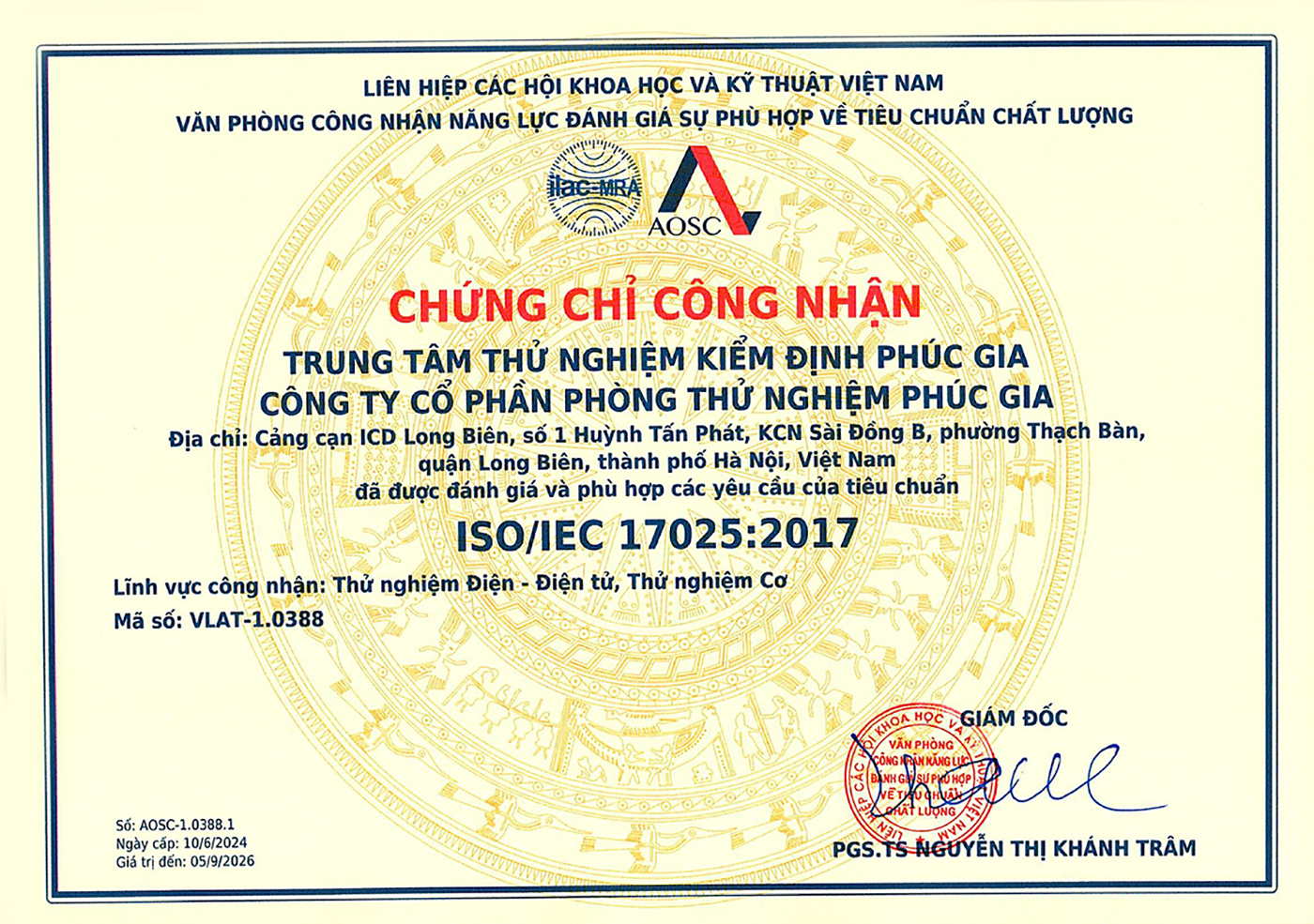
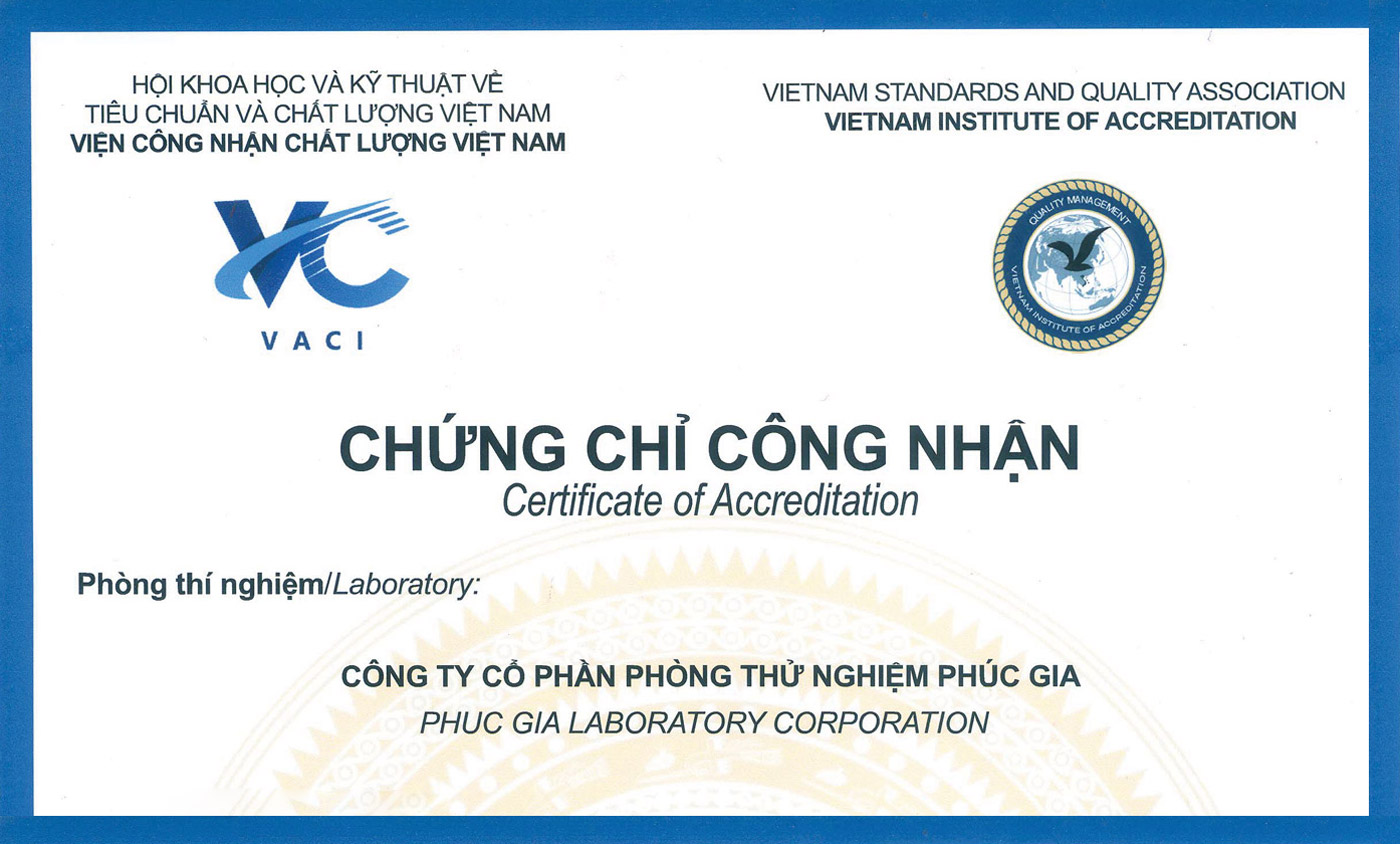
Phuc Gia is an ICT testing laboratory designated by the Ministry of Information and Communications (MIC) (Decision 228/QD-BTTTT), featuring a modern lab system, nearly 100 experts, a 5,000m² facility, and over 10 years of experience. Phuc Gia currently holds the authority to test 14 groups of ICT equipment and assists enterprises with import procedures for ICT equipment and regulation conformity.
Read more related articles:
5.4 Step 4: Customs Clearance of the Customs Declaration
When the inspection results meet all requirements, the customs officer will accept the customs clearance for the declaration. At this point, the enterprise can pay the import tax for the customs declaration to clear the goods.
In the event that goods have been released to the warehouse for advance storage (but the declaration is not yet cleared), the enterprise must supplement the complete dossier to be granted official customs clearance. If the deadline is missed, the enterprise will face penalty fees and significant time delays.
5.5 Step 5: Bring Goods to the Warehouse
Once the declaration is cleared, the enterprise proceeds to liquidate the declaration and carries out the necessary procedures to bring the goods to the warehouse. The enterprise must prepare the delivery order, the cargo pick-up order at the port, and arrange for transportation to the port/warehouse to receive the goods. It is crucial to avoid situations where the declaration is cleared but the delivery order from the carrier is not yet available, as this causes delays in retrieving the goods from the port.
Furthermore, the enterprise must also complete the quality inspection, apply energy labeling as regulated, and ensure goods labeling is done before introducing the product to the market.

6. Key Considerations for the Import Procedures for ICT Equipment
When importing information technology (ICT) products, businesses must note the following important points to ensure the import procedures for ICT equipment proceed smoothly, in compliance with regulations, and mitigate legal risks:
- Classify HS Codes Correctly: Accurately determining the HS code for each type of ICT equipment helps in applying the correct tax policies and avoids penalties for code misclassification.
- Check Specialized Regulations: Certain items, such as broadcasting equipment, measuring devices, and ICT medical equipment, may fall under special management, requiring specific licenses or regulation conformity certification.
- Note the Condition of Goods: Many used ICT products are banned from import, such as used barcode scanners. Goods must meet technical safety standards.
- Prepare a Complete Customs Dossier: This includes the commercial invoice, bill of lading, certificate of origin, licenses (if required), and a clear, truthful declaration.
- Other Considerations: Select a reliable logistics partner, and simultaneously, stay updated on import policies and regulations related to intellectual property for ICT products.

Mastering the import procedures for ICT equipment not only helps businesses save time and costs but also allows them to avoid unnecessary legal risks. If you are seeking a reputable and professional partner in the field of regulation conformity certification for ICT equipment, contact Phuc Gia immediately for dedicated support.
For more details, please contact us at:
PHUC GIA LABORATORY CORPORATION
PHUC GIA CERTIFICATION CENTER
PHUC GIA INSPECTION & TESTING CENTER
Address: ICD Long Bien, No. 01 Huynh Tan Phat, Sai Dong B Industrial Park, Long Bien Ward, Hanoi City, Vietnam.
Hotline: 0981 996 996/ 0982 996 696/ 024 7779 6696
E-mail: lab@phucgia.com.vn/cert@phucgia.com.vn/info@phucgia.com.vn
Website: phucgia.com.vn
Working time: Monday to Friday 8:00 – 18:30; Saturday 8:00 – 12:00

![QUOTATION – Testing and Other Certification Services [2025]](https://phucgia.com.vn/wp-content/uploads/2025/01/quotation.png)