

The electric oven is a common household appliance, utilized extensively in both domestic settings and commercial food service establishments. Operating at high temperatures and in continuous contact with electricity, these devices inherently carry risks of electrical leakage, overheating, fire/explosion, and potential excessive energy consumption if quality control and design standards are not rigorously maintained. Consequently, meeting all Legal Regulations for Electric Ovens in Vietnam is an absolute necessity before any product is released into the market.
See more: Capacity Profile Of Phuc Gia Laboratory Corporation
Table 1: Procedures for Implementing Licenses for Electric Ovens

I. Defining the Electric Oven
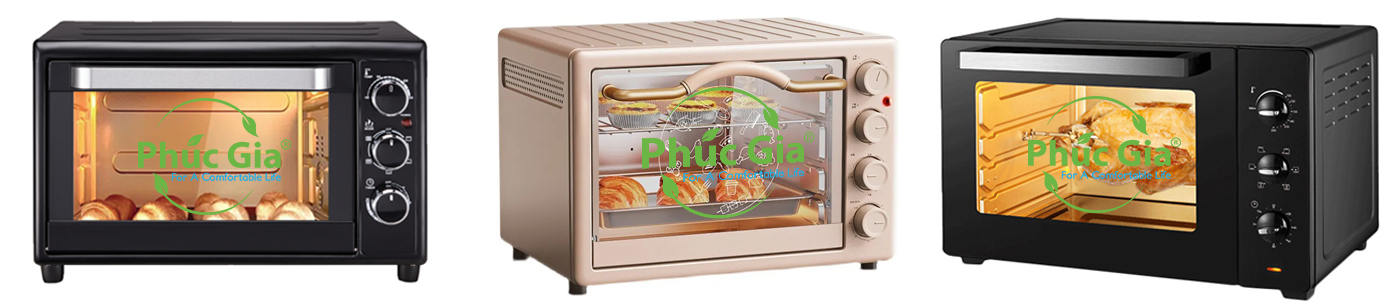
The electric oven is a common household appliance engineered to cook, bake, or heat food by converting electrical energy into thermal energy. The core components include an insulated internal cavity with electric heating elements. Many models enhance performance with a convection fan, which ensures even heat distribution for uniform cooking and optimal flavor preservation.
The market for electric ovens is highly diverse, featuring types such as freestanding ovens, built-in ovens, electronic models, and multi-functional units. All models must adhere to the Legal Regulations for Electric Ovens in Vietnam.
Given their core function of converting electrical energy into thermal energy for cooking, electric ovens are subject to highly rigorous quality control. Mandatory testing, certification, and managed market circulation are essential requirements under the Legal Regulations for Electric Ovens in Vietnam. These measures are crucial for limiting the risks of electrical leakage, overheating, or fire/explosion, and ensuring the appliance delivers efficient, durable, energy-saving, and safe performance for both users and the environment.
Table 2: Testing Requirements for Electric Ovens

II. Legal Regulations for Electric Ovens in Vietnam
1. Procedures for Implementing Licenses for Electric Ovens
a) Imported Electric Ovens
| MANAGING MINISTRY | IMPORTED ELECTRIC OVENS | |
| Implementing Steps | Authorizing/Implementing Body | |
| Ministry of Science and Technology | Step 1: State control registration | Local Department of Standards, Metrology and Quality / Department of Science and Technology where the declaration is opened |
| Step 2: Regulation conformity testing | Phuc Gia® | |
| Step 3: Regulation conformity certification (*) | Phuc Gia® | |
| Step 4: Submit the certificate of conformity and related documents to the registration authority from Step 1 | Local Department of Standards, Metrology and Quality / Local Department of Science and Technology where the declaration is opened | |
| Step 5: Affix the conformity stamp (Before circulating on the market) |
The enterprise self-implements after being licensed | |
Ghi chú: Phuc Gia®: Phuc Gia Laboratory Corporation.
(*) QCVN 4:2009/BKHCN Certification: Certification is conducted according to Method 5 or Method 7.
– Method 5: Includes factory assessment, sample sealing, testing of a representative sample, Certificate (GCN) valid for 3 years, with periodic surveillance not exceeding once every 12 months.
– Method 7: Includes batch inspection, sample sealing, testing of a batch representative sample, Certificate (GCN) only valid for the specific batch.
b) Domestically Manufactured Electric Ovens
| MANAGING MINISTRY | DOMESTICALLY MANUFACTURED ELECTRIC OVENS | |
| Implementing Steps | Authorizing/Implementing Body | |
| Ministry of Science and Technology | Step 1: Regulation conformity testing | Phuc Gia® |
| Step 2: Regulation conformity certification (*) | Phuc Gia® | |
| Step 3: Declaration of conformity | Local Department of Standards, Metrology and Quality / Department of Science and Technology (where the business is registered) | |
| Step 4: Affix the conformity stamp (Before circulating on the market) |
The enterprise self-implements after being licensed | |
Ghi chú: Phuc Gia®: Phuc Gia Laboratory Corporation.
(*) QCVN 4:2009/BKHCN Certification: Certification is conducted according to Method 5 or Method 7.
– Method 5: Includes factory assessment, sample sealing, testing of a representative sample, Certificate (GCN) valid for 3 years, with periodic surveillance not exceeding once every 12 months.
– Method 7: Includes batch inspection, sample sealing, testing of a batch representative sample, Certificate (GCN) only valid for the specific batch.
2. Legal Regulation Documents
| Ministry of Science and Technology | |
| Legal Regulation Documents | – Decision 2711/QD-BKHCN (30/12/2022) of the Ministry of Science and Technology (MOST) on announcing Group 2 products and goods (mandatory quality inspection).
– Circular 01/2022/TT-BKHCN (16/02/2022) of the MOST Minister on amending Circular 07/2018/TT-BKHCN and Circular 08/2019/TT-BKHCN. – Circular 06/2020/TT-BKHCN (10/12/2020) of MOST guiding and implementing Decrees related to quality management. – Circular 02/2017/TT-BKHCN (31/03/2017) of MOST promulgating regulations on standard conformity declaration, regulation conformity declaration, and conformity assessment methods. – Circular 21/2016/TT-BKHCN (15/12/2016) of MOST promulgating Amendment 1:2016 to QCVN 4:2009/BKHCN National Technical Regulation on Safety of Electrical and Electronic Equipment. – Circular 28/2012/TT-BKHCN (30/09/2009) of MOST promulgating regulations on standard conformity declaration, regulation conformity declaration, and conformity assessment methods. – Circular 21/2009/TT-BKHCN (30/09/2009) of MOST promulgating and implementing the National Technical Regulation on Safety for Electrical and Electronic Equipment (QCVN 4:2009/BKHCN). |
3. Types of Electric Ovens within the Scope of Application
| Ministry of Science and Technology | |
| Types of Electric Ovens within the Scope of Application | Electric ovens, electric grills (household electrothermal appliances), portable type, with a weight not exceeding 18 kg (HS code 8516.79.10), including:
|
4. Currently Effective Regulations/Standards
| Ministry of Science and Technology | |
| Currently Effective Regulations/Standards | QCVN 4:2009/BKHCN and Amendment 1:2016 QCVN 4:2009/BKHCN (Specifically applying TCVN 5699-2-9:2017 (IEC 60335-2-9:2016) – National Standard on Household and similar electrical appliances – Safety – Part 2-9: Particular requirements for ovens, toasters, and similar mobile cooking appliances). |
5. Important Notes in Importation, Manufacturing, and Business Policies under the Legal Regulations for Electric Ovens in Vietnam
| Ministry of Science and Technology | |
| Important Notes in Importation, Manufacturing, and Business Policies under the Legal Regulations for Electric Ovens in Vietnam | – Testing and certification must be performed by a testing/certification organization designated, registered, or recognized by the Ministry of Science and Technology (MOST).
– Enterprises manufacturing or importing domestic products (e.g., ovens), after obtaining conformity certification, must register the conformity declaration at the local Sub-Department of Standards, Metrology, and Quality (STAMEQ) where the business is registered before placing the product on the market. – The Conformity Certificate is valid for a maximum of 3 years, and the enterprise must archive records for no less than 10 years from the date the last registered model/type product is shipped. – Equipment designed for use in vehicles, ships, or aircraft may be subject to supplementary requirements. – Used electric ovens and grills are subject to a prohibition on import. – Ovens must be labeled according to customs regulations before market entry. – Enterprises must fully fulfill tax obligations and correctly determine the HS code to avoid back taxes or administrative penalties. |
III. PHUC GIA LABORATORY CORPORATION: COMPREHENSIVE SERVICES FOR ELECTRIC OVENS
| ORD | PHUC GIA® CAPABILITIES | Ministry of Industry and Trade | Ministry of Science and Technology |
| 1 | Testing Capabilities (Certification/ Designation) |
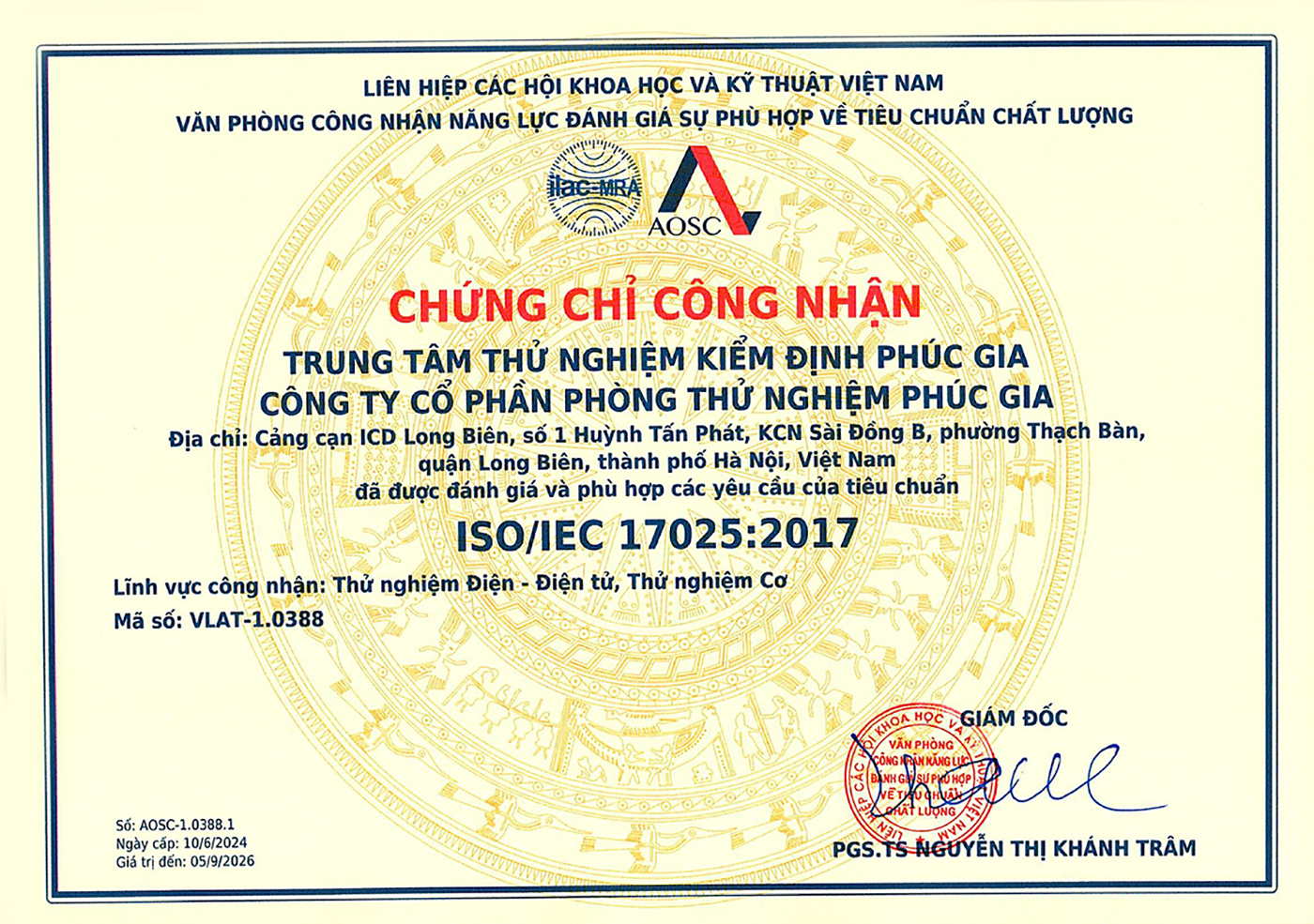
Phuc Gia has officially received designation and the authorization remains currently valid. (Detail) | Phuc Gia® has been designated for testing and certification of electrical safety and electromagnetic compatibility (EMC) and remains effective/valid. (Detail) |
| 2 | Quotation and Duration for Tests | The official listed quotation is available here. | |
| 3 | Support | – Consultancy on product quality improvement;
– Free 24/7 consultation service; – Consultancy on product quality improvement. |
|
| 6 | Contact for Services | For assistance with testing/certification, please contact:
Address: ICD Long Bien, No. 01 Huynh Tan Phat, Sai Dong B Industrial Park, Long Bien Ward, Hanoi |
|
| Note: Phuc Gia Laboratory Corporation directly performs testing and certification procedures for ovens according to the regulations of the Ministry of Science and Technology (MOST). | |||
RELATED POSTS:
- Conformity Certification for Electric Ovens
- A Very Thorough Guidance on Electric Oven Import Procedures for Enterprises
- Latest Procedures for Electric Oven Conformity Certification
- Guidance on Electrical Safety Testing for Ovens and Grills under QCVN 4:2009/BKHCN
- Declaration of Food Safety for Quick Ovens
For more details, please contact us at:
PHUC GIA LABORATORY CORPORATION
PHUC GIA CERTIFICATION CENTER
PHUC GIA INSPECTION TESTING CENTER
Address: ICD Long Bien, No. 01 Huynh Tan Phat, Sai Dong B Industrial Park, Long Bien Ward, Hanoi City, Vietnam.
Hotline: 0981 996 996/ 0982 996 696/ 024 7779 6696
E-mail: lab@phucgia.com.vn/cert@phucgia.com.vn/info@phucgia.com.vn
Website: phucgia.com.vn
Working time: Monday to Friday 8:00 – 18:30; Saturday 8:00 – 12:00

![QUOTATION – Testing and Other Certification Services [2026]](https://phucgia.com.vn/wp-content/uploads/2017/03/bao-gia-thu-nghiem-chung-nhan.png)