

A socket adaptor is an electronic device used to connect plugs with incompatible socket-outlets or to adjust voltage, ensuring the stable operation of electrical equipment. Testing for Socket Adaptors in Vietnam according to QCVN 25:2025/BKHCN is a mandatory requirement to control risks, evaluate load capacity, and assess equipment quality before circulation on the market.
See more: Capacity Profile Of Phuc Gia Laboratory Corporation
I. Usage Trends and Testing for Socket Adaptors in Vietnam
Socket adaptors serve as critical links between plugs and socket-outlets, especially when electrical equipment is operated in areas with mismatched plug configurations or voltage standards. By adapting pin shapes or increasing connection points, these devices ensure seamless power delivery without modifying the original power cord, providing a versatile solution for household goods, personal gadgets, and mobile electronics.
In the context of Testing for Socket Adaptors in Vietnam, these products are primarily classified into three types: travel adaptors for international compatibility; voltage converters that step down power to safe levels for electronics; and multi-way adaptors or splitters that increase the number of available connections at a single outlet without altering the voltage output.

The demand for adaptors is increasing due to the diversity of plug standards between countries and the popularity of imported electronic goods. This leads to potential risks, because if the equipment is incompatible in technical specifications or does not ensure electrical contact quality, it can cause heat generation at the contact point, loose connections, sparks, or electrical shorts during plugging and unplugging. Accordingly, the Ministry of Science and Technology (MOST) has issued QCVN 25:2025/BKHCN with the following roadmap:
- From April 1, 2025, organizations and individuals manufacturing or trading electrical equipment are recommended to voluntarily apply the provisions of QCVN 25:2025/BKHCN.
- From April 1, 2027, all electrical equipment specified in QCVN 25:2025/BKHCN must mandatory meet the requirements of the regulation before being circulated on the market.
This regulation specifies technical requirements and testing methods to ensure that socket adaptors operate safely and stably, while minimizing the risk of fire, explosion, or electrical accidents.

II. Guidance on Testing for Socket Adaptors
1. Scope of Application
Socket adaptors used in households with a rated current not exceeding 32 A (under one of the two HS codes 8536.69.92 and 8536.69.99) must be tested according to QCVN 25:2025/BKHCN – the technical regulation for electrical equipment used in household electrical installations and similar systems.
2. Technical Requirements
QCVN 25:2025/BKHCN stipulates that socket adaptors for household use must meet technical requirements for marking, protection against electric shock, grounding requirements, insulation resistance, and dielectric strength (at an ambient temperature of (20 ±5) °C), and temperature rise, according to the following technical standards:
- National Standard TCVN 6188-1:2007 (IEC 60884-1 : 2002) on Plugs and socket-outlets for household and similar purposes – Part 1: General requirements;
- National Standard TCVN 6188-2-5:2016 (IEC 60884-2-5:1995) on Plugs and socket-outlets for household and similar purposes – Part 2-5: Particular requirements for adaptors.

3. Cost and Time for Testing Socket Adaptors
The cost and time for electrical safety testing for socket adaptors according to QCVN 25:2025/BKHCN are publicly listed by Phuc Gia®. You can view the Quotation for testing electrical equipment used for household electrical installations and similar systems at our Quotation for Testing and Certification Services or contact Phuc Gia for detailed consultation.
4. Reputable Testing for Socket Adaptors in Vietnam according to QCVN 25:2025/BKHCN
4.1. Regulations on Qualified Testing and Certification Bodies
QCVN 25:2025/BKHCN stipulates that test results used for conformity certification are only accepted when performed by a testing organization designated or recognized according to the provisions in Article 3.8 of the Regulation. For domestic testing organizations, the Regulation clearly states:
Designated testing organization: A testing organization designated in accordance with the provisions of Decree No. 132/2008/ND-CP, as amended and supplemented by Decree No. 74/2018/ND-CP and Decree No. 154/2018/ND-CP.
4.2. Phuc Gia® – A Reputable Organization for Testing Socket Adaptors according to QCVN 25:2025/BKHCN in Vietnam
Phuc Gia Laboratory Corporation is currently one of the testing organizations designated by the Ministry of Science and Technology (MOST) to perform testing activities according to QCVN 25:2025/BKHCN for electrical equipment used in household electrical installations and similar systems, under Decision No. 2899/QD-BKHCN.
Accordingly, Phuc Gia® is designated to test the following electrical and electronic devices according to QCVN 25:2025/BKHCN, including:
- Socket-outlets for household use with a rated current not exceeding 32 A;
- Plugs for household use with a rated current not exceeding 32 A;
- Socket adaptors for household use with a rated current not exceeding 32 A;
- Extension cord sets for household use with a rated current not exceeding 32 A;
- Electrical switches for household use with a rated current not exceeding 20 A.
At the same time, Phuc Gia® has been granted the Registration Certificate for Certification Operations No. 3995/GCN-SKHCN by the Department of Science and Technology. Consequently, Phuc Gia® is authorized to conduct certification activities for household socket-outlets with a rated current not exceeding 32 A according to Scheme 1.
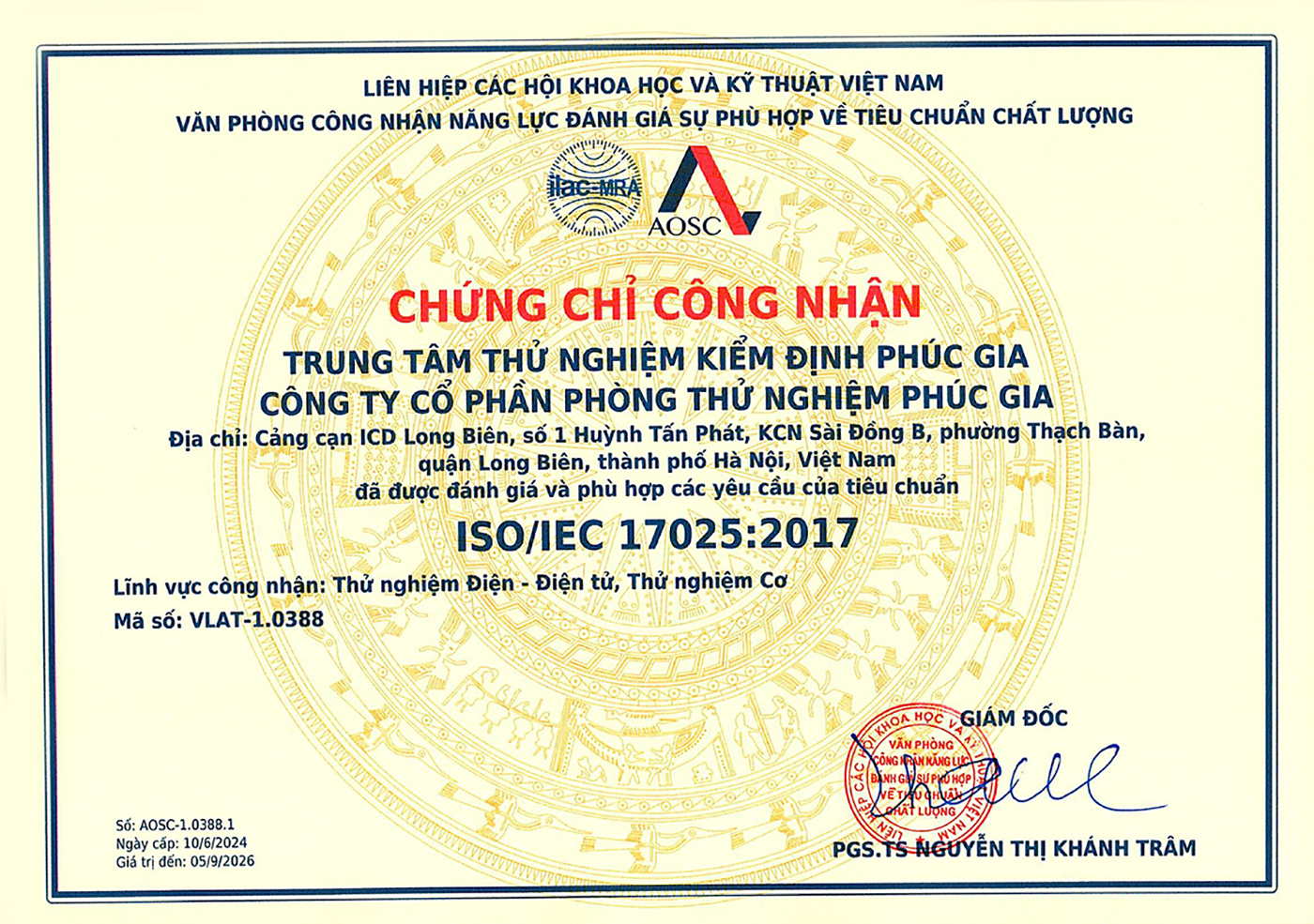
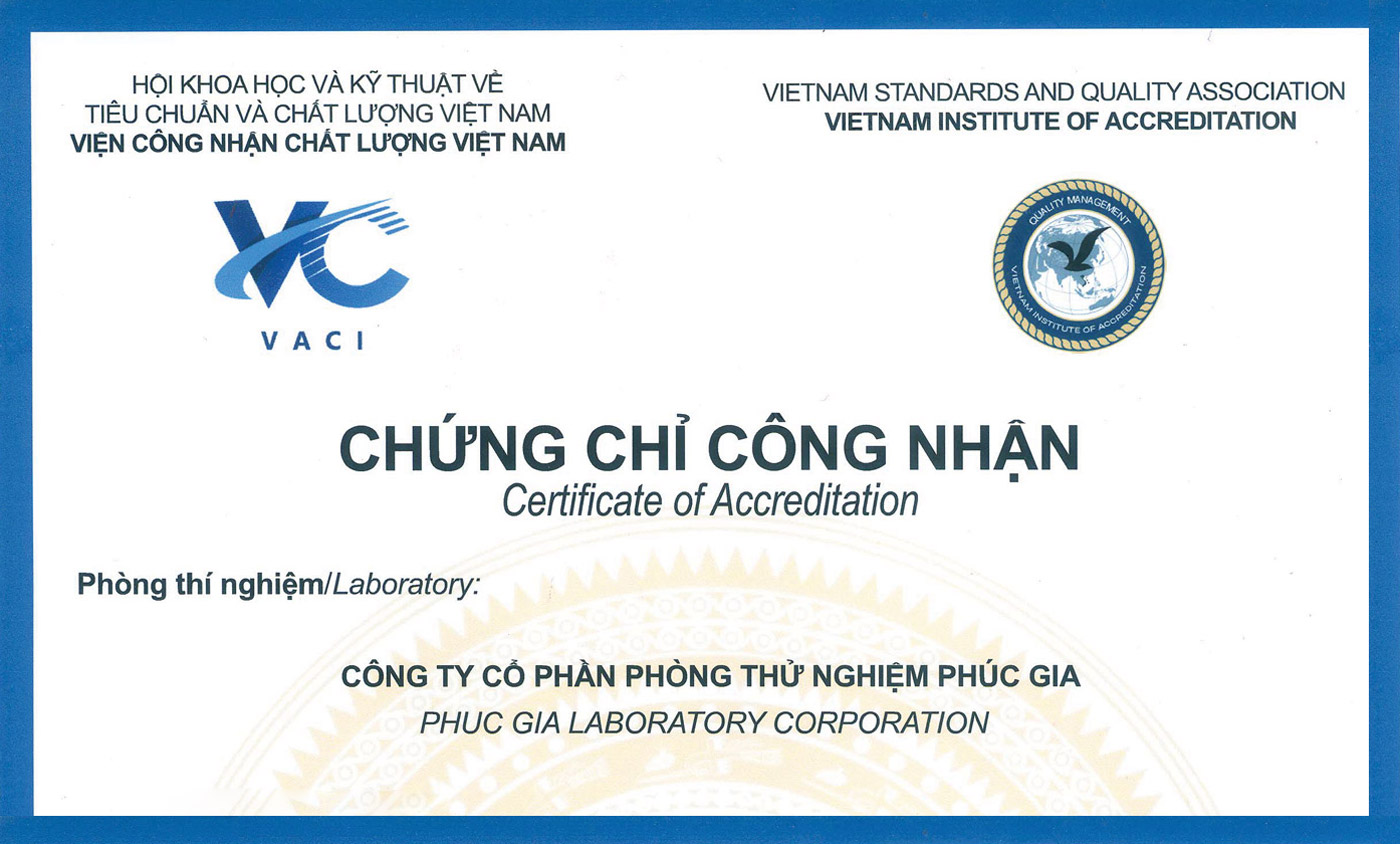
Furthermore, Phuc Gia Laboratory Corporation is the first unit to be accredited by all three accreditation bodies (BoA, AOSC, VACI) as meeting ISO/IEC 17025:2017 standards. The testing facility spans up to 5,000 m², equipped with synchronized modern measurement and inspection equipment to serve electrical safety, EMC, energy efficiency, RF, and many other technical categories. A team of over 100 intensively trained engineers and experts ensures that the testing process follows the correct procedures, guaranteeing reliable, objective, and accurate results.
RELATED POSTS
- Guidance on Testing for Extension Cord Sets according to QCVN 25:2025/BKHCN
- Guidance on Testing for Socket-outlets according to QCVN 25:2025/BKHCN
- Guidance on Testing for Plugs according to QCVN 25:2025/BKHCN
- Guidance on Testing for Electrical Switches according to QCVN 25:2025/BKHCN
- Guidance on Testing for Circuit Breakers according to QCVN 25:2025/BKHCN
For more details, please contact us at:
PHUC GIA LABORATORY CORPORATION
PHUC GIA CERTIFICATION CENTER
PHUC GIA INSPECTION TESTING CENTER
Hotline: 0965996696 / 0982996696 / 02477796696
E-mail: lab@phucgia.com.vn/cert@phucgia.com.vn/info@phucgia.com.vn
Website: phucgia.com.vn
Working time: Monday to Friday 8:00 – 18:30; Saturday 8:00 – 12:00

![QUOTATION – Testing and Other Certification Services [2026]](https://phucgia.com.vn/wp-content/uploads/2017/03/bao-gia-thu-nghiem-chung-nhan.png)