

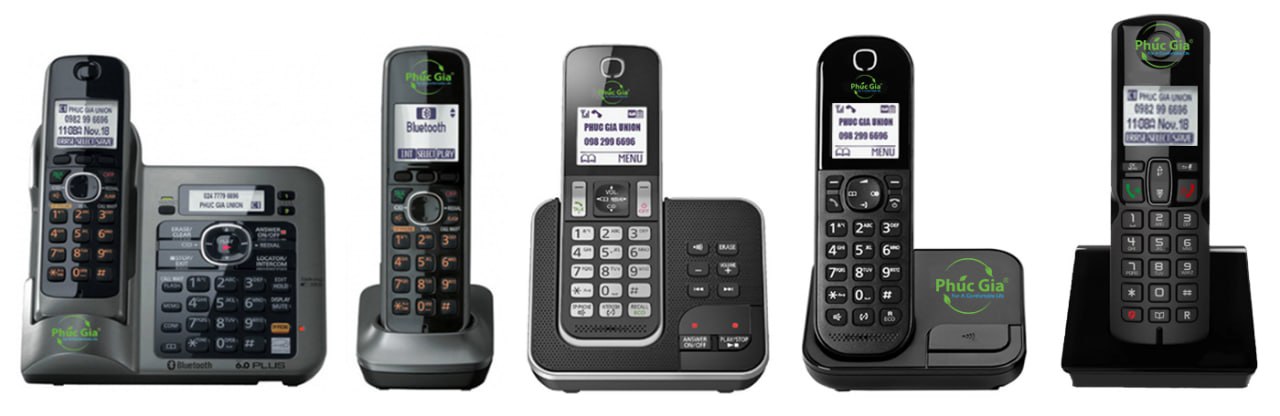
DECT equipment is a group of specialized radio devices for wireless voice transmission, commonly used in internal communication systems with high requirements for stability and security. Therefore, EMC Testing for DECT Equipment in Vietnam according to QCVN 113:2017/BTTTT is a mandatory requirement to ensure that DECT devices and related ancillary equipment operate safely, do not cause interference, and comply with the national frequency planning.
See more: Capacity Profile Of Phuc Gia Laboratory Corporation
I. Usage situation in Vietnam
The usage situation of DECT equipment in Vietnam has seen a clear shift from civil purposes to specialized and enterprise applications. Previously, DECT phones were popular in households; however, the strong development of mobile phones has caused this demand to decline. Currently, DECT is mainly deployed in hospitals, hotels, factories, and operation centers, where stable internal communication, good anti-interference, and high voice quality are required.
The use of DECT in Vietnam is also heavily influenced by frequency planning and monitoring. The DECT frequency band is located near bands that may experience interference due to non-compliant equipment, especially hand-carried goods using different frequency bands. Given this reality, the market has tended to shift toward European standard DECT devices, which are suitable for the frequency planning in Vietnam to limit the risk of causing interference to the national mobile network.
DECT equipment in Vietnam is being modernized through integration into IP-PBX systems. These devices no longer depend on traditional analog lines but are connected via LAN, combining the flexibility of wireless communication with broadband network infrastructure. In the context of increasingly dense 4G/5G infrastructure, conformity management and EMC Testing for DECT Equipment in Vietnam according to QCVN 113:2017/BTTTT have become key factors in ensuring safety and stability for the radio environment in Vietnam.
II. Guidance on EMC Testing for DECT Equipment in Vietnam According to QCVN 113:2017/BTTTT
1. Scope of Application
Circular 29/2025/TT-BKHCN stipulates that DECT equipment and related ancillary equipment must meet the technical requirements of QCVN 113:2017/BTTTT when belonging to one of the following HS codes:
| Product Name | HS Code | Product Description |
| DECT Wireless Subscriber Extension Telephone Equipment | 8517.11.00 | A wireline telephone set consisting of a Base Station accompanied by one or several wireless extension handsets (portable parts) using DECT technology. The handheld mobile units (handsets) connect to the fixed network through the Base Station, which acts as a fixed telephone set connecting calls to the public switched telephone network (PSTN). |
Note: Technical indicators related to antenna ports and radiation from the enclosure port of DECT equipment are not within the scope of this regulation, but are specified in the corresponding product standards and regulations to ensure effective use of the radio frequency spectrum.
2. Technical Requirements
QCVN 113:2017/BTTTT specifies the test conditions, indicator assessment methods, and performance criteria for electromagnetic compatibility regarding DECT equipment and related ancillary equipment.
(1) EMC Emission:
Apply Table 1 of QCVN 18:2022/BTTTT to test EMC emissions on the equipment ports.
|
Phenomenon |
Port | Applicability | Reference in this Regulation | ||
| Fixed use | Use on transport vehicles | Handheld use | |||
| Radiated emission |
Enclosure port of ancillary equipment
|
Applicable | Applicable | Applicable |
2.1.3. Emission from enclosure port
|
| Conducted emission |
DC power input/output port
|
Applicable | Applicable | Not Applicable |
2.1.4. Emission from DC power input/output ports
|
| Conducted emission |
AC power input port
|
Applicable | Not Applicable | Not Applicable |
2.1.5. Emission from AC power input/output ports
|
| Harmonic current emission |
AC power input port
|
Applicable | Not Applicable | Not Applicable |
2.1.6. Harmonic current emission (AC mains power input port)
|
| Voltage fluctuations and flicker |
AC power input port
|
Applicable | Not Applicable | Not Applicable |
2.1.7. Voltage fluctuations and flicker (AC mains power input port)
|
| Conducted emission |
Wired network port
|
Applicable | Not Applicable | Not Applicable |
2.1.8. Emission from wired network port
|
(2) Immunity:
Apply Table 4 of QCVN 18:2022/BTTTT for immunity testing of the relevant ports of the equipment.
|
Phenomenon |
Port | Applicability | Reference in this Regulation | ||
| Fixed use | Use on transport vehicles | Handheld use | |||
|
RF electromagnetic field (from 80 MHz to 6,000 MHz)
|
Enclosure port | Applicable | Applicable | Applicable |
2.2.3. Immunity to radio frequency electromagnetic fields (80 MHz to 6,000 MHz)
|
|
Electrostatic discharge
|
Enclosure | Applicable | Not Applicable | Applicable |
2.2.4. Immunity to electrostatic discharge
|
|
Fast transients, common mode
|
Signal, wired network ports, control ports, DC and AC power ports
|
Applicable | Not Applicable | Not Applicable |
2.2.5. Immunity to fast transients, common mode
|
|
RF, Common mode from 0.15 MHz to 80 MHz
|
Signal, wired network ports, control ports, DC and AC power ports
|
Applicable | Not Applicable | Not Applicable |
2.2.6. Immunity to radio frequencies, common mode
|
|
Transients and surges on transport vehicles
|
DC power input port
|
Not Applicable | Applicable | Not Applicable |
2.2.7. Immunity to transients and surges in transport vehicle environments
|
|
Voltage dips and interruptions
|
AC power input port
|
Applicable | Not Applicable | Not Applicable |
2.2.8. Immunity to voltage dips and interruptions
|
|
Surge line-to-line, line-to-earth
|
AC mains power input port, wired network port
|
Applicable | Not Applicable | Not Applicable |
2.2.9. Immunity to surges
|
(3) Performance criteria:
Manufacturing and trading enterprises must declare the basic functions of the equipment to be tested during and after EMC tests and must record these functions in the test report. DECT equipment must meet the minimum performance criteria below and any additional functions declared by the manufacturer.
- Performance criteria for continuous phenomena applied to transmitters (CT)
- Performance criteria for transient phenomena applied to transmitters (TT)
- Performance criteria for continuous phenomena applied to receivers (CR)
- Performance criteria for transient phenomena applied to receiver equipment (TR)
- Performance criteria for related ancillary equipment tested independently

3. Testing Costs and Time
Testing costs and time for electromagnetic compatibility according to QCVN 113:2017/BTTTT for DECT equipment are publicly listed by Phúc Gia®. You can view the testing quotation for electrical – electronic telecommunications and information technology equipment at the Testing – Certification Quotation or contact Phúc Gia® for detailed advice.
4. Where to conduct EMC Testing for DECT Equipment in Vietnam?
4.1. Regulations on qualified testing and certification units
Based on Article 5 of Consolidated Document 02/2020/VBHN-BTTTT – Regulations on certification of conformity and declaration of conformity for specialized information technology and communications products and goods, the testing units serving certification and declaration of conformity are regulated as follows:
The testing unit serving conformity certification activities is a designated or recognized testing unit.
The testing unit serving conformity declaration activities is a designated or recognized testing unit or a unit that has registered testing activities according to Decree No. 107/2016/ND-CP dated July 1, 2016, of the Government regulating business conditions for conformity assessment services.
Testing units must be responsible before the Competent Authority for the accuracy of testing results. Testing results do not have the value of replacing the Certificate of Conformity and the Declaration of Conformity.
4.2. Phuc Gia® – A prestigious testing organization for telecommunications and information technology equipment in Vietnam
Phuc Gia Laboratory Corporation (Phuc Gia®) is designated by the Ministry of Science and Technology to test telecommunications and information technology equipment according to 24 Vietnam Technical Regulations for many important groups of equipment in the field of telecommunications and information technology to serve the quality management of products and goods capable of causing insecurity under the management responsibility of the Ministry according to Decision No. 2899/QĐ-BKHCN and Decision No. 228/QĐ-BTTTT.
Accordingly, Phúc Gia® is designated to perform electromagnetic compatibility testing activities according to QCVN 113:2017/BTTTT for DECT equipment.
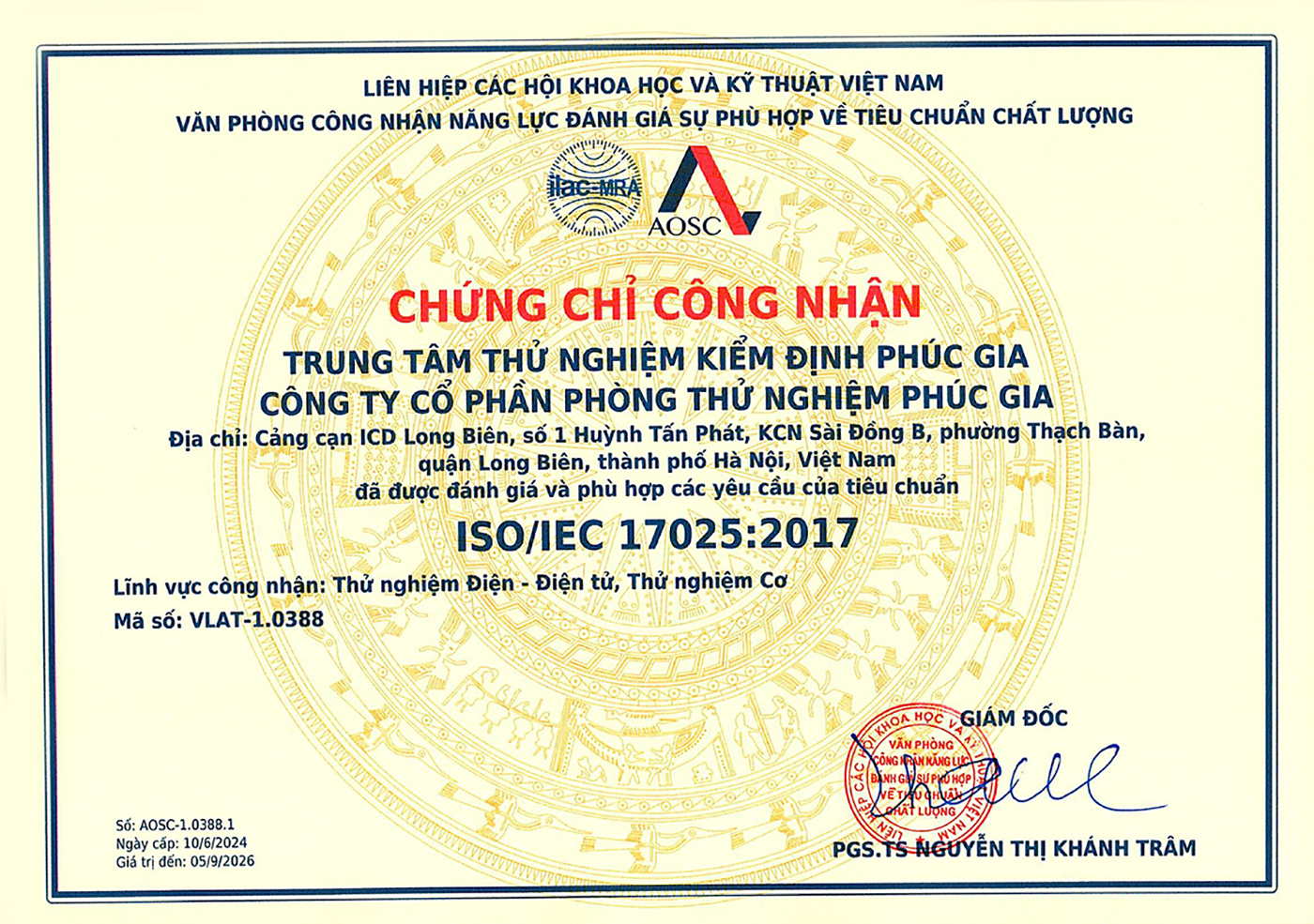
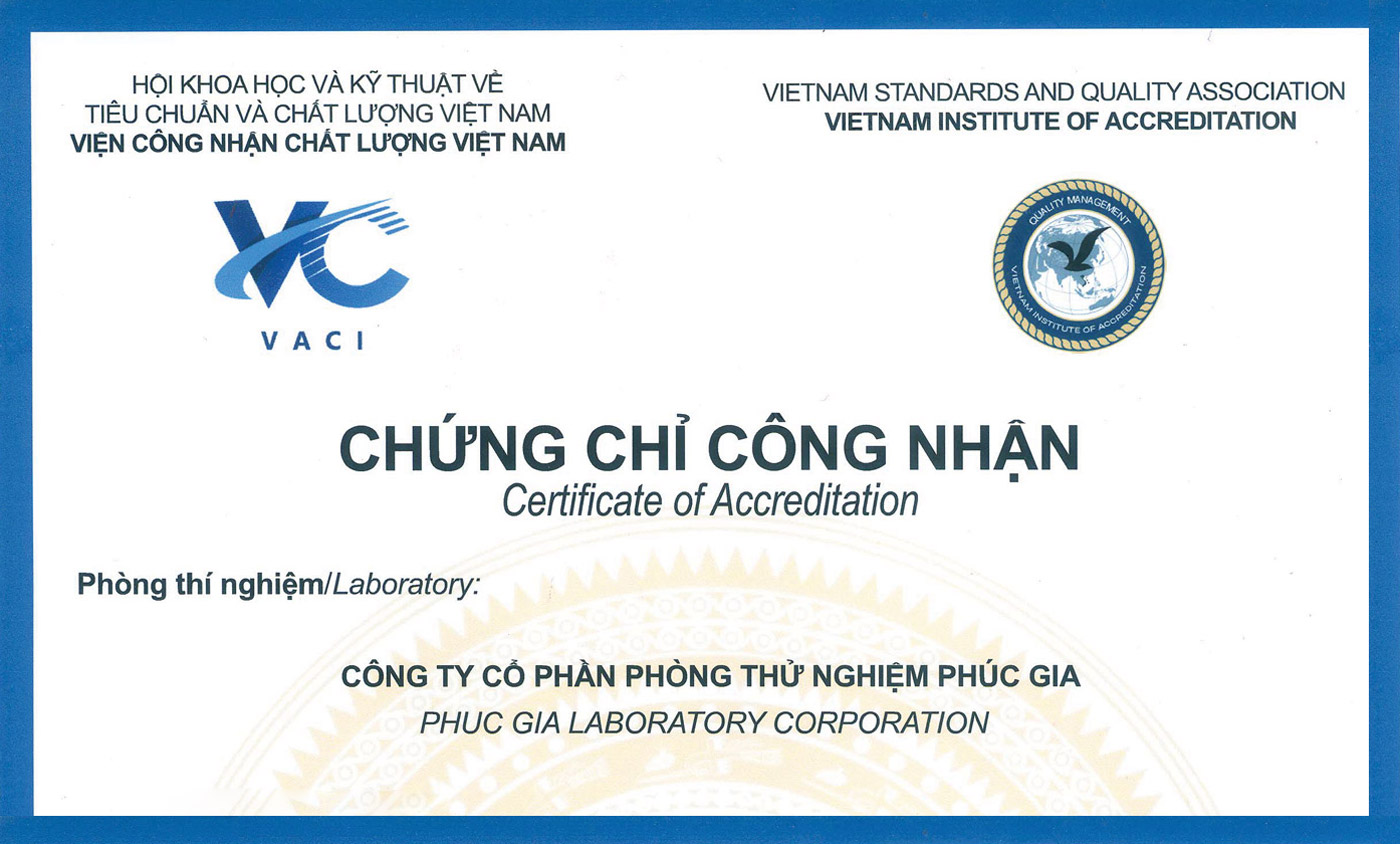
Phuc Gia® is also the first unit to be recognized by all 3 accreditation bodies (BoA, AOSC, VACI) as meeting ISO/IEC 17025:2017 standards. The testing facility has a scale of up to 5,000 m², equipped with synchronous modern measurement and verification equipment, serving testing for electrical safety, EMC, energy efficiency, RF, SAR, and many other technical categories.
Along with that is a team of nearly 100 staff, engineers, and technical experts selected and intensively trained to meet the strict requirements of testing, certification, and conformity assessment activities in many technical fields.


RELATED POSTS
- Guidance on Testing for Radio Communication Equipment according to QCVN 18:2022/BTTTT
- Guidance on Testing for Broadband Data Transmission Equipment according to QCVN 54:2020/BTTTT
- Guidance on Testing for Mobile Communication Terminal Equipment according to QCVN 86:2019/BTTTT
For more details, please contact us at:
PHUC GIA LABORATORY CORPORATION
PHUC GIA CERTIFICATION CENTER
PHUC GIA INSPECTION TESTING CENTER
Address:
- Hanoi: ICD Long Bien, No. 01 Huynh Tan Phat, Sai Dong B Industrial Park, Long Bien Ward
- Ho Chi Minh City: No. 180, D2 Street, Long Truong Ward
Hotline: 0965996696 / 0982996696 / 02477796696
E-mail: lab@phucgia.com.vn/cert@phucgia.com.vn/info@phucgia.com.vn
Website: phucgia.com.vn
Working time: Monday to Friday 8:00 – 18:30; Saturday 8:00 – 12:00

![QUOTATION – Testing and Other Certification Services [2026]](https://phucgia.com.vn/wp-content/uploads/2017/03/bao-gia-thu-nghiem-chung-nhan.png)