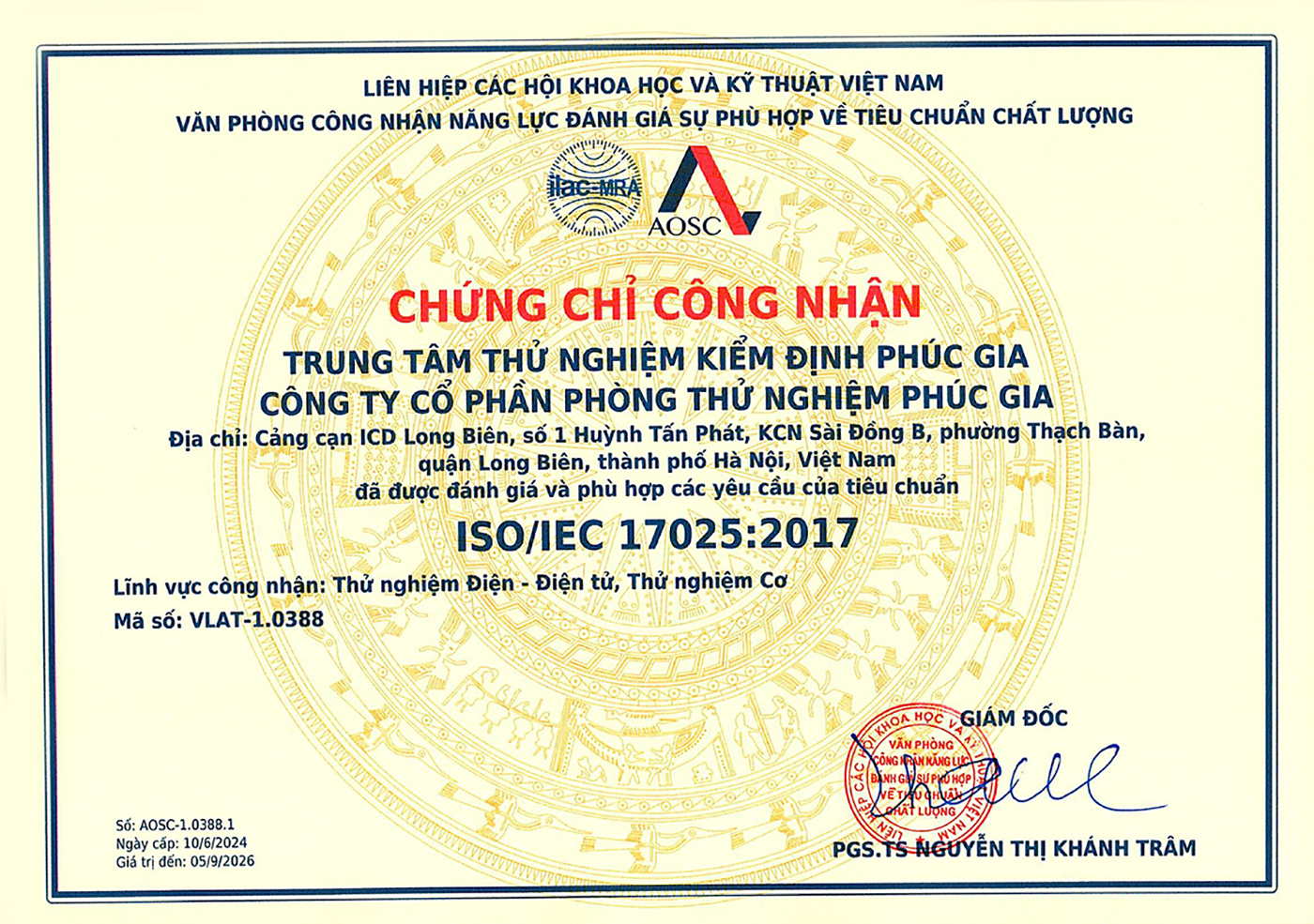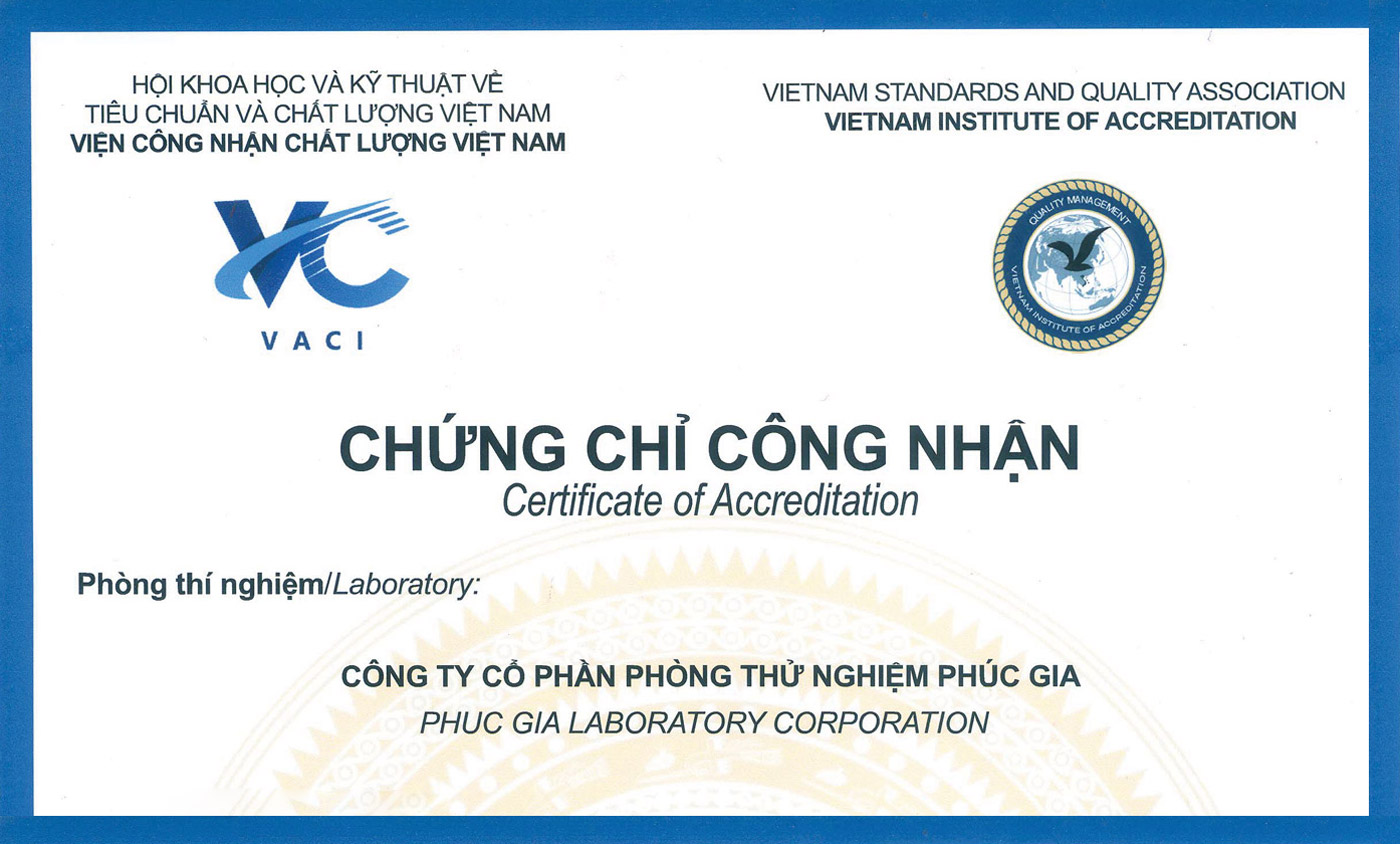


To import blenders into Vietnam, enterprises need to clearly understand the import procedures for blenders according to current regulations. Therefore, in the following article, Phuc Gia will guide enterprises through the implementation process, legal regulations, HS codes, tax rates, and the most accurate and optimized import documentation for blenders.
See more: Capacity Profile Of Phuc Gia Laboratory Corporation
1. Policies and Regulations on Blender Import
Blenders, as well as many other household electrical appliances, must comply with current legal regulations when imported into Vietnam. The import procedures for this product are clearly stipulated in the following legal documents:
-
Decision No. 1983/QĐ-TĐC issued by the Ministry of Science and Technology (MOST) and the Directorate for Standards, Metrology and Quality (STAMEQ) on October 15, 2014, providing guidelines for certification of conformity with national technical regulation QCVN 9:2012 on Electromagnetic Compatibility (EMC) for household electrical and electronic equipment and similar purposes;
-
Decision No. 1182/QĐ-BCT issued by the Ministry of Industry and Trade (MOIT) on April 6, 2021, regulating the list of products subject to specialized inspection under the management of the Ministry of Industry and Trade;
-
Decision No. 1182/QĐ-BCT dated April 6, 2021, of the Ministry of Industry and Trade regulating the list of products subject to specialized inspection under the management of the Ministry of Industry and Trade;
-
Decision No. 04/2017/QĐ-TTg dated March 9, 2017, issued by the Prime Minister, regulating the list of imported goods subject to quality inspection;
-
Decision No. 2711/QĐ-BKHCN dated December 30, 2022, issued by the Ministry of Science and Technology, regulating the standards and technical regulations applied to imported products and goods;
-
Circular No. 36/2016/TT-BCT issued by the Ministry of Industry and Trade on December 28, 2016, along with Consolidated Document No. 23/VBHN-BCT dated March 24, 2020, regulating energy labeling for energy-using means and equipment under the management of the Ministry of Industry and Trade;
-
Circular No. 11/2012/TT-BKHCN of the Ministry of Science and Technology issuing QCVN 9:2012/BKHCN “National technical regulation on electromagnetic compatibility for household electrical and electronic equipment and similar purposes”;
-
Circular No. 13/2013/TT-BKHCN amending and supplementing a number of articles of Circular No. 21/2011/TT-BKHCN, Circular No. 10/2012/TT-BKHCN, and Circular No. 11/2012/TT-BKHCN;
-
Circular No. 01/2022/TT-BKHCN amending and supplementing a number of articles of Circular No. 7/2018/TT-BKHCN dated June 6, 2018, and Circular No. 08/2019/TT-BKHCN dated September 25, 2019, of the Minister of Science and Technology;
-
Circular No. 28/2012/TT-BKHCN issued by the Ministry of Science and Technology on December 12, 2012, regulating standard conformity declaration, technical regulation conformity declaration, and conformity assessment methods with standards and technical regulations;
-
Circular No. 38/2015/TT-BTC dated March 25, 2015, amended and supplemented by Circular 39/2018/TT-BTC dated April 20, 2018, issued by the Ministry of Finance, providing guidance on customs procedures and tax management for imported and exported goods;
-
Decree No. 69/2018/NĐ-CP dated May 15, 2018, issued by the Government, detailing a number of articles of the Law on Foreign Trade Management;
-
Decree No. 128/2020/NĐ-CP dated October 19, 2020, issued by the Government, regulating penalties for administrative violations in the field of customs;
-
Consolidated Document No. 23/VBHN-BCT issued by the Ministry of Industry and Trade on August 30, 2024: Regulating energy labeling for energy-using means and equipment under the management of the Ministry of Industry and Trade;
-
Amendment 1:2018 QCVN 9:2012/BKHCN – National technical regulation on electromagnetic compatibility for household electrical and electronic equipment and similar purposes issued by the Ministry of Science and Technology on June 6, 2018;
-
Consolidated Text of Circulars No. 11/2012/TT-BKHCN, No. 13/2013/TT-BKHCN, No. and 07/2018/TT-BKHCN on technical regulations applied to household electrical and electronic equipment;
-
Law on Value Added Tax No. 13/2008/QH12 dated June 3, 2008, issued by the National Assembly of the Socialist Republic of Vietnam.

2. Blender Import Procedures
Below are the steps required in the blender import procedure to ensure the products are cleared through customs correctly and legally.
Step 1: State control registration on quality of products
The state control registration on quality of products can be conducted directly at the Department of Standards, Metrology and Quality or through the National Single Window system.
To begin, enterprises need to access the website of the National Single Window at https://vnsw.gov.vn and proceed to create an account according to the system’s instructions. Account registration should be done early, as the system usually takes about 24 hours for approval.
After having a valid account, the enterprise can proceed to create a registration profile for quality inspection under the management section of the Ministry of Science and Technology (MOST). During the profiling process, it is necessary to select the Department of Standards, Metrology and Quality as the receiving unit and simultaneously choose a testing laboratory licensed by the MOST to perform sample testing.
Note: Creating an account and preparing the profile can be done before having the customs declaration number to shorten processing time later.

Step 2: Open customs declaration
Opening the customs declaration is the first important step in the blender import process, helping to confirm cargo information, taxes, and legal control before the product enters. After declaring on the electronic customs system, enterprises will receive a channeling notice: green, yellow, or red.
-
Green lane: Goods are cleared quickly, with minimal document inspection.
-
Yellow lane: The profile needs careful inspection; additional customs documents may be required.
-
Red lane: Goods must undergo physical inspection at the warehouse or port; the enterprise must prepare a full profile and wait for customs approval.
The process of opening the declaration must be performed within 15 days from the date of declaration. If not performed on time, the declaration will be canceled and may be subject to fines from customs.
Note that once a formal declaration is available, the importer needs to quickly contact the Customs Branch to continue blender import procedures and simultaneously register for product quality inspection.
Step 3: Testing & Certificate of Conformity
After registering for quality inspection, enterprises proceed with testing and issuance of a Certificate of Conformity for the product to be circulated on the market:
-
Electrical safety & EMC testing: Sampling and testing according to QCVN 4:2009/BKHCN and QCVN 9:2012/BKHCN, ensuring user safety and no electromagnetic interference.
-
Energy Efficiency testing: Assessing power consumption according to QCVN 21:2019/BKHCN, helping users know the efficiency of electricity use.
-
Issuance of Certificate of Conformity (CR) & Energy Labeling: The organization designated by the MOST issues the certification and CR mark; energy labels are affixed according to the Law on Economical and Efficient Use of Energy to inform consumers.
With over 10 years of experience in the field of product testing and certification, Phuc Gia is a reliable partner helping enterprises obtain the Certificate of Conformity for blenders. We provide full guidance on legal requirements and technical standards, from selecting test samples, checking electrical safety, and electromagnetic compatibility to energy efficiency according to current QCVNs, ensuring products meet standards before market circulation.
Phuc Gia’s team of nearly 100 specialists supports enterprises in preparing profiles, assessing legality, completing procedures for the Certificate of Conformity (CR) and CR marking, and guiding the declaration of conformity. As one of the few facilities fully licensed by the Ministry of Science and Technology for both certification and testing, Phuc Gia provides accurate, fast, and cost-saving solutions, helping enterprises confidently bring products to market.
Step 4: Customs Clearance of the declaration
After completing the testing and quality inspection, the results will be submitted to customs. Once the documents are full and validly accepted, the declaration will be granted Customs Clearance and the goods can be introduced into the distribution system. Completing the documentation fully is an important condition to avoid legal and financial risks.
Step 5: Bringing goods to the warehouse
Once the declaration has reached Customs Clearance and procedures are completed, the enterprise can bring the goods to the warehouse for storage. This is the final step in the blender import process, ensuring that the goods are stored safely and are ready for use or distribution.
Note: To bring products to the business market, enterprises are mandatory to perform procedures such as electromagnetic compatibility testing, certification of conformity, energy efficiency testing, and energy labeling.

3. Customs documentation for blender import
The dossier for performing blender import procedures in particular and household electrical appliances in general is guided in Circular No. 38/2015/TT-BTC dated March 25, 2015, amended and supplemented by Circular No. 39/2018/TT-BTC dated April 20, 2018, issued by the Ministry of Finance.
When conducting Customs Clearance, enterprises need to prepare a set of import-export documents for blenders including the following papers:
-
Electronic customs declaration
-
Commercial invoice
-
Bill of lading
-
Packing list
-
Sales contract
-
State control registration on quality of products
-
Certificate of Origin (C/O) (if any)
-
Product catalog (if any)
In which, the core documents and those often required for thorough inspection include: customs declaration, bill of lading, commercial invoice, and state control registration on quality of products profile. The remaining documents can be supplemented according to instructions from the customs authority during the processing.
Particularly for the state control registration on quality of products profile, there are two submission options:
-
Submit a hard copy directly at the specialized agency;
-
Or send an electronic profile through the National Single Window portal.
4. HS Code and import tax for blenders
According to the 2025 Import and Export Tariff, blenders are classified under Chapter 85, specifically subheading 8509, which includes electro-mechanical domestic appliances with self-contained electric motors, other than vacuum cleaners. The specific HS code for this product line is 8509.40.00, applicable to both blenders and fruit or vegetable juice extractors.
Regarding import tax rates, blenders are regulated with the following levels:
-
Value Added Tax (VAT) – 10%
-
Ordinary Iimport Tax – 37.5%
-
Preferential Import Tax – 25%
These tax rates are applied depending on the origin of the goods and related trade agreements, if any.
| HS Code | Product Description | Unit | Import Tax (%) | Preferential Import Tax (%) | VAT (%) | ACTA | AITIGA | AJCEP | VJEPA |
| 8508.19.10 | Blenders of a kind used for household purposes | piece | 37.5 | 25 | 10 | 5 | 0 | 0 | 0 |
| 8508.19.90 | Other | piece | 5 | 0 | 10 | 0 | 0 | 0 | 0 |
| 8508.00.00 | Other vacuum cleaners | piece | 5 | 0 | 10 | 0 | 0 | 0 | 0 |
| 8508.70 | Parts: | kg/piece | |||||||
| 8508.70.10 | Vacuum cleaners of subheading 8508.11.00 or 8508.19.10 | kg/piece | 5 | 0 | 10 | 0 | 0 | 0 | 0 |
| 8508.70.90 | Other | kg/piece | 5 | 0 | 10 | 0 | 0 | 0 | 0 |
| 8509 |
Electro-mechanical domestic appliances, with self-contained electric motor, other than vacuum cleaners
|
piece | |||||||
| 8509.40.00 | Food grinders and mixers; fruit or vegetable juice extractors | piece | 37.5 | 25 | 10 | 5 | 0 | 3 | 5 |
| 8509.80 | Other appliances: | piece | |||||||
| 8509.80.10 | + Floor polishers | piece | 37.5 | 25 | 10 | 5 | 0 | 3 | 5 |
| 8509.80.20 | + Kitchen waste disposers | piece | 37.5 | 25 | 10 | 5 | 0 | 3 | 5 |
| 8509.80.90 | + Other | piece | 37.5 | 25 | 10 | 5 | 0 | 3 | 5 |
| 8509.90 | Parts: | kg/piece | |||||||
| 8509.90.10 | Goods of subheading 8509.10 | kg/piece | 4.5 | 3 | 10 | 0 | 0 | 2 | 4 |
| 8509.90.90 | Other | kg/piece | 10.5 | 7.5 | 10 | 0 | 0 | 2 | 4 |
In addition to the ordinary and basic preferential tax rates, enterprises may be eligible for special preferential import tax if they present a Certificate of Origin (C/O) in accordance with the trade agreements that Vietnam has signed. Some common types of C/O and corresponding tax rates include:
-
Form E (ACFTA) – Applied to goods imported within the framework of the ASEAN-China Free Trade Agreement, with a special preferential tax rate of 5%.
-
Form D (ATIGA) – For goods originating from ASEAN countries, exempted from import tax (0%).
-
Form AJ (AJCEP) – Used in trade between ASEAN and Japan, with a special preferential tax rate of 3%.
-
Form JV (VJEPA) – Applied to items from Japan under the Vietnam – Japan Economic Partnership Agreement, with a preferential tax of 5%.
-
Form AK (AKFTA) – For goods from South Korea under the agreement with ASEAN, with a special preferential tax rate of 32%.
Using the correct and appropriate C/O will help enterprises significantly save import costs and optimize competitive advantages in the market.
5. Regulations on labeling for imported blenders
Goods labeling not only helps administrative management agencies control goods but also supports the identification of origin and the entity responsible for the product. Therefore, labeling is an indispensable and important step when performing blender import procedures.
Since Decree No. 128/2020/NĐ-CP was issued by the Government on October 19, 2020, regulating “Penalties for administrative violations in the field of customs”, the process of labeling goods has been controlled and monitored more strictly.
The important elements of goods labeling are as follows:
Labeling content
According to Decree No. 43/2017/NĐ-CP, issued by the Government on May 14, 2017, regulating “Goods labeling”, amended by Decree No. 111/2021/NĐ-CP dated December 9, 2021 (the source text mentions 43/2017/NĐ-CP twice, but typically refers to the amendment), blender labels must contain full information as follows:
The original labels of goods imported into Vietnam must mandatory show the following contents in foreign language or Vietnamese when performing customs clearance procedures:
a. Name of goods;
b. Origin of goods.
In case the origin cannot be determined, record the place where the final stage to finish the goods was performed according to the provisions in Clause 3, Article 15 of this Decree;
c. Name or abbreviation of the manufacturing organization or individual, or the organization or individual responsible for the goods abroad.
c1. In case the original label of the goods does not show the full name and address of the manufacturing organization or individual, or the organization or individual responsible for the goods abroad, these contents must be fully shown in the documents accompanying the goods;
c2. For goods imported into Vietnam with original labels in foreign languages according to the provisions in points a, b, c, Clause 2 of this Article, after performing customs clearance procedures and moving to the storage warehouse, the importing organization or individual must perform the addition of goods labels written in Vietnamese according to the provisions in Clause 1 of this Article before putting the goods into circulation in the Vietnam market.
Customs will pay special attention to these details when inspecting imported goods to ensure proper compliance with legal regulations.
Labeling position on goods
According to Article 4, Decree No. 43/2017/NĐ-CP, issued by the Government on May 14, 2017, regulating “Goods labeling”:
1. Goods labels must be shown on the goods or the commercial packaging of the goods at a position where, when observed, the prescribed contents of the label can be easily and fully recognized without having to disassemble the details or parts of the goods.
2. In case the outer packaging cannot or may not be opened, the outer packaging must have a label and the label must present the full mandatory contents.
Risks of improper labeling
Affixing goods labels is a legal requirement, and non-compliance can lead to serious consequences:
-
Fines: According to Article 22 of Decree No. 128/2020/NĐ-CP, issued by the Government on October 19, 2020, regulating “Penalties for administrative violations in the field of customs”, if goods have no labels or incorrect labels, the importer may be subject to monetary fines.
-
Loss of right to enjoy preferential import tax: If there is no label or the label does not meet requirements, the C/O (Certificate of Origin) may be rejected, leading to the loss of the right to enjoy preferential import tax.
-
Risk of cargo damage: Lack of warning labels can cause goods to be damaged or lost during the process of loading, unloading, and transportation.
Given these risks, we encourage customers to proactively perform proper labeling when conducting blender import procedures to ensure customs clearance in accordance with regulations.

6. What should be noted when importing blenders?
During the process of performing blender import procedures for customers, we have drawn several experiences and would like to share them with you. Below are the important notes:
-
Import tax is an obligation that the importer must complete towards state agencies.
-
According to Section II, Appendix I issued with Decree 69/2018/NĐ-CP, used electronic and refrigeration goods, including used blenders, belong to the list of goods prohibited from import into Vietnam.
-
Accurately determine the HS code of the product to avoid penalties, according to Official Dispatch 2671/TCHQ-TXNK issued by the Ministry of Finance and the Department of Vietnam Customs in 2013 regarding the determination of HS codes for imported goods.

We hope that through the above article, enterprises have better understood the blender import procedure. If enterprises need support with this procedure or electromagnetic compatibility testing and certification of conformity for products, Phuc Gia is the unit recognized by the Ministry of Science and Technology as having sufficient capacity to perform, helping you execute this process with the most optimized time and cost.
For more details, please contact us at:
PHUC GIA LABORATORY CORPORATION
PHUC GIA CERTIFICATION CENTER
PHUC GIA INSPECTION TESTING CENTER
Address:
- Hanoi: ICD Long Bien, No. 01 Huynh Tan Phat, Sai Dong B Industrial Park, Long Bien Ward
- Ho Chi Minh City: No. 180, D2 Street, Long Truong Ward
Hotline: 0965996696 / 0982996696 / 02477796696
E-mail: lab@phucgia.com.vn/cert@phucgia.com.vn/info@phucgia.com.vn
Website: phucgia.com.vn
Working time: Monday to Friday 8:00 – 18:30; Saturday 8:00 – 12:00

![QUOTATION – Testing and Other Certification Services [2026]](https://phucgia.com.vn/wp-content/uploads/2017/03/bao-gia-thu-nghiem-chung-nhan.png)