

The rice cooker is an essential household appliance in contemporary life. Today’s market continually introduces new models, capacities, and features to satisfy diverse consumer demands. Yet, this broad popularity necessitates increasingly stringent compliance with electrical safety and product quality requirements before the appliances can be manufactured, imported, or circulated on the market, as mandated by the Legal Regulations for Rice Cookers in Vietnam.
Table 1: Testing Requirements for Rice Cookers

For manufacturers, importers, and distributors of rice cookers, mastering the specific legal requirements is essential to guarantee that products adhere to mandatory standards and safety conditions before market release. This document provides Phuc Gia’s summary of key information concerning the Legal Regulations for Rice Cookers in Vietnam, supporting enterprises in achieving reference and operational compliance under current law.
Table 2: Procedures for Implementing Licenses for Rice Cookers

I. WHAT IS A RICE COOKER?
The definition under the Legal Regulations for Rice Cookers in Vietnam is based on regulatory and technical standards. TCVN 8252:2015 defines the rice cooker as “an appliance used to cook rice placed in a removable pot, which is housed inside the appliance during cooking.” Furthermore, per Decision 2711/QĐ-BKHCN, it is classified as an electrical appliance for heating liquids for household and similar uses, with a maximum rated voltage of 250V.
Essentially, a rice cooker is an automated appliance that cooks rice by utilizing steam from heating water. The core components are a heating unit, an internal cooking pot, and a temperature sensor to manage the cooking process. Advanced models often integrate multiple sensors and control features to offer a wider variety of specialized cooking modes.

The contemporary market for rice cookers offers extensive variety in design, capacity, and power levels, complemented by diverse cooking modes tailored to specific user needs. This wide array of choices ensures the rice cooker’s status as a universally popular household appliance across Asia, especially in Vietnam, where all product types must comply with the Legal Regulations for Rice Cookers in Vietnam.
Common rice cooker types include: separate-lid, hinged-lid, standard electronic models, pressure electronic cookers, induction (IH) cookers, low-carb/sugar-separating cookers, and various multi-functional cooking pots.
II. LEGAL REGULATIONS FOR RICE COOKERS IN VIETNAM
1. Procedures for Implementing Licenses for Rice Cookers
1.1. Imported Rice Cookers
| MANAGING MINISTRY | IMPORTED RICE COOKERS | |
| Implementing Steps | Authorizing/Implementing Body | |
| Ministry of Industry and Trade (MOIT) | – Step 1: Register for Energy Efficiency (EE) testing (To collect products for testing) |
Phuc Gia® |
| – Step 2: Energy Efficiency testing | Phuc Gia® | |
| – Step 3: Declaration (registration) of Energy Labeling | Ministry of Industry and Trade | |
| – Step 4: Affix Energy Label (EL) (Before circulating on the market) |
The enterprise self-implements after submitting the declaration dossier for Energy Labeling | |
| Ministry of Science and Technology (MOST) | – Step 1: State control registration (*) | Local Department of Standards, Metrology and Quality / Department of Science and Technology where the declaration is opened |
| – Step 2: Regulation conformity testing | Phuc Gia® | |
| – Step 3: Regulation conformity certification (**) | Phuc Gia® | |
| – Step 4: Submit the certificate of conformity and related documents to the registration authority from Step 1 | The enterprise submits the dossier to the Local Department of Standards, Metrology and Quality / Local Department of Science and Technology where the declaration is opened | |
| – Step 5: Affix the CR conformity stamp (Before circulating on the market) |
The enterprise self-implements after being licensed | |
Notes: Phuc Gia®: Phuc Gia Laboratory Corporation; EE: Energy Efficiency; EL: Energy
(*) Online Submission: Submission for State Inspection is conducted online via https://vnsw.gov.vn/
(**) QCVN 4:2009/BKHCN Certification: Certification is conducted according to Method 5 or Method 7.
Method 5: Includes factory assessment, sample sealing, testing of a representative sample, Certificate (GCN) valid for 3 years, with periodic surveillance not exceeding once every 12 months.
Method 7: Includes batch inspection, sample sealing, testing of a batch representative sample, Certificate (GCN) only valid for the specific batch.
1.2. Domestically Manufactured Rice Cookers
| MANAGING MINISTRY | DOMESTICALLY MANUFACTURED RICE COOKERS | |
| Implementing Steps | Authorizing/Implementing Body | |
| Ministry of Industry and Trade (MOIT) | – Step 1: Energy Efficiency (EE) testing | Phuc Gia® |
| – Step 2: Declaration (registration) of Energy Labeling | Ministry of Industry and Trade | |
| – Step 3: Affix Energy Label (EL) (Before circulating on the market) |
The enterprise self-implements after submitting the declaration dossier for Energy Labeling | |
| Ministry of Science and Technology (MOST) | – Step 1: Regulation conformity testing | Phuc Gia® |
| – Step 2: Regulation conformity certification (**) | Phuc Gia® | |
| – Step 3: Declaration of conformity | Local Department of Standards, Metrology and Quality / Department of Science and Technology (where the business is registered) | |
| – Step 4: Affix the conformity stamp (Before circulating on the market) |
The enterprise self-implements after being licensed | |
Note: Phuc Gia®: Phuc Gia Laboratory Corporation; EE: Energy Efficiency; EL: Energy
(*) QCVN 4:2009/BKHCN Certification: Certification is conducted according to Method 5 or Method 7.
Method 5: Includes factory assessment, sample sealing, testing of a representative sample, Certificate (GCN) valid for 3 years, with periodic surveillance not exceeding once every 12 months.
Method 7: Includes batch inspection, sample sealing, testing of a batch representative sample, Certificate (GCN) only valid for the specific batch.
2. Legal Regulation Documents
| Ministry of Industry and Trade (MOIT) | Ministry of Science and Technology (MOST) |
| – Decision 04/2017/QD-TTg (09/03/2017) of the Prime Minister regulating the list of products subject to energy efficiency testing and mandatory energy labeling for rice cookers.
– Decision 14/2023/QD-TTg (24/05/2023) of the Prime Minister issuing the list and roadmap for energy-using equipment to be phased out and low-efficiency power generating units not permitted for new construction. – Circular 36/2016/TT-BCT (28/12/2016) of the Ministry of Industry and Trade (MOIT) regulating energy labeling. – Circular 30/2011/TT-BCT (10/08/2011) of MOIT temporarily regulating the maximum allowable limit of certain toxic chemicals in electrical and electronic products (RoHS). – Consolidated Document 16/VBHN-BCT (2014) of MOIT, consolidating Circulars regulating the temporary allowable limits of toxic chemicals in electrical and electronic products (RoHS). – Decision 1725/QD-BCT (01/07/2024) of MOIT on issuing the list of goods subject to energy efficiency testing and energy labeling. – Vietnamese National Standard TCVN 8252:2015 on Energy Efficiency for Rice Cookers. |
– Decision 2711/QD-BKHCN (30/12/2022) of the Ministry of Science and Technology (MOST) on announcing Group 2 products and goods (mandatory quality inspection).
– Circular 21/2009/TT-BKHCN (30/09/2009) of MOST promulgating and implementing the National Technical Regulation on Safety for Electrical and Electronic Equipment (QCVN 4:2009/BKHCN). – Circular 28/2012/TT-BKHCN (30/09/2009) of MOST promulgating regulations on standard conformity declaration, regulation conformity declaration, and conformity assessment methods. – Circular 21/2016/TT-BKHCN (15/12/2016) of MOST promulgating Amendment 1:2016 to QCVN 4:2009/BKHCN National Technical Regulation on Safety of Electrical and Electronic Equipment. – Circular 02/2017/TT-BKHCN (31/03/2017) of MOST promulgating regulations on standard conformity declaration, regulation conformity declaration, and conformity assessment methods. – Circular 06/2020/TT-BKHCN (10/12/2020) of MOST guiding and implementing Decrees related to quality management. – Vietnamese National Standard TCVN 5699-2-15:2007 (IEC 60335-2-15:2005) on Household and similar electrical appliances – Safety – Part 2-15: Particular requirements for liquid-heating appliances. |
3. Types of Rice Cookers within the Scope of Appplication
| Ministry of Industry and Trade (MOIT) | Ministry of Science and Technology (MOST) |
| – TCVN 8252:2015 applies to common rice cookers for household and similar purposes, with a rated power up to and including 2,000 W.
– This standard applies to rice cookers using resistance heating or induction heating methods, operating at normal atmospheric pressure. |
Based on Decision 2711/QĐ-BKHCN, rice cookers, classified as electrical appliances for heating liquids for household and similar purposes, with a rated voltage not exceeding 250V, must comply with QCVN 4:2009/BKHCN (HS Code: 8471.30.20). |
4. Currently Effective Regulations/Standards
| Ministry of Industry and Trade (MOIT) | Ministry of Science and Technology (MOST) |
| TCVN 8252:2015 on Energy Efficiency for Rice Cookers. | QCVN 4:2009/BKHCN and Amendment 1:2016 QCVN 4:2009/BKHCN (specifically applying the requirements in TCVN 5699-2-3:2010) |
Note: Rice cookers must also comply with food safety regulations before the product is circulated on the market.
5. Important Notes in Importation, Manufacturing, and Business Policies under the Legal Regulations for Rice Cookers in Vietnam
| Ministry of Industry and Trade (MOIT) | Ministry of Science and Technology (MOST) |
| – Energy efficiency testing and certification for rice cookers must be conducted by a testing/certification organization designated, registered, or recognized by the Ministry of Industry and Trade (MOIT).
– Rice cookers may include an additional warming function and may be capable of cooking food other than rice.
|
– Testing and certification for electrical appliances (e.g., rice cookers) must be performed by a testing/certification organization designated, registered, or recognized by the Ministry of Science and Technology (MOST).
– Domestic enterprises manufacturing or importing rice cookers, after obtaining conformity certification, must register the conformity declaration at the local Sub-Department of Standards, Metrology, and Quality (STAMEQ) where the business is registered before placing the product on the market. – Equipment designed for use in vehicles, ships, or aircraft may be subject to supplementary requirements. – Horizontal and general standards mentioning hazards are not applied because these standards have already been considered when building the general and particular requirements for the TCVN 5699 (IEC 60335) standard series. For example, regarding surface temperature requirements on many appliances, the general standard, e.g., ISO 13732-1 for hot surfaces, is not applied; only Parts 1 and 2 of the TCVN 5699 (IEC 60335) series are applied. |
III. PHUC GIA LABORATORY CORPORATION: COMPREHENSIVE SERVICES FOR RICE COOKERS
| ORD | Phuc Gia® Capabilities | Ministry of Industry and Trade (MOIT) | Ministry of Science and Technology (MOST) |
| 1 | Testing Capabilities (Certification/ Designation) |
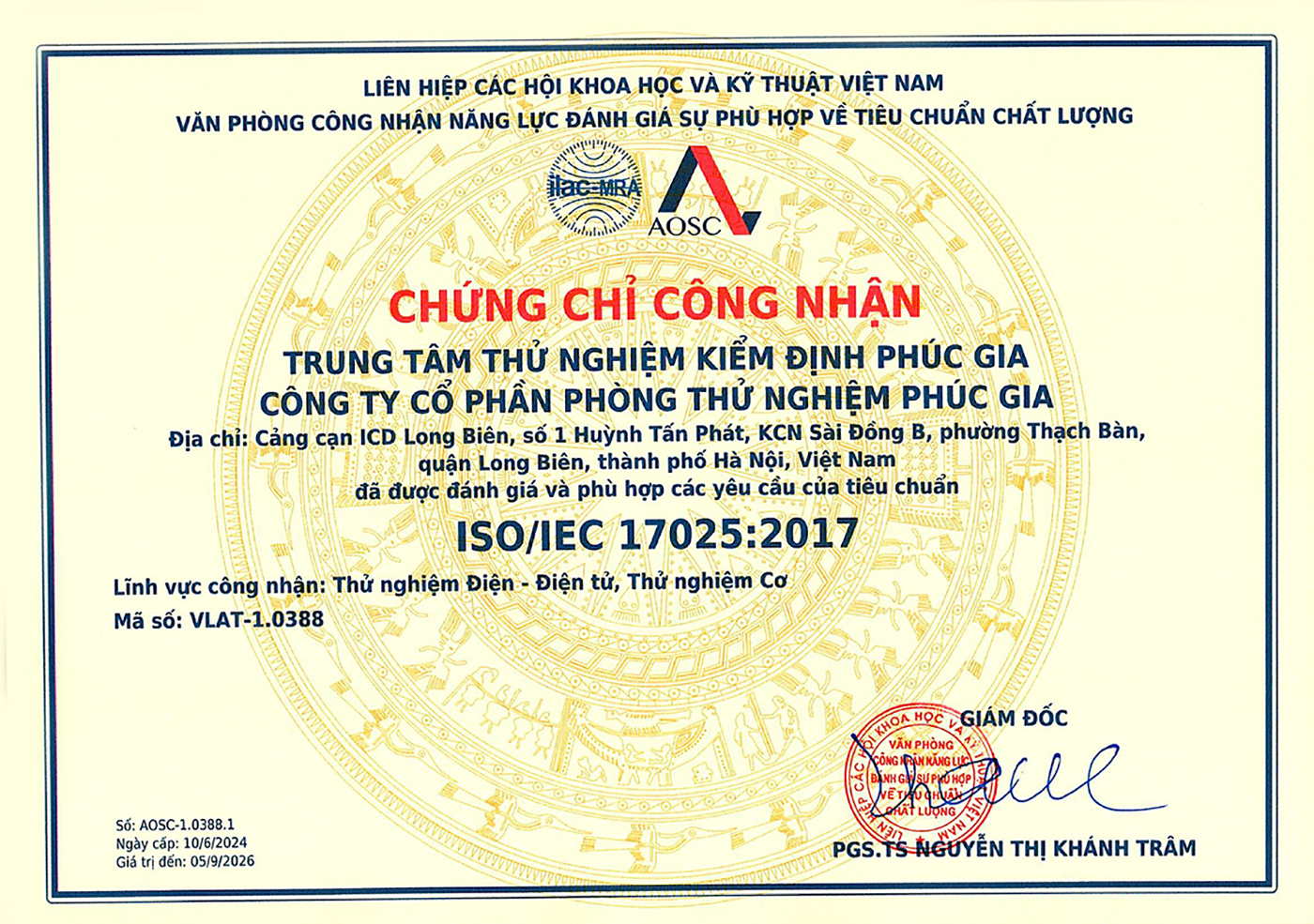
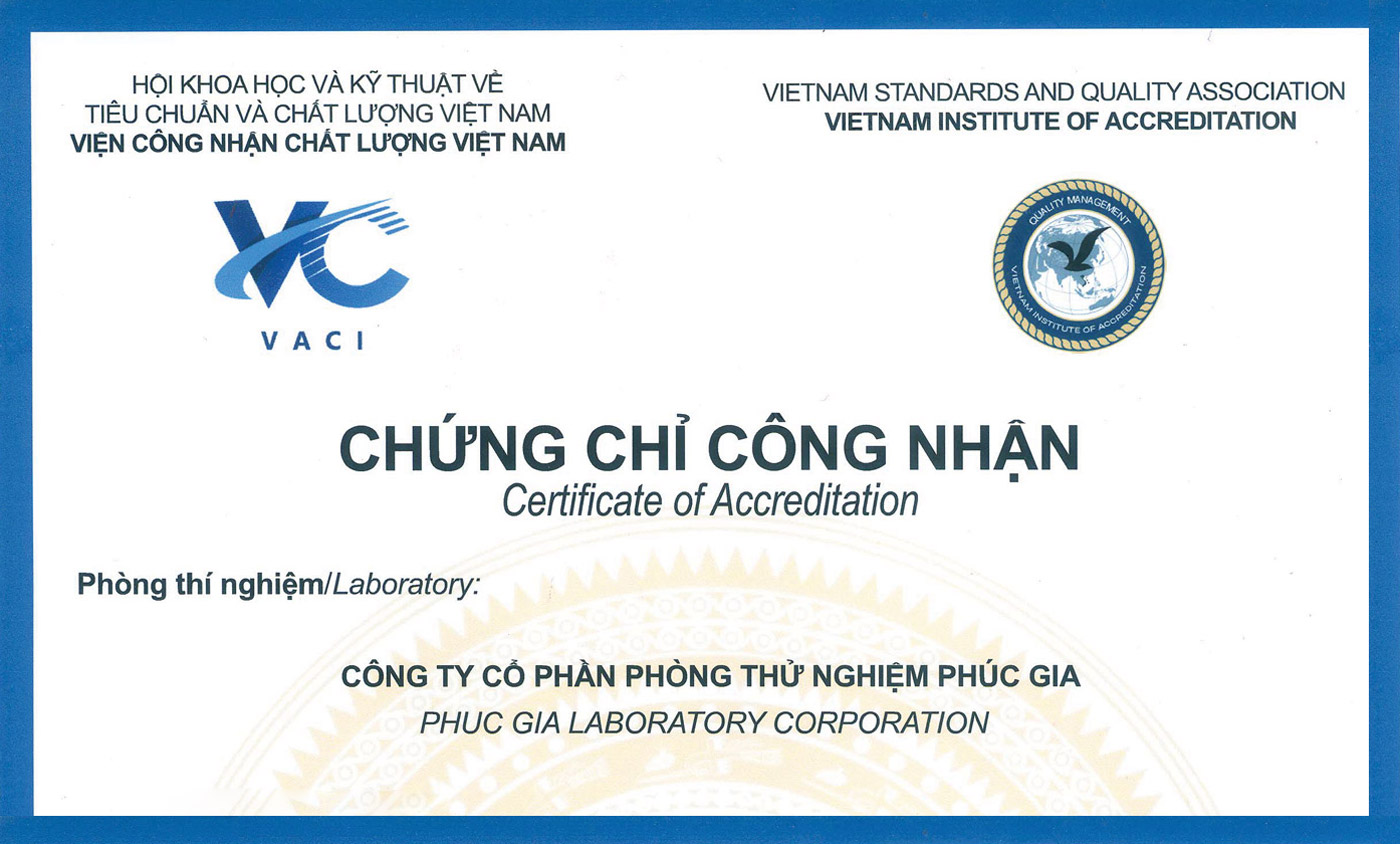
Phuc Gia has received official designation and the authorization is still currently valid. (Detail) | Phuc Gia has received official designation and the authorization is still currently valid. (Detail) |
| 2 | Quotation and Duration for Tests | The official listed quotation is available here. | |
| 3 | Support | – Consultancy on product quality improvement;
– Free 24/7 consultation service; – Consultancy on product quality improvement. |
|
| 4 | Contact for Services | For assistance with testing/certification, please contact:
Address: ICD Long Bien, No. 01 Huynh Tan Phat, Sai Dong B Industrial Park, Long Bien Ward, Hanoi |
|
| Note: Phuc Gia Laboratory Corporation directly performs conformity testing for Rice Cooker products according to the regulations of the Ministry of Industry and Trade (MOIT) and the Ministry of Information and Communications (MIC). Phuc Gia can assist customers with services such as Energy Label Declaration upon request. | |||
RELATED POSTS:
- A Very Thorough Guidance on Energy Efficiency Testing for Rice Cookers
- Energy Efficiency Test Report for Rice Cookers
- Declaration of Energy Labeling for Rice Cookers
- Guidance on Safety Testing for Rice Cookers under QCVN 4:2009/BKHCN
- Conformity Certification for Rice Cookers
- Guidance on Food Safety Declaration/Testing for Rice Cookers
- Full and Detailed Guide to Rice Cooker Import Procedures
For more details, please contact us at:
PHUC GIA LABORATORY CORPORATION
PHUC GIA CERTIFICATION CENTER
PHUC GIA INSPECTION TESTING CENTER
Address: ICD Long Bien, No. 01 Huynh Tan Phat, Sai Dong B Industrial Park, Long Bien Ward, Hanoi City, Vietnam.
Hotline: 0981 996 996/ 0982 996 696/ 024 7779 6696
E-mail: lab@phucgia.com.vn/cert@phucgia.com.vn/info@phucgia.com.vn
Website: phucgia.com.vn
Working time: Monday to Friday 8:00 – 18:30; Saturday 8:00 – 12:00

![QUOTATION – Testing and Other Certification Services [2026]](https://phucgia.com.vn/wp-content/uploads/2017/03/bao-gia-thu-nghiem-chung-nhan.png)