

Base station equipment is radio telecommunications equipment that plays a central role in mobile communication networks, functioning to connect user terminal devices such as mobile phones and tablets to the operator’s core network. In Vietnam, 2G, 3G, and 4G base stations have been widely deployed, forming the essential telecommunications infrastructure for communication, Internet access, and digital services.
According to current regulations, enterprises and manufacturers are responsible for Testing for Base Station Equipment in Vietnam according to QCVN 103:2016/BTTTT (for 2G/3G/4G base station types) before installation and operation.
See more: Capacity Profile Of Phuc Gia Laboratory Corporation
I. Situation of Base Station Equipment Usage (2G/3G/4G) in Vietnam
In Vietnam, the base station equipment system is entering a phase of powerful transformation toward optimizing and modernizing telecommunications infrastructure. Previously, 2G, 3G, and 4G base stations were deployed in parallel to meet the needs of various subscriber groups. However, in recent years, the national telecommunications network has clearly shifted toward phasing out legacy technologies to focus resources on higher-performance technologies.
Specifically, since the end of 2024, network operators in Vietnam have ceased support for 2G-only devices, moving toward the goal of completely shutting down the 2G network during the 2025–2026 period to free up spectrum and reduce operating costs. Simultaneously, 3G base stations are also being gradually scaled back in areas with low traffic, as user demand for mobile data continues to shift toward 4G and newer technologies.
In the current context, the 4G network holds the leading role in Vietnam’s telecommunications infrastructure, with widespread coverage and the capability to meet the majority of data access needs. Major network operators are upgrading and reconfiguring existing BTS stations to broadcast 4G on frequency bands previously used for 2G/3G, while also preparing infrastructure for increased 5G deployment.
This trend has led base station equipment to become increasingly multi-band and high-power, requiring stricter adherence to technical regulations. In this regard, Testing for Base Station Equipment in Vietnam according to QCVN 103:2016/BTTTT plays a pivotal role in managing network quality and safety.
II. Instructions for Testing for Base Station Equipment in Vietnam according to QCVN 103:2016/BTTTT
1. Scope of Application
QCVN 103:2016/BTTTT applies to broadband data radio equipment such as:
- Base station equipment in GSM systems;
- Base station equipment in IMT-2000 CDMA direct spread spectrum W-CDMA FDD (UTRA FDD) mobile communication systems;
- Base station equipment in LTE (E-UTRA) systems;
- Repeater equipment in GSM systems;
- Repeater equipment in IMT-2000 CDMA direct spread spectrum W-CDMA FDD (UTRA FDD) mobile communication systems;
- Repeater equipment in LTE (E-UTRA) systems;
- Related auxiliary equipment.
Note: This regulation does not stipulate technical requirements related to antenna ports and emissions from the enclosure ports of the above radio equipment. These technical requirements are specified in the corresponding equipment technical regulations for the effective use of the radio spectrum.
At the same time, Circular 29/2025/TT-BKHCN also stipulates that the following base station equipment must meet the technical requirements of QCVN 103:2016/BTTTT when falling under one of the following HS codes:
| ORD | Product Name | HS Code | Product Description |
| 1 |
GSM mobile communication base station equipment
|
8517.61.00 |
Base station equipment in mobile networks using GSM (2G and 2.5G) technology.
|
| 2 |
W-CDMA FDD mobile communication base station equipment
|
8517.61.00 |
Base station equipment in mobile networks using W-CDMA FDD (3G) technology.
|
| 3 |
E-UTRA mobile communication base station equipment
|
8517.61.00 |
Base station equipment in mobile networks using E-UTRA (4G) technology.
|
| 4 |
GSM mobile communication repeater equipment
|
8517.62.59 |
Equipment with the function of receiving and retransmitting signals for mobile communication networks using GSM (2G and 2.5G) technology.
|
| 5 |
W-CDMA FDD mobile communication repeater equipment
|
8517.62.59 |
Equipment with the function of receiving and retransmitting signals for mobile communication networks using W-CDMA FDD (3G) technology.
|
| 6 |
E-UTRA mobile communication repeater equipment
|
8517.62.59 |
Equipment with the function of receiving and retransmitting signals for mobile communication networks using E-UTRA (4G) technology.
|
2. Technical Requirements
QCVN 103:2016/BTTTT stipulates general electromagnetic compatibility (EMC) requirements for base station, repeater, and auxiliary equipment in GSM, W-CDMA FDD, and LTE mobile communication systems. Specifically, the above equipment must meet the technical requirements for emission and immunity according to this regulation.
(1) EMC Emission:
EMC emission requirements at the ports of radio equipment and/or related auxiliary equipment are specified in Table 1 of QCVN 18:2022/BTTTT. Additionally, specific conditions are stipulated in Table 1 of QCVN 103:2016/BTTTT, and emission measurement methods are regulated in sections 2.1.2 to 2.1.8 of QCVN 18:2022/BTTTT.
Table 1 – Specific Conditions for EMC Emission Measurements
| Reference section in QCVN 18:2014/BTTTT | Specific Conditions | ||
|
2.1.4. Emission from DC power input/output ports – Limits |
For this type of equipment, the following limits are applied: | ||
| Frequency Range | Quasi-peak, dBµV | Average, dBµV | |
| 0,15 MHz đến 0,5 MHz | 79 | 66 | |
| > 0,5 MHz đến 30 MHz | 73 | 60 | |
(2) Immunity:
Apply Table 4 of QCVN 18:2022/BTTTT for immunity tests on relevant equipment ports. Additionally, specific conditions are stipulated in Table 2 of QCVN 103:2016/BTTTT, and the immunity test configuration is regulated in section 2.2.2 of QCVN 18:2014/BTTTT.
Table 2 – Specific conditions for EMC immunity test configurations
| Reference section in QCVN 18:2014/BTTTT | Specific Conditions | ||
| 2.2.2 Test configuration
(for GSM/EDGE, UTRA, E-UTRA base station equipment) |
|
||
3. Testing Costs and Duration
The costs and duration for Testing for Base Station Equipment in Vietnam according to QCVN 103:2016/BTTTT are publicly listed by Phuc Gia®. You can view the testing price list for electrical-electronic, telecommunications, and information technology equipment at our Quotation for Testing/Certification Services or contact Phuc Gia® for detailed consultation.
4. Where to conduct Testing for Base Station Equipment in Vietnam according to QCVN 103:2016/BTTTT?
4.1. Regulations on qualified testing and certification units
Based on Article 5 of Consolidated Document No. 02/2020/VBHN-BTTTT – Regulations on conformity certification and declaration of conformity for specialized information and communication technology products and goods, the testing units serving certification and declaration of conformity are regulated as follows:
Testing units serving conformity certification activities are testing units that are designated or recognized.
Testing units serving declaration of conformity activities are testing units that are designated or recognized, or units that have registered testing activities according to Decree No. 107/2016/NĐ-CP dated July 01, 2016, of the Government stipulating business conditions for conformity assessment services.
Testing units must be responsible to the Competent Authorities for the accuracy of testing results. Testing results do not replace the Certificate of Conformity or the Declaration of Conformity.
4.2. Phuc Gia® – A Prestigious Telecommunications and Information Technology Testing Organization in Vietnam
Phuc Gia Laboratory Corporation (Phuc Gia®) is designated by the Ministry of Science and Technology to conduct testing for telecommunications and information technology equipment according to 24 Vietnamese Technical Regulations for various critical groups of equipment in the telecommunications and IT sectors. This serves the quality management of products and goods likely to cause unsafe conditions under the Ministry’s management responsibility, pursuant to Decision No. 2899/QĐ-BKHCN and Decision No. 228/QĐ-BTTTT. Accordingly, Phuc Gia® is designated to perform Testing for Base Station Equipment in Vietnam according to QCVN 103:2016/BTTTT.
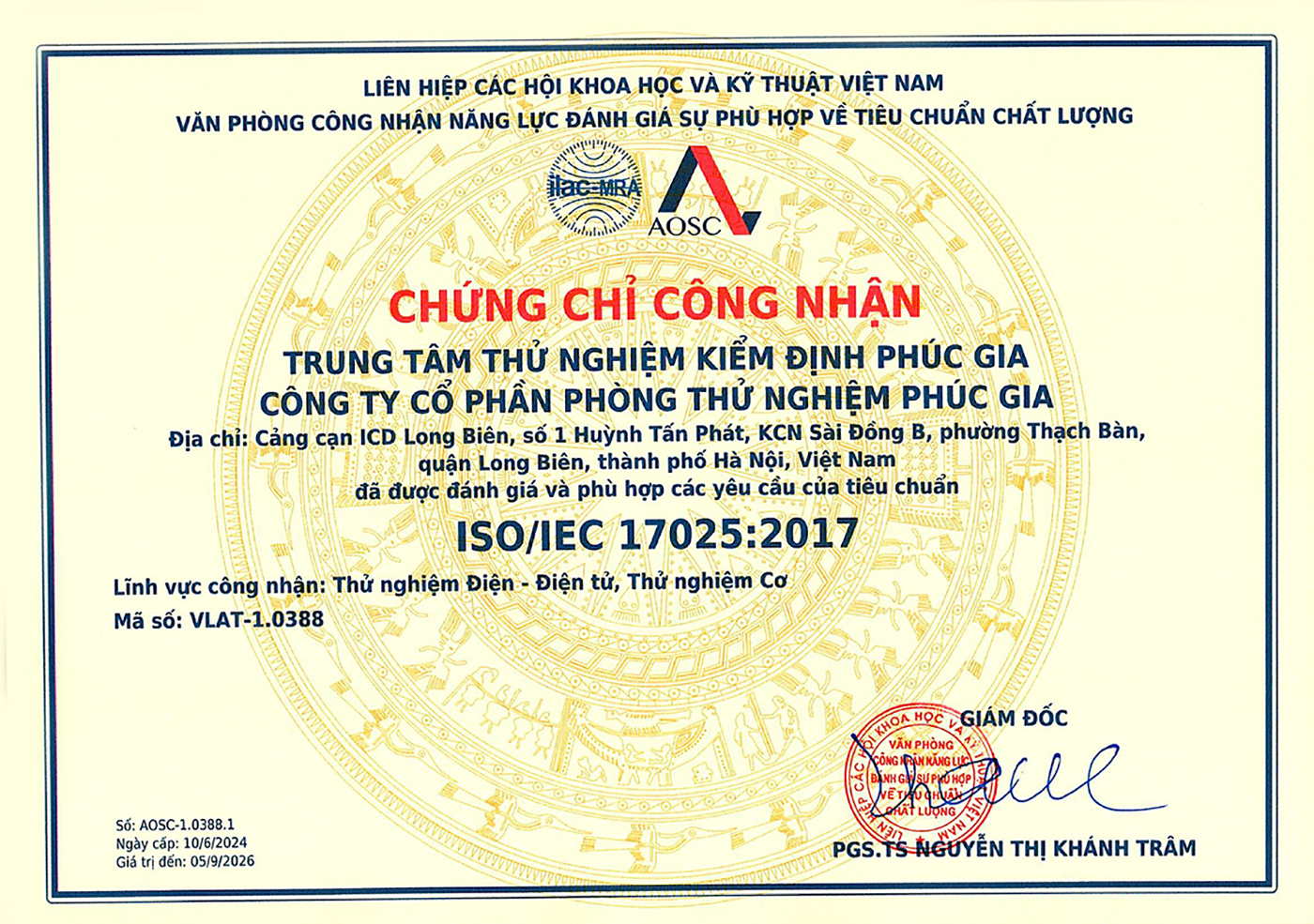
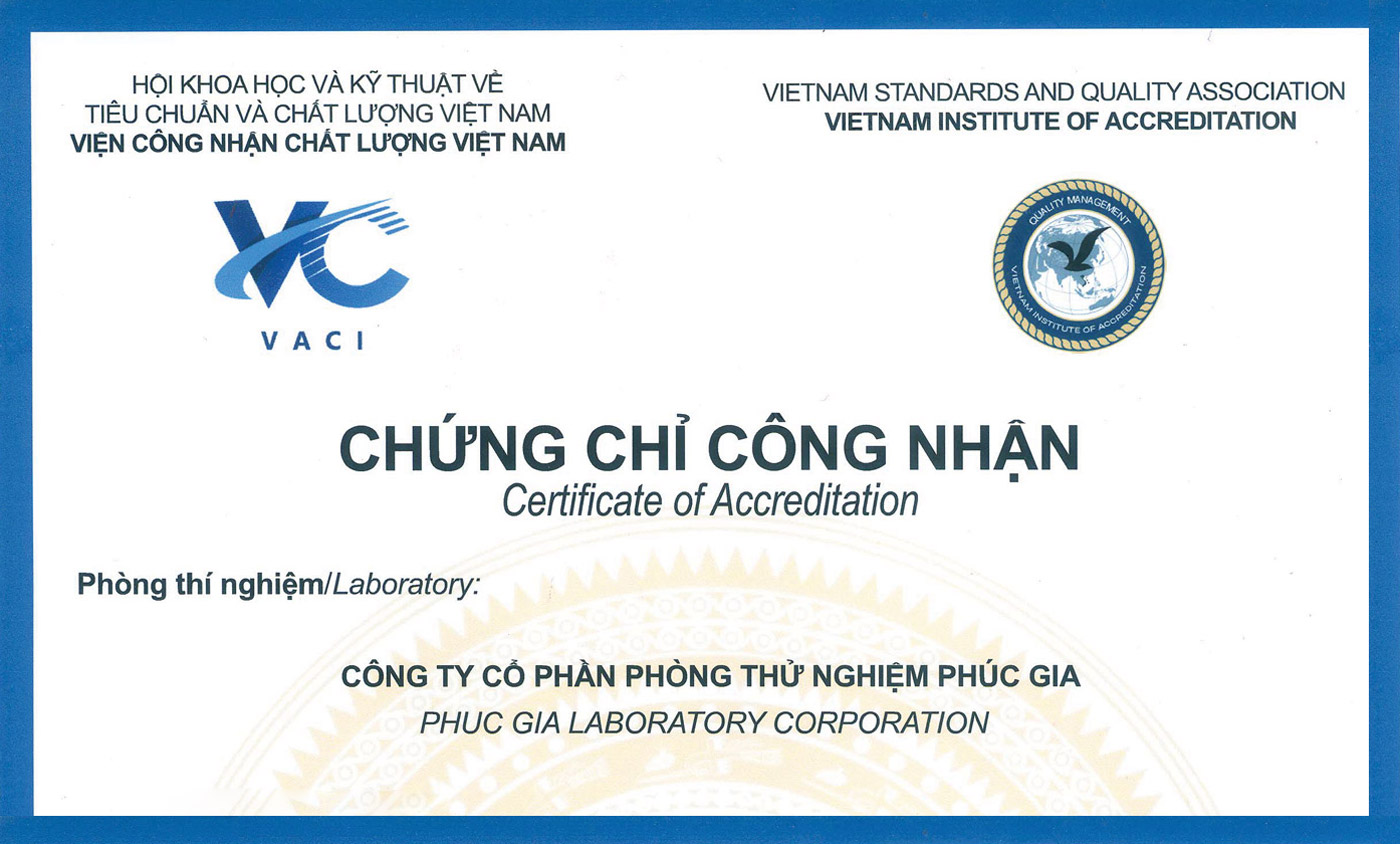
Phuc Gia® is also the first unit to be accredited by all three accreditation bodies (BoA, AOSC, VACI) as meeting the ISO/IEC 17025:2017 standard. The testing facility spans up to 5,000 m², equipped with a synchronized array of modern measurement and inspection devices, serving tests for electrical safety, EMC, energy efficiency, RF, SAR, and many other technical categories.
Supporting this infrastructure is a team of nearly 100 officers, engineers, and technical experts who are meticulously selected and intensively trained, meeting the stringent requirements of testing, certification, and conformity assessment activities across various technical fields.


RELATED POSTS
- Guidance on Testing for Radio Communication Equipment According to QCVN 18:2022/BTTTT
- Guidance on Testing for Broadband Data Transmission Equipment According to QCVN 54:2020/BTTTT
- Guidance on Testing for Mobile Communication Terminal Equipment According to QCVN 86:2019/BTTTT
For more details, please contact us at:
PHUC GIA LABORATORY CORPORATION
PHUC GIA CERTIFICATION CENTER
PHUC GIA INSPECTION TESTING CENTER
Address:
- Hanoi: ICD Long Bien, No. 01 Huynh Tan Phat, Sai Dong B Industrial Park, Long Bien Ward
- Ho Chi Minh City: No. 180, D2 Street, Long Truong Ward
Hotline: 0965996696 / 0982996696 / 02477796696
E-mail: lab@phucgia.com.vn/cert@phucgia.com.vn/info@phucgia.com.vn
Website: phucgia.com.vn
Working time: Monday to Friday 8:00 – 18:30; Saturday 8:00 – 12:00

![QUOTATION – Testing and Other Certification Services [2026]](https://phucgia.com.vn/wp-content/uploads/2017/03/bao-gia-thu-nghiem-chung-nhan.png)