

Electric kettles are common household electrical appliances used to boil water for daily living needs. Due to the nature of direct contact with power sources and water, compliance with electrical safety regulations before circulating products is extremely important. Given this characteristic, manufacturing and importing enterprises are mandatory required to perform Electric Kettle ES Testing according to QCVN 4:2009/BKHCN and Amendment 1:2016 QCVN 4:2009/BKHCN.
Below is the essential information researched and synthesized by Phuc Gia® regarding Electric Kettle ES Testing according to QCVN 4:2009/BKHCN, supporting enterprises in understanding technical requirements and preparing appropriate dossiers during the production, import, and circulation of products.
See more: Capacity Profile Of Phuc Gia Laboratory Corporation
I. The situation of electric kettle usage in Vietnam
An electric kettle (also known as a high-speed kettle or super-speed flask) is a household appliance used to boil water quickly, saving more time compared to boiling with traditional stoves. The device usually consists of a heating element, a water container body, a lid, and a temperature control mechanism or automatic shut-off when boiling.
In Vietnam, the electric kettle is one of the household appliances that is almost indispensable in every home, office, and small business establishment. The current market has many types of electric kettles with different capacities, power, casing materials, and additional features, ranging from basic kettles to electronic kettles integrated with automatic shut-off, keep-warm, or dry-boil protection functions. This widespread popularity serves the diverse usage needs of consumers.
However, accompanying this are risks related to electrical safety when electricity and water operate in the same device. This has set requirements for enterprises to ensure quality, electrical safety, and compliance with current regulations before manufacturing, importing, or circulating products on the market. Specifically, manufacturing and importing enterprises must perform Electric Kettle ES Testing according to QCVN 4:2009/BKHCN before being circulated on the market.

II. Instructions for Electric Kettle ES Testing
1. Scope of Application
Based on Decision No. 2711/QD-BKHCN of the Ministry of Science and Technology (MOST), water dispensers belong to the group of Electrical appliances for heating liquids used in households and similar purposes, with a rated voltage not greater than 250V. Accordingly, electric kettles with a rated capacity not exceeding 10 L (HS code: 8516.79.10) must comply with the Electric Kettle ES Testing requirements according to QCVN 4:2009/BKHCN and Amendment 1:2016 QCVN 4:2009/BKHCN.

2. Technical requirements
QCVN 4:2009/BKHCN stipulates that enterprises must perform Electric Kettle ES Testing according to TCVN 5699-2-15:2013 (National standard for Household and similar electrical appliances – Safety – Part 2-15: Particular requirements for appliances for heating liquids).
TCVN 5699-2-15:2013 stipulates “acceptable levels of protection against electrical, mechanical, thermal, fire, and radiation hazards of appliances when operating under normal use conditions taking into account the manufacturer’s instructions. This standard also covers expected abnormal situations that may occur in practice and takes into account the way that electromagnetic field phenomena can affect the safe operation of the appliance.”
Accordingly, electric kettles must meet requirements for protection against access to live parts, power input and current, heating, leakage current and electric strength at operating temperature, transient overvoltages, moisture resistance, rated pressure, resistance to heat and fire, resistance to rusting, radiation, toxicity, and similar hazards along with requirements for terminals, conductors, connecting screws…
In addition to the specific requirements in TCVN 5699-2-21:2013, this group of devices must also comply with general safety requirements for household electrical appliances according to TCVN 5699-1 (IEC 60335-1) – Part 1: General safety requirements for household and similar electrical appliances.
3. Costs and duration of Electric Kettle ES Testing
The costs and duration for Electric Kettle ES Testing according to QCVN 4:2009/BKHCN are publicly listed by Phuc Gia®. You can view the testing price list for household and office products at the Testing – Certification Quotation or contact Phuc Gia for detailed advice.
4. Where to conduct Electric Kettle ES Testing according to QCVN 4:2009/BKHCN?
4.1. Regulations on qualified testing and certification units
According to current regulations, electric kettles must undergo electrical safety testing at a testing organization designated by the Ministry of Science and Technology (MOST). These organizations perform testing within their designated scope and issue valid test reports for enterprises to use as a basis for completing certification dossiers, declarations, and implementing the application of conformity marks (CR stamps) before product circulation.
Circular No. 06/2020/TT-BKHCN, providing guidance and measures for the implementation of Decree No. 132/2008/ND-CP, Decree No. 74/2018/ND-CP, Decree No. 154/2018/ND-CP, and Decree No. 119/2017/ND-CP, stipulates:
Certification, inspection, and testing organizations performing certification, inspection, and testing activities for Group 2 products and goods are certification organizations, inspection organizations, and testing organizations that have been registered or recognized according to the provisions of law, or certification organizations, inspection organizations, and testing organizations designated according to the provisions of Decree No. 132/2008/ND-CP, as amended and supplemented by Decree No. 74/2018/ND-CP and Decree No. 154/2018/ND-CP;
Decree No. 105/2016/ND-CP stipulates the operating conditions of organizations for inspection, calibration, and testing of measuring instruments and measurement standards as follows:
(1) Having legal personality according to the provisions of Vietnamese law.
(2) Having sufficient technical facilities to meet conditions such as sufficient measurement standards, instruments, and environmental conditions that correctly meet the requirements of the inspection, calibration, or testing process. The implementation process must be consistent with the instructions of the Ministry of Science and Technology or according to international recommendations such as OIML, IEC, ISO, or relevant manufacturer documents. Measurement standards and measuring instruments must be inspected, calibrated, or tested periodically, remain valid, and be maintained, preserved, and used according to the organization’s regulations.
(3) Having sufficient inspection, calibration, and testing processes suitable for the registered field of activity.
(4) Having at least 01 technical employee suitable for each field of activity. These technical employees must meet requirements such as graduating from intermediate school or equivalent or higher and having completed professional training courses in inspection, calibration, and testing corresponding to the field of activity and according to the instructions of the Ministry of Science and Technology.
(5) Having established and maintained a management system in accordance with National Standard TCVN ISO/IEC 17025 for the inspection, calibration, and testing of measuring instruments and measurement standards. Having a document from the head of the organization regulating the management of certificates (stamps, seals, certificates) for inspection, calibration, and testing.
(6) Having a certificate of registration for providing services for inspection, calibration, and testing of measuring instruments and measurement standards (hereinafter abbreviated as registration certificate) according to the provisions of this Decree.
4.2. Phuc Gia® – A reputable Electric Kettle ES Testing organization according to QCVN 4:2009/BKHCN in Vietnam
Phuc Gia Laboratory Corporation has been designated by the Ministry of Science and Technology to perform electrical safety testing activities according to QCVN 4:2009/BKHCN for household and office electrical and electronic equipment under Decision No. 2899/QD-BKHCN.
Accordingly, Phuc Gia® is designated to test the following electrical and electronic equipment according to QCVN 4:2009/BKHCN and Amendment 1:2016 QCVN 4:2009/BKHCN, including: Instantaneous water heaters; Storage water heaters; Hairdryers and other hair-care appliances; Electric kettles; Rice cookers; Electric fans; Electric irons; Microwave ovens; Portable electric ovens and grills; Immersion heaters; Tea/coffee makers; Hand dryers.
Simultaneously, Phuc Gia® has been granted Certification Activity Registration Certificate No. 3995/GCN-SKHCN by the Department of Science and Technology. Accordingly, Phúc Gia® is permitted to perform certification activities for household electrical and electronic products, wires, and cables according to QCVN 4:2009/BKHCN and Amendment 1:2016 QCVN 4:2009/BKHCN.
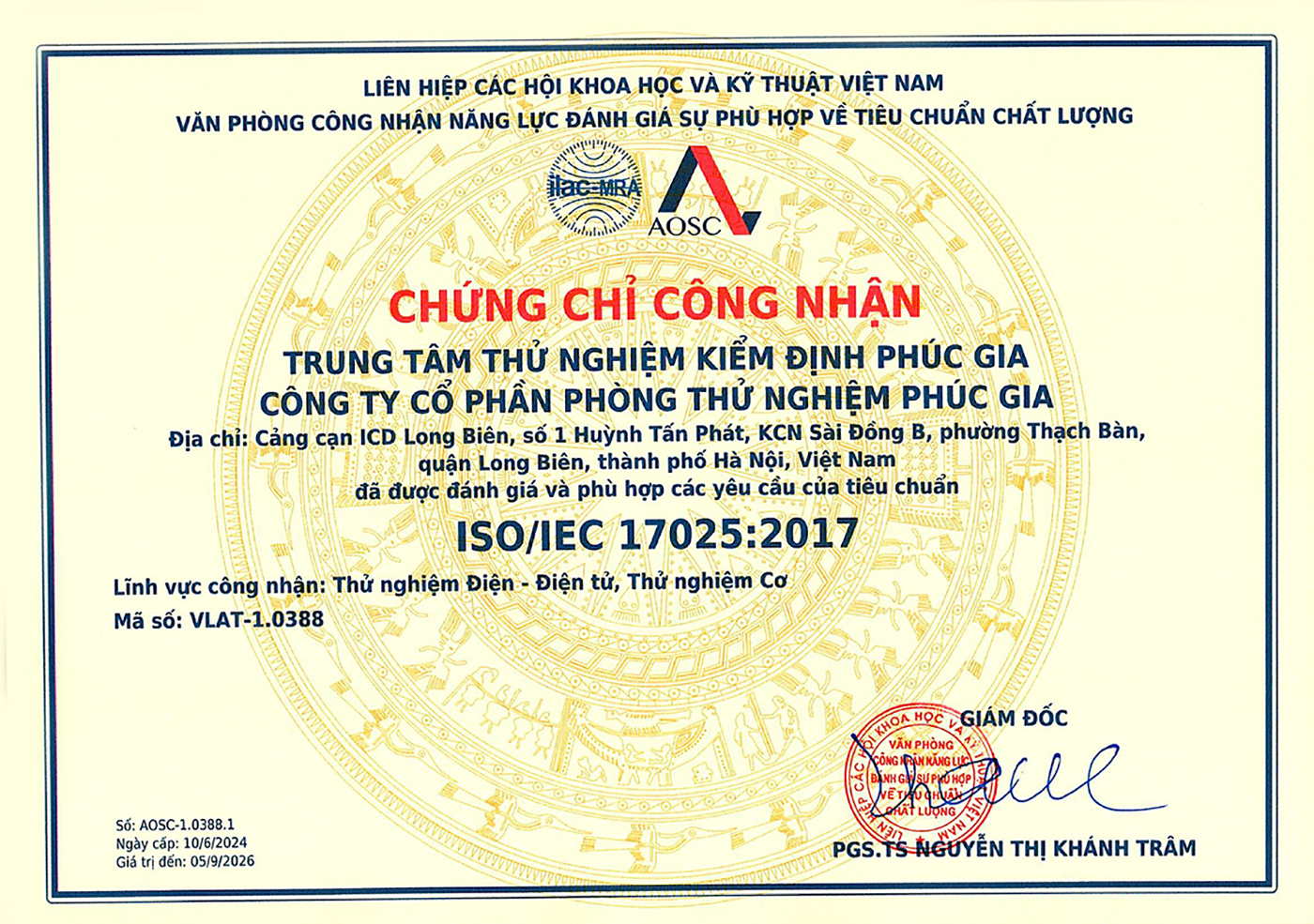
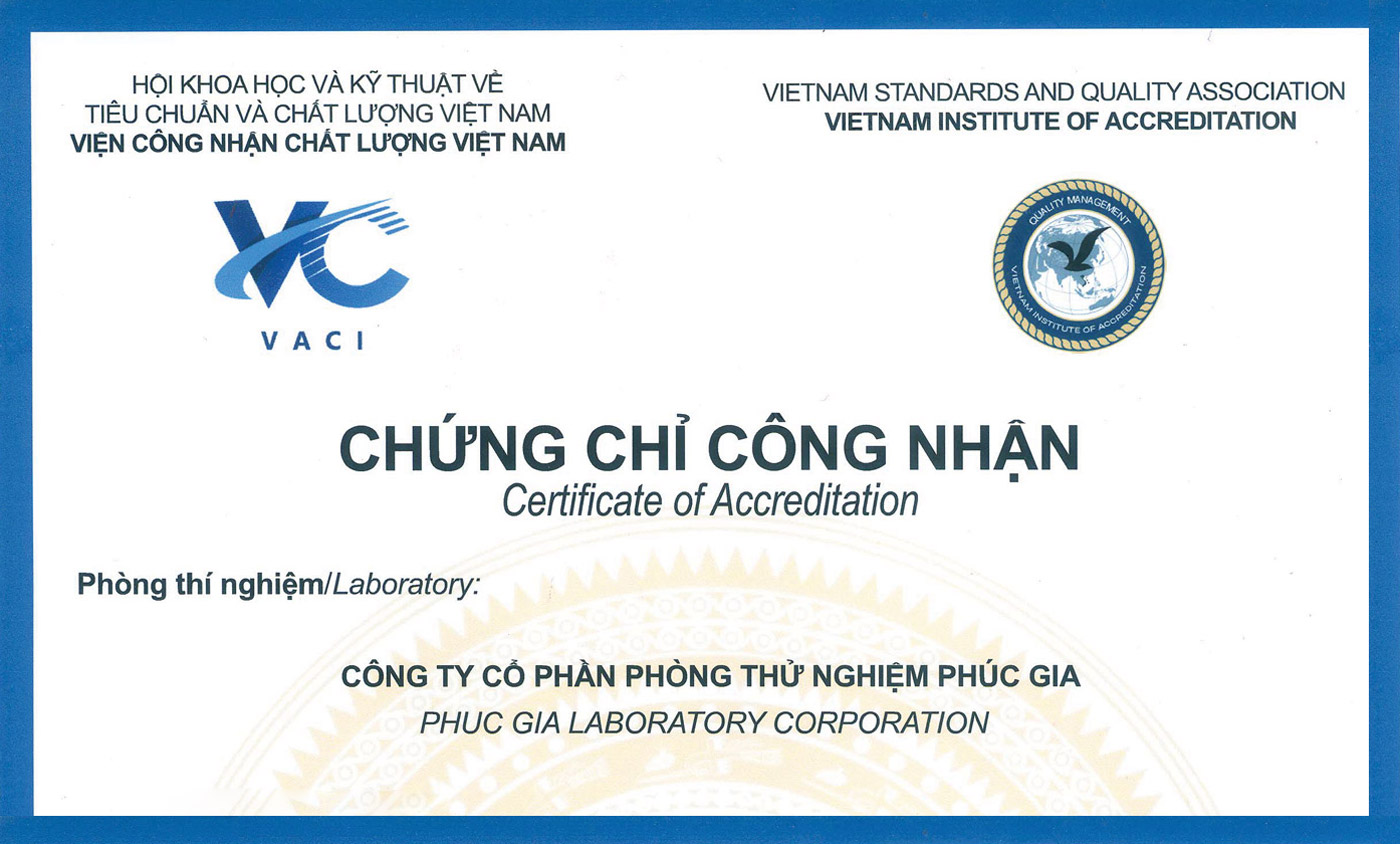
In addition, Phuc Gia Laboratory Corporation is the first unit to be recognized by all 3 accreditation bodies (BoA, AOSC, VACI) as meeting ISO/IEC 17025:2017 standards. Phúc Gia® currently owns a testing facility with a scale of nearly 5,000 m², equipped with advanced measurement and inspection equipment systems that are periodically calibrated, fully meeting safety, EMC, energy efficiency, and RF tests… according to Vietnamese regulations. Along with that is a team of more than 100 well-trained engineers and technical experts, ensuring accuracy in every test report.

III. See more current documents applied to electric kettles
– Decision No. 2711/QD-BKHCN dated December 30, 2022, of the Ministry of Science and Technology (MOST) on the announcement of group 2 products and goods.
– Circular No. 01/2022/TT-BKHCN dated February 16, 2022, of the Minister of Science and Technology on amending Circular No. 07/2018/TT-BKHCN and Circular No. 08/2019/TT-BKHCN.
– Circular No. 06/2020/TT-BKHCN dated December 10, 2020, of the Ministry of Science and Technology providing guidance and measures for the implementation of Decree No. 132/2008/ND-CP, No. 74/2018/ND-CP, No. 154/2018/ND-CP, and No. 119/2017/ND-CP.
– Circular No. 02/2017/TT-BKHCN dated March 31, 2017, of the Ministry of Science and Technology promulgating regulations on declaration of conformity to standards, declaration of conformity to regulations, and methods for conformity assessment with standards and technical regulations.
– Circular No. 21/2016/TT-BKHCN dated December 15, 2016, of the Ministry of Science and Technology promulgating Amendment 1:2016 QCVN 4:2009/BKHCN National Technical Regulation on Safety of electrical and electronic equipment.
– Vietnam Standard TCVN 5699-2-15:2013 (IEC 60335-2-15:2012) in 2013 of the Ministry of Science and Technology regulating household and similar electrical appliances- safety – part 2-15: particular requirements for appliances for heating liquids.
– Circular No. 28/2012/TT-BKHCN dated September 30, 2009, of the Ministry of Science and Technology promulgated on Regulations on declaration of conformity to standards, declaration of conformity to regulations, and methods for conformity assessment with standards and technical regulations.
– Circular No. 21/2009/TT-BKHCN dated September 30, 2009, of the Ministry of Science and Technology promulgating and implementing the “National technical regulation on safety for electrical and electronic equipment” (QCVN 4:2009/BKHCN).

IV. Some related questions
1. When are enterprises mandatory required to test and certify conformity for electric kettles according to QCVN 4:2009/BKHCN?
According to QCVN 4:2009/BKHCN and QCVN 4:2009/BKHCN/SĐ01:2016, electric kettles belong to the list of electrical and electronic equipment that must be tested, certified, affixed with conformity marks, and registered for quality dossiers as prescribed before being circulated on the market since June 1, 2010.
2. Why must electric kettles undergo testing according to QCVN 4:2009/BKHCN?
Electric kettles are currently used daily in families, offices, schools, hospitals, agencies… This is a device that simultaneously combines electricity – water – heat and is in direct contact with users. Therefore, Electric Kettle ES Testing according to QCVN 4:2009/BKHCN is necessary to ensure safety, comply with the law, and support enterprises in declaring conformity. Specifically:
- Ensuring user safety: Electric kettles are devices in direct contact with electricity and water. Testing according to QCVN 4 helps check for risks of electric leakage, fire and explosion, exposed electricity, the risk of burns, or incidents during the heating/cooling process that can absolutely occur – affecting the health and safety of users.
- Improving product quality: Testing helps manufacturers detect technical errors early, thereby improving design, components, and production processes, increasing durability and safety.
- Meeting legal requirements: QCVN 4:2009/BKHCN is a mandatory regulation for electric kettles before production, import, or circulation on the Vietnamese market.
- Supporting declaration of conformity and product circulation: Test results are a mandatory part of the dossier to perform the declaration of conformity, helping enterprises bring products to the market legally.
In summary, Electric Kettle ES Testing according to QCVN 4:2009/BKHCN is a mandatory requirement that enterprises must perform before production, import, and circulation of products, while contributing to ensuring consumer safety and maintaining market trust for this group of equipment.

3. What should enterprises do next after testing to circulate products to the market?
After having the Electric Kettle ES Testing results according to QCVN 4:2009/BKHCN, enterprises will perform conformity certification according to method 5 or 7 and proceed with the declaration of conformity according to current regulations. Upon completion of the declaration procedures, enterprises are permitted to self-affix the conformity mark (CR) on products consistent with the information in the Declaration of Conformity and the Certificate of Conformity.

For more details, please contact us at:
PHUC GIA LABORATORY CORPORATION
PHUC GIA CERTIFICATION CENTER
PHUC GIA INSPECTION TESTING CENTER
Address:
- Hanoi: ICD Long Bien, No. 01 Huynh Tan Phat, Sai Dong B Industrial Park, Long Bien Ward
- Ho Chi Minh City: No. 180, D2 Street, Long Truong Ward
Hotline: 0965996696 / 0982996696 / 02477796696
E-mail: lab@phucgia.com.vn/cert@phucgia.com.vn/info@phucgia.com.vn
Website: phucgia.com.vn
Working time: Monday to Friday 8:00 – 18:30; Saturday 8:00 – 12:00
![QUOTATION – Testing and Other Certification Services [2026]](https://phucgia.com.vn/wp-content/uploads/2017/03/bao-gia-thu-nghiem-chung-nhan.png)