

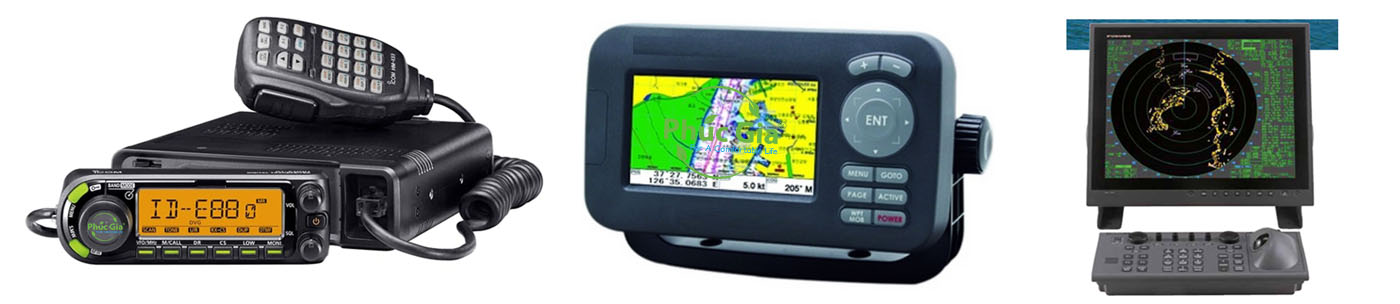
In Vietnam, radio communication and maritime navigation equipment play a particularly important role in maritime activities, ranging from shipping and offshore fishing to ensuring maritime safety and security tasks. As the number of devices installed on ships increases and systems operate simultaneously within limited spaces, the requirement to control electromagnetic interference becomes a key factor. EMC Testing for Radio Communication and Maritime Navigation Equipment in Vietnam according to QCVN 119:2019/BTTTT is the mandatory technical basis to ensure that communication and navigation equipment operates stably, accurately, and safely.
See more: Capacity Profile Of Phuc Gia Laboratory Corporation
I. Analyzing the Utilization of Radio Communication and Maritime Navigation Equipment in Vietnam
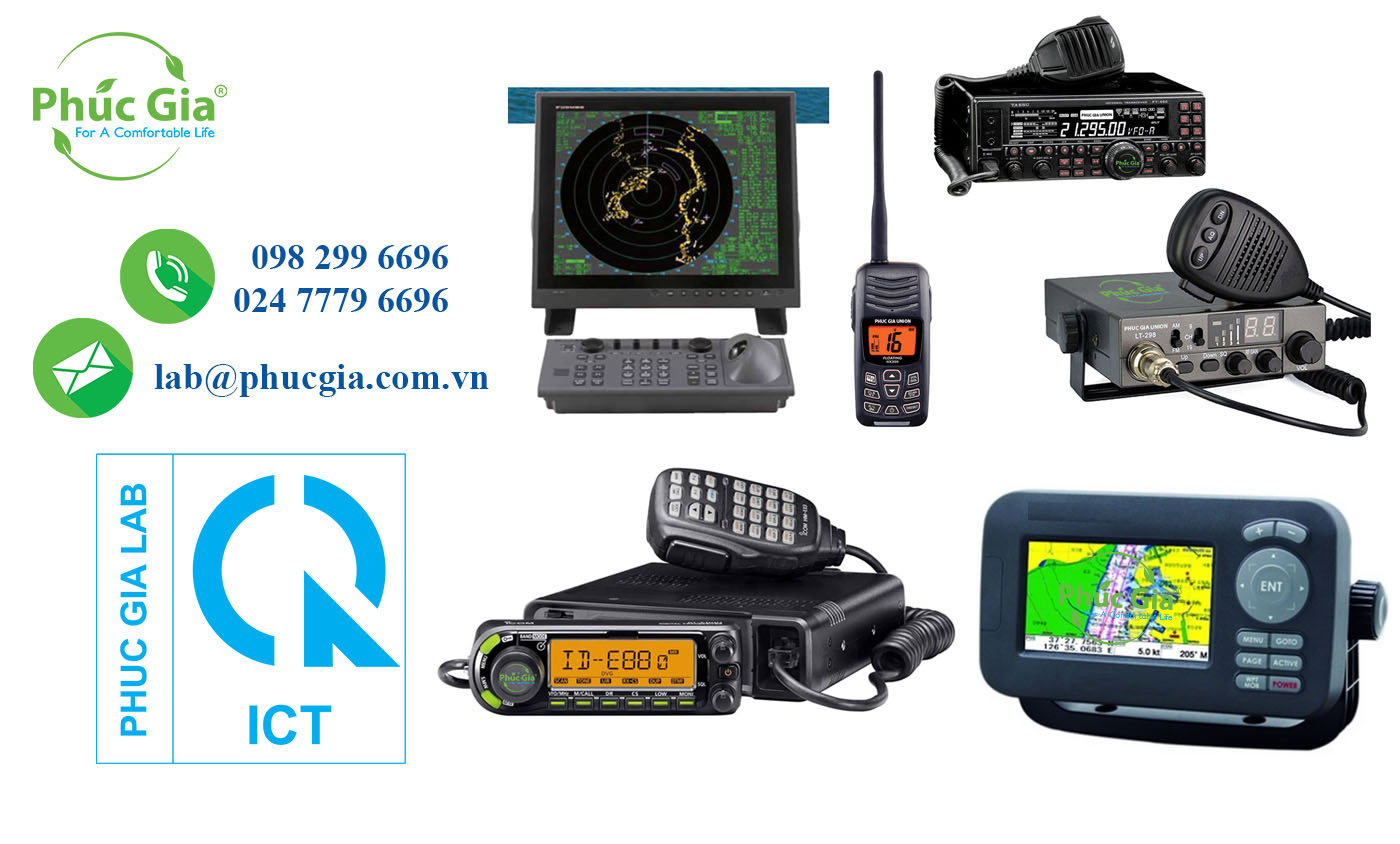
In Vietnam, radio communication and maritime navigation equipment are becoming increasingly popular on many types of vessels, from transport and service ships to offshore fishing boats. These two groups of equipment are typically installed and operated simultaneously within the limited space of a ship, serving the needs of communication, positioning, maritime safety, and supporting management as well as search and rescue operations at sea.
Many devices on Vietnamese ships integrate multiple functions within a single system. On sea-going vessels, electronic chart displays, radio communication, and position information exchange systems often operate concurrently in the narrow space of the cabin. The simultaneous operation of multiple transmitting and receiving devices increases the risk of mutual interference, particularly between high-power communication equipment and high-sensitivity navigation devices.
Furthermore, the modernization of Vietnam’s fleet is driving the replacement of legacy equipment with digitalized, high-precision devices that meet international safety requirements. In a maritime environment with numerous radio interference sources and harsh operating conditions, controlling the emission levels and immunity of equipment is a key factor. Therefore, before being put into use or circulated on the market, EMC Testing for Radio Communication and Maritime Navigation Equipment in Vietnam according to QCVN 119:2019/BTTTT is required to ensure frequency safety and maritime safety.
II. Guidelines for Electromagnetic Compatibility Testing According to QCVN 119:2019/BTTTT for Radio Communication and Maritime Navigation Equipment
1. Scope of Application
According to Circular No. 29/2025/TT-BKHCN, products with the HS codes listed below must meet the technical and management requirements of QCVN 119:2019/BTTTT regarding Electromagnetic Compatibility for radio communication and maritime navigation equipment.
| ORD | Product Name | HS Code | Product Description |
| 1 | VHF radio transceiver for coastal stations within the GMDSS system | 8517.62.53 |
Transmitters and transceivers with external antenna connectors for coastal stations, operating in the VHF band of the maritime mobile service and using G3E emission type, and G2B for DSC signaling: – Analog voice equipment, digital selective calling (DSC), or both; |
| 8517.62.59 | – Equipment operating in the frequency band from 156 MHz to 174 MHz;
– Equipment operating via local control or remote control; – Equipment operating with a channel spacing of 25 kHz; – Equipment operating in simplex, semi-duplex, and duplex modes; – Equipment that may consist of multiple units; – Equipment that may be single-channel or multi-channel; – Equipment operating in shared radio wave areas; – Equipment operating independently of other radio equipment. |
||
| 2 | Fixed two-way VHF radiotelephone equipment for search and rescue vessels | 8517.18.00 |
Two-way VHF radiotelephone equipment, operating in the frequency band from 156 MHz to 174 MHz, used in the maritime mobile service and suitable for fixed installation on search and rescue vessels belonging to the Global Maritime Distress and Safety System (GMDSS).
|
| 3 |
Inmarsat-C equipment for use on sea-going ships |
8517.62.59 |
Inmarsat-C ship earth station equipment for use on sea-going vessels belonging to the Global Maritime Distress and Safety System (GMDSS) (transmitting equipment combined with receiving equipment).
|
| 4 |
VHF radiotelephone equipment for use on survival craft
|
8517.18.00 |
Portable VHF radiotelephone equipment operating in the maritime mobile service frequency band from 156 MHz to 174 MHz; suitable for use on search and rescue vessels and usable on sea-going ships.
|
| 5 |
Maritime Emergency Position Indicating Radio Beacon (EPIRB) operating in the 406.0 MHz to 406.1 MHz band
|
8526.91.10 | Satellite Emergency Position Indicating Radio Beacon (EPIRB) equipment (transmit only for telegraphy) operating in the COSPAS-SARSAT satellite system for radio communication within the Global Maritime Distress and Safety System (GMDSS). |
| 6 |
Personal Locator Beacon (PLB) operating in the 406.0 MHz to 406.1 MHz band
|
8526.91.10 | Personal Locator Beacon equipment (transmit only for telegraphy) (hereinafter referred to as PLB) operating in the COSPAS-SARSAT satellite system. These PLBs operate in the 406.0 MHz to 406.1 MHz frequency band and have a temperature range:
Types used for individuals on civil aircraft, or dedicated to sea-going vessels. |
| 7 |
Digital Selective Calling (DSC) equipment
|
8517.62.59 |
Digital Selective Calling (DSC) equipment, not including telephone equipment, operating in the MF, MF/HF, and/or VHF bands within the Global Maritime Distress and Safety System (GMDSS) typically used on ships and vessels (transmitting equipment combined with receiving equipment).
|
| 8 |
Search and Rescue Radar Transponder (SART)
|
8517.62.59 |
Radar Transponder operating in the 9200 MHz – 9500 MHz band for search and rescue purposes (transmitting equipment combined with receiving equipment).
|
| 9 |
Radiotelex equipment for maritime MF/HF services
|
8517.62.59 |
Radiotelex equipment used on ships and vessels within the Global Maritime Distress and Safety System (GMDSS) (transmitting equipment combined with receiving equipment).
|
| 10 |
Automatic Identification System (AIS) equipment for use on sea-going ships
|
8526.91.10 |
Radio navigation equipment used in the automatic identification system for sea-going vessels (identifying the position of one’s own ship and surrounding ships and boats within a certain range to adjust heading and speed accordingly).
|
| 11 |
AIS Search and Rescue Transmitter (AIS-SART)
|
8517.62.53 |
Automatic Identification System Search and Rescue Transmitter (AIS SART) (transmitting equipment combined with receiving equipment for telegraphy).
|
| 12 |
VHF radiotelephone equipment for maritime mobile services
|
8517.18.00 |
VHF transmitter for telephone and digital selective calling (DSC), with an external antenna connector for use on ships and vessels.
|
| 13 |
MF and HF radiotelephone equipment
|
8517.18.00 |
Radio receivers and transmitters, for telephone use, utilized on large ships and vessels, operating only on Medium Frequency (MF) or on both Medium and High Frequency (MF/HF) bands allocated to the Maritime Mobile Service (MMS), including: – Single Sideband (SSB) equipment for voice transmission and reception (J3F); – Frequency Shift Keying (FSK) or SSB modulation of keyed sub-carriers for the transmission and reception of Digital Selective Calling (DSC) signals; – Radio equipment not integrated with a DSC encoder or decoder, but specifying interfaces with such equipment. |
| 14 |
UHF radiotelephone equipment
|
8517.18.00 |
Radio equipment for telephone use, installed on large ships and vessels, and systems operating on UHF frequencies allocated to maritime mobile services.
|
| 15 |
Radar equipment for sea-going vessels
|
8526.10.10 8526.10.90 |
All types of Radar equipment installed on sea-going ships and vessels.
|
| 16 |
Radio navigation equipment |
8526.91.10 8526.91.90 |
Radio navigation equipment used for navigation and obstacle warning purposes within the satellite radio navigation, aeronautical navigation, and satellite aeronautical navigation services.
|
| 8526.91.10 8526.91.90 |
Radio navigation equipment used for navigation and obstacle warning purposes within the maritime radio navigation and satellite maritime navigation services.
|
Note: This regulation only applies to Radar equipment, radio navigation equipment, and radio transmitting or transceiving equipment specifically used for maritime mobile services that are included in the List of products and goods potentially causing unsafety under the management responsibility of the Ministry of Information and Communications.
2. Technical Requirements
QCVN 119:2019/BTTTT specifies the requirements for electromagnetic compatibility for radio communication and maritime navigation equipment. Accordingly, this equipment must meet the requirements for electromagnetic emission and electromagnetic immunity.
(1) Requirements for electromagnetic emission:
- Conducted emission requirements: This test measures the signals emitted by the equipment at the power port that can be conducted to the common power supply, thereby causing interference to other equipment.
- Radiated emission requirements through the enclosure port: This test measures any signals radiated from the equipment without going through the antenna and which may cause interference to other equipment in the vicinity, such as radio receivers.
(2) Requirements for electromagnetic immunity:
| Portable | Protected | Exposed | Submerged | |
|
Conducted radio frequency interference
|
− | 3 V r.m.s e.m.f 150 kHz – 80 MHz,
10 V r.m.s e.m.f at specified spot frequencies, AC and DC power ports, signal and control ports, common mode. Performance criterion A |
||
| Radiated interference | 10 V/m, 80 MHz-2 GHz,
Enclosure port, Performance criterion A |
– | ||
| Fast transients | − |
2 kV voltage on AC power ports 1 kV common mode voltage on signal and control ports, Performance criterion B |
||
| Surge (slow transients) | − |
1 kV line-to-earth, 0.5 kV line-to-line AC power ports Performance criterion B |
||
| Short-term power variation | − | Voltage + 20% for 1.5 s, frequency ± 10% for 5 s
AC power ports Performance criterion B |
||
| Power supply failure | − |
60s interruption AC and DC power ports Performance criterion C |
||
| Electrostatic discharge |
6 kV contact discharge 8 kV air discharge Performance criterion B |
− | ||
| NOTE: “−”: Not Applicable | ||||
3. Testing costs and time
The costs and time for electromagnetic compatibility testing according to QCVN 119:2019/BTTTT for radio communication and maritime navigation equipment are publicly listed by Phuc Gia®. You can view the testing quotation for electrical-electronic, telecommunications, and information technology equipment at Testing – Certification Quotation or contact Phuc Gia® for detailed consultation.
4. Where to conduct electromagnetic compatibility testing according to QCVN 119:2019/BTTTT for radio communication and maritime navigation equipment?
4.1. Regulations on qualified testing and certification units
Based on Article 5 of Consolidated Document 02/2020/VBHN-BTTTT – Regulations on conformity certification and declaration for specialized information and communication technology products and goods, testing units serving certification and declaration of conformity are regulated as follows:
- The testing unit serving conformity certification activities is a designated or recognized testing unit.
- The testing unit serving conformity declaration activities is a designated or recognized testing unit, or a unit that has registered testing activities under Decree No. 107/2016/NĐ-CP dated July 1, 2016, of the Government regulating business conditions for conformity assessment services.
- Testing units must be responsible before the Competent Authority for the accuracy of testing results. Testing results do not replace the Certificate of Conformity and the Declaration of Conformity.
4.2. Phuc Gia® – A prestigious testing organization for telecommunications and information technology equipment in Vietnam
Phuc Gia Laboratory Joint Stock Company (Phuc Gia®) has been designated by the Ministry of Science and Technology to test telecommunications and information technology equipment according to 24 Vietnam Technical Regulations for many important groups of equipment in the field of telecommunications and information technology to serve the quality management of products and goods potentially causing unsafety under the Ministry’s management responsibility according to Decision No. 2899/QĐ-BKHCN and Decision No. 228/QĐ-BTTTT.
Accordingly, Phuc Gia® is designated to perform electromagnetic compatibility testing according to QCVN 119:2019/BTTTT for radio communication and maritime navigation equipment.
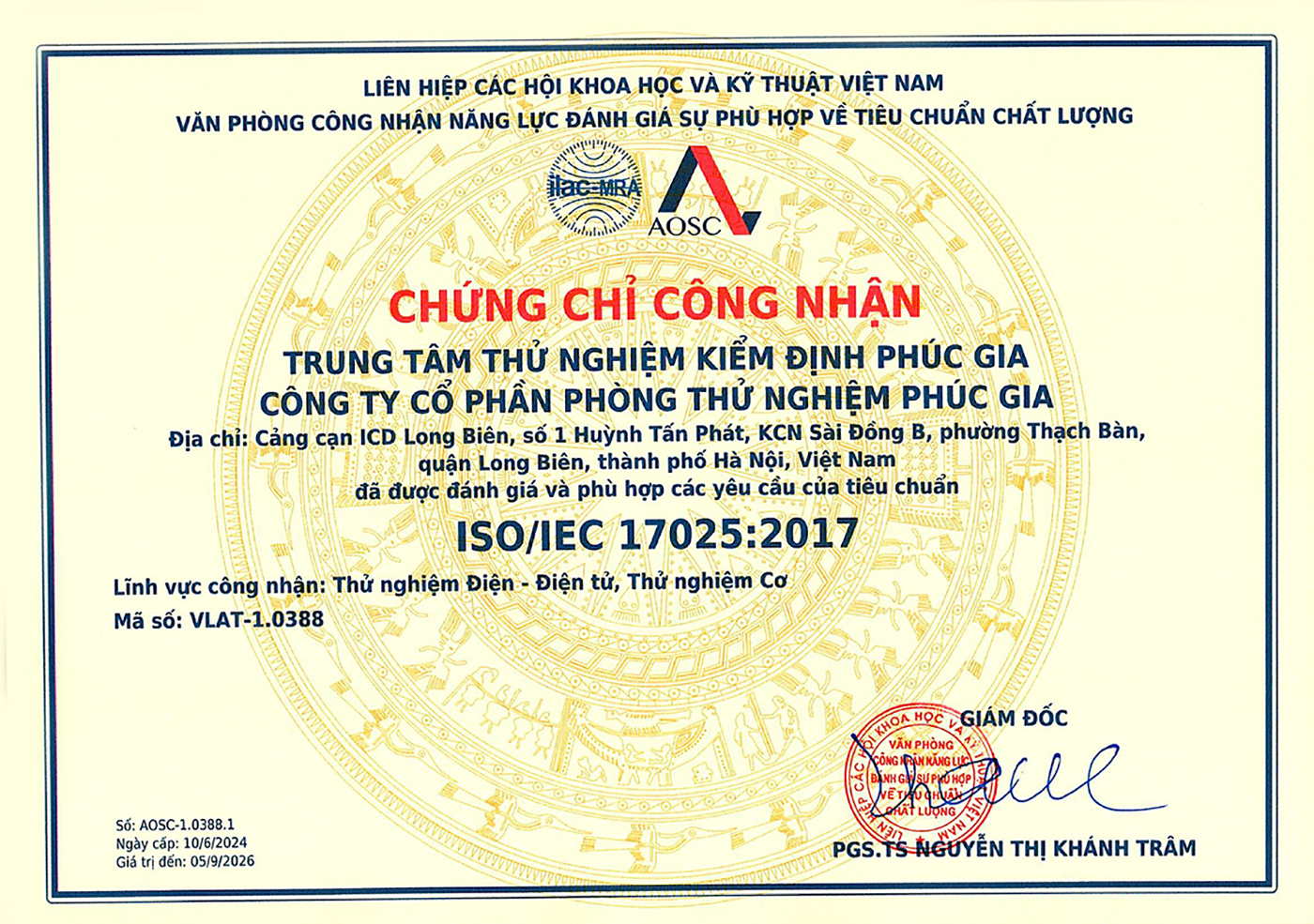
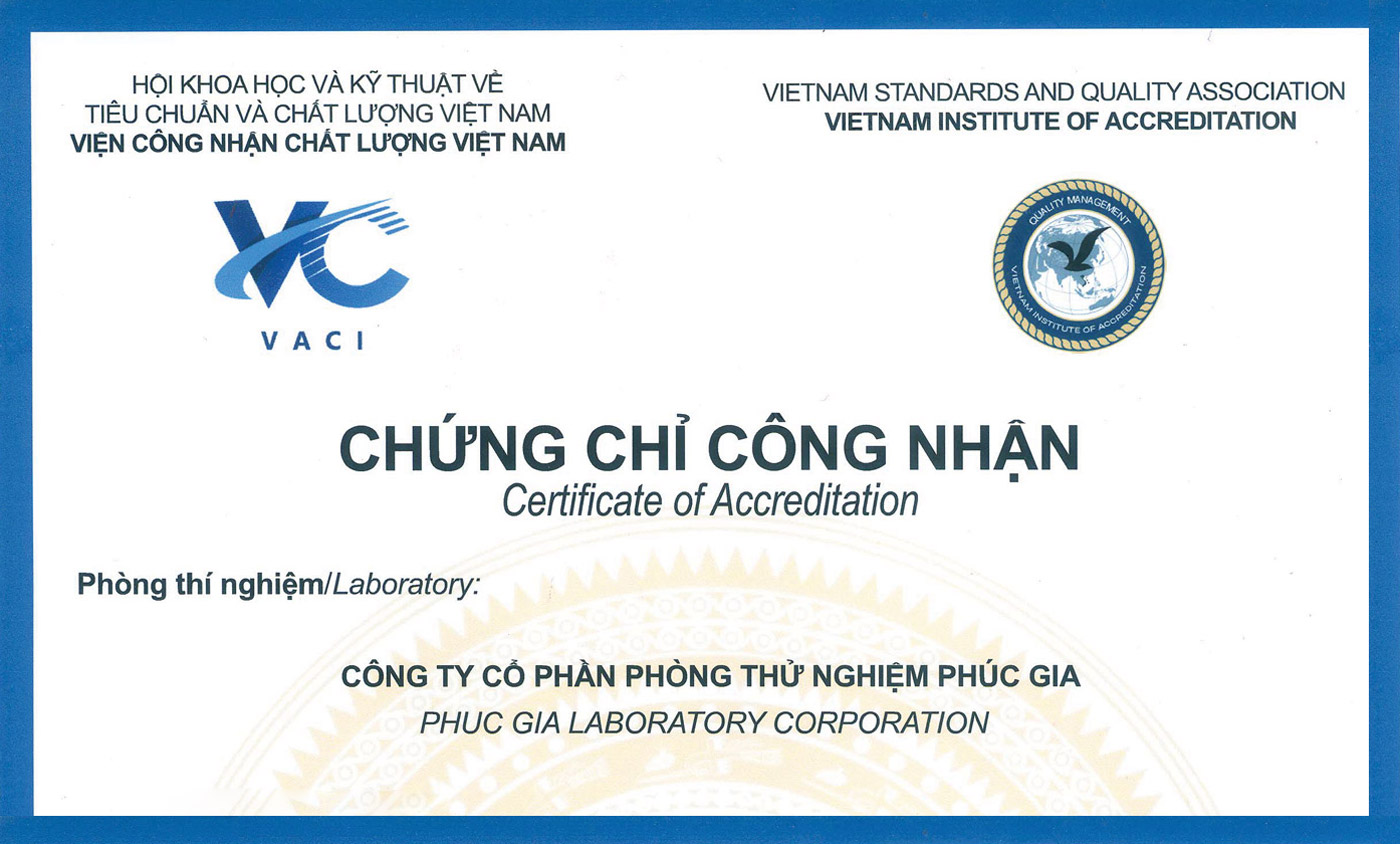
Phuc Gia® is also the first unit recognized by all three accreditation bodies (BoA, AOSC, VACI) as meeting the ISO/IEC 17025:2017 standard. The testing facility has a scale of up to 5,000 m², equipped with synchronous modern measurement and calibration equipment, serving testing for electrical safety, EMC, energy efficiency, RF, SAR, and many other technical categories.
Along with that is a team of nearly 100 staff, engineers, and technical experts selected and intensively trained, meeting the strict requirements of testing, certification, and conformity assessment activities in many technical fields.


RELATED POSTS
- Guidance on Testing for Radio Communication Equipment according to QCVN 18:2022/BTTTT
- Guidance on Testing for Broadband Data Transmission Equipment according to QCVN 54:2020/BTTTT
- Guidance on Testing for Mobile Communication Terminal Equipment according to QCVN 86:2019/BTTTT
For more details, please contact us at:
PHUC GIA LABORATORY CORPORATION
PHUC GIA CERTIFICATION CENTER
PHUC GIA INSPECTION TESTING CENTER
Address:
- Hanoi: ICD Long Bien, No. 01 Huynh Tan Phat, Sai Dong B Industrial Park, Long Bien Ward
- Ho Chi Minh City: No. 180, D2 Street, Long Truong Ward
Hotline: 0965996696 / 0982996696 / 02477796696
E-mail: lab@phucgia.com.vn/cert@phucgia.com.vn/info@phucgia.com.vn
Website: phucgia.com.vn
Working time: Monday to Friday 8:00 – 18:30; Saturday 8:00 – 12:00

![QUOTATION – Testing and Other Certification Services [2026]](https://phucgia.com.vn/wp-content/uploads/2017/03/bao-gia-thu-nghiem-chung-nhan.png)