

Learning about meat grinder import procedures is an indispensable step that helps enterprises bring products into the country in accordance with legal regulations. From preparing dossiers, quality inspection, to electromagnetic compatibility (EMC) testing,… every stage requires accuracy. If you are planning to import this equipment for production and business purposes, let’s review the detailed instructions in the article below with Phuc Gia.
See more: Capacity Profile Of Phuc Gia Laboratory Corporation
1. Current Meat Grinder Import Policies
The procedures for importing meat grinders are regulated and guided through many important legal documents such as:
-
Decision No. 1983/QĐ-TĐC issued by the Ministry of Science and Technology (MOST) and the Directorate for Standards, Metrology and Quality (STAMEQ) on October 15, 2014, providing guidelines for certification of conformity with national technical regulation QCVN 9:2012 on Electromagnetic Compatibility (EMC) for household electrical and electronic equipment and similar purposes.
-
Decision No. 1182/QĐ-BCT dated April 6, 2021, of the Ministry of Industry and Trade regulating the list of products subject to specialized inspection under the management of the Ministry of Industry and Trade;
-
Decision No. 04/2017/QĐ-TTg – issued by the Prime Minister on March 9, 2017, regulating the list of means and equipment subject to energy labeling, application of minimum energy efficiency levels, and implementation roadmap;
-
Decision No. 2711/QĐ-BKHCN dated December 30, 2022, and Decision No. 367/QĐ-BKHCN of the Minister of Science and Technology on the announcement of Group 2 products and goods under the management responsibility of the Ministry of Science and Technology;
-
Circular No. 36/2016/TT-BCT – “Regulating energy labeling for energy-using means and equipment under the management of the Ministry of Industry and Trade” issued on December 28, 2016 (along with Consolidated Document No. 23/VBHN-BCT dated March 24, 2020);
-
Circular No. 11/2012/TT-BKHCN issuing QCVN 9:2012/BKHCN “National technical regulation on electromagnetic compatibility for household electrical and electronic equipment and similar purposes”;
-
Circular No. 01/2022/TT-BKHCN amending and supplementing a number of articles of Circular No. 7/2018/TT-BKHCN dated June 6, 2018, and Circular No. 08/2019/TT-BKHCN dated September 25, 2019, of the Minister of Science and Technology;
-
Circular No. 38/2015/TT-BTC – issued by the Ministry of Finance on March 25, 2015, amended by Circular 39/2018/TT-BTC dated April 20, 2018, regulating customs procedures; customs inspection and supervision; taxes for imported and exported goods;
-
Decree No. 74/2018/NĐ-CP issued by the Government on May 15, 2018 – Regulating state quality inspection procedures (general application);
-
Decree No. 128/2020/NĐ-CP – issued by the Government on October 19, 2020, regulating penalties for administrative violations in the field of customs, including acts of misdeclaring HS codes, values, or descriptions of goods;
-
Decree No. 69/2018/NĐ-CP issued by the Government on May 15, 2018, detailing a number of articles of the Law on Foreign Trade Management, including import goods management policies;
-
Consolidated Document No. 23/VBHN-BCT: Regulating energy labeling for energy-using means and equipment under the management of the Ministry of Industry and Trade;
-
Amendment 1:2018 QCVN 9:2012/BKHCN – National technical regulation on electromagnetic compatibility for household electrical and electronic equipment and similar purposes issued by the Ministry of Science and Technology on June 6, 2018;
-
Consolidated Text of Circulars No. 11/2012/TT-BKHCN, No. 13/2013/TT-BKHCN, and No. 07/2018/TT-BKHCN on technical regulations applied to household electrical and electronic equipment;
-
Law on Value Added Tax No. 13/2008/QH12 issued by the National Assembly on June 3, 2008, regulating taxable objects, non-taxable objects, taxpayers, bases and methods for calculating tax, credit and refund of value added tax;
-
Official Dispatch No. 1395/TCHQ-TXNK issued by the Department of Vietnam Customs on March 12, 2019, guiding tax policies for a number of imported items, including machinery used in food processing;
-
National Technical Regulation QCVN 9:2012/BKHCN on electromagnetic compatibility (EMC) issued by the Ministry of Science and Technology attached to Circular No. 11/2012/TT-BKHCN dated April 12, 2012, specifying technical requirements and management requirements for limits of electromagnetic interference emission from household electrical and electronic equipment and equipment used for similar purposes.

In addition, since meat grinders are devices in direct contact with food, the Ministry of Health and other state agencies have issued legal documents related to testing and food safety declaration for this equipment, including:
-
Law on Food Safety No. 55/2010/QH12 issued on June 17, 2010;
-
Decree No. 15/2018/NĐ-CP providing detailed instructions on the implementation of a number of articles of the Law on Food Safety;
-
According to the Appendix of Decision No. 2711/QĐ-BKHCN issued by the Ministry of Science and Technology on December 30, 2022, regarding the announcement of Group 2 products and goods under the management scope of the Ministry of Science and Technology, meat grinders are permitted to be imported into Vietnam and must undergo state control registration on quality of products according to regulations.
Furthermore, according to Section II, Appendix I issued with Decree No. 69/2018/NĐ-CP, used electronic and refrigeration goods, including used meat grinders, are on the list of prohibited import goods.
2. HS code and import tax for meat grinders
When importing meat grinders, enterprises need to pay special attention to the HS code—the key factor for determining tax rates, management policies, and related inspection requirements. Applying the correct HS code not only facilitates a smooth Customs Clearance process but also avoids risks of tax discrepancies or subsequent tax arrears.
2.1. Meat grinder HS code
According to the Appendix of Decision No. 2711/QĐ-BKHCN issued by the Ministry of Science and Technology on December 30, 2022, regarding the announcement of Group 2 products and goods under the management scope of the Ministry of Science and Technology, the HS code for meat grinders is 8509.40.00.
2.2. Meat grinder import tax
Based on the HS code of the meat grinder, the applicable preferential import tax rate is 25%, along with a Value Added Tax (VAT) of 10%.
However, besides the normal preferential tax rate, there is also a special preferential import tax rate—often 0%—if imported from countries or territories that have signed trade agreements with Vietnam.
Import tax is a financial obligation that importing enterprises must fulfill toward the State. This tax is considered part of the cost of goods, directly affecting business costs. For meat grinders, enterprises should note two basic types of taxes: Import tax and Value Added Tax (VAT).
Import tax according to the HS code is calculated by the formula:
Import tax = CIF value x % tax rate
- In which, CIF value is the total ex-factory value of the goods, plus all costs to bring the goods to the first border gate in the importing country.
VAT is calculated on both the value of the goods and the import tax according to the formula:
Value Added Tax = (CIF value + Import tax) x % tax rate
It can be seen that the tax level an enterprise must pay depends heavily on the HS code applied to the meat grinder product as well as the corresponding type of tax rate.
Specially, if goods are imported from countries with which Vietnam has signed trade agreements such as: China, Japan, South Korea, EU, USA, Chile, ASEAN, Eastern Europe, etc., they may enjoy special preferential tax rates. To enjoy these incentives, enterprises need to request the supplier to provide a full Certificate of Origin (C/O) during the negotiation and contract signing process.
3. Customs documentation for meat grinder import
The dossier for performing meat grinder import procedures, as well as many other items, is specifically regulated in Circular No. 38/2015/TT-BTC issued by the Ministry of Finance on March 25, 2015, amended and supplemented by Circular No. 39/2018/TT-BTC also issued by the Ministry of Finance on April 20, 2018.
A full set of import-export documents includes the following papers:
-
Customs declaration;
-
Commercial Invoice;
-
Bill of Lading;
-
Packing List;
-
Sales Contract;
-
State control registration on quality of products profile;
-
Certificate of Origin (C/O – if any);
-
Product catalog or technical documents (if any).
Among the above customs documents, the mandatory and most important ones include: Customs declaration, commercial invoice, bill of lading, and state control registration on quality of products profile. The remaining documents are not mandatory to be submitted from the beginning but can be requested for supplementation during the customs process.
Particularly, the Certificate of Origin (C/O) is not mandatory but plays a key role if enterprises want to enjoy special preferential import tax according to free trade agreements that Vietnam has signed. Therefore, to optimize costs, enterprises should proactively request suppliers to fully prepare this document during the purchasing process.

4. Instructions on meat grinder import procedures
Meat grinder import procedures are clearly and detailedly regulated in Circular No. 38/2015/TT-BTC dated March 25, 2015, amended and supplemented by Circular No. 39/2018/TT-BTC dated April 20, 2018, of the Ministry of Finance. These documents play an important role in guiding enterprises to perform customs steps, ensuring the import process takes place in accordance with legal regulations:
Step 1: State control registration on quality of products
Meat grinders belong to the list of goods subject to quality inspection upon import according to the Appendix of Decision No. 2711/QĐ-BKHCN issued by the Ministry of Science and Technology on December 30, 2022, regarding the announcement of Group 2 products and goods under the management scope of the Ministry of Science and Technology. However, in case the meat grinder does not use electricity, quality inspection is not required.
The state control registration on quality of products can be performed in two ways: Submit the profile directly at the Department of Standards, Metrology and Quality or register online through the National Single Window portal.
To register for meat grinder quality inspection, enterprises access the website https://vnsw.gov.vn to create an account by filling in all information according to the form. Accounts are usually activated within 24 hours, so registration should be done early before performing import procedures.
After having an account, the enterprise proceeds to register the quality inspection profile under the management section of the Ministry of Science and Technology (MOST). The profile will be received and processed by the Department of Standards, Metrology and Quality. Simultaneously, the enterprise needs to register information of a testing laboratory licensed by the MOST, such as Phuc Gia Laboratory, to perform sample testing.

Step 2: Open customs declaration
After preparing a full set of customs documents including:
-
Sales contract
-
Commercial invoice
-
Packing list
-
Bill of Lading
-
Certificate of Origin (C/O)
According to regulations, within 30 days from the date the goods arrive at the port, the enterprise must complete the declaration. If this deadline is exceeded, the enterprise may be subject to administrative penalties for late declaration.
After declaring, the system will return the channeling result (green, yellow, or red). Depending on the channeling, the enterprise needs to print the declaration and bring all relevant documents to the Customs Branch to perform the procedure of opening the declaration.
Opening the declaration should be performed as early as possible and at the latest within 15 days from the time of declaration. If this time is exceeded, the declaration will be canceled, and the enterprise may be fined, affecting the time of goods delivery.
Note: Immediately after having the formal declaration, you should proactively contact the Customs Branch to proceed with meat grinder import procedures. Avoid leaving the declaration for too long without processing, as this can lead to penalties or delays in Customs Clearance.
Step 3: Testing & Certification of Conformity
Sampling for inspection can be conducted at the port or the warehouse of the importing enterprise. In case the enterprise wishes to bring the goods to the warehouse, please contact Phuc Gia for detailed advice.
To take samples, the enterprise only needs to submit the state control registration on quality of products. The testing content includes electromagnetic compatibility (EMC) according to QCVN 9:2012/BKHCN and Amendment 1:2018 QCVN 9:2012/BKHCN. Specifically, meat grinder samples are tested according to TCVN 7492-1 (CISPR 14-1) applied from July 01, 2020. The execution time is usually 2 – 3 days, depending on the testing laboratory.
In addition, to be introduced into the market, meat grinders are mandatory to undergo electromagnetic compatibility testing and certification of conformity after being imported into Vietnam.
Note: When importing meat grinders, enterprises must ensure the products fully meet the requirements for quality inspection and certification of conformity according to current legal regulations.
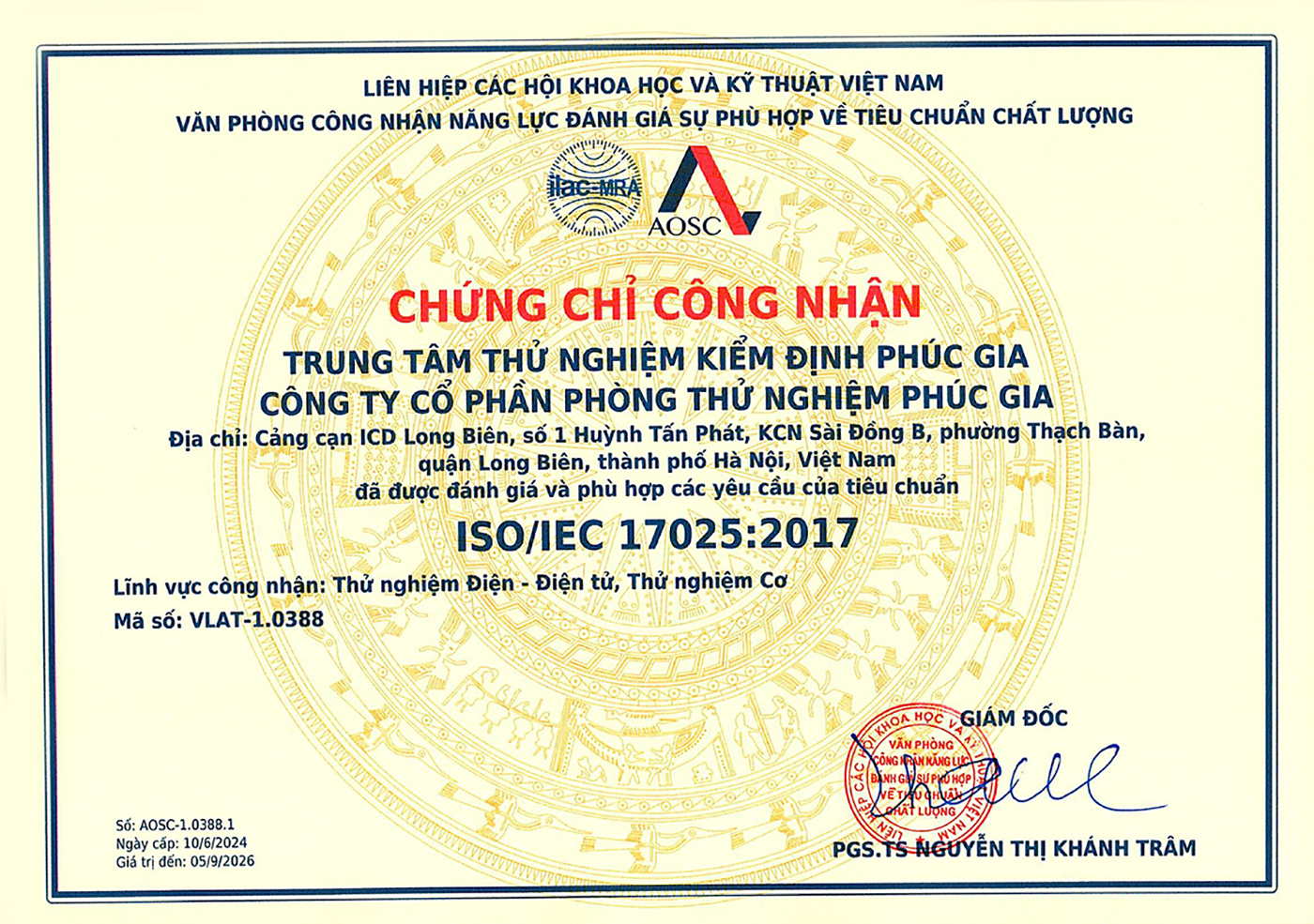
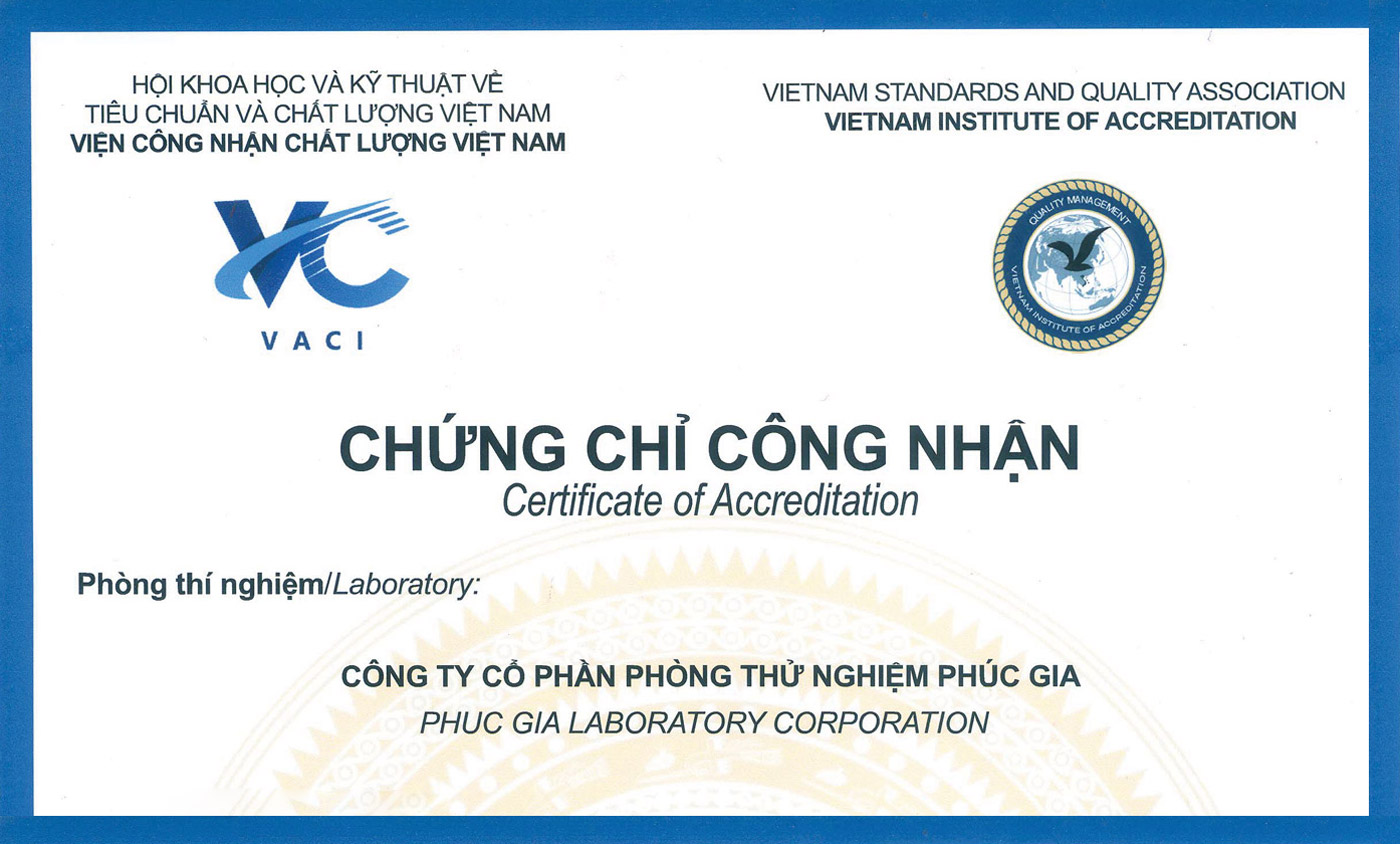
Electromagnetic Compatibility Testing Laboratory – Phuc Gia Laboratory – Vilas 1212 is a testing laboratory assessed and granted the Registration Certificate for electromagnetic compatibility (EMC) testing operations by the Ministry of Science and Technology for household electrical and electronic products according to QCVN 9.
With over 10 years of experience in consulting for certification, testing, inspection, and legal advice on profiles and procedures – providing comprehensive support solutions from profile preparation consultancy, testing, and inspection to the completion of certification and Customs Clearance. Phuc Gia commits to providing a fast, accurate, and cost-saving process, helping enterprises confidently bring meat grinders to market in compliance with standards and the law.

Step 4: Proceed with Customs Clearance of the declaration
The testing laboratory will issue testing results for the enterprise to complete customs clearance procedures. In case the profile is valid and no suspicions arise, the customs officer will approve the Customs Clearance of the declaration.
Enterprises will proceed to pay taxes to complete procedures and receive goods. Particularly in some special cases, goods can be brought to the warehouse for preservation first, then supplemented with a complete profile for official Customs Clearance.
Step 5: Bringing goods to the warehouse
After the declaration is granted Customs Clearance, the enterprise proceeds to liquidate the declaration and perform necessary procedures to bring the goods to the warehouse. To ensure the goods receipt process takes place smoothly, the enterprise needs to prepare full delivery orders, suitable means of transport and ensure that the goods have been allowed by the customs authority to pass through the supervision area.
Note: To bring products to the market, enterprises are mandatory to perform procedures such as electromagnetic compatibility testing, certification of conformity, energy efficiency testing, and energy labeling.
5. Notes when performing meat grinder import procedures
When conducting meat grinder import, enterprises need to pay special attention to the following points to ensure the Customs Clearance process takes place smoothly and in accordance with regulations:
-
Import tax payment obligation: Enterprises must fully complete tax obligations, including import tax and value-added tax (VAT), according to current regulations.
-
Quality inspection requirements: According to the Appendix of Decision 2711/QĐ-BKHCN issued by the Ministry of Science and Technology on December 30, 2022, regarding the announcement of Group 2 products and goods under the management of the Ministry of Science and Technology, meat grinders belong to the group of goods subject to state control registration on quality of products upon import, to ensure safety and compliance with technical standards. In case the equipment does not use electricity, the enterprise does not need to perform quality inspection procedures upon import.
-
Exceptions for components: Particularly, separate parts and components of meat grinders are not mandatory for quality inspection during the import process.
-
Ban on used meat grinder import: According to Section II, Appendix I issued with Decree 69/2018/NĐ-CP, used electronic and refrigeration goods, including used meat grinders, belong to the list of prohibited import goods, therefore enterprises are not allowed to import them into Vietnam.

The above notes play an important role in the process of preparing dossiers and performing import procedures. Understanding these regulations will help enterprises save time, costs, and limit risks arising during the Customs Clearance process.
Above is important information about meat grinder import procedures for enterprises. Performing each step accurately not only helps goods be cleared quickly but also ensures full compliance with technical standards when circulating on the market. If enterprises need to perform EMC testing and certification of conformity for meat grinders, please contact Phuc Gia immediately – the unit certified by the Ministry of Science and Technology as having sufficient capacity to perform the above process!
For more details, please contact us at:
PHUC GIA LABORATORY CORPORATION
PHUC GIA CERTIFICATION CENTER
PHUC GIA INSPECTION TESTING CENTER
Address:
- Hanoi: ICD Long Bien, No. 01 Huynh Tan Phat, Sai Dong B Industrial Park, Long Bien Ward
- Ho Chi Minh City: No. 180, D2 Street, Long Truong Ward
Hotline: 0965996696 / 0982996696 / 02477796696
E-mail: lab@phucgia.com.vn/cert@phucgia.com.vn/info@phucgia.com.vn
Website: phucgia.com.vn
Working time: Monday to Friday 8:00 – 18:30; Saturday 8:00 – 12:00

![QUOTATION – Testing and Other Certification Services [2026]](https://phucgia.com.vn/wp-content/uploads/2017/03/bao-gia-thu-nghiem-chung-nhan.png)