

Microwave Oven import procedures are a crucial step that enterprises need to perform when bringing products into the Vietnamese market. To ensure that microwave ovens are cleared in accordance with legal regulations, in the article below, Phuc Gia will provide detailed instructions and the latest updates on the Microwave Oven import process for enterprises.
See more: Capacity Profile Of Phuc Gia Laboratory Corporation
1. Policies Regulating Microwave Oven Import Procedures
The process of importing microwave ovens into Vietnam must comply with legal regulations on Microwave Oven import procedures, which are clearly expressed in the following legal documents:
-
Decision No. 2711/QĐ-BKHCN issued by the Ministry of Science and Technology on December 30, 2022, regulating the announcement of group 2 products and goods under the management responsibility of the Ministry of Science and Technology.
-
Decision No. 1182/QĐ-BCT dated April 06, 2021, of the Ministry of Industry and Trade regulating the list of specialized inspection products of the Ministry of Industry and Trade.
-
Decision No. 04/2017/QĐ-TTg, regulating the list of equipment subject to mandatory energy labeling and application of minimum energy performance testing, issued by the Prime Minister, effective from April 25, 2017.
-
Decision No. 1983/QĐ-TĐC issued by the Ministry of Science and Technology, along with the Directorate for Standards, Metrology and Quality on October 15, 2014, regulating the issuance of guidelines for certification of conformity with national technical regulation QCVN 9:2012 on electromagnetic compatibility (EMC) for household electrical and electronic equipment and similar purposes.
-
Circular No. 36/2016/TT-BCT – “Regulating energy labeling for energy-using vehicles and equipment under the management of the Ministry of Industry and Trade” issued on December 28, 2016 (along with Consolidated Document No. 23/VBHN-BCT dated March 24, 2020).
-
Circular No. 11/2012/TT-BKHCN promulgating QCVN 9:2012/BKHCN “National technical regulation on electromagnetic compatibility for household electrical and electronic equipment and similar purposes.”
-
Circular 01/2022/TT-BKHCN amending and supplementing a number of articles of Circular No. 07/2018/TT-BKHCN dated June 06, 2018, and Circular No. 08/2019/TT-BKHCN dated September 25, 2019, of the Minister of Science and Technology.
-
Circular No. 28/2012/TT-BKHCN issued by the Ministry of Science and Technology on December 12, 2012, Regulating the declaration of standard conformity, regulation conformity, and methods for assessing conformity with standards and technical regulations.
-
Circular No. 38/2015/TT-BTC issued by the Ministry of Finance on March 25, 2015, amending and supplementing Circular No. 39/2018/TT-BTC dated April 20, 2018 – Regulating customs procedures; customs inspection and supervision; export tax, import tax, and tax administration for exported and imported goods.
-
Decree No. 69/2018/NĐ-CP issued by the Government on May 15, 2018 – Guiding the Law on Foreign Trade Management.
-
Decree No. 128/2020/NĐ-CP regulating the sanctioning of administrative violations in the field of customs, issued by the Government on October 19, 2020.
-
Decree No. 74/2018/NĐ-CP issued by the Government on May 15, 2018 – Regulating state quality inspection procedures (general application).
-
Consolidated Document No. 23/VBHN-BCT: Regulating energy labeling for energy-using vehicles and equipment under the management of the Ministry of Industry and Trade.
-
QCVN 9:2012/BKHCN – National technical regulation on electromagnetic compatibility for household electrical and electronic equipment and similar purposes – issued by the Ministry of Science and Technology on April 12, 2012.
-
Regulation QCVN 04:2009/BKHCN (promulgated in Circular No. 28:2012/BKHCN of the Ministry of Science and Technology) on Safety for Electrical – Electronic equipment.
-
Amendment 1:2018 QCVN 9:2012/BKHCN – National technical regulation on electromagnetic compatibility for household electrical and electronic equipment and similar purposes – issued by the Ministry of Science and Technology on June 06, 2018.
-
Consolidated Document of Circulars No. 11/2012/TT-BKHCN, No. 13/2013/TT-BKHCN, and No. 07/2018/TT-BKHCN on technical regulations applied to household electrical and electronic equipment.
-
Value Added Tax (VAT) Law No. 13/2008/QH12 dated June 03, 2008 (issued by the National Assembly on November 26, 2024, replacing the 2008 VAT Law) regulating the Value Added Tax Law.
Notably, microwave ovens are not on the list of goods prohibited from import according to Appendix I – List of goods prohibited from export and import issued with Decree No. 69/2018/NĐ-CP dated May 15, 2018, of the Government (amended and supplemented in several later documents such as Decree No. 26/2023/NĐ-CP).
2. Microwave Oven Import Tax and HS Code
According to figures from the General Department of Customs, below is information on HS codes, import tax, and VAT for types of microwave ovens:
Ordinary microwave ovens:
-
HS Code: 8516.50.00
-
VAT: 10%
-
Ordinary Import Tax: 37.5%
-
Preferential Import Tax: 25%
| Market | Tax Fees |
| China into Vietnam | 5% (ACFTA) or 25% (RCEP) |
| India into Vietnam | 25% (AIFTA) |
| USA into Vietnam | 25% (Preferential Import Tax) |
| ASEAN into Vietnam | 0% (ATIGA) |
| Korea into Vietnam | 32% (AKFTA) or 0% (VKFTA) or 25% (RCEP) |
| Japan into Vietnam | 0% (AJCEP or VJEPA or CPTPP) or 25% (RCEP) |
| UK into Vietnam | 0% (UKVFTA) |
| EU into Vietnam | 0% (EVFTA) |
| Australia into Vietnam | 0% (AANZFTA) or 25% (RCEP) |
| Russia into Vietnam | 0% (VN-EAEUFTA) |
| Canada into Vietnam | 0% (CPTPP) |
| Mexico into Vietnam | 0% (CPTPP) |
3. Microwave Oven Import Documentation Set
Based on the regulations in Section 2, Article 16, Circular 38/2015/TT-BTC – Regulating customs procedures; customs inspection and supervision; export tax, import tax, and tax administration for exported and imported goods, issued on March 25, 2015, and amended and supplemented in Circular 39/2018/TT-BTC issued on April 20, 2018, by the Ministry of Finance, the set of Microwave Oven import and export documents includes:
-
Customs declaration
-
Commercial invoice
-
Bill of lading
-
Packing list
-
Sales contract
-
Quality inspection registration dossier
-
Certificate of origin
-
Catalogue
In which, the customs declaration, bill of lading, commercial invoice, and quality inspection registration dossier for Microwave Oven import are the most important documents. Other documents will be supplemented when requested by customs.
The quality inspection dossier will have 2 forms of submission: direct physical paper submission and electronic submission via the National Single Window portal. The quality inspection dossier is mandatory when performing Microwave Oven import procedures. Therefore, once the customs declaration number is available, quality inspection registration must be carried out immediately to avoid wasting time.
4. Instructions for Microwave Oven Import Procedures
Before proceeding with Microwave Oven Import, enterprises must clearly understand the legal regulations and related procedures to ensure correct compliance with the requirements of the functional authorities. Below are detailed instructions on Microwave Oven Import procedures.
4.1. Step 1: Registration for Quality Inspection
To import microwave ovens into Vietnam, enterprises are mandatory to register for product quality inspection according to Decision 2711/QĐ-BKHCN issued by the Ministry of Science and Technology on December 30, 2022, regarding the announcement of group 2 products and goods under the management responsibility of the Ministry of Science and Technology.
To perform the administrative procedure for quality inspection registration, enterprises access the website vnsw.gov.vn to register an account. After approval (usually within 24 hours), you can proceed to submit the quality inspection registration dossier. Select an inspection organization licensed by the Ministry of Science and Technology to receive and process the dossier.
To register for quality inspection, enterprises need to prepare full documents such as: commercial invoice, bill of lading, quality inspection registration form, and product catalogue. Performing this early and submitting the dossier via the National Single Window Portal will help shorten processing time and limit unnecessary delays.
4.2. Step 2: Opening the Declaration
Importing enterprises need to prepare a full dossier provided by the exporter, then proceed to declare customs declaration information via electronic software such as ECUS5 or VNACCS.
After completing the declaration, the system will respond with the result of the declaration flow classification. Depending on the assigned flow color (green, yellow, or red), the enterprise will open the declaration at the corresponding customs branch:
-
Green flow: Goods are cleared quickly, only dossier inspection is needed.
-
Yellow flow: Inspect the dossier more carefully, may request supplements.
-
Red flow: Inspect both customs documents and physical goods.
4.3. Step 3: Proceed with Testing & Declaration of Conformity Certification
After completing the above administrative procedures, enterprises need to proceed with microwave oven testing for electromagnetic compatibility and microwave oven conformity certification to ensure the product meets quality and safety standards.
The testing & conformity certification contents include:
-
Electromagnetic Compatibility (EMC) testing according to QCVN 9:2012/BKHCN: aimed at checking the ability of the microwave oven to operate stably without causing electromagnetic interference to other electrical and electronic equipment in the operating environment.
-
Conformity certification according to QCVN 4:2009/BKHCN for microwave oven products: assessing the level of electrical safety, the ability to protect users from risks of electric shock, electromagnetic leakage, or fire and explosion during operation.
To proceed, the enterprise needs to submit the Quality Inspection Receipt to the customs authority. After approval, a product sample will be taken from the shipment to be tested at a laboratory designated by the Ministry of Science and Technology.
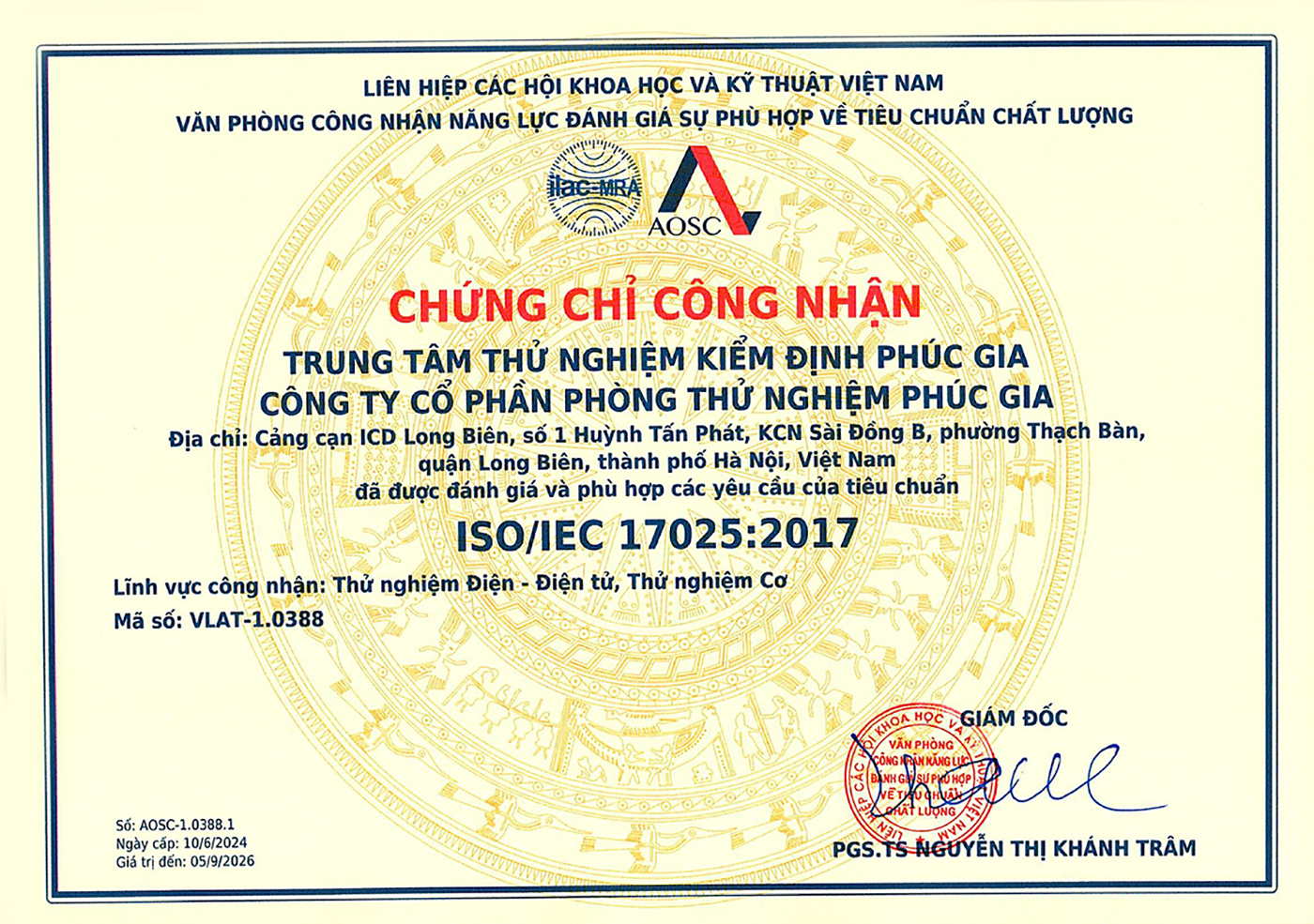
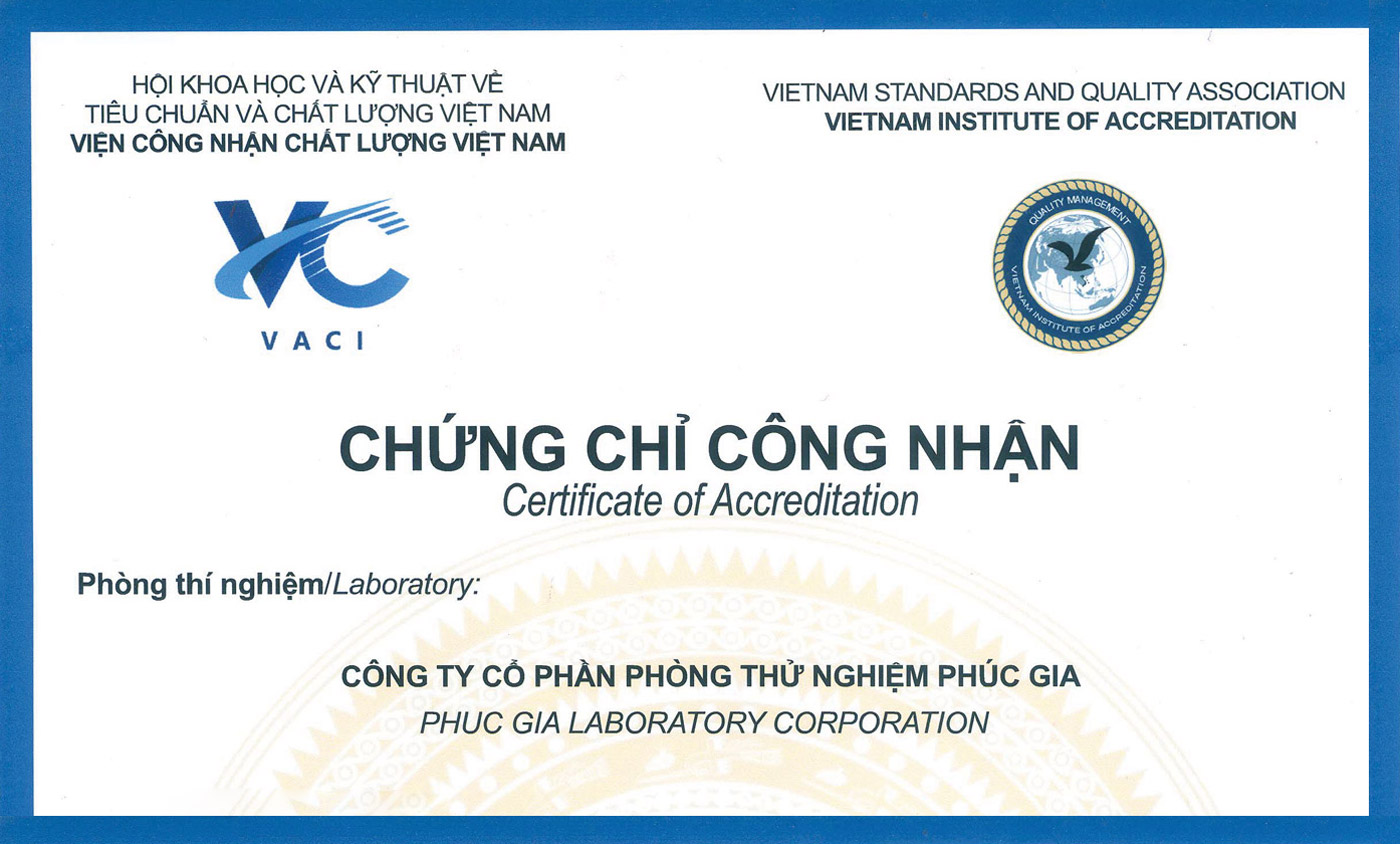
Currently, Phuc Gia has full capacity to perform testing and conformity certification for microwave oven products according to QCVN 9:2012/BKHCN and QCVN 19:2019/BKHCN. All testing, assessment, and certification activities of Phuc Gia are licensed by the Ministry of Science and Technology, ensuring legality, transparency, and high reliability.
This testing and certification not only aims to ensure safe products for consumers but also helps enterprises fully comply with national regulations, avoid legal risks, and create a competitive advantage when circulating on the market.

4.4 Step 4: Customs Declaration Clearance
After the dossier is inspected and there are no issues, the customs officer will approve the dossier. The enterprise will proceed to pay taxes according to regulations. Once the taxes have been paid, the shipment will be cleared, and the customs system will update the clearance status for the shipment.
4.5 Step 5: Bringing Goods to the Warehouse
After completing the above steps, you can transfer the products to the warehouse for storage and use. However, it should be noted that the storage and use of imported microwave ovens must fully comply with safety and product preservation regulations. This includes ensuring appropriate warehouse conditions, periodic product quality inspections, and compliance with the manufacturer’s instructions for use to ensure efficiency and safety during use.
Note: In case the enterprise needs to distribute goods to the market, it is mandatory to perform procedures such as electromagnetic compatibility testing, conformity certification, performance testing, and energy labeling according to regulations.
5. Notes When Performing Microwave Oven Import Procedures
In the process of performing Microwave Oven import procedures, enterprises need to note several important points to ensure that goods are cleared smoothly and fully comply with legal regulations. Below are the notes you need to remember when performing Microwave Oven import procedures:
-
Research regulations: Clearly understand Vietnam’s import policies.
-
Choose reputable manufacturers: Ensure quality and compliance with regulations.
-
Quality inspection: Ensure products meet standards.
-
Monitor legislative changes: Update with new regulations.
Microwave Oven import procedures require enterprises to strictly comply with regulations on quality inspection, electromagnetic compatibility testing, and conformity certification. To ensure the import process takes place legally, Phuc Gia is always ready to accompany enterprises in the process of electromagnetic compatibility testing and conformity certification, as well as supporting information during the import process. If you need detailed advice on Microwave Oven import procedures, please contact Phuc Gia immediately.
For more details, please contact us at:
PHUC GIA LABORATORY CORPORATION
PHUC GIA CERTIFICATION CENTER
PHUC GIA INSPECTION TESTING CENTER
Address:
- Hanoi: ICD Long Bien, No. 01 Huynh Tan Phat, Sai Dong B Industrial Park, Long Bien Ward
- Ho Chi Minh City: No. 180, D2 Street, Long Truong Ward
Hotline: 0965996696 / 0982996696 / 02477796696
E-mail: lab@phucgia.com.vn/cert@phucgia.com.vn/info@phucgia.com.vn
Website: phucgia.com.vn
Working time: Monday to Friday 8:00 – 18:30; Saturday 8:00 – 12:00

![QUOTATION – Testing and Other Certification Services [2026]](https://phucgia.com.vn/wp-content/uploads/2017/03/bao-gia-thu-nghiem-chung-nhan.png)