

Testing for Mobile Communication Terminal Equipment in Vietnam according to QCVN 86:2019/BTTTT is a prerequisite for enterprises importing and manufacturing devices using 2G/3G/4G technology to circulate products on the Vietnam market. The following guidance has been synthesized by Phuc Gia® to support enterprises in clearly understanding the criteria to be evaluated according to the regulation, facilitating the preparation of documents and ensuring products meet requirements before being brought to market.
See more: Capacity Profile Of Phuc Gia Laboratory Corporation
| ORD | HS Code according to Circular No. 31/2022/TT-BTC | Product Description |
| 1 | 8517.13.00 8517.14.00 |
Terrestrial mobile phones using E-UTRA (4G) technology and potentially integrating one or more of the following functions:
– W-CDMA FDD (3G) mobile communication terminals; – GSM (2G and 2.5G) mobile communication terminals; – Fifth-generation (5G) mobile communication terminals; – Broadband data transmission operating in the 2.4 GHz band; – 5 GHz band radio access; – Short-range radio transmission and transception. |
| 2 | 8517.62.59 | Terrestrial mobile communication terminal equipment other than mobile phones (transmission equipment combined with receiving equipment), integrating/using one or more technologies: E-UTRA (4G); W-CDMA FDD (3G); GSM (2G and 2.5G); and potentially integrating one or more of the following functions:
– Fifth-generation (5G) mobile communication terminals; – Broadband data transmission operating in the 2.4 GHz band; – 5 GHz band radio access; – Short-range radio transmission and transception. |
2. Technical Requirements
QCVN 86:2019/BTTTT stipulates the technical requirements for electromagnetic compatibility (EMC) for mobile communication terminal equipment. Accordingly, these devices must meet the technical requirements for EMC emissions and EMC immunity specified in this regulation.
2.1. Technical Requirements for Emissions
(1) GSM and DCS Systems
EMC emission measurements on radio communication equipment ports and/or related ancillary equipment are specified in Table 1 of QCVN 18:2014/BTTTT and the regulations in Table 2 of QCVN 86:2019/BTTTT.
Table 2: Measurement conditions for EMC emission measurements used for terminal and ancillary equipment in GSM and DCS systems
| Reference section in QCVN 18:2014/BTTTT | Additional or modified measurement conditions for section 2.1 in QCVN 18:2014/BTTTT |
| 2.1.3 “Radiated emission from the enclosure port of standalone ancillary equipment” | According to the manufacturer’s declaration, ancillary equipment may be measured together with the radio equipment in the same test. In this case, radiated emissions from the transmitter/receiver shall be ignored but must be recorded in the test report. |
(2) Direct Sequence Spread Spectrum CDMA Systems (UTRA and E-UTRA)
EMC emission testing applications on radio communication equipment ports and/or related ancillary equipment comply with Table 1 of QCVN 18:2014/BTTTT.
2.2. Technical Requirements for Immunity
(1) GSM and DCS Systems
EMC immunity testing applications on radio communication equipment ports and/or related ancillary equipment comply with Table 2 of QCVN 18:2014/BTTTT and the regulations in Table 4 of QCVN 86:2019/BTTTT.
Table 4. Measurement conditions for immunity measurements used for terminal and ancillary equipment in GSM and DCS systems
| Reference section in QCVN 18:2014/BTTTT | Additional or modified measurement conditions for section 2.2 in QCVN 18:2014/BTTTT |
| 2.2.3 “Immunity to radio frequency electromagnetic fields,” “Test method” section | When applying the peak detector method, at each test initialization step, the test signal must be an unmodulated signal. After that, the test modulation is applied.
This test shall be repeated with the equipment in standby mode of operation, and the exclusion band shall not be used in the test. |
| 2.2.6 “Immunity to radio frequency, common mode,” “Test method” section | When applying the peak detector method at each test initialization step, the test signal must be an unmodulated signal. After that, the test modulation is applied. |
| For the test method, the frequency is increased in steps of 50 kHz of the instantaneous frequency in the frequency range from 150 kHz to 5 MHz. When applying the peak detector method, at each initiated test frequency step, an unmodulated immunity test signal shall be applied. Then, the RF immunity test signal modulation (1 kHz) is applied as in QCVN 18:2014/BTTTT. | |
| 2.2.7 “Immunity to transients and surges in the vehicular environment,” “Performance criteria” section | During testing processes with pulses 3a and 3b, the performance criteria must be applied (see 2.5.1.3). |
(2) Direct Sequence Spread Spectrum CDMA Systems (UTRA and E-UTRA)
EMC immunity testing applications on radio communication equipment ports and/or related ancillary equipment comply with Table 2 in QCVN 18:2014/BTTTT and the regulations in Table 5 of QCVN 86:2019/BTTTT.
| Reference section in QCVN 18:2014/BTTTT | Additional or modified measurement conditions for section 2.2 in QCVN 18:2014/BTTTT |
| 2.2.3 “Immunity to radio frequency electromagnetic fields,” “Test method” section | When applying the peak detector method, at each test initialization step, the test signal must be an unmodulated signal. After that, the test modulation is applied. |
| 2.2.6 “Immunity to radio frequency, common mode,” “Test method” section | The exclusion band is not applied to equipment within the scope of this regulation;
When applying the peak detector method at each test frequency step initialization, an unmodulated test signal shall be used. After that, the test modulation is applied; The procedure used to identify narrowband responses does not apply to conducted immunity measurements in the frequency range from 150 kHz to 80 MHz (see 2.3.4). |
| 2.2.7 “Immunity to transients and surges in the vehicular environment,” “Performance criteria” section | During testing processes with pulses 3a and 3b, the performance criteria must be applied (see 2.5.1.3). |
3. Testing Costs and Time
Costs and time for Testing for Mobile Communication Terminal Equipment in Vietnam according to QCVN 86:2019/BTTTT are publicly listed by Phuc Gia®. You can view the testing price list for electrical-electronic, telecommunications, and information technology equipment at Testing – Certification Quotation or contact Phuc Gia® for detailed advice.
4. Where to conduct Testing for Mobile Communication Terminal Equipment according to QCVN 86:2019/BTTTT?
4.1. Regulations on qualified testing – certification units
Based on Article 5 of Consolidated Document No. 02/2020/VBHN-BTTTT – Regulations on certification of conformity and declaration of conformity for specialized information technology and communications products and goods, the testing units serving certification and declaration of conformity are regulated as follows:
The testing unit serving certification of conformity activities is a designated or recognized testing unit.
The testing unit serving declaration of conformity activities is a designated or recognized testing unit, or a unit that has registered testing activities under Decree No. 107/2016/NĐ-CP dated July 1, 2016, of the Government regulating business conditions for conformity assessment services.
Testing units must be responsible before the Competent Authority for the accuracy of testing results. Testing results have no value in replacing the Certificate of Conformity and the Declaration of Conformity.
Circular 29/2025/TT-BKHCN stipulates: “Testing results from domestic or foreign testing laboratories that have not been designated or recognized, or testing results from the manufacturer, shall not be used to assess conformity with this technical regulation.”
4.2. Phuc Gia® – A prestigious testing organization for telecommunications and information technology equipment in Vietnam
Phuc Gia Laboratory Corporation (Phuc Gia®) has been designated by the Ministry of Science and Technology to test telecommunications and information technology equipment according to 24 Vietnam Technical Regulations for many important equipment groups in the field of telecommunications and information technology. This serves the quality management of products and goods potentially causing unsafety under the Ministry’s management responsibility, pursuant to Decision No. 2899/QD-BKHCN and Decision No. 228/QD-BTTTT.
Accordingly, Phuc Gia® is designated to conduct Testing for Mobile Communication Terminal Equipment in Vietnam using 2G/3G/4G technology, such as mobile phones, tablets, laptops, smartwatches, radio transceiver equipment, dashcams, motorcycle trackers, etc., according to QCVN 86:2019/BTTTT.
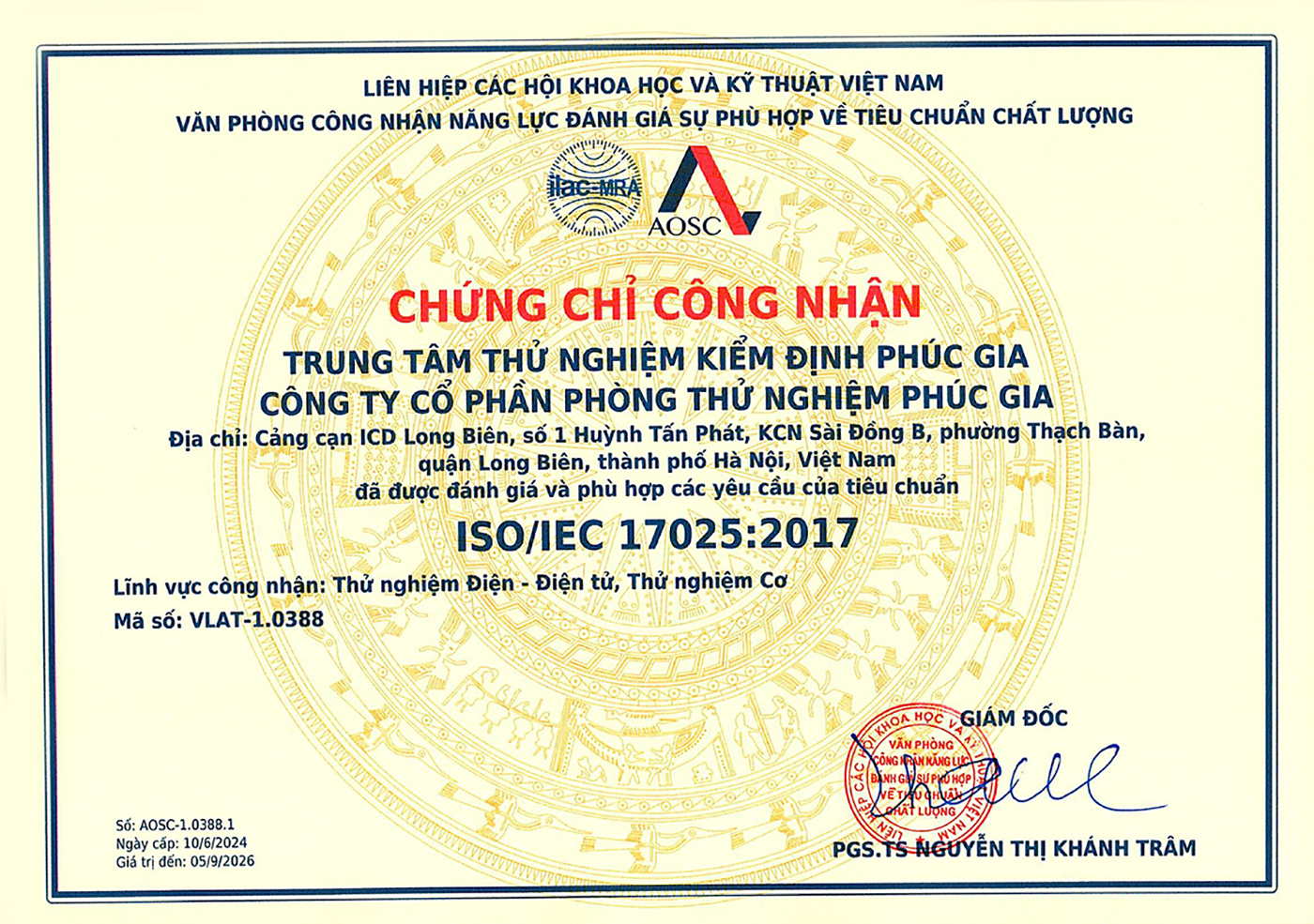
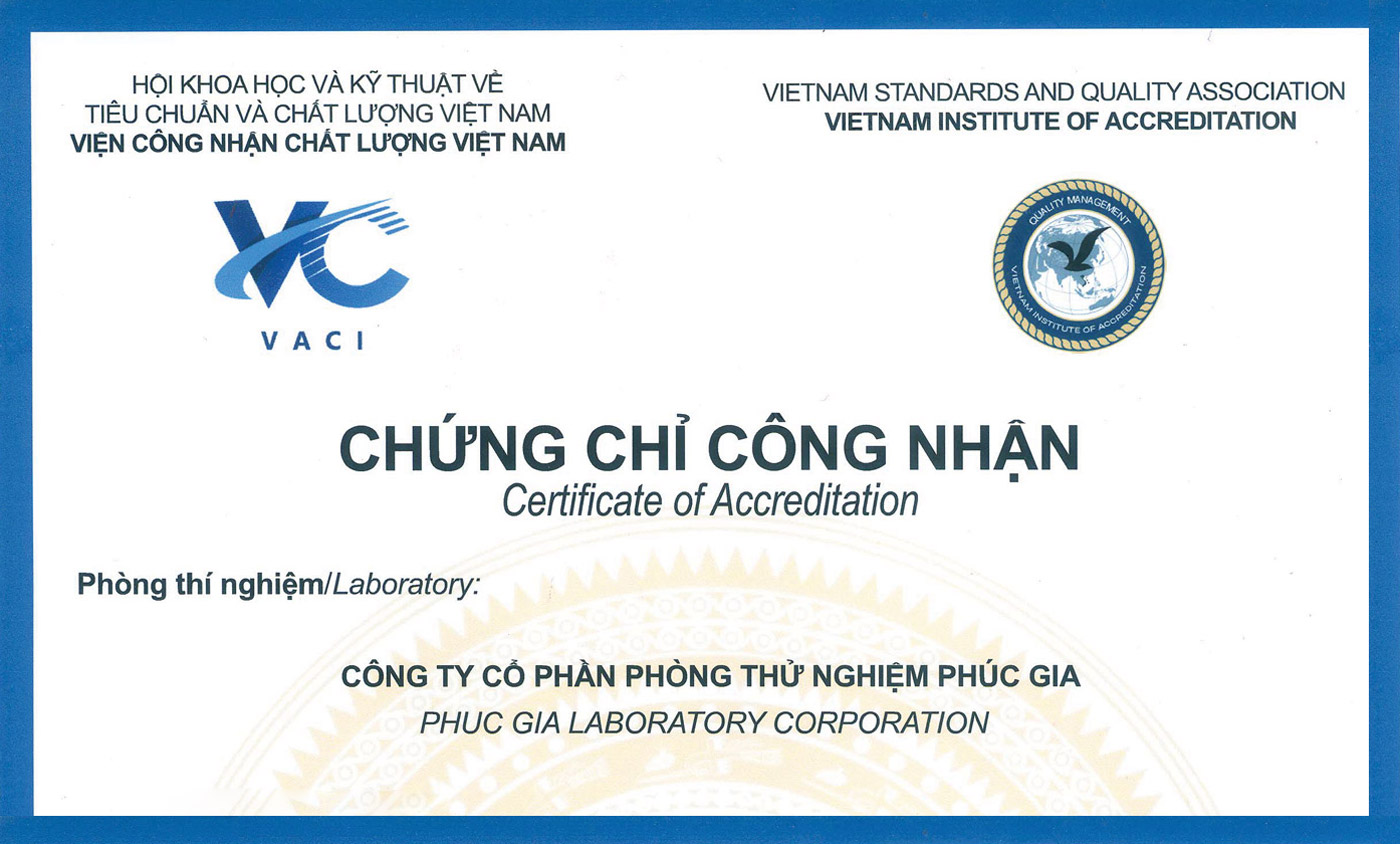
Phuc Gia® is also the first unit to be recognized by all three accreditation bodies (BoA, AOSC, VACI) as meeting ISO/IEC 17025:2017 standards. The testing facility spans up to 5,000 m², equipped with a synchronous array of modern measurement and inspection equipment, serving tests for electrical safety, EMC, energy efficiency, RF, SAR, and many other technical categories.
Along with that is a team of nearly 100 staff, engineers, and technical experts selected and intensively trained to meet the strict requirements of testing, certification, and conformity assessment activities in various technical fields.


In conclusion, maintaining strict compliance with the Testing for Mobile Communication Terminal Equipment in Vietnam is the only reliable way to guarantee that cellular hardware meets national electromagnetic compatibility (EMC) standards. These Testing for Mobile Communication Terminal Equipment in Vietnam protocols, governed by QCVN 86:2019/BTTTT, are essential for all devices operating on GSM, WCDMA, and LTE networks. By completing the required Testing for Mobile Communication Terminal Equipment in Vietnam at a designated Testing laboratory, manufacturers can secure the necessary reports to finalize their Declaration of Conformity with the Ministry of Information and Communications (MIC).
Ultimately, successfully navigating the Testing for Mobile Communication Terminal Equipment in Vietnam according to QCVN 86:2019/BTTTT allows businesses to legally apply the ICT Mark and avoid delays during Customs Clearance. Since these Testing for Mobile Communication Terminal Equipment in Vietnam requirements focus on protecting the telecommunications infrastructure from interference, they remain a cornerstone of Technical regulation Compliance. Prioritizing thorough Testing for Mobile Communication Terminal Equipment in Vietnam ensures your products are safe, reliable, and fully authorized for use across all Vietnamese provinces.
RELATED POSTS
- Guidance on Testing for Radio Communication Equipment according to QCVN 18:2022/BTTTT
- Guidance on Testing for Broadband Data Transmission Equipment according to QCVN 54:2020/BTTTT
- Guidance on Testing for Mobile Communication Terminal Equipment according to QCVN 86:2019/BTTTT
For more details, please contact us at:
PHUC GIA LABORATORY CORPORATION
PHUC GIA CERTIFICATION CENTER
PHUC GIA INSPECTION TESTING CENTER
Address:
- Hanoi: ICD Long Bien, No. 01 Huynh Tan Phat, Sai Dong B Industrial Park, Long Bien Ward
- Ho Chi Minh City: No. 180, D2 Street, Long Truong Ward
Hotline: 0965996696 / 0982996696 / 02477796696
E-mail: lab@phucgia.com.vn/cert@phucgia.com.vn/info@phucgia.com.vn
Website: phucgia.com.vn
Working time: Monday to Friday 8:00 – 18:30; Saturday 8:00 – 12:00

![QUOTATION – Testing and Other Certification Services [2026]](https://phucgia.com.vn/wp-content/uploads/2017/03/bao-gia-thu-nghiem-chung-nhan.png)