

Radio transceiver equipment is widely used in Vietnam across many fields, from mobile communications and short-range radio devices to transmission systems and specialized equipment. Due to their operation within a very broad frequency range, this group of devices has the potential to directly affect the frequency spectrum environment if not strictly controlled for emissions and electromagnetic compatibility.
Within the current management system, Testing for Radio Transceiver Equipment in Vietnam according to QCVN 47:2015/BTTTT is a mandatory requirement to ensure the safe and efficient use of the radio frequency spectrum.
See more: Capacity Profile Of Phuc Gia Laboratory Corporation
I. Current Situation of Radio Transceiver Equipment Usage in Vietnam
The reality in Vietnam shows that radio transceiver equipment is being used in large quantities and with highly diverse types, covering many frequency bands from low to high. These devices appear in telecommunications infrastructure, consumer electronics, industrial equipment, as well as specialized information systems. The coexistence of multiple technologies and equipment generations increases the risk of interference if emission characteristics are not fully evaluated.

For radio transceiver equipment not yet regulated by specialized technical standards, Testing for Radio Transceiver Equipment in Vietnam according to QCVN 47:2015/BTTTT serves as the fundamental technical basis for controlling radio frequency spectrum and radiation parameters. Compliance with this regulation helps limit unwanted emissions and ensures coexistence among radio systems operating in the same frequency environment.
In the context of increasing demand for radio equipment, the uniform application of Testing for Radio Transceiver Equipment in Vietnam according to QCVN 47:2015/BTTTT not only meets state management requirements but also contributes to maintaining spectral order and the long-term stability of the radio communication system in Vietnam.
II. Guidance on Testing for Radio Transceiver Equipment in Vietnam According to QCVN 47:2015/BTTTT
1. Scope of Application
Radio transmitting and receiving devices operating in the frequency range from 9 kHz to 40 GHz (such as DECT wireless telephone equipment, RFID devices…) that fall under one of the HS codes below must meet the technical requirements of QCVN 47:2015/BTTTT.
| ORD | Product Name | HS Code | Product Description |
| 1 | Fifth Generation (5G) mobile communication base station equipment | 8517.61.00 |
Base station equipment for the fifth-generation (5G) mobile communication network
|
| 2 | Multi-technology NR and E-UTRA mobile communication base station equipment | 8517.61.00 |
Mobile communication base station equipment capable of simultaneous operation of NR and E-UTRA technologies; or individual operation of either NR or E-UTRA technology at any given time
|
| 3 | GSM mobile communication repeater equipment | 8517.62.59 |
Equipment with the function of receiving and re-transmitting signals of mobile communication networks using GSM technology (2G and 2.5G)
|
| 4 | Fifth Generation (5G) mobile communication repeater equipment | 8517.62.59 |
Equipment with the function of receiving and re-transmitting signals of the fifth-generation (5G) mobile communication network
|
| 5 | Low Power Wide Area Network (LPWAN) radio equipment | 8517.61.00
8517.62.43 8517.62.59 8517.62.69 8517.62.99 8517.69.00 |
Base station equipment, radio access equipment, or terminal equipment with sensing, measurement, recording, and transmission functions for measured parameters via a radio interface
|
| 9015.10.90 |
Water level sensor equipment, transmitting measurement parameters via LPWAN technology radio interface
|
||
| 9025.19.19 |
Air temperature sensor equipment, transmitting measurement parameters via LPWAN technology radio interface
|
||
| 9025.80.00 |
Air humidity sensor equipment, transmitting measurement parameters via LPWAN technology radio interface
|
||
| 9027.89.90 |
Air dust sensor equipment, transmitting measurement parameters via LPWAN technology radio interface
|
||
| 8531.10.30 8531.90.90 |
Smoke detector equipment in smoke alarm systems, with functions to analyze air smoke and transmit smoke warning signals to a control center or smoke alarm device via LPWAN technology radio interface
|
||
| 8517.14.00 |
Terrestrial mobile communication terminal equipment using Narrowband IoT (NB-IoT) technology designed to operate in E-UTRA bands.
|
||
| 6 | Radar equipment (excluding Radar equipment for seagoing vessels and Radar belonging to the category of short-range radio transmitting and receiving equipment) | 8526.10.10 8526.10.90 |
All types of Radar equipment used on the ground or equipped on civil aircraft, except for Radar equipment for seagoing vessels and Radar belonging to the category of short-range radio transmitting and receiving equipment.
|
| 7 | DECT wireless telephone equipment | 8517.11.00 |
Wireline telephone sets including a Base Station accompanied by one or several cordless handsets using DECT technology. Handheld mobile units (handsets) connect to the fixed network via the Base Station, which is a fixed telephone unit connecting calls to the fixed network.
|
| 8 | Wi-Fi 6E, Wi-Fi 7 radio access equipment | 8517.62.51 |
Wi-Fi transceiver equipment (Wi-Fi Modems, Wi-Fi Routers) used in wireless local area networks (WLAN) in the 6 GHz band (5.925 GHz to 6.425 GHz).
|
| 9 | Radar equipment applied in road or rail traffic | 8526.10.10 8526.10.90 |
Short-range Radar equipment operating in the 24 GHz – 24.25 GHz frequency range for traffic information applications (road or rail) such as cruise control, detection, warning, and collision avoidance between vehicles and surrounding objects.
|
| 10 |
Radio warning and detection equipment |
8517.62.69 | Equipment including sensor units and control systems interconnected via a radio interface used for radio warning and detection purposes. |
| 11 |
Radio remote control equipment |
8526.92.00 | Equipment using radio waves for model control, as well as industrial and civil control. |
| 12 |
Radio Frequency Identification (RFID) equipment
|
8523.52.00 8523.59.10 |
Equipment using radio waves for automatic identification, tracking, and management of goods, people, animals, and other applications. The equipment consists of two separate units connected via a radio interface:
– Radio transceiver equipment, storing information in the form of electronic chip tags (RF tags), attached to the object to be identified; only applicable to tags with a power source. Excluding Radio Frequency Identification (RFID) equipment in section 4.2 Appendix II of this Circular. |
| 8471.60.90 | – Radio transceiver equipment (RF Reader) to activate radio tags and receive tag information, transferring it to the data processing system.
Excluding Radio Frequency Identification (RFID) equipment in section 4.2 Appendix II of this Circular. |
||
| 13 |
Electronic Toll Collection (ETC) equipment using Radio Frequency Identification (RFID) technology
|
8523.52.00 8523.59.10 |
Electronic Toll Collection (ETC) equipment using Radio Frequency Identification (RFID) technology in the 920 MHz – 923 MHz band with high power over 500 mW ERP, consisting of two separate units connected via a radio interface:
– Radio transceiver equipment, storing information in the form of electronic chip tags (RF tags), attached to the object to be identified; only applicable to tags with a power source. |
| 8471.60.90 | Radio transceiver equipment (RF Reader) to activate radio tags and receive tag information, transferring it to the data processing system. | ||
| 14 |
Ultra Wide Band (UWB) data transmission equipment |
8517.62.59 | Equipment using Ultra Wide Band (UWB) technology used for fixed indoor or mobile and portable information transmission, including:
– Standalone radio devices with or without an attached control part; – Modular plug-in radio devices used to plug into various host devices, such as personal computers and handheld terminal devices; – Plug-in radio devices used in combined equipment, for example, cable modems, Set Top Boxes, and access points; – Combined equipment or a combination of a plug-in radio device and a specific host device; – Equipment used in road and rail vehicles. |
2. Technical Requirements
QCVN 47:2015/BTTTT specifies general technical requirements regarding frequency spectrum and emissions for radio transmitting and receiving devices operating in the frequency range from 9 kHz to 40 GHz, such as frequency tolerance requirements.
2.1. Frequency Tolerance Requirements
The limits for frequency tolerance applied to equipment transmitters or radio stations are determined according to Table 1 of QCVN 47:2015/BTTTT. This includes each frequency band type (including the upper limit frequency, excluding the lower limit frequency) and the corresponding station type with its respective frequency tolerance limit.
This QCVN 47:2015/BTTTT provides regulations for the following frequency bands:
- Frequency Bands: 9 kHz to 535 kHz
- Frequency Bands: 535 kHz to 1 606,5 kHz
- Frequency Bands: 1 606,5 kHz to 4 000 kHz (Advertising Radio Stations)
- Frequency Bands: 4 MHz to 29,7 MHz
- Frequency Bands: 29,7 MHz to 100 MHz
- Frequency Bands: 100 MHz to 470 MHz
- Frequency Bands: 470 MHz to 2 450 MHz
- Frequency Bands: 2 450 MHz to 10 500 MHz
- Frequency Bands: 10,5 GHz to 40 GHz
2.2. Spurious Emission Requirements
Limits for spurious emissions of radio transmitters are determined according to Table 2; limits and frequency ranges of the spurious domain are determined as per Appendix C of QCVN 47:2015/BTTTT. These emission levels do not apply to Emergency Position Indicating Radio Beacons (EPIRB), emergency locator transmitters, ship emergency transmitters, lifeboat transmitters, survival craft transmitters, or maritime transmitters when used in emergency situations.
Spurious emission levels are determined according to the following reference bandwidths:
- 1 kHz in the frequency range from 9 kHz to 150 kHz;
- 10 kHz in the frequency range from 150 kHz to 30 MHz;
- 100 kHz in the frequency range from 30 MHz to 1 GHz;
- 1 MHz for frequencies above 1 GHz.
- The reference bandwidth for space services is 4 kHz.
- For radar systems, the reference bandwidth is determined according to each specific type of radar (as prescribed in this regulation).
2.3. Occupied Bandwidth Requirements
QCVN 47:2015/BTTTT – National Technical Regulation on Radio Frequency Spectrum and Radiation for Radio Transceiver Equipment – stipulates the following:
- The occupied bandwidth of a radio transmitter must not exceed the assigned frequency band applicable to that equipment.
- Unless otherwise specified, the assigned frequency band is determined by the sum of the necessary bandwidth and twice the frequency tolerance of the radio transmitter.
- The necessary bandwidth of a radio transmitter corresponding to the types of emission is determined as per Appendix B of this Regulation.

3. Testing Costs and Duration
The costs and duration for Testing for Radio Transceiver Equipment in Vietnam according to QCVN 47:2015/BTTTT are publicly listed by Phúc Gia®. You may view the testing price list for electrical-electronic, telecommunications, and information technology equipment at the Testing – Certification Quotation section or contact Phúc Gia® for detailed consultation.
4. Where to Conduct Testing for Radio Transceiver Equipment According to QCVN 47:2015/BTTTT?
4.1. Regulations on Qualified Testing and Certification Bodies
Pursuant to Article 5 of Consolidated Document No. 02/2020/VBHN-BTTTT – Regulations on certification of conformity and declaration of conformity for specialized information and communication technology products and goods, testing units serving certification and declaration of conformity are regulated as follows:
The testing unit serving certification of conformity activities must be a designated or recognized testing laboratory.
The testing unit serving declaration of conformity activities must be a designated or recognized testing laboratory, or an entity registered for testing activities under Decree No. 107/2016/NĐ-CP dated July 1, 2016, of the Government, which stipulates conditions for conformity assessment service businesses.
Testing units are responsible to the Competent Authority for the accuracy of testing results. Test results do not replace a Certificate of Conformity or a Declaration of Conformity.
Circular No. 29/2025/TT-BKHCN stipulates: “It is prohibited to use measurement/testing results from domestic or foreign laboratories that have not been designated or recognized, or measurement/testing results from manufacturers, to assess conformity against this technical regulation.”
4.2. Phúc Gia® – A Prestigious Testing Organization for Telecommunications and IT Equipment in Vietnam
Phuc Gia Laboratory Corporation (Phúc Gia®) is designated by the Ministry of Science and Technology to conduct testing for telecommunications and information technology equipment according to 24 Vietnam Technical Regulations (QCVN). This covers many critical equipment groups in the ICT sector to support the quality management of products and goods with potential safety risks under the Ministry’s responsibility, pursuant to Decision No. 2899/QĐ-BKHCN and Decision No. 228/QĐ-BTTTT.
Accordingly, Phúc Gia® is designated to perform Testing for Radio Transceiver Equipment in Vietnam for devices operating in the frequency range from 9 kHz to 40 GHz, such as DECT wireless telephone equipment and RFID devices, which must be tested according to QCVN 47:2015/BTTTT.
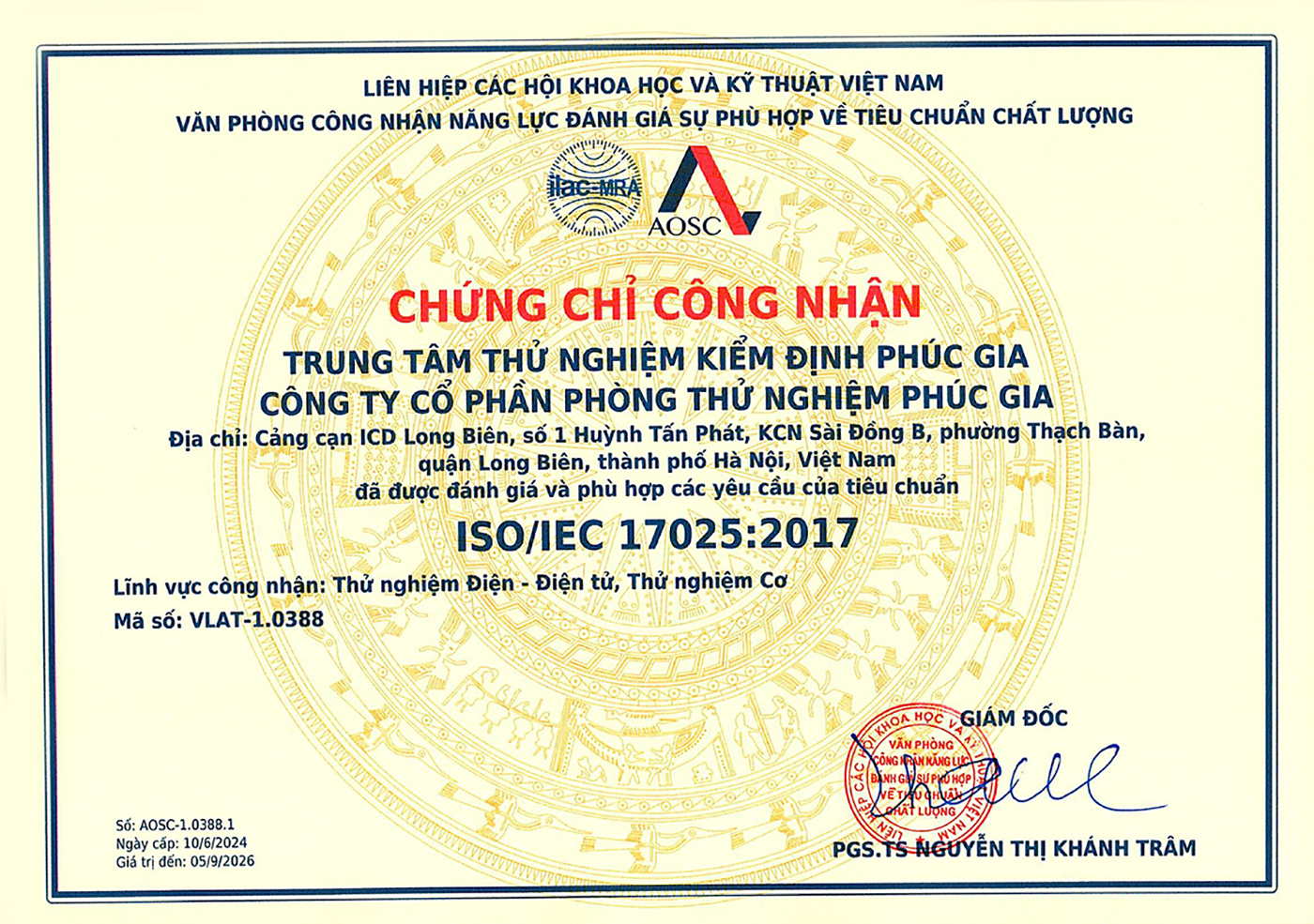
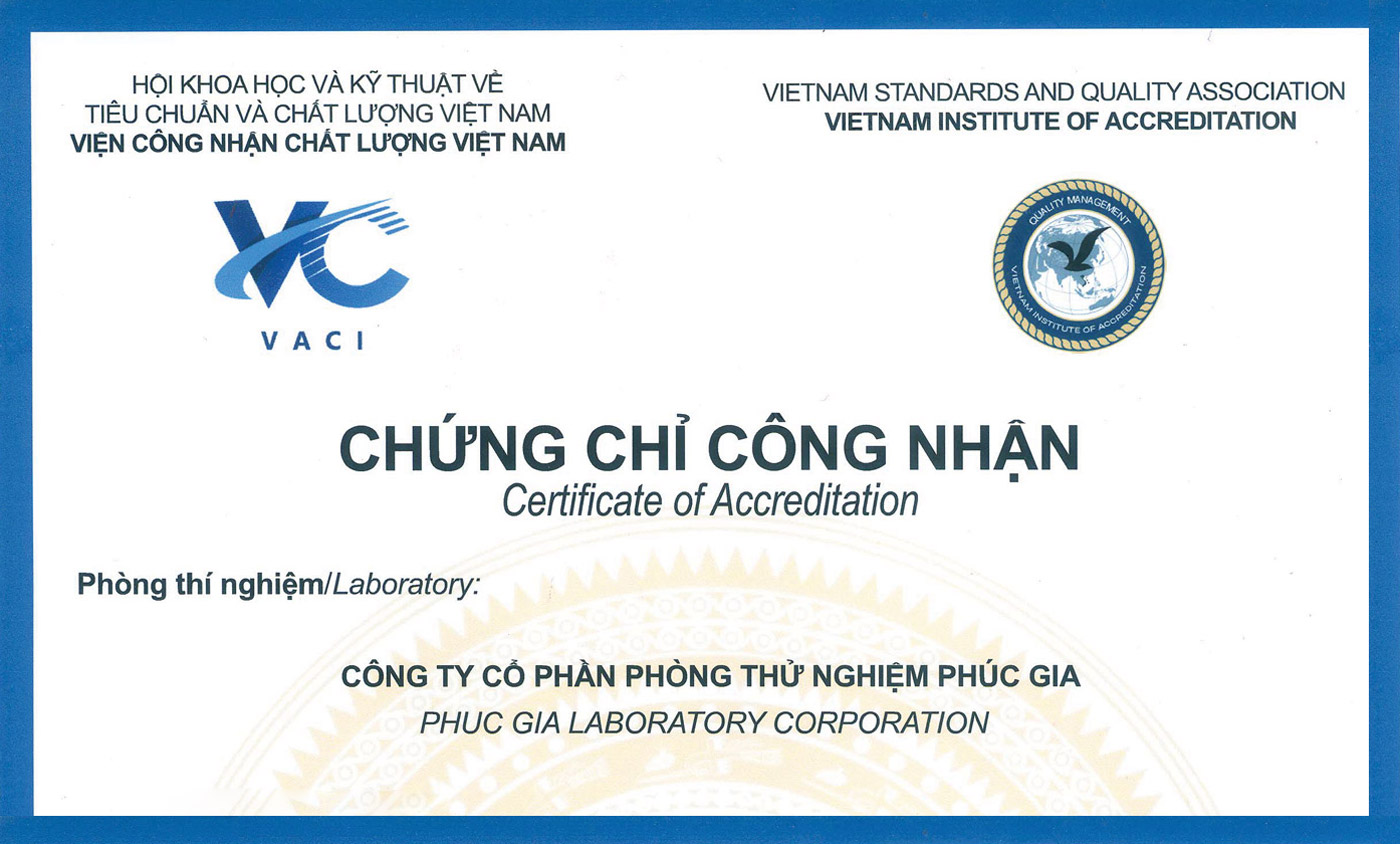
Phúc Gia® is also the first entity to be accredited by all three major accreditation bodies (BoA, AOSC, VACI) as meeting ISO/IEC 17025:2017 standards. Our testing facility spans up to 5,000 m², equipped with a synchronized array of modern measurement and inspection hardware for testing electrical safety, EMC, energy efficiency, RF, SAR, and many other technical categories.
Supporting this infrastructure is a team of nearly 100 staff, engineers, and technical experts who have been strictly selected and intensively trained to meet the rigorous requirements of testing, certification, and conformity assessment across multiple technical fields.


RELATED POSTS
- Guidance on Testing for Radio Communication Equipment according to QCVN 18:2022/BTTTT
- Guidance on Testing for Broadband Data Transmission Equipment according to QCVN 54:2020/BTTTT
- Guidance on Testing for Mobile Communication Terminal Equipment according to QCVN 86:2019/BTTTT
For more details, please contact us at:
PHUC GIA LABORATORY CORPORATION
PHUC GIA CERTIFICATION CENTER
PHUC GIA INSPECTION TESTING CENTER
Address:
- Hanoi: ICD Long Bien, No. 01 Huynh Tan Phat, Sai Dong B Industrial Park, Long Bien Ward
- Ho Chi Minh City: No. 180, D2 Street, Long Truong Ward
Hotline: 0965996696 / 0982996696 / 02477796696
E-mail: lab@phucgia.com.vn/cert@phucgia.com.vn/info@phucgia.com.vn
Website: phucgia.com.vn
Working time: Monday to Friday 8:00 – 18:30; Saturday 8:00 – 12:00

![QUOTATION – Testing and Other Certification Services [2026]](https://phucgia.com.vn/wp-content/uploads/2017/03/bao-gia-thu-nghiem-chung-nhan.png)