

In recent years, the terrestrial mobile communication system in Vietnam has been shifting significantly in both technology and infrastructure. This process is associated with replacing legacy mobile technologies with new platforms that offer higher frequency efficiency and better meet modern connectivity demands. In this context, Testing for Terrestrial Mobile Communication Terminal Equipment in Vietnam according to QCVN 117:2020/BTTTT is a mandatory requirement to ensure that equipment circulating on the market is consistent with the mobile network development roadmap in Vietnam.
See more: Capacity Profile Of Phuc Gia Laboratory Corporation
I. Situation of Testing for Terrestrial Mobile Communication Terminal Equipment in Vietnam
Currently, the number of 2G phones has decreased significantly due to the 2G switch-off policy and programs supporting users in upgrading to 4G/5G smartphones. Accordingly, the majority of mobile subscribers have transitioned to using 4G-enabled smartphones, in which Voice over LTE (VoLTE) services are gradually becoming the standard replacement for traditional 2G voice services. Besides mobile phones, many other terminal devices such as 4G Wi-Fi routers, SIM-based surveillance cameras, or handheld payment devices are also flourishing thanks to widespread 4G coverage.
In addition, Vietnam is shifting toward 5G and next-generation IoT. Modern smart devices are often designed as multi-mode, simultaneously supporting multiple technologies from 2G, 3G, 4G to 5G to ensure connectivity continuity. In the industrial sector, non-phone IoT devices are gradually moving toward NB-IoT or LTE-M based on the E-UTRA platform, consistent with energy-saving requirements and deep coverage capabilities in complex environments.
Consequently, Testing for Terrestrial Mobile Communication Terminal Equipment in Vietnam according to QCVN 117:2020/BTTTT is a mandatory requirement to control this transition in a safe and sustainable direction.

II. Guidance on Testing for Terrestrial Mobile Communication Terminal Equipment in Vietnam According to QCVN 117:2023/BTTTT
1. Scope of Application
QCVN 117:2020/BTTTT specifies the technical requirements for the radio access part of GSM, W-CDMA, and E-UTRA terrestrial mobile communication terminal equipment, including mobile phones and non-phone terrestrial mobile communication terminal equipment. According to Circular No. 29/2025/TT-BKHCN, terrestrial mobile communication terminal equipment must satisfy the technical requirements of QCVN 117:2023/BTTTT when falling under one of the following HS codes:
| ORD | Product Name | HS Code | Product Description |
| 1 | Terrestrial mobile communication terminal equipment | 8517.13.00 8517.14.00 |
– Smartphones
– Other telephones for other cellular networks |
| 8517.62.59 | Non-phone terrestrial mobile communication terminal equipment (transmission equipment combined with receiver equipment), integrating/using one or more technologies: E-UTRA (4G); W-CDMA FDD (3G); GSM (2G and 2.5G) | ||
| 2 | Simbox equipment | 8517.62.59 | SIM box with multiple (more than 2) SIM slots, featuring antennas for terrestrial mobile communication connection using one or more technologies: E-UTRA (4G); W-CDMA FDD (3G); GSM (2G and 2.5G), 5th generation mobile information (5G) and operating as an IP network device |
Note: This regulation does not specify the technical requirements for the radio access part using NB-IoT, LTE-M, and 5G technologies.
2. Technical Requirements
QCVN 117:2023/BTTTT specifies technical requirements for transmitter power, spectrum mask and emission types, receiver characteristics such as adjacent channel selectivity, blocking characteristics, spurious response, intermodulation, sensitivity, as well as adjacent channel leakage power ratio… for GSM, W-CDMA, and E-UTRA terrestrial mobile communication terminal equipment.
(1) Requirements for the Transmitter
- Transmitter maximum output power: Transmitter maximum output power for a single carrier, Transmitter output power for carrier aggregation mode (DL CA and UL CA).
- Transmitter emission spectrum mask: Transmitter emission spectrum mask for a single carrier, Transmitter emission spectrum mask for carrier aggregation mode (DL CA and UL CA), Transmitter emission spectrum mask for PUSCH multi-cluster in a component carrier.
- Transmitter spurious emissions: Transmitter spurious emissions for a single carrier, Transmitter spurious emissions for carrier aggregation mode (DL CA and UL CA), Transmitter spurious emissions for PUSCH multi-cluster in a component carrier.
- Transmitter minimum output power: Transmitter minimum output power for a single carrier, Transmitter minimum output power for carrier aggregation mode (DL CA and UL CA).
- Transmitter adjacent channel leakage power ratio: Transmitter adjacent channel leakage power ratio for a single carrier, Adjacent channel leakage power ratio for carrier aggregation (DL CA and UL CA), Adjacent channel leakage power ratio for carrier aggregation (DL CA and UL CA).
(2) Requirements for the Receiver
- Receiver adjacent channel selectivity: Receiver adjacent channel selectivity (ACS) for a single carrier, Adjacent channel selectivity (ACS) for carrier aggregation mode in DL-only bands.
- Receiver blocking characteristics: Receiver blocking characteristics for a single carrier, Receiver blocking characteristics for carrier aggregation in DL-only bands.
- Receiver spurious response: Receiver spurious response for a single carrier, Receiver spurious response for carrier aggregation in DL-only bands.
- Receiver intermodulation characteristics: Receiver intermodulation characteristics for a single carrier, Receiver intermodulation characteristics for carrier aggregation in DL-only bands.
- Receiver spurious emissions: Receiver spurious emissions for a single carrier, Receiver spurious emissions in DL-only bands.
- Receiver reference sensitivity: Unless otherwise specified, receiver characteristics are determined at the UE antenna connectors. For UE(s) with only a single integrated antenna, one (or more) reference antenna(s) with 0 dBi gain are assumed for each antenna port.
- Receiver total radiated sensitivity: This technical requirement applies to UEs with dimensions greater than or equal to 56 mm and less than or equal to 72 mm.
(3) Total Radiated Power (TRP): This technical requirement applies to UEs with dimensions greater than or equal to 56 mm and less than or equal to 72 mm. Total Radiated Power (TRP) is a measurement of the actual power level radiated by the UE.
(4) Radiated Emissions: This criterion assesses the ability to limit unwanted emissions from the enclosure port of radio equipment and ancillary equipment. This criterion applies to radio equipment and ancillary equipment. The measurement of this criterion must be performed on the radio equipment and/or on a representative configuration of the ancillary equipment.
(5) Control and Monitoring Functions: This requirement verifies that the control and monitoring functions of the UE prevent the UE from transmitting in the absence of a valid network. This criterion is applicable to radio equipment and ancillary equipment. The measurement of this criterion must be performed on the radio equipment and/or on a representative configuration of the ancillary equipment.
(6) Requirements for VoLTE Voice Features: Mobile phones using E-UTRA technology must support the VoLTE voice feature.
Note:
- Simbox equipment is subject to mandatory Declaration of Conformity (Certification is not mandatory).
- This type of product or good does not apply to explosion-proof communication equipment.
- Regarding QCVN 117:2023/BTTTT: requirements for Receiver Total Radiated Sensitivity (TRS) in Clause 2.2.12, Section B.2.2.18 and Total Radiated Power (TRP) in Clause 2.2.13, Section B.2.2.19 of the technical regulation are not applicable; technical requirements for GSM technology (2G and 2.5G) are not applicable.

3. Testing Costs and Time
The costs and lead time for Testing for Terrestrial Mobile Communication Terminal Equipment in Vietnam according to QCVN 117:2020/BTTTT are publicly listed by Phuc Gia®. You may view the price list for electrical, electronic, telecommunication, and information technology equipment testing at Testing and Certification Quotation or contact Phuc Gia® for detailed consultation.
4. Where to Conduct Testing for Terrestrial Mobile Communication Terminal Equipment according to QCVN 117:2020/BTTTT?
4.1. Regulations on Qualified Testing and Certification Bodies
Pursuant to Article 5 of Consolidated Document 02/2020/VBHN-BTTTT – Regulations on conformity certification and declaration of conformity for specialized information and communication technology products and goods, the testing units serving certification and declaration of conformity are regulated as follows:
The testing units serving conformity certification activities are designated or recognized testing units.
The testing units serving declaration of conformity activities are designated or recognized testing units, or units that have registered testing activities under Decree No. 107/2016/NĐ-CP dated July 1, 2016, of the Government regulating business conditions for conformity assessment services.
Testing units are responsible to the Competent Authorities for the accuracy of their testing results. Testing results do not serve as a substitute for the Certificate of Conformity or the Declaration of Conformity.
4.2. Phuc Gia® – A Prestigious Testing Organization for Telecommunications and Information Technology Equipment in Vietnam
Phuc Gia Laboratory Corporation (Phuc Gia®) is designated by the Ministry of Science and Technology to test telecommunications and information technology equipment according to 24 Vietnamese Technical Regulations for many important groups of devices. This serves the quality management of products and goods potentially causing unsafety under the Ministry’s management responsibility, pursuant to Decision No. 2899/QĐ-BKHCN and Decision No. 228/QĐ-BTTTT.
Phuc Gia® is designated to perform Testing for Terrestrial Mobile Communication Terminal Equipment in Vietnam according to QCVN 117:2020/BTTTT.
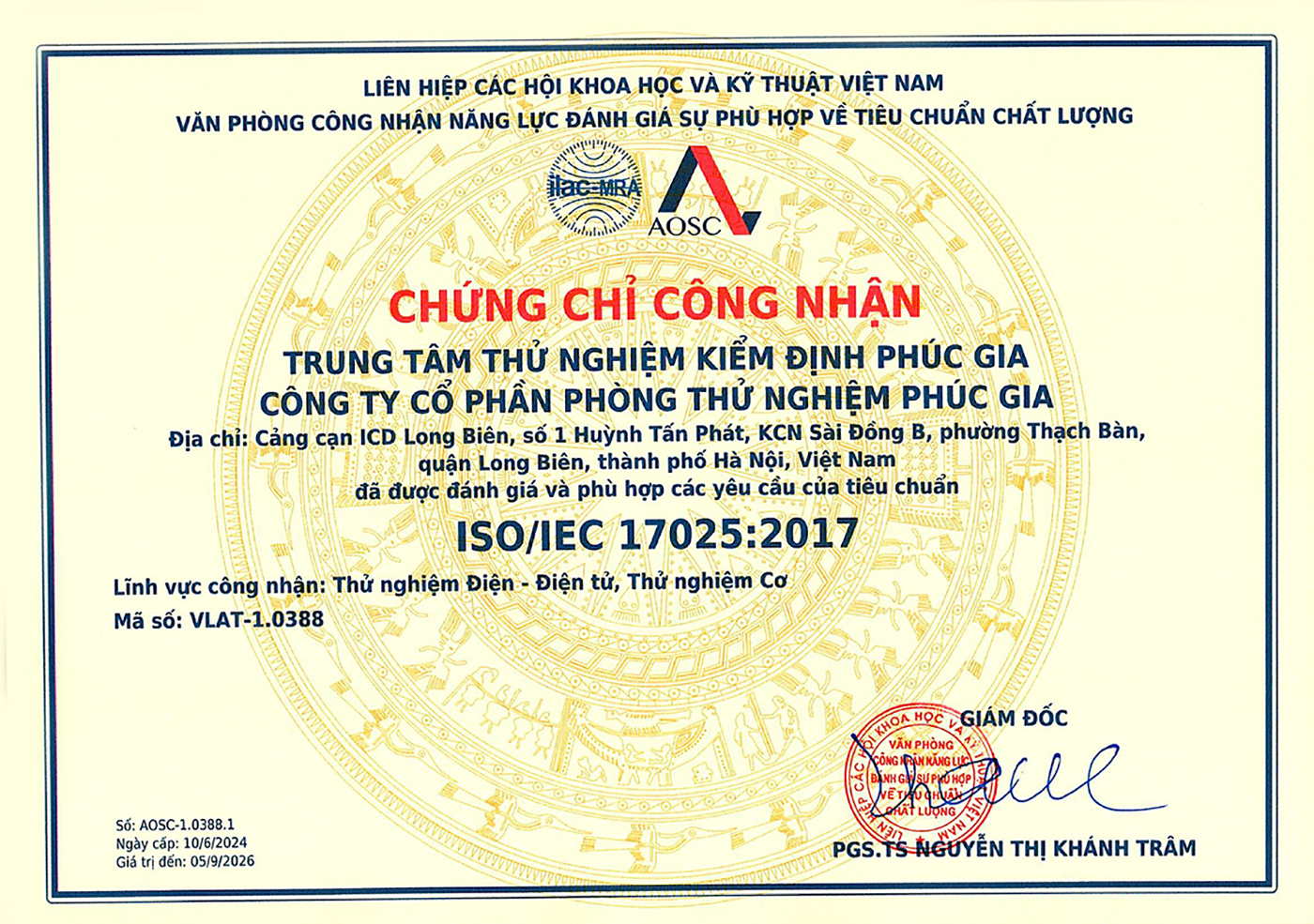
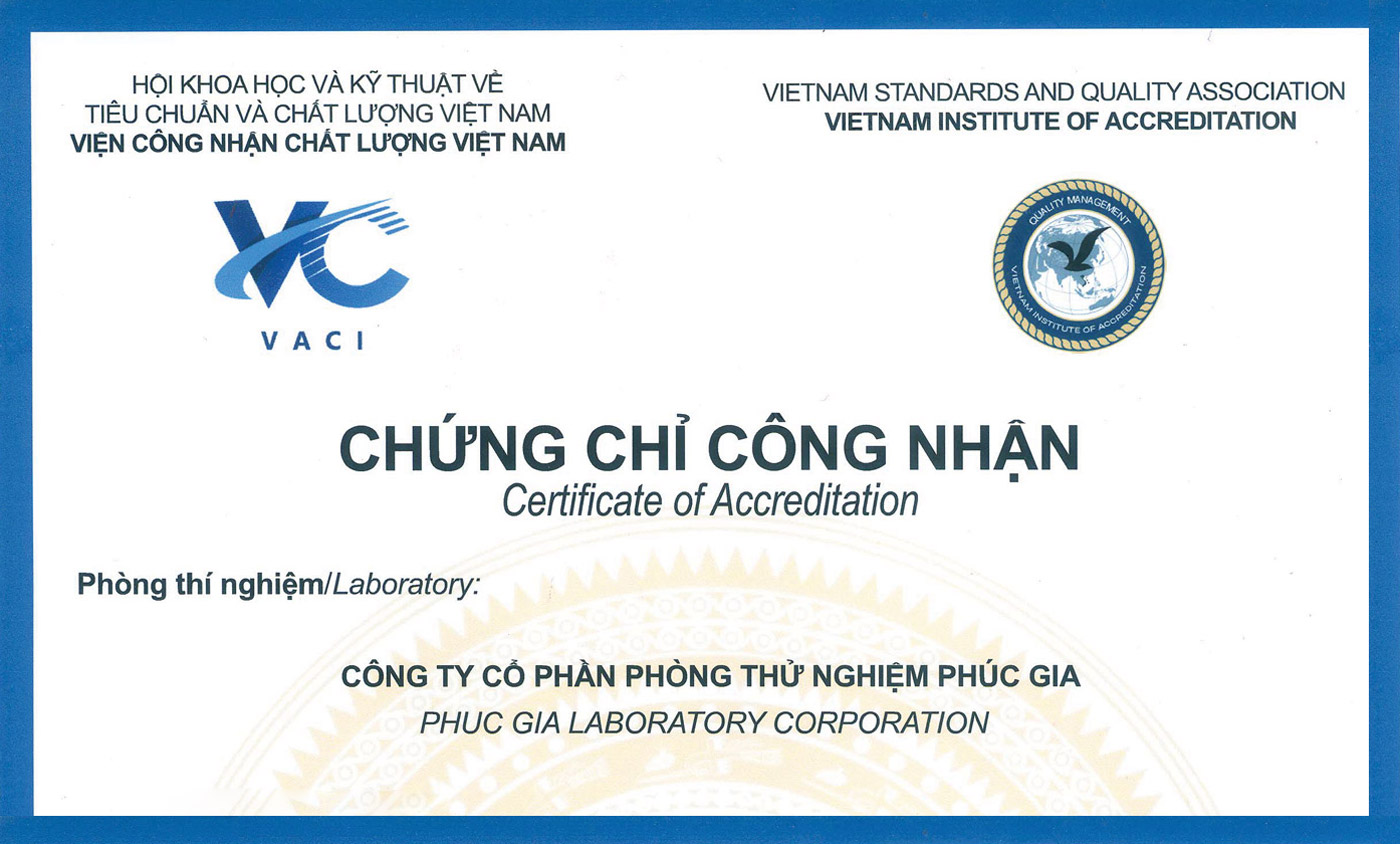
Phuc Gia® is also the first entity to be accredited by all three accreditation bodies (BoA, AOSC, VACI) as meeting the ISO/IEC 17025:2017 standard. The testing facility spans up to 5,000 m², equipped with synchronous and modern measurement and inspection equipment, serving tests for electrical safety, EMC, energy efficiency, RF, SAR, and many other technical categories.
Along with that is a team of nearly 100 staff, engineers, and technical experts who are highly selected and intensively trained, meeting the strict requirements of testing, certification, and conformity assessment activities in various technical fields.


In conclusion, maintaining strict adherence to the Testing for Terrestrial Mobile Communication Terminal Equipment in Vietnam is the only way to ensure that cellular devices are safe, high-performing, and legally compliant. These procedures, strictly centered on QCVN 117:2023/BTTTT, are mandatory for all mobile terminals—including the now-required 4G LTE and VoLTE integrations. By completing the comprehensive Testing for Terrestrial Mobile Communication Terminal Equipment in Vietnam, manufacturers can obtain the essential ICT Type Approval Certificate from the Ministry of Information and Communications (MIC).
Ultimately, current Testing for Terrestrial Mobile Communication Terminal Equipment in Vietnam must be conducted at a designated or MRA-recognized testing laboratory to verify radio access specifications, such as transmitter output power and spectrum masks. Successfully following this Testing for Terrestrial Mobile Communication Terminal Equipment in Vietnam allows businesses to legally apply the CR Mark and pass Customs Clearance without delay. Prioritizing rigorous Testing for Terrestrial Mobile Communication Terminal Equipment in Vietnam according to QCVN 117:2023/BTTTT guarantees that mobile hardware supports Vietnam’s modern network infrastructure while providing a reliable user experience.
RELATED POSTS
- Guidance on Testing for Radio Communication Equipment according to QCVN 18:2022/BTTTT
- Guidance on Testing for Broadband Data Transmission Equipment according to QCVN 54:2020/BTTTT
- Guidance on Testing for Mobile Communication Terminal Equipment according to QCVN 86:2019/BTTTT
For more details, please contact us at:
PHUC GIA LABORATORY CORPORATION
PHUC GIA CERTIFICATION CENTER
PHUC GIA INSPECTION TESTING CENTER
Address:
- Hanoi: ICD Long Bien, No. 01 Huynh Tan Phat, Sai Dong B Industrial Park, Long Bien Ward
- Ho Chi Minh City: No. 180, D2 Street, Long Truong Ward
Hotline: 0965996696 / 0982996696 / 02477796696
E-mail: lab@phucgia.com.vn/cert@phucgia.com.vn/info@phucgia.com.vn
Website: phucgia.com.vn
Working time: Monday to Friday 8:00 – 18:30; Saturday 8:00 – 12:00

![QUOTATION – Testing and Other Certification Services [2026]](https://phucgia.com.vn/wp-content/uploads/2017/03/bao-gia-thu-nghiem-chung-nhan.png)