

LED Bulbs are becoming increasingly popular thanks to their energy-saving capabilities, long lifespan, and environmental friendliness; therefore, product quality control has become an urgent requirement. National technical regulations are issued to ensure electrical safety, reliability, and the operational efficiency of products before they circulate on the market. The article below by Phuc Gia® will provide a guide for LED Bulbs Testing according to QCVN 19:2019/BKHCN, helping manufacturers, importers, and related entities clearly understand the legal procedures, technical standards, and compliance obligations according to current regulations.
See more: Capacity Profile Of Phuc Gia Laboratory Corporation
I. STATUS OF LED BULB USAGE IN VIETNAM
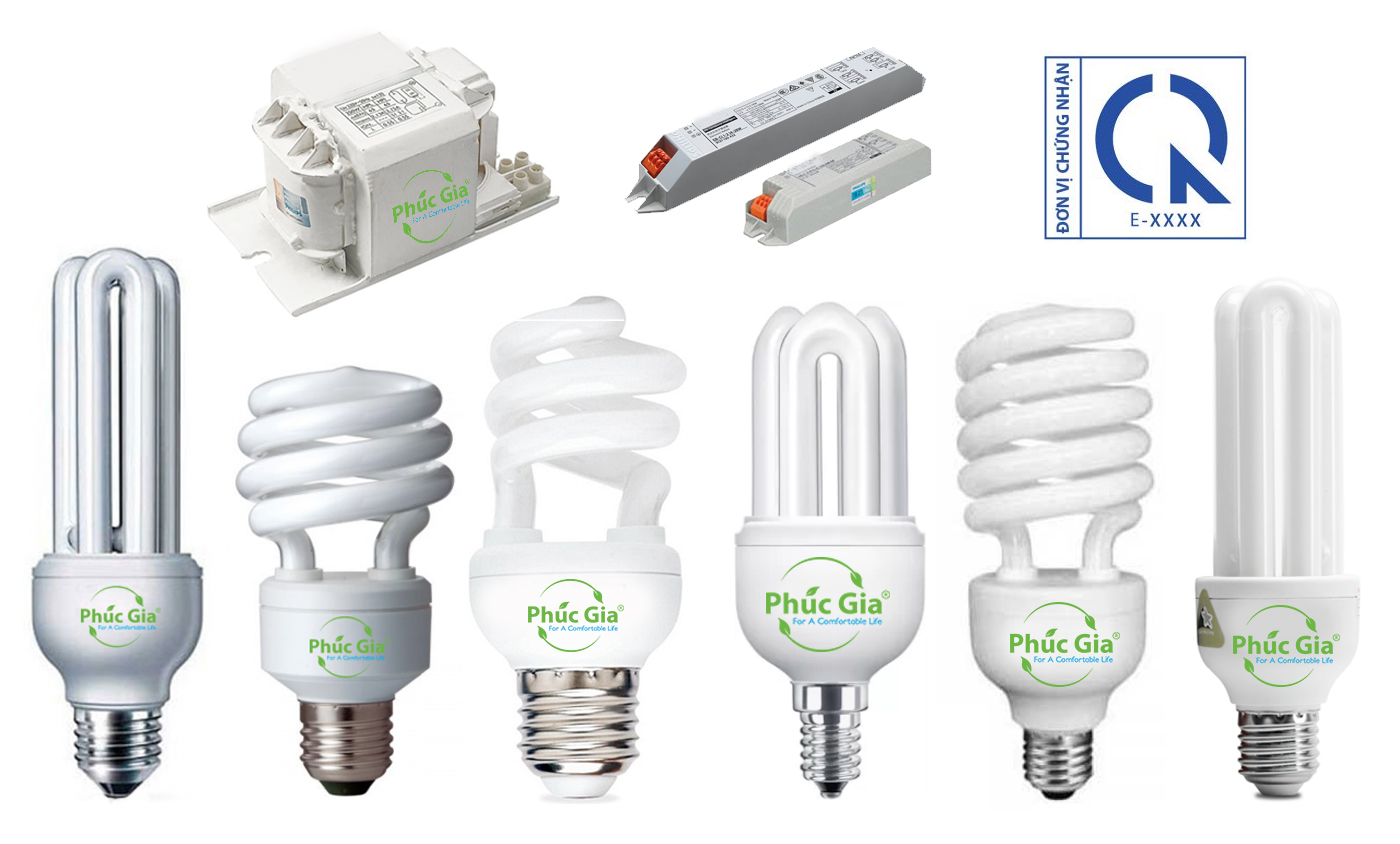
Currently, LED Bulbs (self-ballasted LED lights) have almost completely replaced incandescent bulbs and quickly surpassed even compact fluorescents due to high lighting efficiency, low power consumption, and superior lifespan. This is also the product group prioritized by consumers for residential and office lighting.
LED Bulbs save 50–80% of electricity compared to traditional lights, helping households and small businesses significantly reduce operating costs. Besides, a long lifespan of 15,000–25,000 hours brings long-term efficiency and limits replacement costs, especially in hard-to-reach spaces. In addition to economic benefits, light quality and health factors also contribute to consolidating the position of this device; in particular, LED Bulbs do not contain mercury or toxic chemicals, contributing to environmental protection and promoting green consumption trends in Vietnam.
However, parallel to the strong growth, the domestic LED Bulb market also faces many challenges. Low-quality products and floating goods that do not fully meet standards for electrical safety, lifespan, or efficiency are still common. This poses a requirement for stricter management from state agencies.
For effective management, the State has issued many important documents such as QCVN 19:2019/BKHCN on electrical safety and electromagnetic compatibility, along with TCVN 8782:2017 (IEC 62560:2011) regarding technical requirements for LED Bulbs (self-ballasted LED lights), and other documents related to artificial lighting in urban areas.
Energy-saving policies and the application of Minimum Energy Performance Standards (MEPS) by the Ministry of Industry and Trade are also being integrated into public lighting projects. Close coordination between management agencies helps shape a modern, economical, and sustainable street lighting system, aiming at the goal of building smart, environmentally friendly cities.
II. CURRENT REGULATIONS APPLICABLE TO THE TESTING AND CERTIFICATION OF LED BULBS
– Circular No. 08/2019/TT-BKHCN: Circular promulgating the “National Technical Regulation on LED Lighting Products” issued on September 25, 2019 (This Circular took effect on December 31, 2019);
– QCVN 19:2019/BKHCN: National Technical Regulation on LED Lighting Products (QCVN 19:2019/BKHCN issued together with Circular 08/2019/TT-BKHCN);
– Decision No. 1383/QD-BKHCN: Correction of the National Technical Regulation QCVN 19:2019/BKHCN regarding LED lighting products;
– Decision No. 2711/QD-BKHCN: Regarding the Declaration of Group 2 Products and Goods Under the Management Responsibility of the Ministry of Science and Technology issued on December 30, 2022;
– Decision No. 367/QD-BKHCN: Regarding the Amendment and Supplement of the LED Lighting Product Group in Decision No. 2711/QD-BKHCN;
– Circular No. 28/2012/TT-BKHCN: Regulations on the declaration of standard conformity, regulation conformity, and methods for assessing conformity with standards and technical regulations;
– Circular No. 02/2017/TT-BKHCN: Amending Circular 28/2012/TT-BKHCN regarding the declaration of standard conformity, regulation conformity, and methods for assessing conformity;
– Circular No. 07/2018/TT-BKHCN: Amendment 1:2018 QCVN 9:2012/BKHCN National Technical Regulation on Electromagnetic Compatibility for household and similar electrical and electronic equipment;
– Circular No. 01/2022/TT-BKHCN: Amending Circular 07/2018/TT-BKHCN and 08/2019/TT-BKHCN;
– Technical requirements of QCVN 19:2019/BKHCN for LED Bulbs are as follows: TCVN 8782:2017 – IEC 62560:2011 Self-ballasted LED lights for general lighting services by voltage > 50 V – Safety specifications.
When importing LED Bulbs, enterprises must not only comply with mandatory technical regulations such as quality, energy efficiency, declaration of conformity, and state inspection of goods quality, but also simultaneously comply with regulations on taxes and fees according to current regulations.
III. GUIDANCE ON LED BULBS TESTING ACCORDING TO QCVN 19:2019/BKHCN
1. Which types of LED Bulbs must perform testing and declaration of conformity according to QCVN 19:2019/BKHCN?
LED Bulbs must be certified for conformity according to QCVN 19:2019/BKHCN when they meet the following 3 conditions:
(1) Based on item 10 in the Appendix of Decision No. 367/QD-BKHCN Regarding the Amendment and Supplement of the LED Lighting Product Group in Decision No. 2711/QD-BKHCN, the following products must undergo LED Bulbs Testing and conformity certification according to QCVN 19:2019/BKHCN. LED Bulbs must belong to one of the following two HS codes:
- 8539.52.10
- 8539.52.90
(2) Not falling under the cases specified in Clause 1, QCVN 19:2019/BKHCN:
LED lighting equipment on transport vehicles specified in QCVN 35:2017/BGTVT;
Lighting equipment in lighting projects specified in QCVN 07-7:2016/BXD;
Lighting equipment in outdoor advertising means specified in QCVN 17:2018/BXD.
(3) Based on TCVN 8782:2017 (IEC 62560:2015), LED lights with integrated means for stable operation (self-ballasted LED lights), designed for general domestic lighting purposes and similar general lighting purposes, having a rated power up to 60 W; a rated voltage greater than 50 V to 250 V, and specific lamp caps (B15d, B22d, E11, E12, E14, E17, E26, E27, GU10, GZ10, GX53).
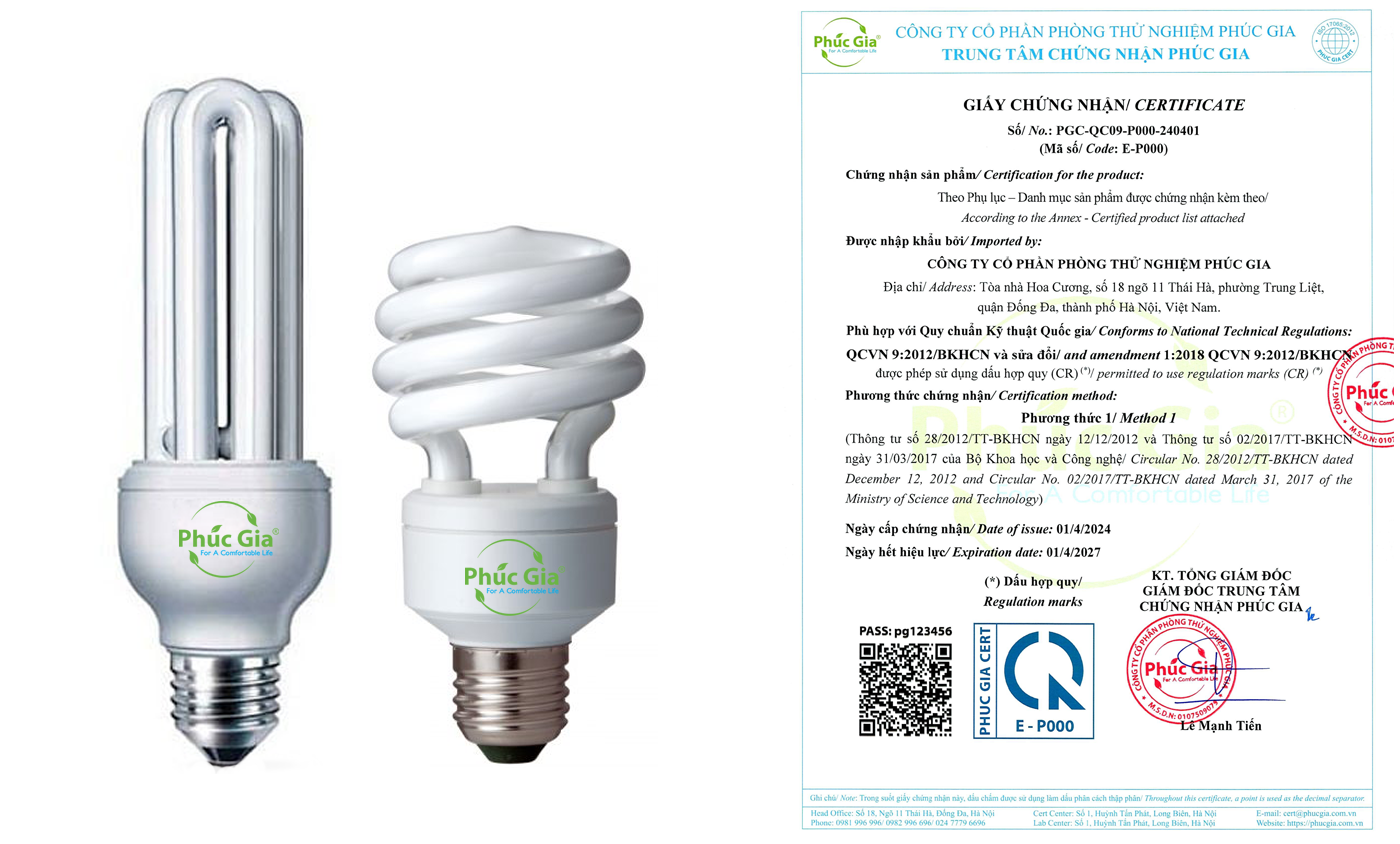
2. When is it mandatory for enterprises to perform LED Bulbs Testing according to QCVN 19:2019/BKHCN?
“LED lighting products (LED Bulbs, LED Tubes, LED street lights, LED Floodlights, etc.) in the Appendix of this Technical Regulation must declare conformity in accordance with technical regulations, bear the conformity mark (CR mark), and be labeled before circulating on the market” (Article 3 – Management Requirements – Circular 08/2019/TT-BKHCN).
Accordingly, enterprises are mandatory to perform LED Bulbs Testing according to QCVN 19:2019/BKHCN when they wish to circulate products on the market. The application includes 2 stages as follows:
– Stage 1: From January 01, 2021, LED lamps must meet requirements for safety and electromagnetic interference limits (EMI, ES).
– Stage 2: From January 01, 2023, LED lamps must additionally meet requirements for photobiological safety and electromagnetic immunity (EMI, ES).
Testing to serve the declaration of conformity and conformity certification for LED Bulbs must be performed by testing organizations designated under the provisions of Decree No. 107/2016/ND-CP, Decree No. 154/2018/ND-CP, or recognized under the provisions of Circular No. 27/2007/TT-BKHCN (The testing scope of the testing organization must meet the requirements specified in this Technical Regulation).
3. Technical requirements for LED Bulbs
QCVN 19:2019/BKHCN stipulates technical requirements for Electrical Safety (ES); Electromagnetic Interference (EMI); Electromagnetic Immunity (EMS), and Photobiological Safety (PBS). Accordingly, LED Bulbs (self-ballasted LED lamps) must perform tests according to TCVN 8782:2017 (IEC 62560:2015).
(1) Labeling requirements for LED Bulbs;
(2) Interchangeability requirements (including the interchangeability of the lamp cap; bending moment and mass caused by the bulb at the lampholder);
(3) Protection against accidental contact with live parts;
(4) Insulation resistance and electric strength after humidity treatment;
(5) Mechanical strength requirements;
(6) Temperature rise requirements of the lamp cap;
(7) Resistance to heat requirements;
(8) Resistance to flame and ignition;
(9) Fault condition requirements (ensuring safety when working under fault conditions that may occur during intended use);
(10) Creepage distances and air clearances: Applying requirements of TCVN 7590-1 (IEC 61347-1), except for accessible conductive parts, where TCVN 7722-1 (IEC 60598-1) applies;
(11) Abnormal operation requirements: Self-ballasted lamps must not cause danger under abnormal working conditions;
(12) Photobiological safety requirements (UV radiation, Blue light hazard, Infrared radiation);
(13) Protection against water penetration requirements.
Strict compliance with technical requirements and conducting tests according to the above standards is a mandatory requirement for manufacturers and importers of LED Bulbs to circulate products on the market. To clearly understand the testing process and conformity certification according to current regulations, enterprises can contact Phuc Gia for detailed advice and professional support.
4. Costs and time for LED Bulbs Testing according to QCVN 19:2019/BKHCN
Costs and testing time for Electrical Safety and Electromagnetic Compatibility for LED Bulbs according to QCVN 19:2019/BKHCN are publicly listed by Phuc Gia. You can view the testing quotation for telecommunications and information technology products at the Testing and Certification Quotation or contact Phuc Gia for detailed advice.
5. Where to perform conformity LED Bulbs Testing according to QCVN 19:2019/BKHCN?
5.1. Regulations on Qualified Testing – Certification Units
Based on Article 5 of Consolidated Document No. 02/2020/VBHN-BTTTT, testing units serving certification and declaration of conformity are regulated as follows:
- The testing unit serving conformity certification activities is a designated or recognized testing unit.
- The testing unit serving conformity declaration activities is a designated or recognized testing unit, or a unit that has registered testing activities according to Decree No. 107/2016/ND-CP dated July 01, 2016, of the Government regulating business conditions for conformity assessment services.
- Testing units must be responsible before the Competent Authority for the accuracy of testing results. Testing results do not have the value of replacing the Conformity Certificate and the Self-declaration of Conformity.
Circular No. 02/2024/TT-BTTTT stipulates: “Testing results from domestic or foreign laboratories that have not been designated or recognized, or testing results from the manufacturer, shall not be used to assess conformity with this technical regulation.”
Accordingly, the testing and conformity certification for Electrical Safety and Electromagnetic Compatibility for LED lighting products (LED Bulbs, LED Tubes, LED street lights, LED Floodlights, etc.) according to QCVN 19:2019/BKHCN must be performed by testing organizations Designated or Recognized by Ministries and sectors.
5.2. PHUC GIA – A Reputable Testing – Certification Unit in Vietnam
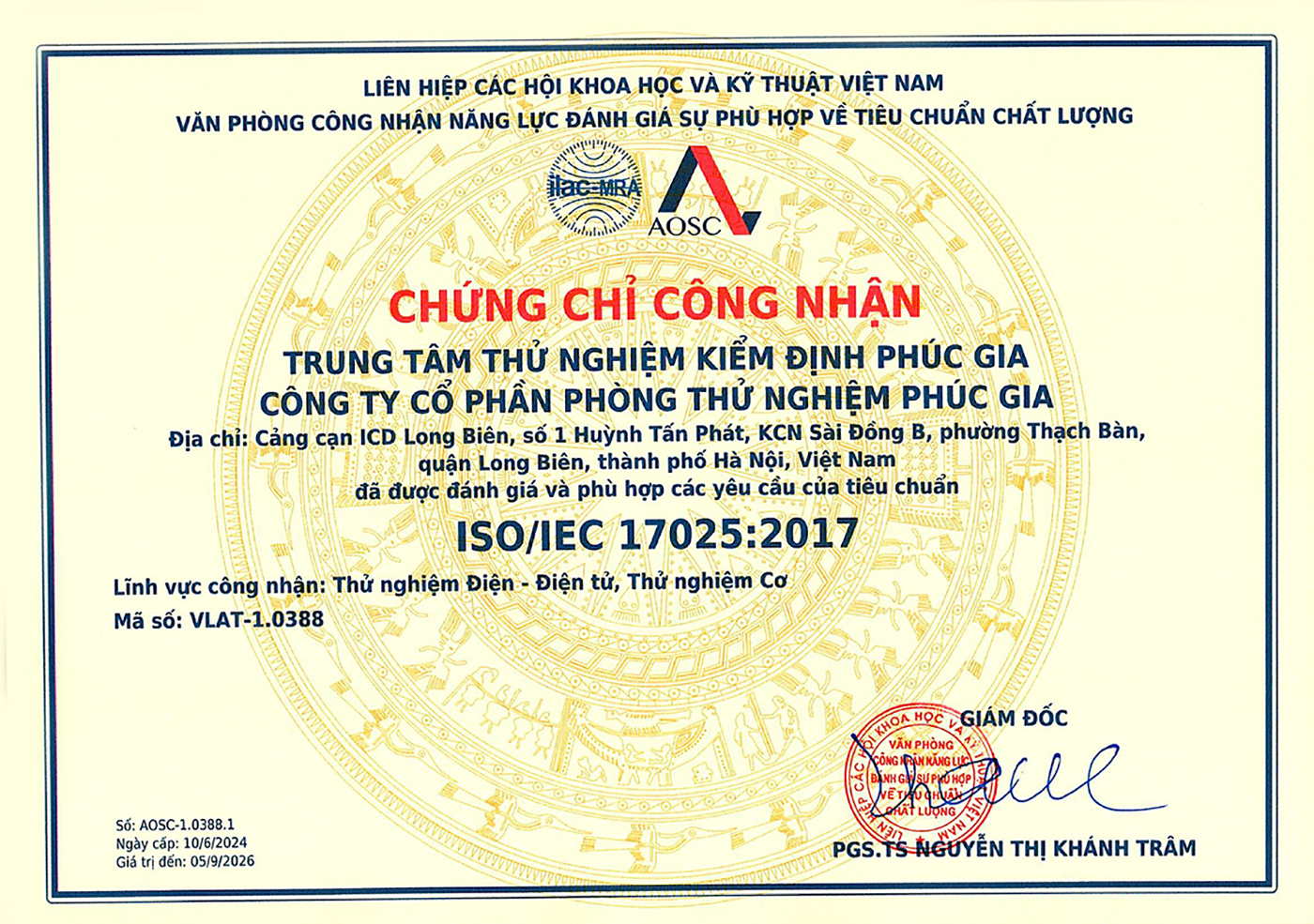
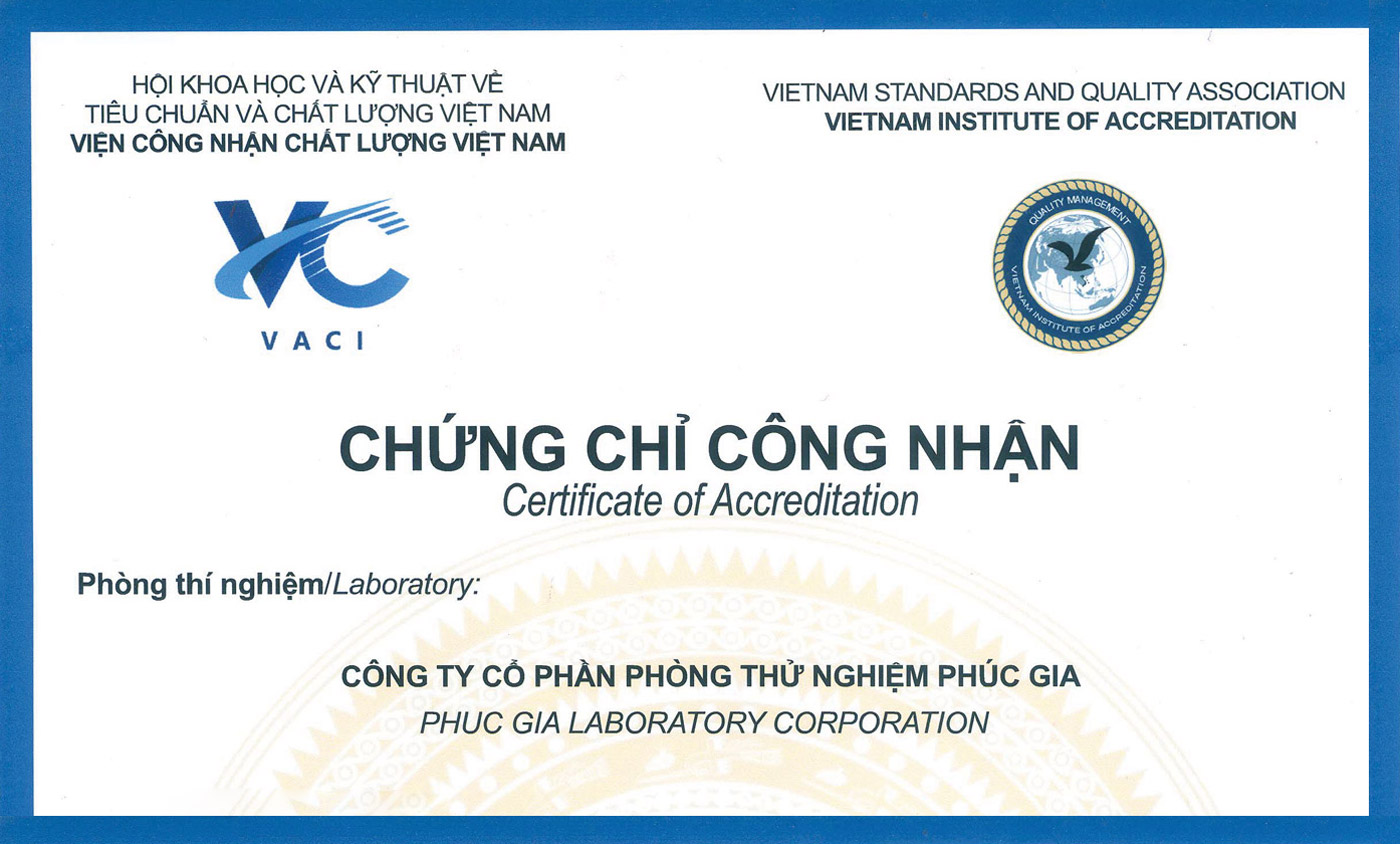
Phuc Gia Lab is a multi-disciplinary organization in the electrical – electronic field, including technical indicators for electrical safety and electromagnetic compatibility (EMC) for LED lighting products in accordance with the national technical regulation QCVN 19:2019/BKHCN. Customers can view more details in the designation decisions and operation registration certificates below:
SUMMARY TABLE OF DECISIONS AND CERTIFICATES FROM THE MINISTRY OF SCIENCE AND TECHNOLOGY TO PHUC GIA®
| ORD | Certificate No. | Date of Issuance | Issuing Authority | Field of Operation |
| 1 | 3084/TĐC-HCHQ | 18/9/2020 | Commission for the Standards, Metrology and Quality of Vietnam – Ministry of Science and Technology | Testing for multi-disciplinary integration in the electrical – electronic field |
| 2 | 2483/QĐ-TĐC | 25/12/2020 | Commission for the Standards, Metrology and Quality of Vietnam – Ministry of Science and Technology | Testing of technical criteria for electrical safety and electromagnetic compatibility (EMC) for LED lighting technology products |
| 3 | 2242/TĐC-HCHQ | 16/7/2021 | Ministry of Science and Technology | Testing for multi-disciplinary integration in the electrical – electronic field |
| 4 | 1951/QĐ-TĐC | 28/10/2021 | Commission for the Standards, Metrology and Quality of Vietnam – Ministry of Science and Technology | Testing of technical criteria for electrical safety and electromagnetic compatibility (EMC) for LED lighting technology products |
| 5 | 3206/TĐC-HCHQ | 28/10/2021 | Ministry of Science and Technology | Testing for multi-disciplinary integration in the electrical – electronic field |
| 6 | 3851/TĐC-HCHQ | 30/12/2022 | Ministry of Science and Technology | Certification of products and goods in accordance with standards and national technical regulations under Method 1 |
| 7 | 2117/QĐ-TĐC | 13/12/2022 | Commission for the Standards, Metrology and Quality of Vietnam – Ministry of Science and Technology | Testing of technical criteria for electrical safety and electromagnetic compatibility (EMC) for LED lighting technology products, Electromagnetic Interference (EMI) for LED lamps/ self-ballasted lamps and lighting equipment |
| 8 | 3617/TĐC-HCHQ | 13/12/2022 | Ministry of Science and Technology | Testing for multi-disciplinary integration in the electrical – electronic field |
Specifically, Phuc Gia is a designated organization authorized to perform testing and certification in the electrical and electronic fields with a diverse scope, including:
- Electrical Safety: Luminaires for general purposes (fixed – recessed), Luminaires for road and street lighting, Portable general-purpose luminaires, Floodlights, Self-ballasted LED lamps for general lighting services working at voltages > 50V, Double-capped LED lamps designed to replace linear fluorescent lamps;
- Photobiological Safety: Lamps and lamp systems;
- Electromagnetic Compatibility (EMC) for electrical and electronic household appliances and similar purposes using 1-phase input power, with a rated input current limit ≤ 32A: Electric motor-operated hand-held drills, Vacuum cleaners, Refrigerators, freezers, Air conditioners, Hair dryers, Blenders, meat grinders, juicers, egg beaters, Electric stoves (including induction hobs), Instantaneous water heaters, Washing machines/ Clothes dryers, Microwave ovens (including combination types);
- Electromagnetic Interference (EMI): LED lamps/ Self-ballasted lamps and lighting equipment;
- Electromagnetic Immunity (EMS): General lighting equipment.
IV. FACILITIES FOR LED LIGHTS TESTING AT PHUC GIA


In particular, to assist customers and partners in finding the address of the Phuc Gia® Inspection & Testing Center most easily, we invite our partners and customers to refer to the directions to Phuc Gia below!
RELATED POSTS
- Comprehensive Comprehension of Legal Regulations for LED Lamps
- Guidance on LED Street Lights Testing According to QCVN 19:2019/BKHCN
- Guidance on LED Lights Testing According to QCVN 19:2019/BKHCN
- Guidance on Testing and Conformity Certification of LED Lights According to QCVN 19:2019/BKHCN
- LED Lighting Products Must Perform Testing and Conformity Certification According to QCVN 19:2019/BKHCN
- List of Testing Organizations for LED Lamp Conformity According to QCVN 19:2019/BKHCN Designated by the Ministry of Science and Technology
- Why Should We Care About the IK Protection Rating When Selecting LED Lamp Equipment?
For more details, please contact us at:
PHUC GIA LABORATORY CORPORATION
PHUC GIA CERTIFICATION CENTER
PHUC GIA INSPECTION TESTING CENTER
Address:
- Hanoi: ICD Long Bien, No. 01 Huynh Tan Phat, Sai Dong B Industrial Park, Long Bien Ward
- Ho Chi Minh City: No. 180, D2 Street, Long Truong Ward
Hotline: 0965996696 / 0982996696 / 02477796696
E-mail: lab@phucgia.com.vn/cert@phucgia.com.vn/info@phucgia.com.vn
Website: phucgia.com.vn
Working time: Monday to Friday 8:00 – 18:30; Saturday 8:00 – 12:00

![QUOTATION – Testing and Other Certification Services [2026]](https://phucgia.com.vn/wp-content/uploads/2017/03/bao-gia-thu-nghiem-chung-nhan.png)