

Short Range Devices (SRDs) are increasingly used in Vietnam for civil, commercial, and industrial applications, especially in urban environments and enclosed spaces. Testing for Short Range Device in Vietnam according to QCVN 55:2023/BTTTT aims to control emissions and ensure the coexistence of multiple radio devices within the same frequency spectrum.
See more: Capacity Profile Of Phuc Gia Laboratory Corporation
I. Status of Short Range Device Usage in Vietnam
In the frequency range from 9 kHz to 25 MHz, Short Range Devices primarily operate based on the principle of electromagnetic induction, serving applications that require very short transmission distances and high reliability. This group of devices is widely present in daily life, particularly in payment, identification, and automation systems.
Typical applications include NFC at 13.56 MHz, commonly used in contactless payments, access cards, and chip-embedded citizen ID cards; RFID for logistics management, access control, and retail anti-theft; along with wireless charging equipment according to the Qi standard, operating in the low frequency range of approximately 110–205 kHz. Despite the limited emission range, the large quantity of devices necessitates strict control of local interference risks.

For this group of equipment, assessing and testing emissions in accordance with the applicable regulations is a mandatory requirement. Accordingly, Testing for Short Range Device in Vietnam according to QCVN 55:2023/BTTTT plays a critical role for other SRD frequency bands and technologies to ensure compliance with spectrum regulations during actual operation.
II. Guidance on Testing for Short Range Device in Vietnam According to QCVN 55:2023/BTTTT
1. Scope of Application
Pursuant to Circular No. 29/2025/TT-BKHCN, short range radio devices in the frequency range of 9 kHz to 25 MHz, such as laptops, notebook computers, mobile phones, etc., with integrated NFC, are required to undergo Testing for Short Range Device in Vietnam according to QCVN 55:2023/BTTTT when falling under one of the following HS codes:
| ORD | Product Name | HS Code | Product Description |
| 1 | General purpose short range radio transmitters and transceivers | 8517.62.59 8517.62.69 |
Equipment with external antenna connectors and/or integrated antennas, used for transmitting or receiving voice, images, or other data forms; including equipment using active Near Field Communication (NFC) technology. Not applicable to equipment specified in Section 4.1 of Appendix II.
|
| 2 | Radio detection and alarm equipment | 8517.62.69 |
Equipment including sensors and control systems interconnected via a radio interface for the purpose of radio detection and alarms.
|
| 3 | Radio remote control equipmentn | 8526.92.00 | Equipment using radio waves to control models, industrial, and civil applications. |
a) General purpose short range radio devices operating in the frequency range from 9 kHz to 25 MHz; and
b) Inductive loop systems operating in the frequency range from 9 kHz to 30 MHz, including: Radio Frequency Identification (RFID) equipment, equipment using Near Field Communication (NFC) technology, and equipment used in Electronic Article Surveillance (EAS) systems operating in the LF and HF frequency bands.
All short range radio devices specified in this regulation must comply with Vietnam’s regulations on frequency planning and frequency channel allocation. The types of radio equipment listed above operate in the frequency bands from 9 kHz to 30 MHz (as specified in Table 1) for the following cases:
- Having a radio output connection with a detachable antenna or with an integrated antenna;
- Using all types of modulation;
- Fixed equipment, mobile equipment, and portable equipment.
Table 1 – Permitted frequency bands for short-range devices in the 9 kHz to 30 MHz frequency range
| Band/Frequency | Application | |
| Transmit and Receive | 9 kHz ÷ 90 kHz | Inductive equipment, for general purposes |
| 90 kHz ÷ 119 kHz | Inductive equipment, for general purposes | |
| 119 kHz ÷ 140 kHz | Inductive equipment, for general purposes | |
| 140 kHz ÷ 148,5 kHz | Inductive equipment, for general purposes | |
| 148,5 kHz ÷ 190 kHz | Inductive equipment, for general purposes | |
| 3 155 kHz ÷ 3 400 kHz | Inductive equipment, for general purposes | |
| 3 234 kHz ÷ 5 234 kHz | Inductive equipment, used in transport | |
| 6 765 kHz ÷ 6 795 kHz | Inductive equipment, for general purposes | |
| 10,200 MHz ÷ 11,000 MHz | Inductive equipment, for general purposes | |
| 13,553 MHz ÷ 13,567 MHz | Inductive equipment, for general purposes | |
| 26,957 MHz ÷ 27,283 MHz | Inductive equipment, for general purposes |
2. Technical Requirements
Short range radio devices shall comply with Vietnam’s regulations on frequency planning and frequency channel allocation according to QCVN 55:2023/BTTTT. Accordingly, radio equipment must meet requirements for spurious emissions, radiation, RF carrier current, permitted operating frequency bands, spurious emissions…
Note: For QCVN 55:2023/BTTTT: technical requirements under extreme/critical conditions shall not apply as of July 01, 2025.
(1) Receiver requirements:
Table 2 – Receiver compliance testing by technology
| Technology | Receiver spurious emissions (see 2.5.3) | Adjacent channel selectivity (see 2.5.1) | Blocking or desensitization (see 2.5.2) |
| Tagging Systems | Required | Not Required (Note 2) | Not Required (Note 1) |
| Systems in the 27 MHz Band | Required | Required | Required |
| Other Systems | Required | Not Required (Note 2) | Required |
| NOTE 1: Blocking or desensitization characteristics are not required because the receiver is co-located with the transmitter in tagging systems where the Rx and Tx operate simultaneously. The Tx signal at the Rx input is approximately 90 dB higher than the receiver sensitivity or the tag signal level (see ETSI TR 103 059, Figure 8).
Furthermore, given the very short communication range for applications (e.g., NFC, RFID), the blocking interference signal would need to be approximately 90 dB higher than the transmitter signal at the antenna, which is unlikely to occur. NOTE 2: Adjacent channel selectivity complies with the National Radio Frequency Master Plan with constant frequency channel spacing, for example: the 27 MHz band. |
|||
(2) Quality Criteria
For quality testing purposes, the receiver shall produce an appropriate output under normal conditions as indicated below:
- An SND/ND ratio of 20 dB, measured at the receiver output through a telephone weighting network as described in ITU-T Recommendation O.41; or
- After demodulation, a data signal with a bit error rate of 10⁻² without correction; or
- After demodulation, a message acceptance ratio of 80%; or
Where the above quality criteria cannot be achieved, the manufacturer shall declare the Criteria used to determine the receiver’s quality.

3. Testing Costs and Duration
The costs and lead time for Testing for Short Range Device in Vietnam according to QCVN 55:2023/BTTTT are publicly listed by Phúc Gia®. You can view the quotation for testing electrical-electronic, telecommunications, and information technology equipment at the Quotation for Testing and Certification Services or contact Phúc Gia® for detailed consultation.
4. Where to conduct Testing for Short Range Device in Vietnam according to QCVN 55:2023/BTTTT?
4.1. Regulations on qualified testing and certification units
Pursuant to Article 5 of Consolidated Document No. 02/2020/VBHN-BTTTT – Regulations on certification of conformity and declaration of conformity for specialized information technology and communications products and goods, testing units serving certification and declaration of conformity are regulated as follows:
Testing units serving certification of conformity activities are designated or recognized testing units.
Testing units serving declaration of conformity activities are designated or recognized testing units, or units that have registered testing operations according to Decree No. 107/2016/NĐ-CP dated July 01, 2016, of the Government regulating business conditions for conformity assessment services.
Testing units must be responsible before the Regulatory Authority for the accuracy of testing results. Testing results do not substitute for the Certificate of Conformity or the Declaration of Conformity.
4.2. Phúc Gia® – A Prestigious Testing Organization for Telecommunications and Information Technology Equipment in Vietnam
Phuc Gia Laboratory Corporation (Phúc Gia®) has been designated by the Ministry of Science and Technology to conduct testing for telecommunications and information technology equipment according to 24 Vietnam Technical Regulations for many important groups of equipment in the ICT sector. This serves the quality management of potentially unsafe products and goods under the Ministry’s responsibility, pursuant to Decision No. 2899/QĐ-BKHCN and Decision No. 228/QĐ-BTTTT. Accordingly, Phúc Gia® is designated for Testing for Short Range Device in Vietnam according to QCVN 55:2023/BTTTT.
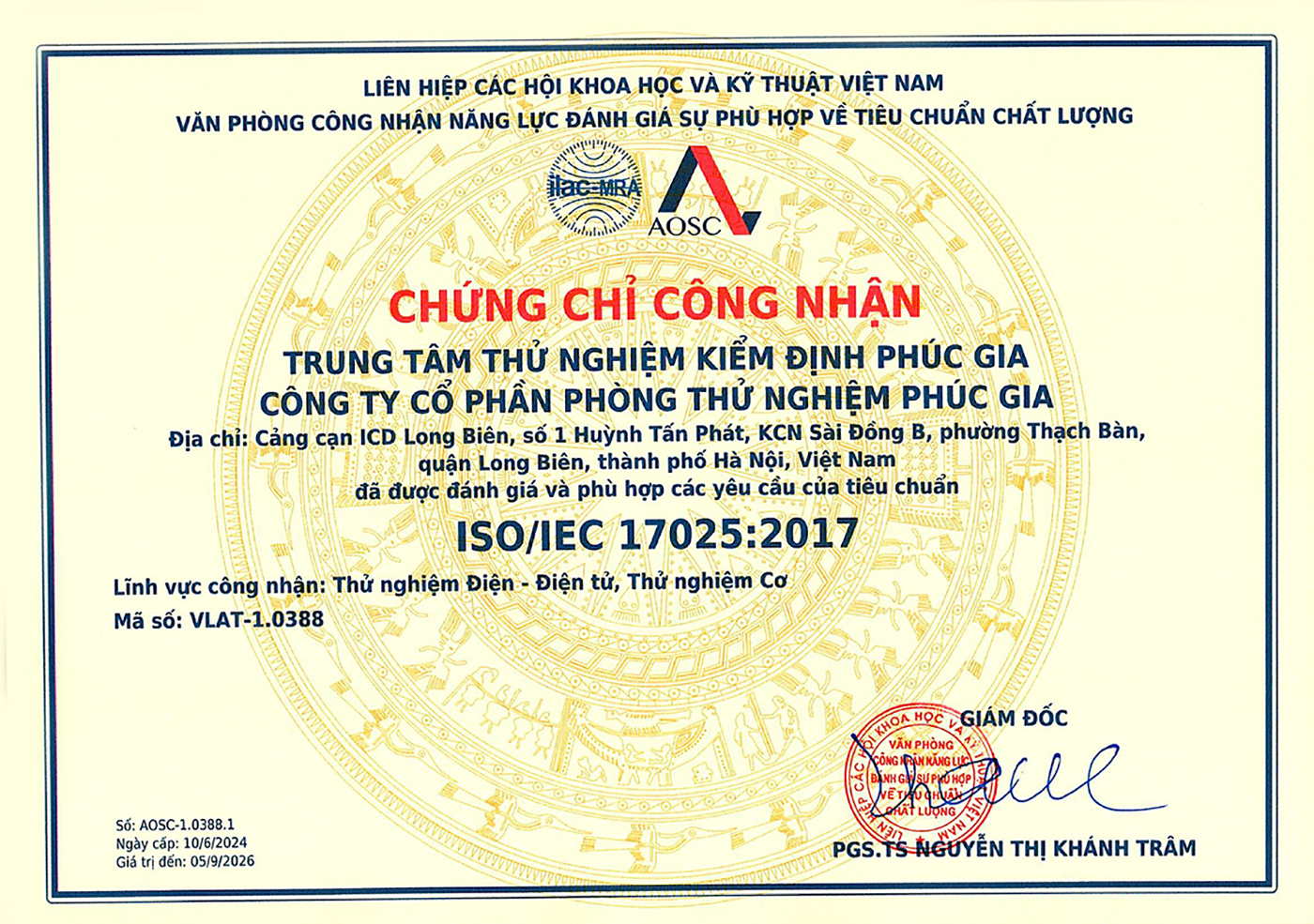
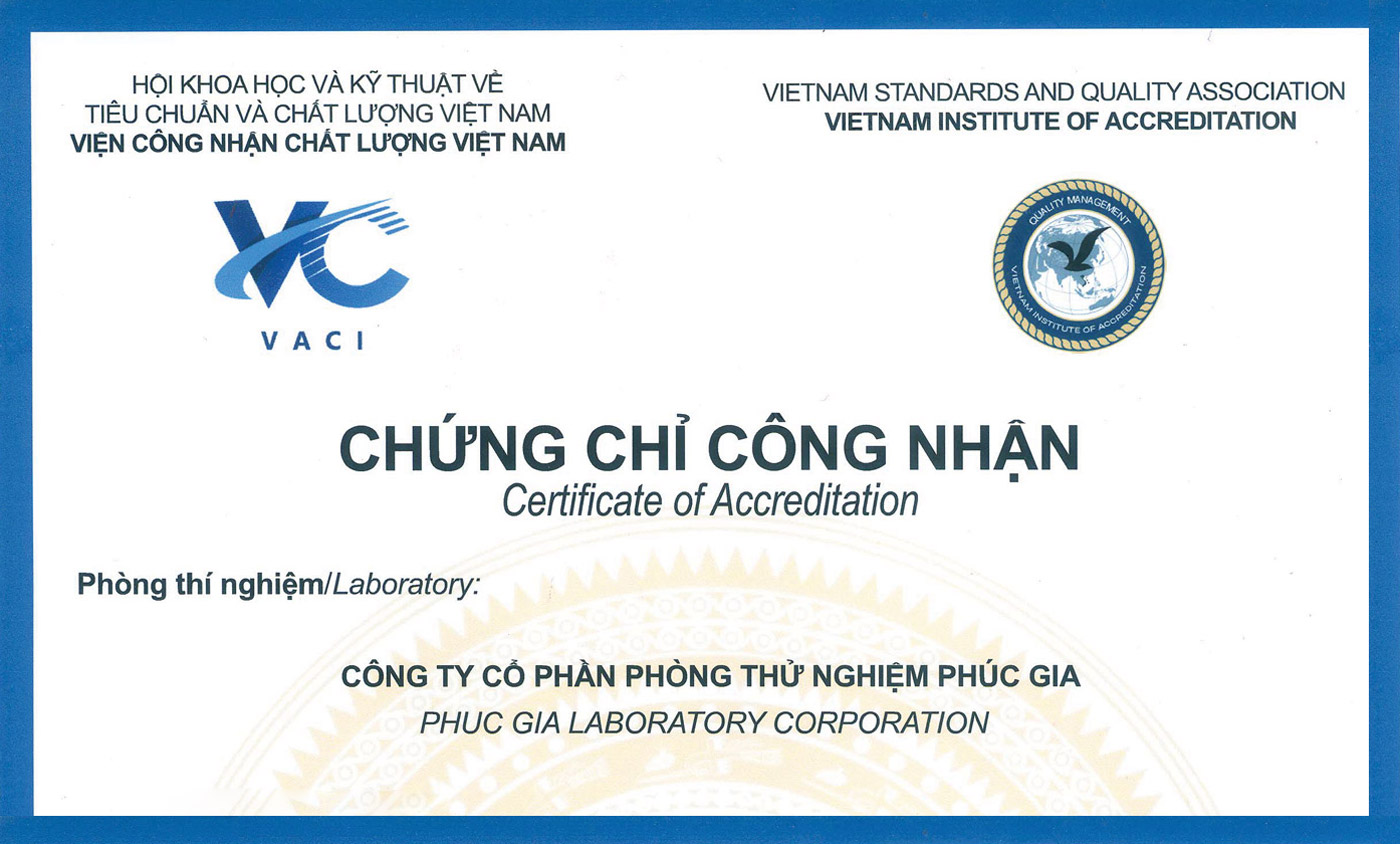
Phúc Gia® is also the first unit to be accredited by all three accreditation bodies (BoA, AOSC, VACI) as meeting the ISO/IEC 17025:2017 standard. The testing facility has a scale of up to 5,000 m², equipped with a synchronized system of modern measurement and inspection equipment, serving tests for electrical safety, EMC, energy efficiency, RF, SAR, and many other technical categories.
Along with that is a team of nearly 100 staff, engineers, and technical experts who are carefully selected and intensively trained, meeting the strict requirements of testing, certification, and conformity assessment activities in various technical fields.


RELATED POSTS
- Guidance on Testing for Radio Communication Equipment according to QCVN 18:2022/BTTTT
- Guidance on Testing for Broadband Data Transmission Equipment according to QCVN 54:2020/BTTTT
- Guidance on Testing for Mobile Communication Terminal Equipment according to QCVN 86:2019/BTTTT
For more details, please contact us at:
PHUC GIA LABORATORY CORPORATION
PHUC GIA CERTIFICATION CENTER
PHUC GIA INSPECTION TESTING CENTER
Address:
- Hanoi: ICD Long Bien, No. 01 Huynh Tan Phat, Sai Dong B Industrial Park, Long Bien Ward
- Ho Chi Minh City: No. 180, D2 Street, Long Truong Ward
Hotline: 0965996696 / 0982996696 / 02477796696
E-mail: lab@phucgia.com.vn/cert@phucgia.com.vn/info@phucgia.com.vn
Website: phucgia.com.vn
Working time: Monday to Friday 8:00 – 18:30; Saturday 8:00 – 12:00

![QUOTATION – Testing and Other Certification Services [2026]](https://phucgia.com.vn/wp-content/uploads/2017/03/bao-gia-thu-nghiem-chung-nhan.png)