

Ultra-Wideband (UWB) information technology equipment is increasingly used in daily life and economic activities, primarily associated with personal terminal devices and several smart positioning and connectivity applications. Although not yet as widely prevalent as traditional radio technologies, UWB is considered a technology with great potential, while simultaneously posing requirements for stricter technical management within the context of an increasingly dense frequency environment. Enterprises are mandatory required to perform Testing for Ultra-Wideband Information Technology Equipment in Vietnam according to QCVN 94:2015/BTTTT before bringing products to market.
See more: Capacity Profile Of Phuc Gia Laboratory Corporation
I. The situation of using Ultra-Wideband information technology equipment in Vietnam
Currently, Vietnam is in a stage of strong transition in accessing and using new radio technologies, including UWB. This technology is beginning to be integrated into personal devices such as smartphones, serving precise positioning functions and short-range communication.
A prominent challenge in the process of using UWB devices in Vietnam is the conflict regarding radio frequency space. The RF environment is increasingly being “filled” by various types of information and audio devices, increasing the risk of causing interference or cross-interference between systems. In this context, UWB devices, despite having low power and unique technical characteristics, still need to be strictly controlled so as not to affect important infrastructure systems.
The deployment of fixed UWB transmitting stations or infrastructure systems in Vietnam is currently very limited, mainly appearing in high-end projects or factories with FDI factors. This reality shows that the potential of UWB has not been fully exploited, while simultaneously emphasizing the role of Testing for Ultra-Wideband Information Technology Equipment in Vietnam according to QCVN 94:2015/BTTTT in ensuring the technology meets established requirements, limits interference risks, and creates a foundation for sustainable development in the future.
II. Guidance on Testing for Ultra-Wideband Information Technology Equipment in Vietnam According to QCVN 94:2015/BTTTT
1. Scope of Application
According to Circular No. 29/2025/TT-BKHCN, ultra-wideband information technology terminal equipment must meet the technical requirements in QCVN 94:2015/BTTTT when falling under the following HS code:
| Product Name | HS Code | Product Description |
| Ultra-Wideband Information Technology Equipment (UWB) | 8517.62.59 | Equipment using ultra-wideband (UWB) technology for fixed indoor or mobile and portable information transmission, including:
– Standalone radio devices with or without attached controls; – Plug-in radio modules used for insertion into different host equipment, such as personal computers and handheld terminals; – Plug-in radio devices used in combination equipment, for example, cable modems, Set-Top Boxes, and access points; – Combination equipment or a combination of a plug-in radio device and a specific host device; – Equipment used in road and rail vehicles. |
At the same time, QCVN 94:2015/BTTTT applies to UWB devices with detachable antennas or UWB devices with integral antennas operating on several frequency bands designated for UWB information equipment in accordance with the Vietnam national radio frequency allocation master plan.
Note: This regulation does not apply to UWB transmitters installed permanently outdoors or in flying models, aircraft, and other forms of aviation.
2. Technical Requirements
QCVN 94:2015/BTTTT stipulates electromagnetic compatibility requirements (including EMC emissions and EMC immunity) for transmitters, receivers, and transceivers using ultra-wideband (UWB) technology for short-range communication.
2.1. EMC Emissions
Emission requirements comply with section 2.1 in QCVN 18:2022/BTTTT.
|
Phenomenon |
Port | Applicability | Reference in this Regulation | ||
| Fixed use | Use on transport vehicles | Handheld use | |||
| Radiated emission |
Enclosure port of ancillary equipment
|
Applicable | Applicable | Applicable |
2.1.3. Emission from enclosure port
|
| Conducted emission |
DC power input/output port
|
Applicable | Applicable | Not Applicable |
2.1.4. Emission from DC power input/output ports
|
| Conducted emission |
AC power input port
|
Applicable | Not Applicable | Not Applicable |
2.1.5. Emission from AC power input/output ports
|
| Harmonic current emission |
AC power input port
|
Applicable | Not Applicable | Not Applicable |
2.1.6. Harmonic current emission (AC mains power input port)
|
| Voltage fluctuations and flicker |
AC power input port
|
Applicable | Not Applicable | Not Applicable |
2.1.7. Voltage fluctuations and flicker (AC mains power input port)
|
| Conducted emission |
Wired network port
|
Applicable | Not Applicable | Not Applicable |
2.1.8. Emission from wired network port
|
2.2. EMC Immunity
Requirements for EMC Immunity in compliance with the section 2.2 in QCVN 18:2022/BTTTT.
|
Phenomenon |
Port | Applicability | Reference in this Regulation | ||
| Fixed use | Use on transport vehicles | Handheld use | |||
|
RF electromagnetic field (from 80 MHz to 6,000 MHz)
|
Enclosure port | Applicable | Applicable | Applicable |
2.2.3. Immunity to radio frequency electromagnetic fields (80 MHz to 6,000 MHz)
|
|
Electrostatic discharge
|
Enclosure | Applicable | Not Applicable | Applicable |
2.2.4. Immunity to electrostatic discharge
|
|
Fast transients, common mode
|
Signal, wired network ports, control ports, DC and AC power ports
|
Applicable | Not Applicable | Not Applicable |
2.2.5. Immunity to fast transients, common mode
|
|
RF, Common mode from 0.15 MHz to 80 MHz
|
Signal, wired network ports, control ports, DC and AC power ports
|
Applicable | Not Applicable | Not Applicable |
2.2.6. Immunity to radio frequencies, common mode
|
|
Transients and surges on transport vehicles
|
DC power input port
|
Not Applicable | Applicable | Not Applicable |
2.2.7. Immunity to transients and surges in transport vehicle environments
|
|
Voltage dips and interruptions
|
AC power input port
|
Applicable | Not Applicable | Not Applicable |
2.2.8. Immunity to voltage dips and interruptions
|
|
Surge line-to-line, line-to-earth
|
AC mains power input port, wired network port
|
Applicable | Not Applicable | Not Applicable |
2.2.9. Immunity to surges
|
2.3. Performance Criteria
(1) General performance criteria include:
- Performance criteria A for immunity tests to phenomena of a continuous nature;
- Performance criteria B for immunity tests to phenomena of a transient nature;
- Performance criteria C for immunity tests to power supply interruptions exceeding a specified duration.
(2) Criteria for continuous phenomena applied to transmitters (CT)
(3) Criteria for transient phenomena applied to transmitters (TT)
(4) Criteria for continuous phenomena applied to receivers (CR)
(5) Criteria for transient phenomena applied to receivers (TR)
3. Testing Costs and Duration
Testing costs and lead times for ultra-wideband information technology equipment according to QCVN 94:2015/BTTTT are publicly listed by Phuc Gia®. You can view the testing price list for electrical, electronic, telecommunications, and information technology equipment at Testing – Certification Quotation or contact Phuc Gia® for detailed consultation.
4. Where to conduct Testing for Ultra-Wideband Information Technology Equipment in Vietnam according to QCVN 94:2015/BTTTT?
4.1. Regulations on Qualified Testing and Certification Units
Based on Article 5 of Consolidated Document No. 02/2020/VBHN-BTTTT – Regulations on certification of conformity and declaration of conformity for specialized information technology and communications products and goods, testing units serving certification and declaration of conformity are regulated as follows:
Testing units serving certification of conformity activities are designated or recognized testing units.
Testing units serving declaration of conformity activities are designated or recognized testing units, or units that have registered testing activities under Decree No. 107/2016/NĐ-CP dated July 1, 2016, of the Government regulating business conditions for conformity assessment services.
Testing units must be responsible before the Competent Authority for the accuracy of testing results. Testing results have no value in replacing the Certificate of Conformity and the Declaration of Conformity.
4.2. Phuc Gia® – A Prestigious Testing Organization for Telecommunications and Information Technology Equipment in Vietnam
Phuc Gia Laboratory Corporation (Phuc Gia®) has been designated by the Ministry of Science and Technology to perform testing for telecommunications and information technology equipment according to 24 Vietnam Technical Regulations for many important groups of equipment in the field of telecommunications and information technology. This serves the quality management of products and goods potentially causing unsafety under the Ministry’s management responsibility according to Decision No. 2899/QĐ-BKHCN and Decision No. 228/QĐ-BTTTT. Accordingly, Phuc Gia® is designated to conduct Testing for Ultra-Wideband Information Technology Equipment in Vietnam according to QCVN 94:2015/BTTTT.
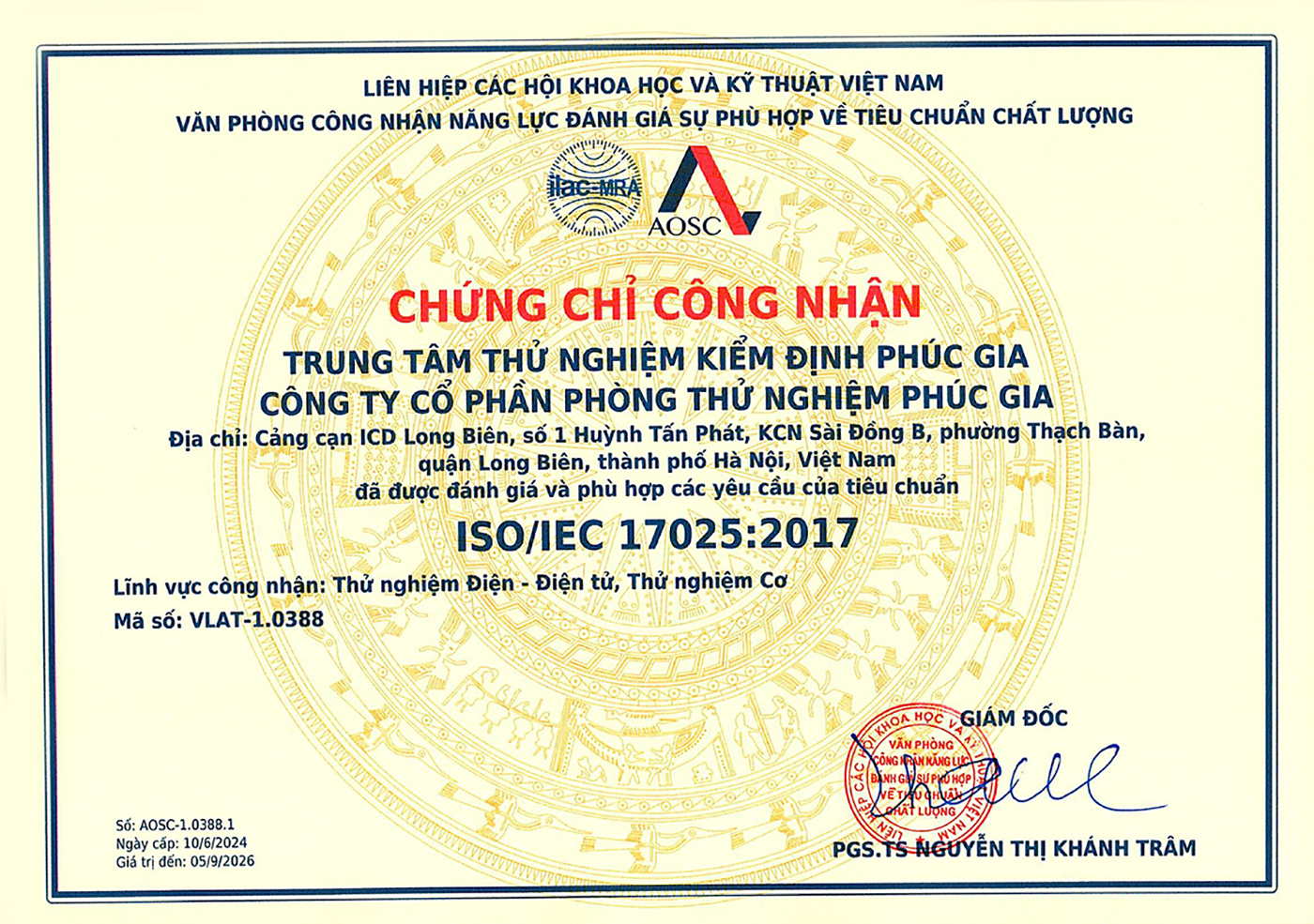
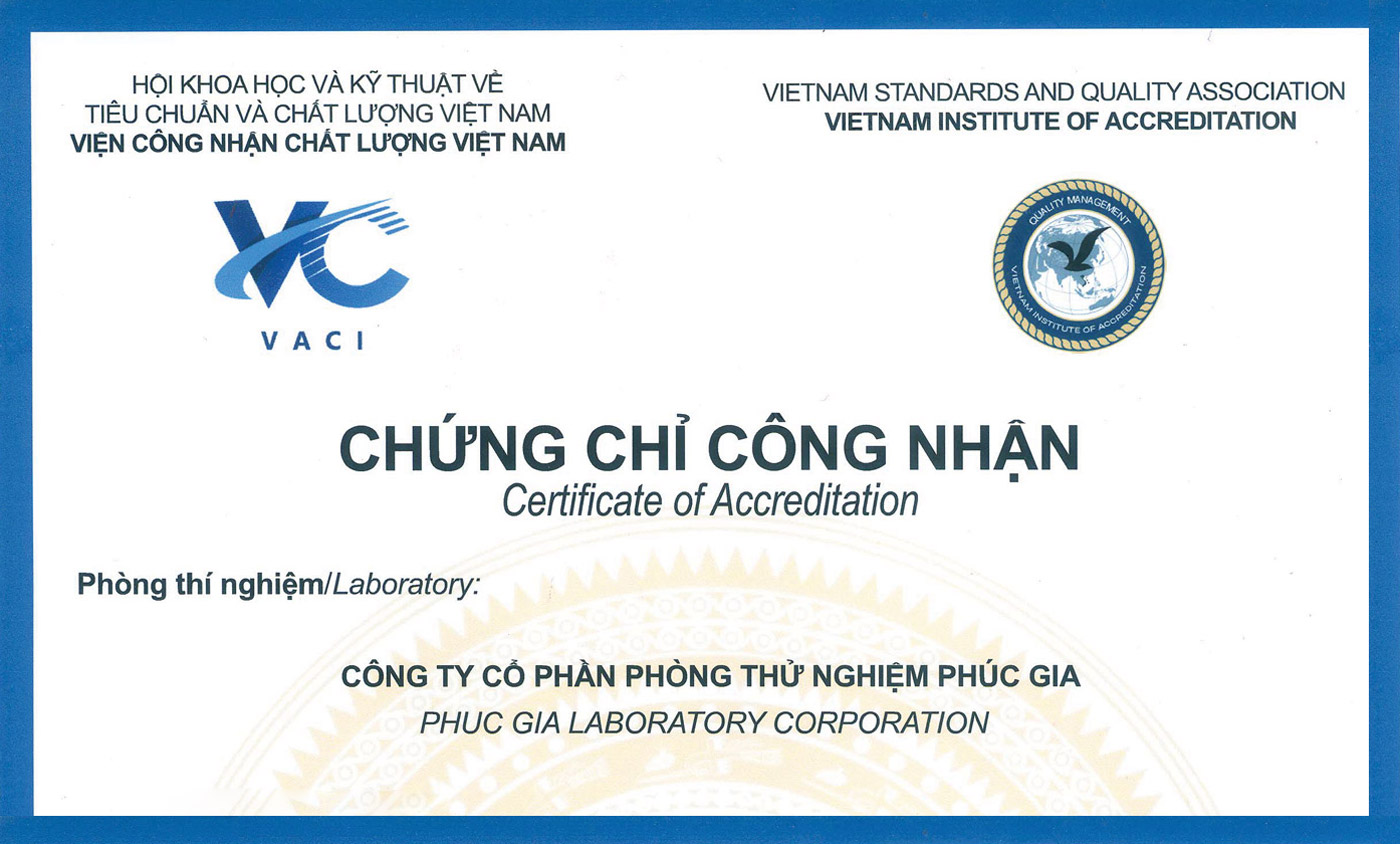
Phuc Gia® is also the first unit to be accredited by all three accreditation bodies (BoA, AOSC, VACI) as meeting the ISO/IEC 17025:2017 standard. The testing facility has a scale of up to 5,000 m², equipped with a synchronized system of modern measurement and inspection equipment, serving tests for electrical safety, EMC, energy efficiency, RF, SAR, and many other technical items.
In addition, there is a team of nearly 100 officers, engineers, and technical experts who are selected and intensively trained to meet the strict requirements of testing, certification, and conformity assessment activities across various technical fields.

ICT Testing Chamber – Phuc Gia Laboratory Corporation

Control Room – Phuc Gia Laboratory Corporation

In conclusion, maintaining strict compliance with the Testing for Ultra-Wideband Information Technology Equipment in Vietnam is the only way to ensure that UWB devices operate safely and legally within the national radio spectrum. These Testing for Ultra-Wideband Information Technology Equipment in Vietnam protocols are anchored in QCVN 94:2015/BTTTT, which establishes essential electromagnetic compatibility (EMC) requirements for both pulse-based and carrier-based UWB technologies. By successfully completing the Testing for Ultra-Wideband Information Technology Equipment in Vietnam, manufacturers ensure that their products—ranging from asset trackers to high-speed wireless connectors—satisfy the standards set by the Ministry of Information and Communications (MIC).
Ultimately, current Testing for Ultra-Wideband Information Technology Equipment in Vietnam must be performed at a designated Testing laboratory to verify that emissions stay within the permissible 3.1 GHz to 10.6 GHz limits. Following the Testing for Ultra-Wideband Information Technology Equipment in Vietnam allows for the legal issuance of a Declaration of Conformity and the application of the CR Mark, which is vital for passing Customs Clearance. Prioritizing rigorous Testing for Ultra-Wideband Information Technology Equipment in Vietnam according to QCVN 94:2015/BTTTT guarantees that your information technology equipment provides precise positioning and high-speed data without interfering with other critical wireless services in Vietnam.
RELATED POSTS
- Guidance on Testing for Radio Communication Equipment according to QCVN 18:2022/BTTTT
- Guidance on Testing for Broadband Data Transmission Equipment according to QCVN 54:2020/BTTTT
- Guidance on Testing for Mobile Communication Terminal Equipment according to QCVN 86:2019/BTTTT
For more details, please contact us at:
PHUC GIA LABORATORY CORPORATION
PHUC GIA CERTIFICATION CENTER
PHUC GIA INSPECTION TESTING CENTER
Address:
- Hanoi: ICD Long Bien, No. 01 Huynh Tan Phat, Sai Dong B Industrial Park, Long Bien Ward
- Ho Chi Minh City: No. 180, D2 Street, Long Truong Ward
Hotline: 0965996696 / 0982996696 / 02477796696
E-mail: lab@phucgia.com.vn/cert@phucgia.com.vn/info@phucgia.com.vn
Website: phucgia.com.vn
Working time: Monday to Friday 8:00 – 18:30; Saturday 8:00 – 12:00

![QUOTATION – Testing and Other Certification Services [2026]](https://phucgia.com.vn/wp-content/uploads/2017/03/bao-gia-thu-nghiem-chung-nhan.png)