

Microwave ovens are among the product groups proposed for addition to the list of equipment subject to mandatory energy labeling under the new Draft Circular. Businesses can proactively conduct Microwave Oven Energy Efficiency testing to evaluate product compliance with technical requirements. Early testing not only helps businesses prepare for the mandatory roadmap but also affirms their commitment to product quality and energy efficiency to consumers.
Below is the essential information researched, compiled, and analyzed by Phuc Gia® regarding Microwave Oven Energy Efficiency testing, helping businesses better understand the requirements and procedures for Microwave Oven Energy Efficiency testing, thereby taking initiative in production, import, and distribution activities.
See more: Capacity Profile Of Phuc Gia Laboratory Corporation
I. Current situation of microwave oven usage in Vietnam
Microwave ovens are one of the household appliances commonly used in every family, company, convenience supermarket, and store. This equipment is primarily used to quickly reheat and defrost food, bringing convenience to today’s busy lives.
With the continuous development of the household appliance market, microwave ovens feature increasing designs, functions, and technologies, meeting the rising demands of consumers. However, this popularity also poses greater requirements for ensuring electrical safety, microwave radiation control, and Microwave Oven Energy Efficiency, aiming to protect user health and improve domestic power usage efficiency.

II. Guidance on Microwave Oven Energy Efficiency testing
Phuc Gia® has been accredited by the Bureau of Accreditation (BoA) as qualified to perform Microwave Oven Energy Efficiency testing in accordance with ISO/IEC 17025:2017. Below are the guidance information and technical regulations that businesses need to clearly understand when conducting Microwave Oven Energy Efficiency testing, to ensure products meet current requirements before being circulated on the market.
1. Scope of Application
Based on TCVN 13663:2023 standards, microwave ovens for household purposes with a capacity up to and including 30 L (including microwave ovens with grill functions and combination microwave ovens) must undergo energy efficiency testing. Below are several types of microwave ovens that must be tested according to this standard:
- Microwave oven: Equipment that uses electromagnetic energy in one or more ISM frequency bands within the range of 300 MHz to 30 GHz to heat food and beverages (the ISM frequency bands are electromagnetic frequencies established by the ITU and specified in TCVN 6988).
- Combination microwave oven: A microwave oven in which microwave energy is combined with energy transfer through forced air circulation, conventional heating, hot steam, and steam.
- Microwave oven with grill: A microwave oven in which microwave energy is combined with a grilling function.
Note:
- For the grilling function, see TCVN 12218-1:2018 (IEC 60350-1:2016).
- For definitions of the forced air circulation function, conventional heating function, hot steam function, and steam function, see TCVN 12218-1:2018 (IEC 60350-1:2016).

2. Implementation timeline
According to the Draft Circular regulating the list of machines and equipment subject to energy labeling and the implementation roadmap (continuing the application roadmap of Decision No. 04/2017/QĐ-TTg), microwave ovens are proposed to be included in the group of equipment required to undergo testing and energy labeling in the near future. The expected roadmap is as follows:
- Voluntary energy labeling shall be implemented until the end of June 30, 2026, for: Induction hobs, infrared hobs, microwave ovens, and LED lamps for road and street lighting;
- Mandatory energy labeling shall be implemented from July 1, 2026, for: Induction hobs, infrared hobs, microwave ovens, and LED lamps for road and street lighting.
3. Technical requirements
Based on TCVN 13663:2023 regarding Energy Efficiency for household microwave ovens, this equipment must ensure energy efficiency requirements in standby mode and microwave mode, specifically as follows:
– Energy efficiency in standby mode: Determined according to TCVN 10152 (IEC 62301), in which the maximum energy consumption of the microwave oven in standby mode must be less than or equal to 1 W.
– Energy efficiency in microwave mode: The Microwave Oven Energy Efficiency is determined according to the formula in section 5.3 of this standard. The energy efficiency of this equipment consists of 5 levels, detailed as follows:
- Energy efficiency (η) Level 1: η < 45 %
- Energy efficiency (η) Level 2: 45 % < η ≤ 53 %
- Energy efficiency (η) Level 3: 53 % < η ≤ 58 %
- Energy efficiency (η) Level 4: 58 % < η ≤ 65 %
- Energy efficiency (η) Level 5: η > 65 % (Best level)
4. Testing costs and lead time
The costs and lead time for Microwave Oven Energy Efficiency testing are publicly listed by Phuc Gia. You can view the product testing price list at the Quotation for Testing and Certification Services or contact Phuc Gia for detailed consultation.
5. Where to conduct Microwave Oven Energy Efficiency testing?
5.1. Regulations on qualified testing and certification units
According to current regulations, products under the scope of energy efficiency management must be tested at testing laboratories designated by the Ministry of Industry and Trade (MOIT). These organizations are issued a Registration Certificate for Energy Efficiency Testing Operations, providing valid test results as a basis for businesses to register the declaration and energy labeling for their products.
Pursuant to Circular No. 36/2016/TT-BCT, Energy Efficiency testing organizations are regulated as follows:
1. Energy labeling testing organizations include: domestic testing organizations (independent testing organizations or manufacturers’ testing laboratories); foreign testing organizations (independent testing organizations or manufacturers’ testing laboratories).
2. Energy labeling testing organizations must satisfy the following conditions:
a) Domestic testing organizations are those that meet the regulations in Chapter II of Decree No. 107/2016/NĐ-CP dated July 1, 2016, of the Government, regulating conditions for business in conformity assessment services;
b) Foreign testing organizations are those accredited according to ISO/IEC 17025 (or equivalent) by accreditation bodies that have signed mutual recognition agreements (ILAC or APLAC).
5.2. Phuc Gia® – A Prestigious Energy Efficiency Testing Unit in Vietnam
Phuc Gia Laboratory Corporation is one of the leading prestigious testing organizations in the country, designated by the Ministry of Industry and Trade (MOIT) to perform energy efficiency testing for household and office equipment under the Registration Certificate for Energy Efficiency Testing Operations No. 986/GCN-BCT. Additionally, microwave ovens are one of the products for which Phuc Gia® has been accredited by the Bureau of Accreditation (BoA) as qualified to perform energy efficiency testing in accordance with ISO/IEC 17025:2017.
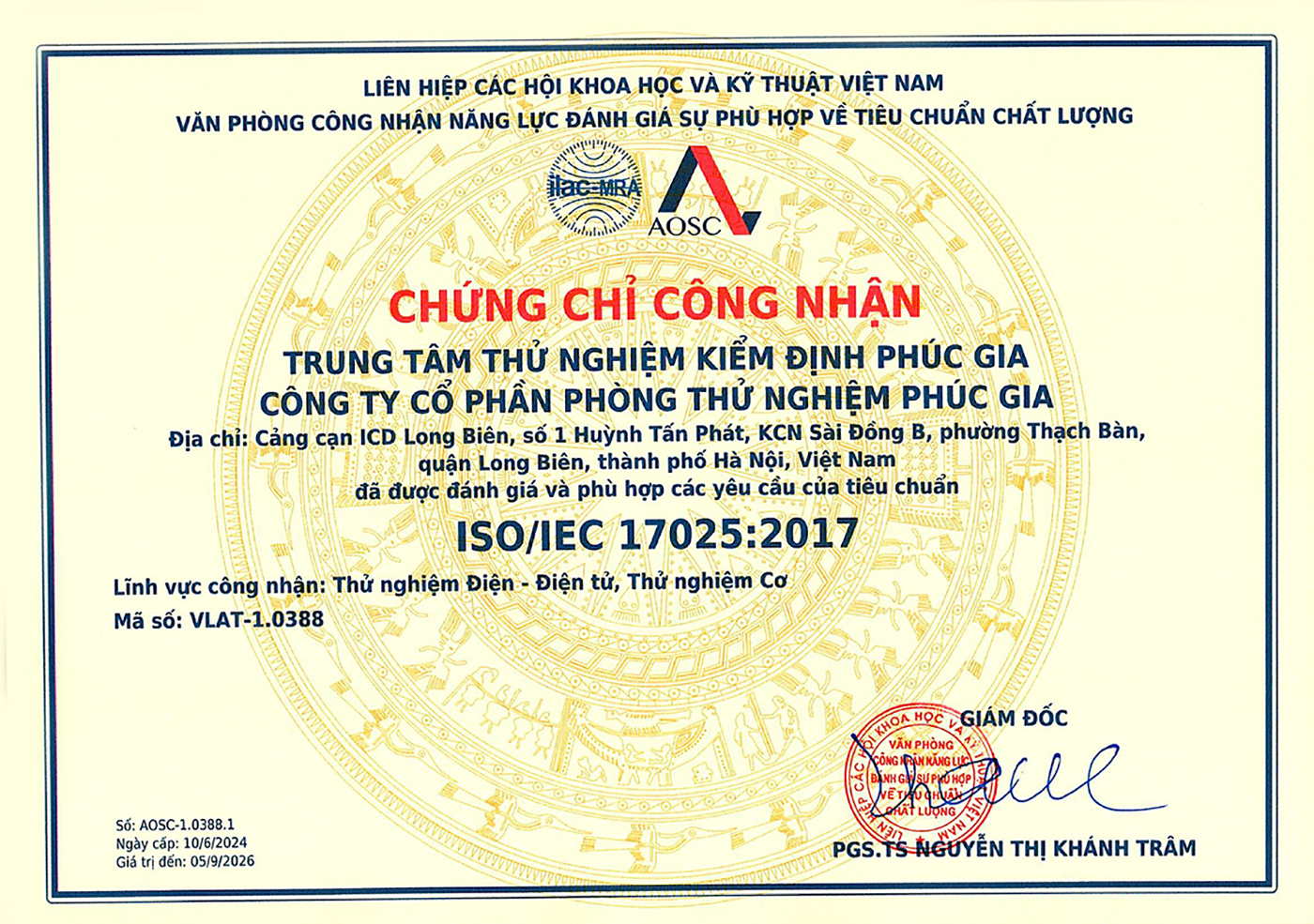
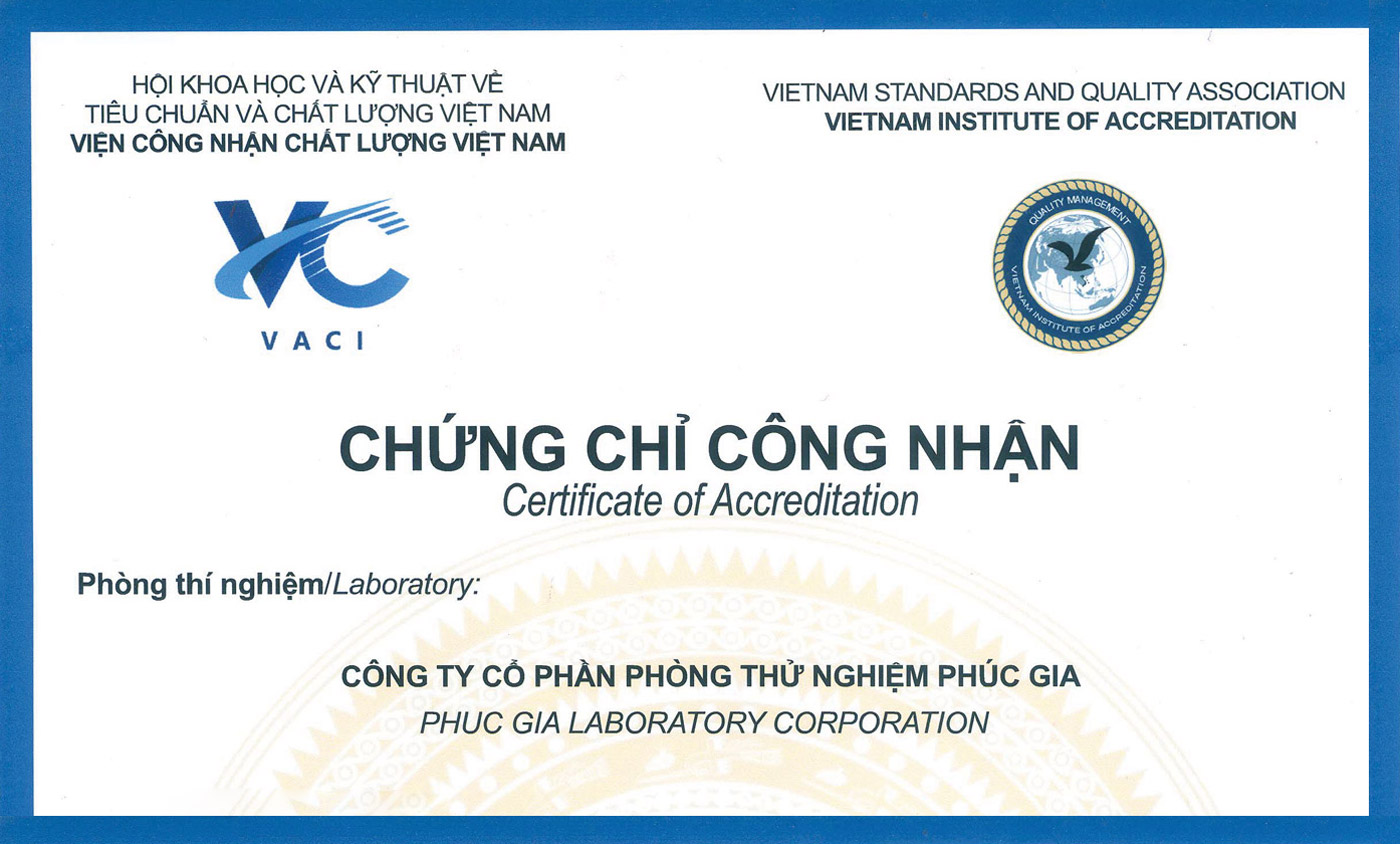
Furthermore, Phuc Gia Laboratory Corporation is also the first organization to be accredited by all three accreditation bodies (BoA, AOSC, VACI) to meet the ISO/IEC 17025:2017 standard. Phuc Gia® is the first private organization to invest in an energy efficiency testing chamber for air conditioners with a capacity of up to 60,000 Btu/h (the largest in Vietnam at present) using the Enthalpy test method, along with testing chambers for refrigerators and commercial refrigerated cabinets with a testing capacity for 4 refrigerators at a time. In addition, it possesses many advanced testing laboratories that fully meet current regulations.

These investments help quickly and effectively meet the testing needs of businesses, while contributing to improving Vietnam’s conformity assessment capacity in the field of energy efficiency.
In addition to Microwave Oven Energy Efficiency testing, businesses must also comply with requirements for electrical safety testing and electromagnetic compatibility (EMC) according to national technical regulations issued by the Ministry of Science and Technology (MOST), specifically as follows:
| ORD | Applicable Regulations | Content of Testing |
|---|---|---|
| 1 | QCVN 4:2009/BKHCN | Guidance on Electrical Safety Testing for Microwave Oven According to QCVN 4:2009/BKHCN |
| 2 | QCVN 9:2012/BKHCN |
Guidance on EMC Testing for Microwave Oven According to QCVN 9:2012/BKHCN |
III. See more regulatory documents related to microwave ovens
Regulations of the Ministry of Industry and Trade (MOIT) on Microwave Oven Energy Efficiency testing:
- Circular No. 36/2016/TT-BCT – Regulations on energy labeling issued by the Ministry of Industry and Trade on December 28, 2016.
- Decision No. 04/2017/QĐ-TTg – Regulations on the list of vehicles and equipment subject to energy labeling, application of minimum energy performance standards, and implementation roadmap issued by the Prime Minister on March 9, 2017.
- Consolidated Document No. 23/VBHN-BCT – Regulations on energy labels for energy-using vehicles and equipment under the management scope of the Ministry of Industry and Trade, issued by the Ministry of Industry and Trade on March 24, 2020.
- Decision No. 1182/QĐ-BCT – Regulations on the list of imported goods (with HS codes) subject to specialized inspection under the management responsibility of the Ministry of Industry and Trade, issued on April 6, 2021.
- Decision No. 14/2023/QĐ-TTg – Regulations on the list and roadmap of energy-using equipment to be discarded, issued by the Prime Minister on May 24, 2023.
- TCVN 13663:2023 – Regulations on energy efficiency for household microwave ovens.
Regulations of the Ministry of Science and Technology (MOST) on electromagnetic compatibility testing (QCVN 9:2012/BKHCN) and electrical safety (QCVN 4:2009/BKHCN) for microwave ovens:
- Decision No. 2711/QĐ-BKHCN – Regulations on the declaration of Group 2 products and goods under the management responsibility of the Ministry of Science and Technology, issued on December 30, 2022.
- Circular No. 07/2018/TT-BKHCN – Amendment 1:2018 QCVN 9:2012/BKHCN National technical regulation on Electromagnetic compatibility for household and similar electrical and electronic equipment, issued by the Ministry of Science and Technology on June 6, 2018.
- Circular No. 16/2010/TT-BKHCN – Amending and supplementing Circular No. 21/2009/TT-BKHCN on National technical regulation on safety for electrical and electronic equipment (QCVN 4:2009/BKHCN/SĐ01:2016), issued by the Ministry of Science and Technology on September 21, 2010.
- Circular No. 21/2009/TT-BKHCN – Circular promulgating and implementing the “National technical regulation on safety for electrical and electronic equipment” (QCVN 4:2009/BKHCN), issued by the Ministry of Science and Technology on September 30, 2009.
- Decree No. 74/2018/NĐ-CP – Regulations on procedures for state quality inspection of imported goods, issued on November 15, 2018.
RELATED POSTS
- Compilation of Legal Regulations for Microwave Ovens
- Certificate of Conformity for Microwave Ovens
- Product Certificate for Microwave Ovens according to QCVN 9:2012/BKHCN
- How Decision No. 14/2023/QĐ-TTg has affected and will affect enterprises importing and manufacturing household and office electrical equipment
- Guidance on the latest import procedures for microwave ovens
- Comparison of TCVN between Electric Ovens and Microwave Ovens
For more details, please contact us at:
PHUC GIA LABORATORY CORPORATION
PHUC GIA CERTIFICATION CENTER
PHUC GIA INSPECTION TESTING CENTER
Address:
- Hanoi: ICD Long Bien, No. 01 Huynh Tan Phat, Sai Dong B Industrial Park, Long Bien Ward
- Ho Chi Minh City: No. 180, D2 Street, Long Truong Ward
Hotline: 0965996696 / 0982996696 / 02477796696
E-mail: lab@phucgia.com.vn/cert@phucgia.com.vn/info@phucgia.com.vn
Website: phucgia.com.vn
Working time: Monday to Friday 8:00 – 18:30; Saturday 8:00 – 12:00
![QUOTATION – Testing and Other Certification Services [2026]](https://phucgia.com.vn/wp-content/uploads/2017/03/bao-gia-thu-nghiem-chung-nhan.png)